What an ST1600 Conveyor Belt Is
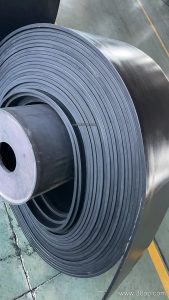
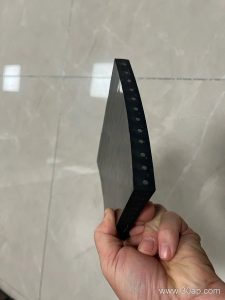
An ST1600 Conveyor Belt is a steel cord conveyor belt with a nominal tensile strength of 1600 N/mm. It sits in the middle-upper range of the ST family, above ST1000 and ST1250 but below ST2000, ST2500 and ST3150. The “ST” designation refers to steel cord construction, so this is not a fabric belt such as an EP Conveyor Belt or NN Conveyor Belt. Instead, brass-coated steel cords run longitudinally through the belt as the tension-bearing carcass, and rubber covers protect the cords from abrasion, impact and moisture.
Because the cords carry the load rather than multiple fabric plies, a single ST1600 belt can replace a thick Multi-Ply Fabric Core Conveyor Belt on long, high-capacity routes. That makes it a practical choice for bulk material conveying where tensile demand is high and elongation must stay low.
How the Belt Is Built
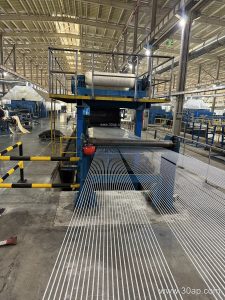
The construction is straightforward in principle but demanding in production. Steel cords are arranged at a defined pitch, bonded to core rubber, and sandwiched between top and bottom covers. The cover compounds are selected for the duty: an Abrasion Resistant Conveyor Belt grade for sharp rock, a Heat Resistant Conveyor Belt compound for hot clinker or sinter, or a Flame Retardant Conveyor Belt / Fire Resistant Conveyor Belt version for coal and underground work.
A typical ST1600 specification is often expressed through belt width, cover thickness and cord pitch. Reference values below are common examples only and should be confirmed against the actual design.
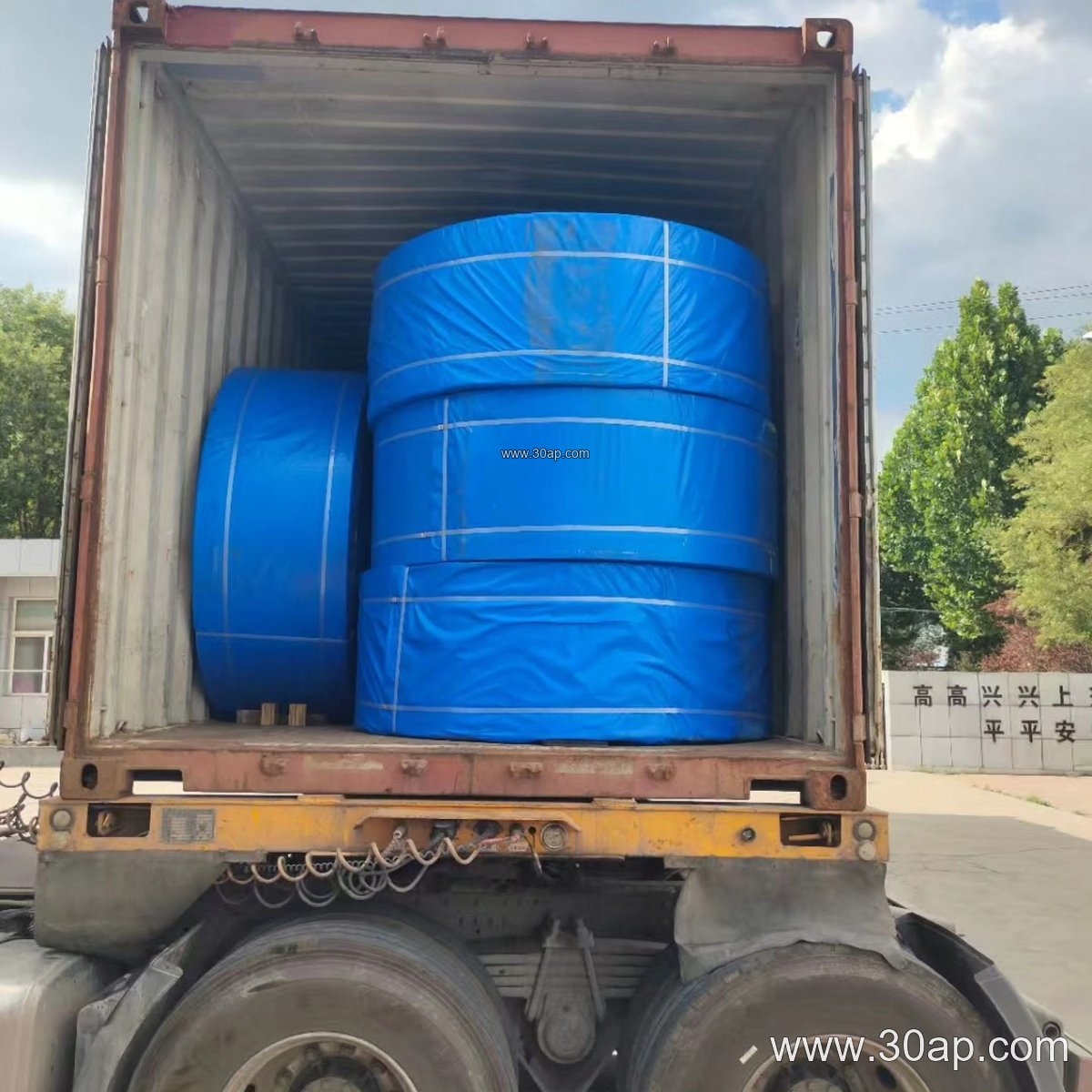
| Parameter | Common reference values |
|---|---|
| Nominal strength | ST1600 (1600 N/mm) |
| Belt width | B800, B1000, B1200, B1400, B1600, B1800, B2000 |
| Cover thickness | 5+2 mm, 6+2 mm, 8+3 mm |
| Cord pitch | Usually 10 mm to 20 mm, depending on manufacturer |
| Cover grades | Abrasion resistant, heat resistant, flame retardant, anti-static, cold resistant |
Cover thickness is not a fixed rule. A 1200mm or 1400mm wide ST1600 belt for iron ore may use an 8+3 mm cover, while a 1000mm belt on a shorter cement plant route may use 6+2 mm. The pulley diameter, troughing angle and transition distance all affect cord stress and should be checked by the conveyor designer.
Where ST1600 Belts Are Used
The strength class suits main haulage lines in mining, coal preparation, cement plants, power stations, steel plants, ports and large quarries. In an underground coal mine, a flame retardant and anti-static ST1600 is often specified for trunk conveyors. On the surface, the same strength class may move crushed stone, aggregate, ore or clinker over several kilometres.
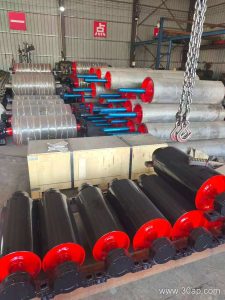
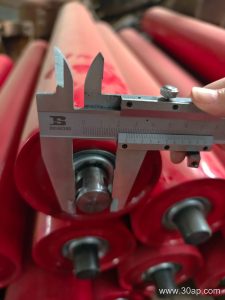
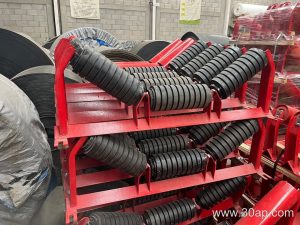
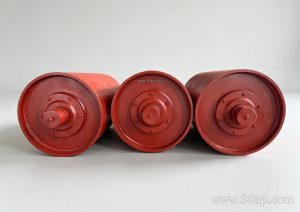
The belt works with standard conveyor components: idler roller sets support the carrying side, a conveyor pulley drives and tensions the belt, and a conveyor bracket holds the rollers and pulleys in alignment. Belt tracking, pulley lagging and transition idler spacing matter as much as the belt itself.
Selection and Comparison Notes
Buyers sometimes compare ST1600 with an EP1000 or EP1250 EP Conveyor Belt. Fabric belts are easier to splice and often cost less at moderate tension, but they stretch more and need more take-up travel. Steel cord belts such as ST1600 offer low elongation and high impact resistance, which is valuable at crusher discharge points and on long overland routes. For hot material, a Heat Resistant Conveyor Belt grade of ST1600 may be needed; for oily scrap or recycled material, an Oil Resistant Conveyor Belt cover is worth considering.
- Confirm the required strength after calculating the actual operating tension, not just the maximum tonnage.
- Match cover grade to the material: abrasive rock, hot clinker, coal, or oily feedstock.
- Check minimum pulley diameters and splice method with the belt supplier.
- Consider a Chevron Conveyor Belt or Corrugated Sidewall Conveyor Belt only if the route has an incline or space constraint that a flat ST1600 cannot handle.
- For long horizontal runs, an Endless Conveyor Belt splice may reduce joint maintenance.
Installation and Maintenance Points
Steel cord belts are usually spliced on site with a hot vulcanised joint. Joint quality depends on cord alignment, cleanliness and press control, so the splice should be done by trained personnel. After installation, check idler roller rotation, pulley lagging wear and belt tracking during the first loaded runs. A misaligned conveyor bracket or a seized roller can damage the cover quickly, especially on an Abrasion Resistant Conveyor Belt carrying sharp ore.
Routine inspection should include cover wear, edge damage, cord exposure and splice condition. Store spare belt in a dry, shaded place and avoid sharp bends. If the conveyor is in a cold climate, a Cold Resistant Conveyor Belt compound may be specified to reduce cracking at start-up.
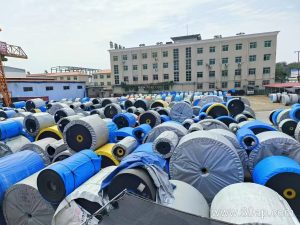
For buyers sourcing an ST1600 Conveyor Belt, the key is to provide the full duty data: material type, lump size, capacity, centre distance, incline, pulley diameters and ambient conditions. That information lets the supplier recommend a suitable cover grade and splice configuration rather than a generic belt.