What a Port Conveyor Pulley Does
A port conveyor pulley is the rotating drum that drives, redirects, or tensions the conveyor belt in a bulk material handling system. In a seaport unloading coal, iron ore, or fertilizer from a ship, these pulleys work under constant load, salt air, and abrasive dust. The drive pulley, also called the head pulley, transmits power from the gearbox to the belt. A tail pulley sits at the opposite end, while a bend pulley changes the belt path without driving. These roles are not interchangeable, and each one is specified for its position in the conveyor line.
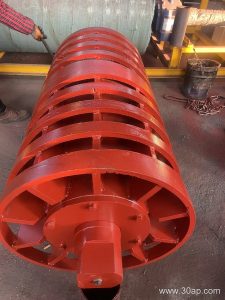
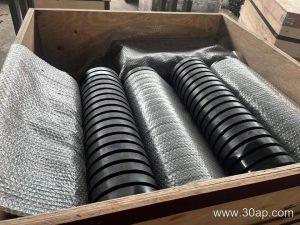
The term port conveyor pulley is often used alongside the accurate equivalent name conveyor drum. Both refer to the same assembly: a cylindrical shell with end discs, a shaft, bearing housings, and a surface that contacts the belt.
How It Is Built
A typical pulley starts with a rolled steel shell. End discs are welded to the shell and machined to hold the shaft. The shaft is sized by torque and radial load, not by belt width alone. Common shaft diameters include Ø50, Ø60, Ø80, Ø100, Ø120, Ø140, Ø160, Ø180, and Ø200 mm, but the final value comes from the drive calculation.
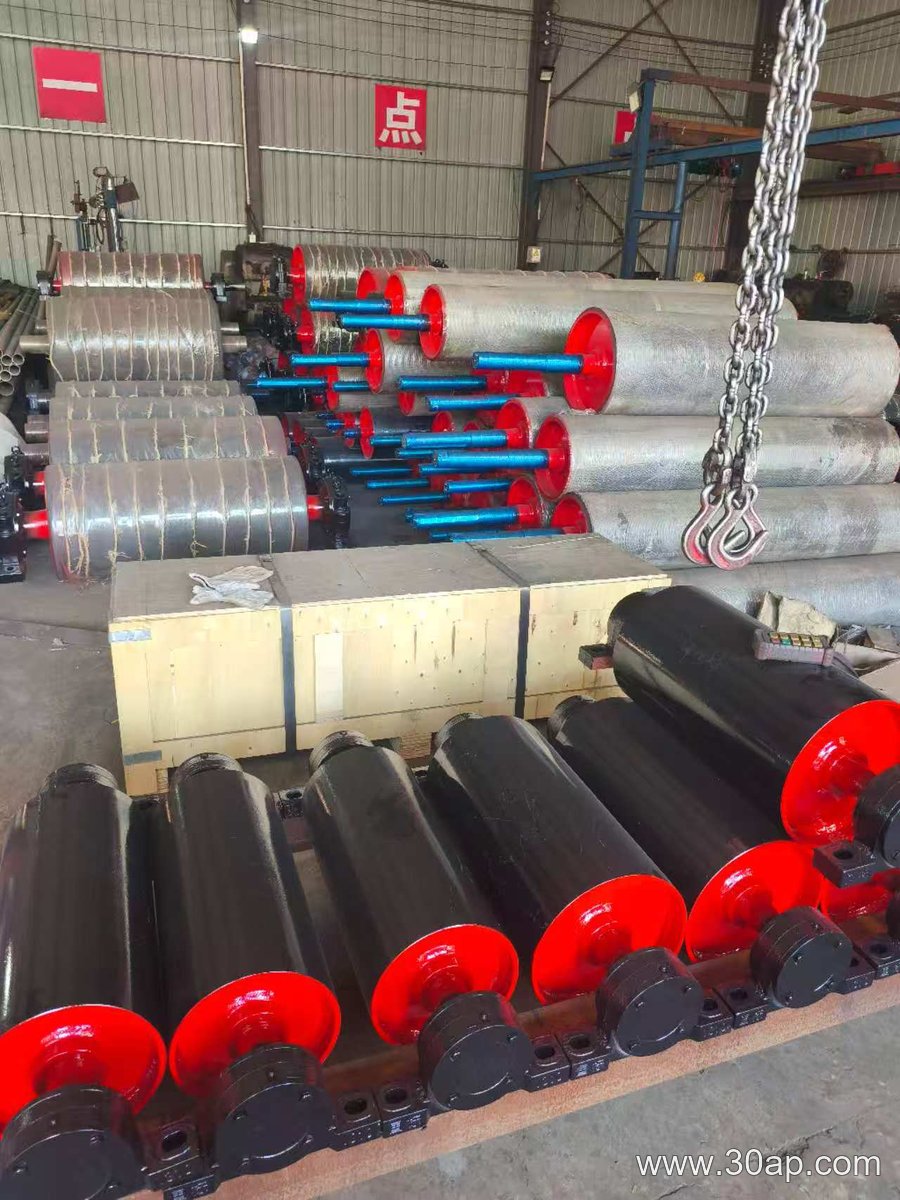
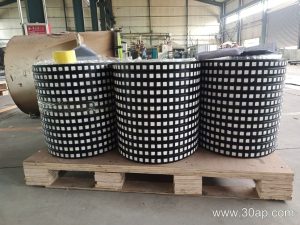
The surface may be plain, or it may carry rubber lagging. Lagging improves grip and reduces belt slip. Common forms are plain rubber, diamond grooved, herringbone, and ceramic lagging. Lagging thickness often falls between 8 mm and 20 mm, depending on the duty. A drive pulley in a coal terminal usually needs more grip than a bend pulley handling the same belt.
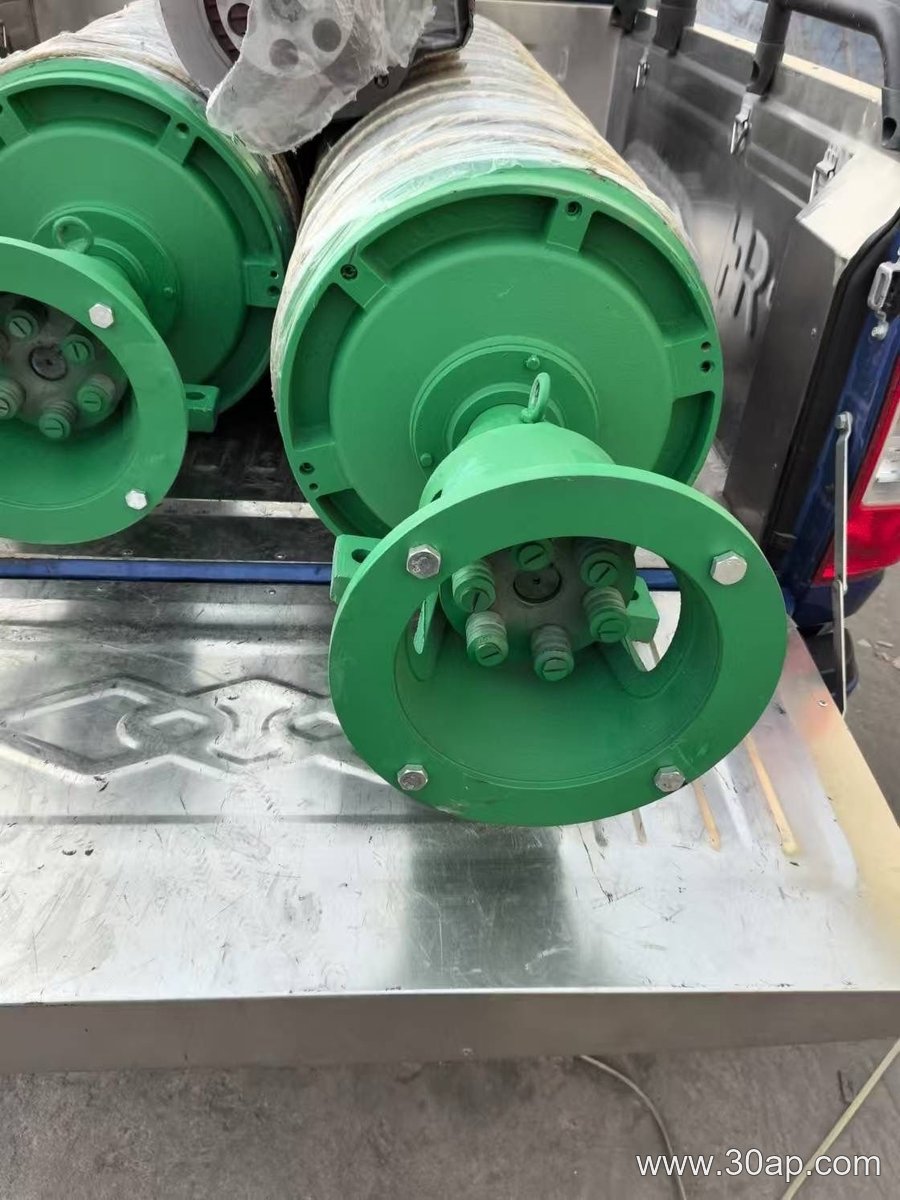
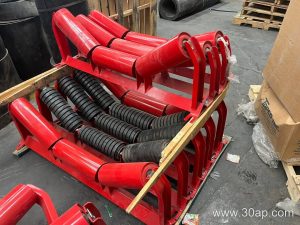
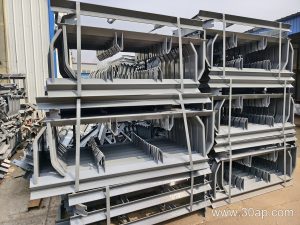
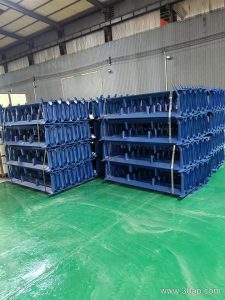
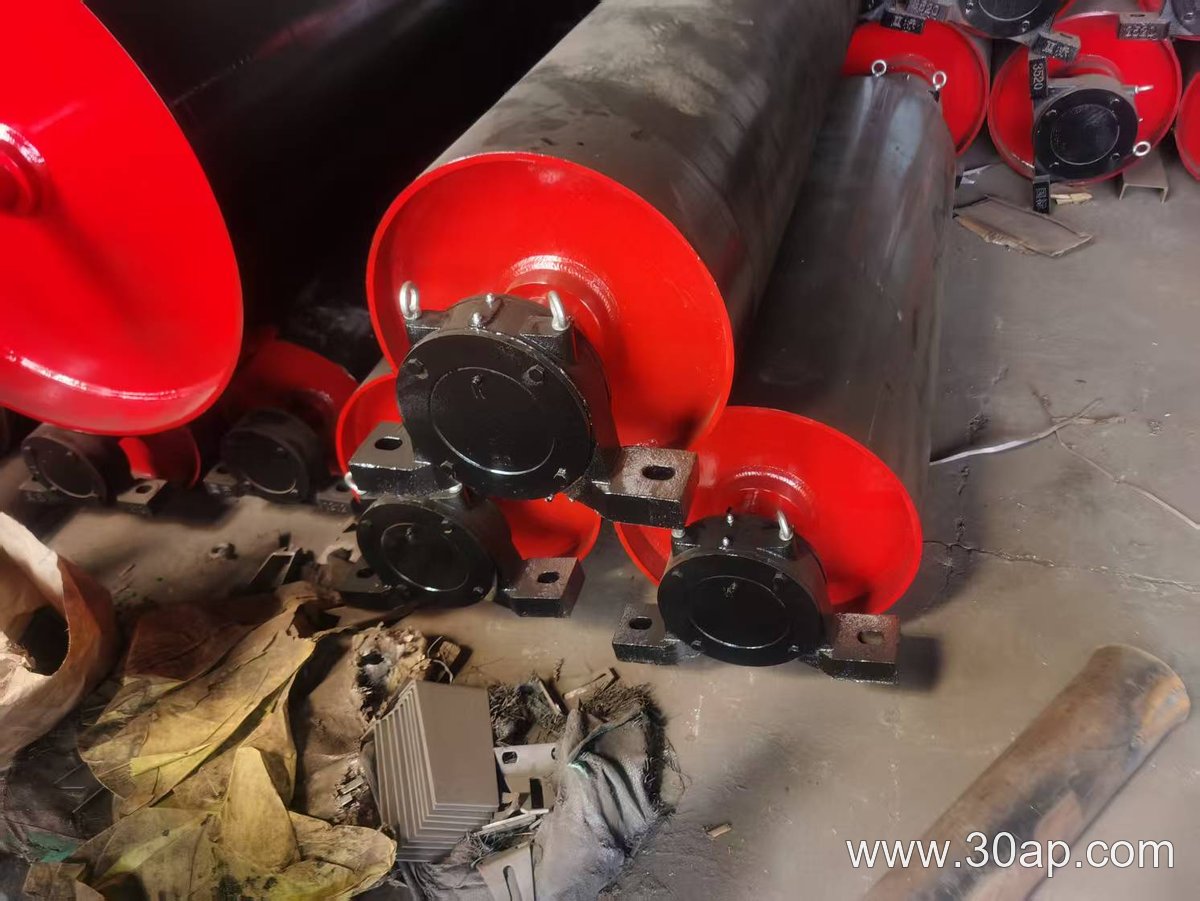
Bearing housings are bolted to a frame or to a conveyor bracket. The bracket must align with the pulley shaft and carry the belt tension without flexing. A misaligned bracket is a common cause of premature bearing failure.
Where It Fits in a Port Setting
Port conveyors move material from ship unloaders, stackers, and reclaimers to storage yards or train loaders. A drive pulley at the head end pulls the loaded belt. A tail pulley at the loading point keeps the belt tracking. A bend pulley near a transfer tower routes the belt around a structure. A tension pulley, sometimes a gravity take-up or screw take-up, maintains the belt tension needed to prevent slip.
In a sand and gravel yard or a cement clinker terminal, the same pulley types appear, but the belt may run slower and carry sharper material. In a power plant coal yard, a port conveyor pulley often faces coal dust that works into the bearing seals. The surface form and seal choice should match the material.
Common Dimensions and Combinations
The table below shows reference data, not a fixed rule. A belt width does not lock the pulley to one diameter. The engineer selects the diameter from belt speed, wrap angle, and tension.
| Belt width | Typical pulley face width | Example diameter |
|---|---|---|
| B400 | about 500 mm | Ø200, Ø250 |
| B650 | about 750 mm | Ø315, Ø400 |
| B800 | about 950 mm | Ø500 |
| B1000 | about 1150 mm | Ø630, Ø800 |
| B1200 | about 1400 mm | Ø1000 |
| B1400 | about 1600 mm | Ø800, Ø1000 |
| B1600 | about 1800 mm | Ø1250 |
| B2000 | about 2200 mm | Ø1400, Ø1600 |
These figures are common reference values. A B1200 belt may run on a Ø1000 mm drive pulley in one plant and a different diameter in another. The shaft diameter is never chosen from belt width alone.
What a Buyer Should Check
- Position and duty. Confirm whether the pulley is a drive, tail, bend, or tension pulley. Each has a different load case.
- Lagging. Choose plain, diamond, herringbone, or ceramic based on slip risk and material abrasiveness. A ceramic lagging may suit a wet coal terminal, while a plain surface may be enough for a light bend pulley.
- Bearing and seal. Dust and salt air demand good sealing. Ask how the bearing housing keeps out fines and moisture.
- Shaft and bracket fit. The conveyor bracket must match the shaft end and the frame hole pattern.
- Belt compatibility. The pulley face width should exceed the belt width to allow tracking. The belt, idler roller, and pulley must work as one system.
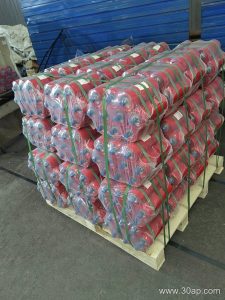
A port conveyor pulley is not a shelf item. It is a wear part that affects belt life, energy use, and downtime. Buyers should share the belt width, belt speed, material, and take-up method with the supplier so the drum, shaft, and lagging are matched to the job.