What a Tapered Idler Does on a Conveyor
A tapered idler is a rotating roller whose shell diameter changes from one end to the other, forming a gentle cone. On a belt conveyor it is usually installed as a side roller in a troughed idler set or as part of a self-aligning station. The cone shape is not there to carry more load than a straight roller; it is there to steer. Because the surface speed of a rotating cone varies along its length, the belt tends to follow the larger diameter, which helps correct drift and keeps the belt centred on the carrying run.
The same component is also called a conical idler roller or taper roller in many workshops. These are accurate equivalents, and the terms describe the same product. A tapered idler is not a drive pulley, a tail pulley or a bend pulley. Those are pulleys that transmit motion or change belt direction at the ends of a conveyor, while the tapered idler is a load-bearing and aligning roller mounted on the carrying side or return side.
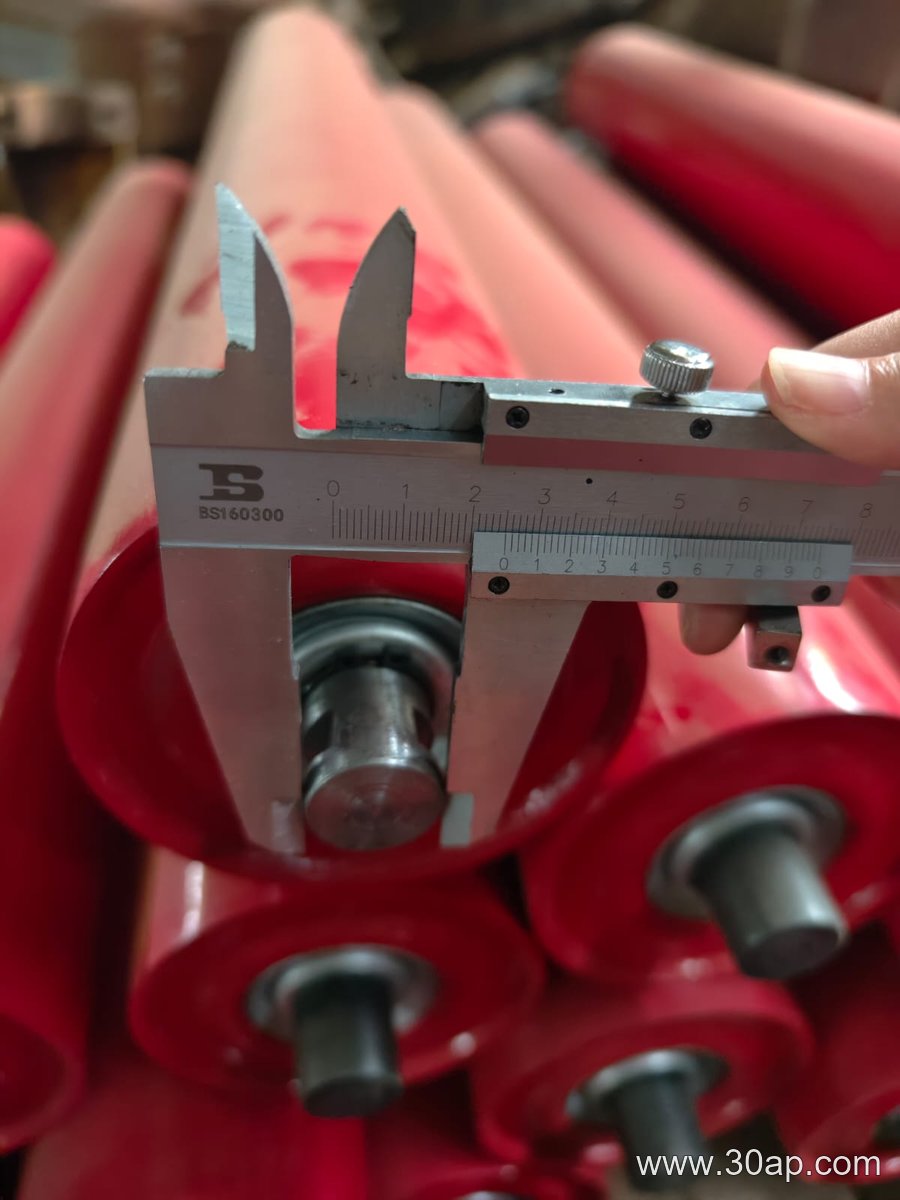
How the Roller Is Built
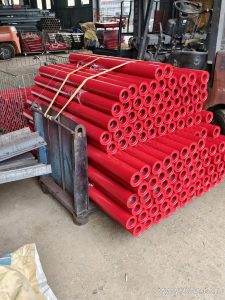
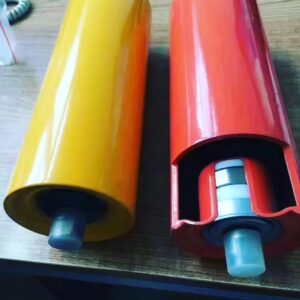
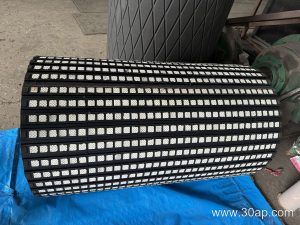
A typical unit combines a steel tube or formed shell, a shaft, bearing housings and seals. The taper is produced by machining or forming the shell, and the surface may be left as plain steel or fitted with a rubber ring or ceramic layer for grip and wear resistance. Bearings are selected by load, speed and service life; common sizes include 6204, 6205, 6305, 6306, 6308 and 6310.
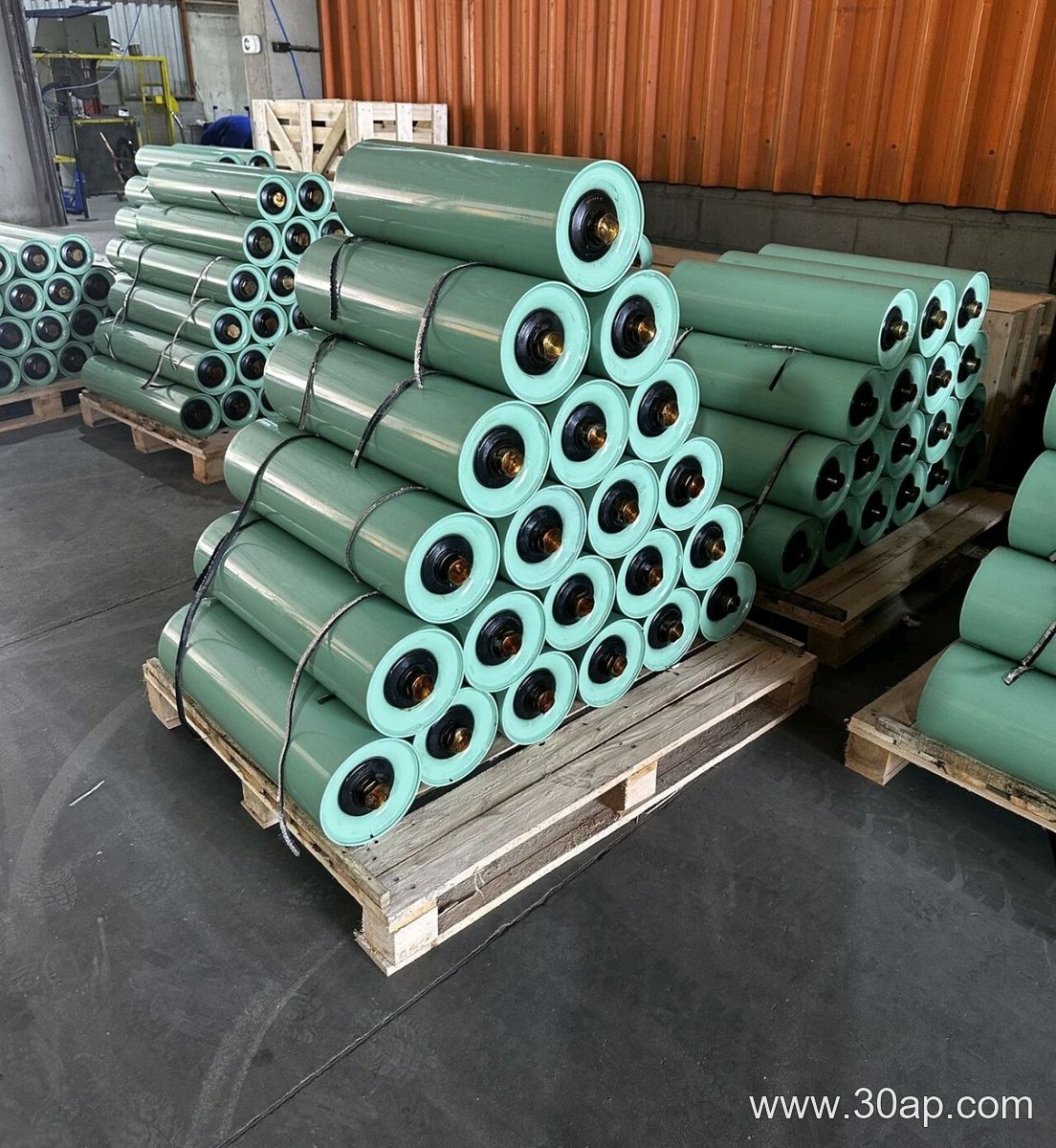
The mounting arrangement matters as much as the roller itself. A tapered idler usually sits in a conveyor bracket or frame that allows a small angle relative to the belt path. When the belt touches the cone, the resulting friction turns the roller and nudges the belt back toward the centre line. The bracket should allow rotation without binding, and the shaft should be free of paint or burrs at the mounting points.
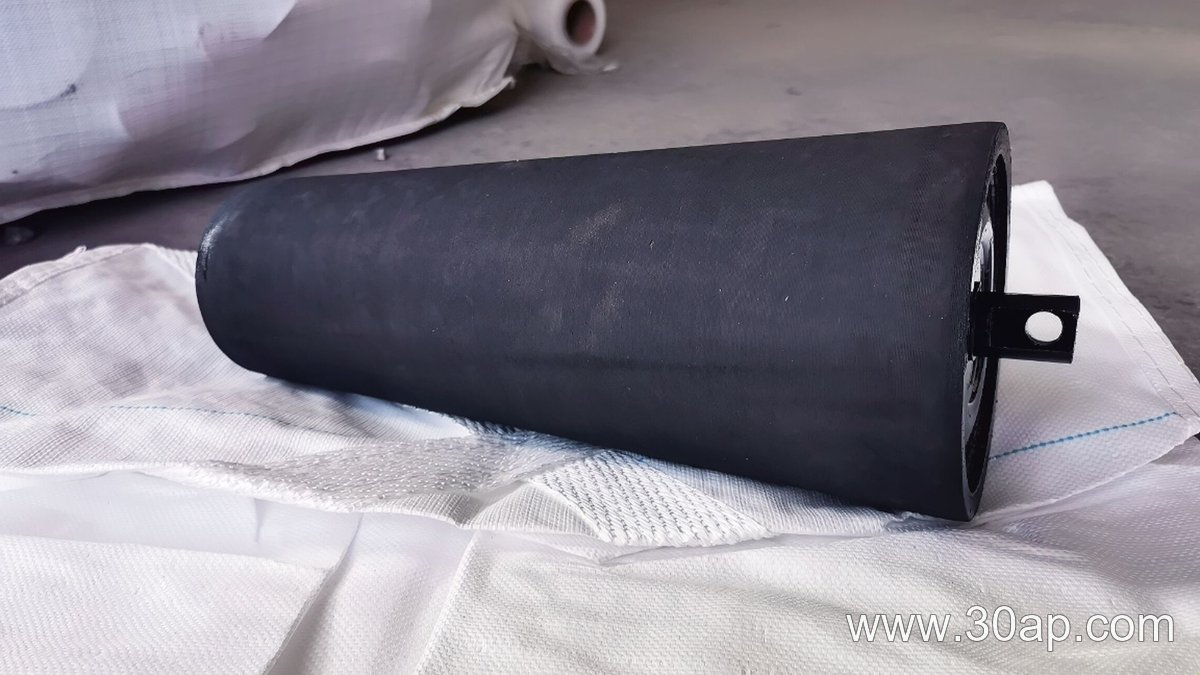
Where Tapered Idlers Are Used
These rollers appear in bulk handling lines where belts are long, loaded unevenly or exposed to side winds and off-centre feed. Two common settings are a quarry feeding a primary crusher and a coal yard transferring fuel to a boiler house. In both cases, a belt that wanders can spill material, rub the frame and wear the edges. A self-aligning station using tapered idlers can reduce that drift without stopping production.
They are also found on the return run of a conveyor, where a V-shaped or tapered arrangement helps keep the empty belt tracking. In a crushing and screening circuit they may be placed after the discharge point, where the belt is most likely to shift. They are not a substitute for proper loading, pulley alignment or a training idler on the carrying side, but they are a useful part of a complete tracking system.
Matching a Tapered Idler to the Conveyor
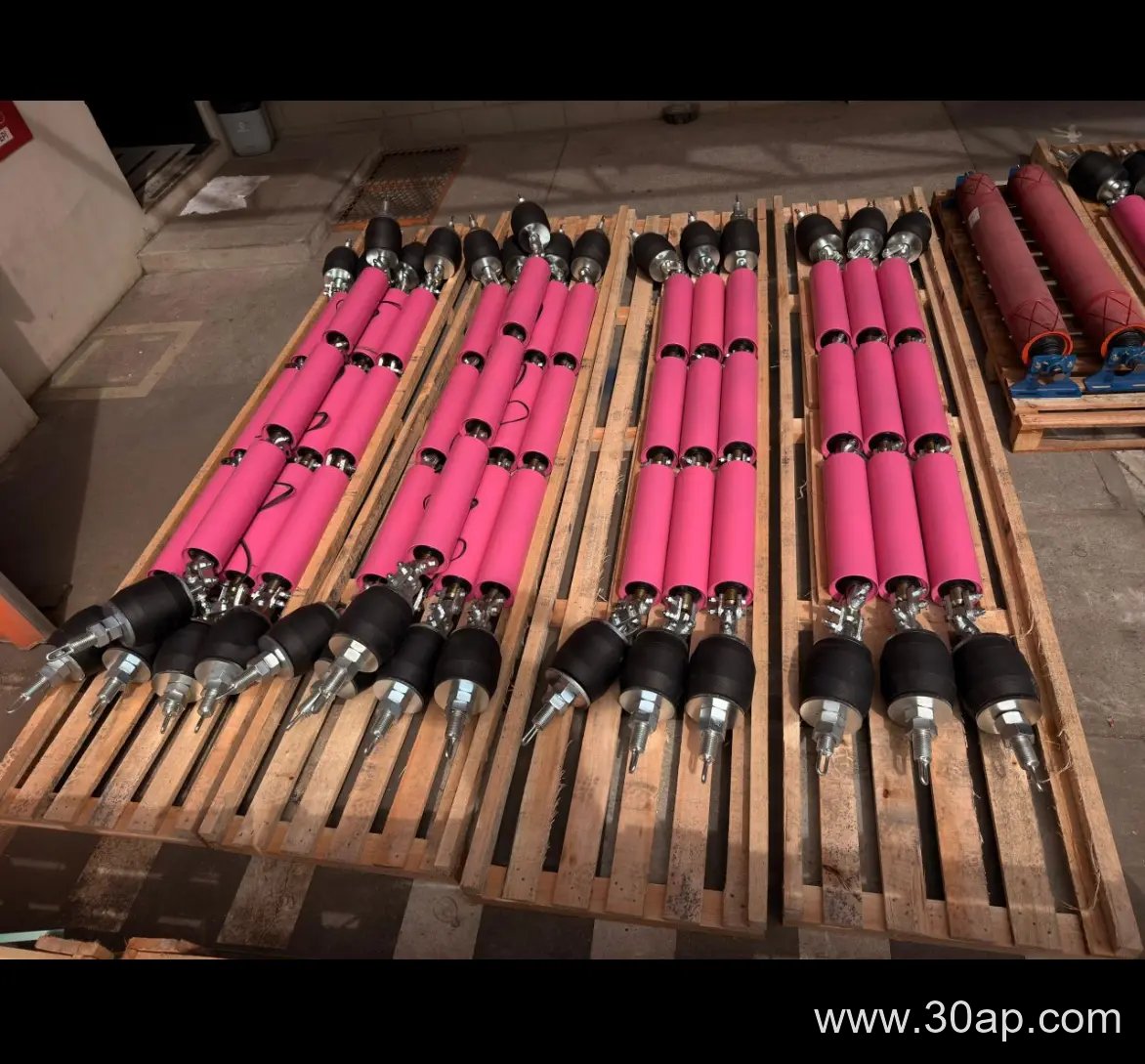
Selection starts with belt width, trough angle and the idler set arrangement. A three-roll troughed station commonly uses side rollers with a cone, while the centre roll stays straight. Roller diameter is chosen from the load and speed, not from belt width alone. The table below shows common reference values for roller diameter, belt width and idler length; actual dimensions depend on the design and should be confirmed with the manufacturer.
| Roller diameter (mm) | Belt width | Typical idler length (mm) |
|---|---|---|
| Ø89 | B500 | 200 |
| Ø102 | B650 | 250 |
| Ø108 | B800 | 315 |
| Ø127 | B1000 | 380 |
| Ø133 | B1200 | 465 |
| Ø159 | B1400 | 530 |
| Ø178 | B1600 | 600 |
| Ø194 | B1800 | 670 |
| Ø219 | B2000 | 750 |
Trough angles are usually 20, 30, 35 or 45 degrees. A forward tilt of about 1.5 to 2 degrees is sometimes used on training idlers, but it should be specified only when the belt needs that extra steering force. The shell may be plain steel, nylon, rubber ring or ceramic, depending on whether the priority is grip, wear life or material build-up.
What Buyers Should Check
- Confirm the belt width and the idler set form before ordering; a side roller and a centre roller can have different lengths.
- Check the roller diameter against the load and speed, and do not assume one belt width fixes one shaft diameter.
- Ask about bearing size, seal type and lubrication, since these determine service life in dusty or wet conditions.
- Verify the mounting brackets, shaft ends and taper direction so the roller steers the belt the right way.
- Keep spare rollers for the most heavily loaded stations, where wear is fastest.
A tapered idler is a small component, but on a long conveyor it can decide whether the belt runs true or keeps rubbing the structure. Choosing the right cone, diameter and bracket for the job is more useful than treating any single size as a universal answer.