What a Wear-Resistant Idler Is
A wear-resistant idler is a conveyor idler roller built to hold its shape and surface over a long service life when the belt carries sharp, heavy or abrasive bulk material. On a belt conveyor, the idler roller supports the conveyor belt, sets its trough profile and keeps the load moving with low rolling resistance. In a quarry, a coal preparation plant or a cement kiln feed line, ordinary idlers can wear thin on the shell, seize at the bearing or lose their roundness. A wear-resistant idler addresses that wear from the shell inward.
How the Roller Is Built
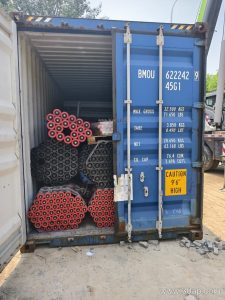
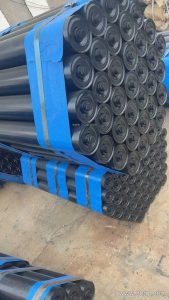
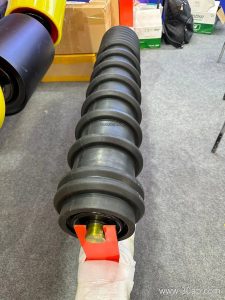
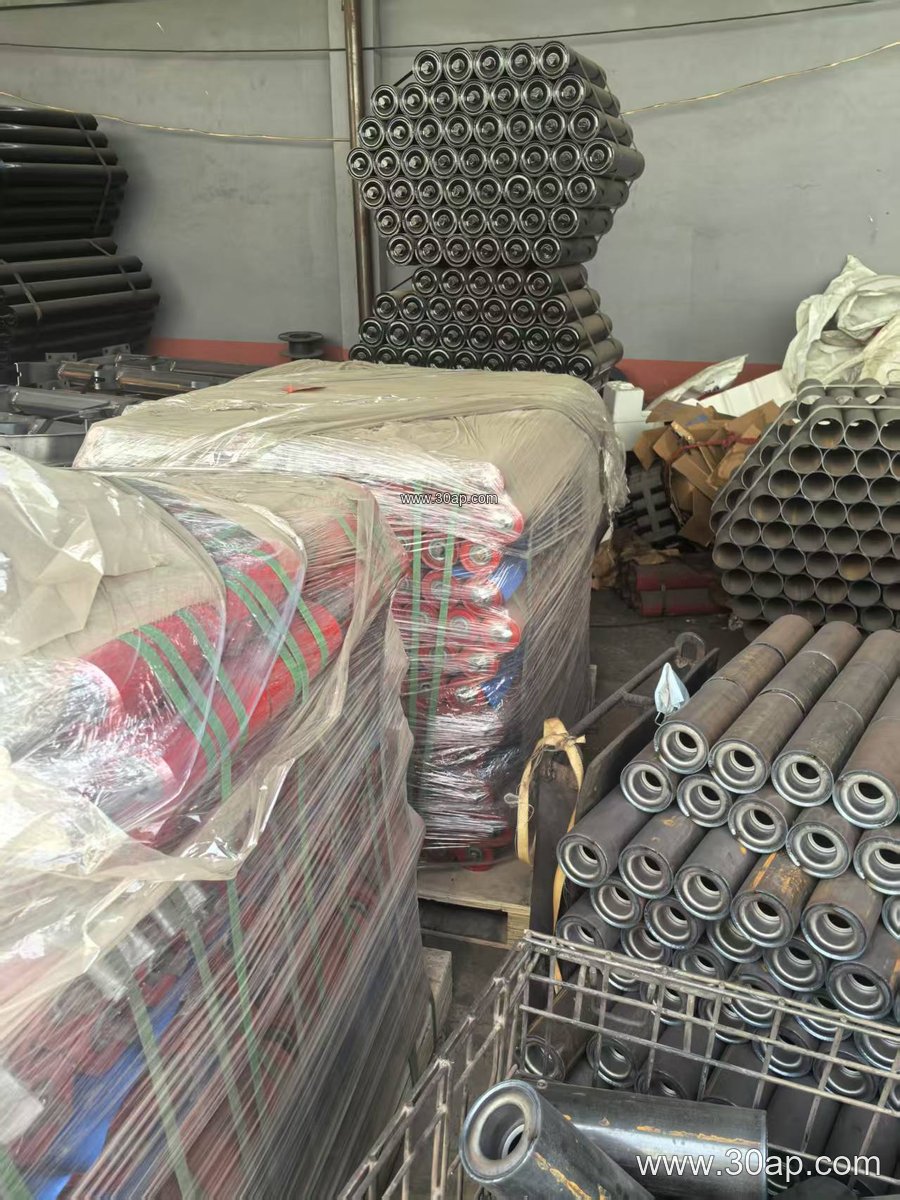
The shell is usually a steel tube, and wear protection comes from thickness, surface treatment or a covering. Common roller surfaces include plain steel, nylon, ceramic and rubber rings. Rubber ring idlers, also used as impact idlers, soften the drop point under a crusher or transfer chute; ceramic-faced rollers resist sliding abrasion from grit and fines. Bearing selection matters as much as the tube. Common bearing numbers are 6204, 6205, 6305, 6306, 6308 and 6310, but no single bearing is tied to one roller diameter. Sealing is the quiet factor in wear life: a good labyrinth seal keeps dust out of the bearing cavity, so the roller turns freely instead of skidding and flat-spotting.
Sizes and Trough Forms
Roller diameter, length and trough angle are selected together with belt width, belt speed and material load. The table below shows typical reference ranges; each value is a common example, not a fixed match.
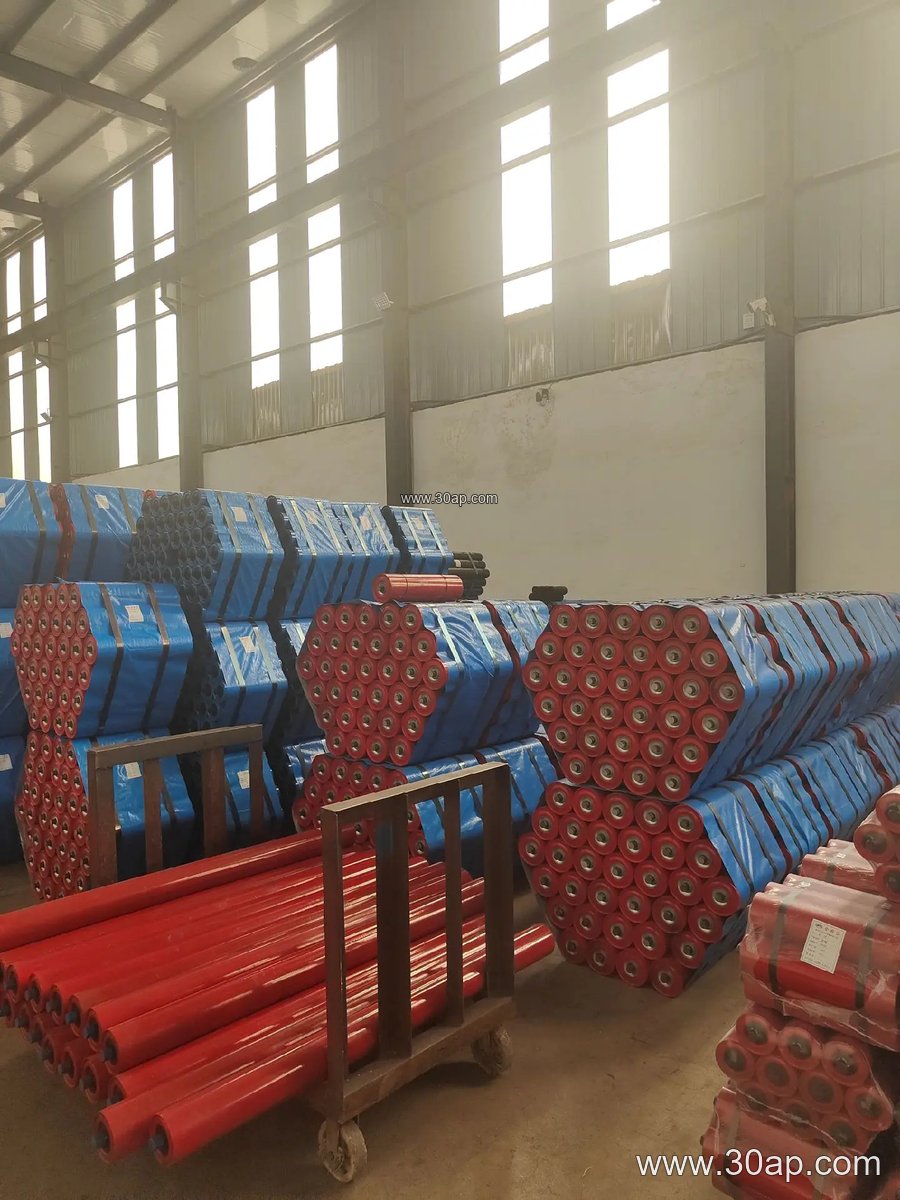
- Roller diameter: Ø63, Ø76, Ø89, Ø102, Ø108, Ø127, Ø133, Ø159, Ø178, Ø194, Ø219 mm
- Belt width: B400 to B2400, including B650, B800, B1000, B1200, B1400 and B1600
- Trough angle: 20, 30, 35 or 45 degrees
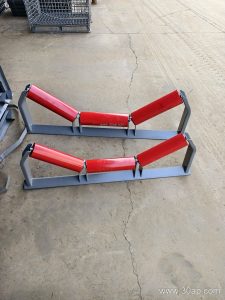
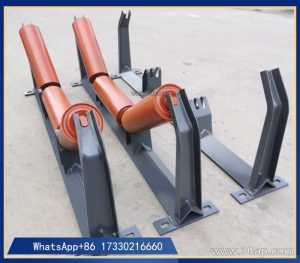
- Idler set: single roller, two-roller or three-roller troughing
- Bearing: 6204, 6205, 6305, 6306, 6308, 6310 as design requires
For a three-roller troughing set, a B800 belt often uses a roller length near 315 mm, a B1000 belt near 380 mm and a B1200 belt near 465 mm. These are common starting points for design; side rollers and centre rollers may differ. The trough angle also changes how the belt and the load sit: a 35-degree trough holds bulk material more centrally than a 20-degree profile, which is why abrasive ore and coal lines usually favour a deeper trough.
Where It Fits on the Conveyor
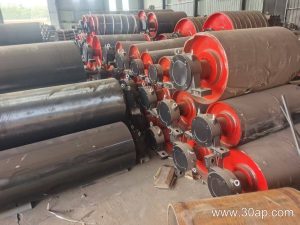
Wear-resistant idlers are used on the carrying side, particularly at load points and along sections that handle hard rock, sinter, clinker or aggregate. They also suit the return side where fines cling to the belt. A typical installation uses troughing idlers on the top run and V-return or flat return idlers underneath. Impact zones may use rubber ring cushioning rollers, while self-aligning idlers, including friction and tapered types, correct belt drift on long runs. Drive pulleys, tail pulleys and bend pulleys are separate components and are not interchangeable with idlers; they transmit or redirect belt tension rather than support the load.
Buyer Checklist
Start with the material: particle size, moisture, temperature and abrasiveness decide whether a steel, nylon, ceramic or rubber-surfaced roller is appropriate. Check the conveyor belt type and tension, since a heavy-duty mining conveyor belt or steel cord conveyor belt loads the idlers differently from a light fabric core belt. Confirm the bracket and frame dimensions, the shaft ends and the sealing arrangement. Ask how the roller is balanced and whether the bearing housing is protected against water and dust. Spare parts planning should cover the most heavily loaded positions first, because those wear fastest.
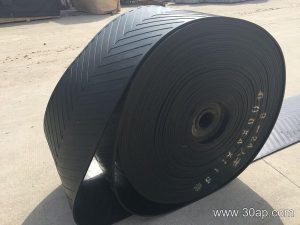
Related components such as the conveyor pulley, conveyor bracket and conveyor belt should be reviewed as one system. On abrasive lines, an abrasion resistant conveyor belt paired with correctly sized wear-resistant idlers reduces belt edge damage and tracking problems.
Maintenance Notes
Inspect idlers at load points and at every transfer chute. A worn shell, a noisy bearing or a roller that no longer turns freely should be replaced before it damages the belt cover. Keep the return side clean, check alignment after any frame repair, and record roller diameter and bearing size so replacements match the original design. For more detail on compatible belting and conveyor components, visit www.morningbelt.com and www.morningbelt.com/wear-resistant-idler.