What the Tail Pulley Does on a Belt Conveyor
The belt conveyor tail pulley sits at the return end of the conveyor, opposite the drive. Its main job is to close the belt loop and turn the conveyor belt back toward the carrying side. On many installations it also carries the tensioning function, which is why the same component is often called the take-up pulley or tension pulley when it is mounted on a sliding frame or a screw take-up. It is not a drive pulley: the drive transmits torque, while the tail pulley mainly guides and tensions. It is also not the same as a bend pulley, which redirects the belt somewhere along the route without closing the loop.
Because of this position, the tail pulley has a strong influence on belt tracking and on how evenly tension is distributed across the belt width. A poorly aligned tail pulley can cause the belt to drift, rub the structure, and wear the edges long before the belt reaches the end of its service life.
Construction and Main Components
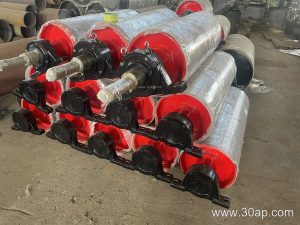
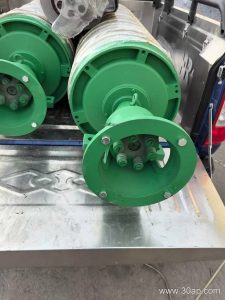
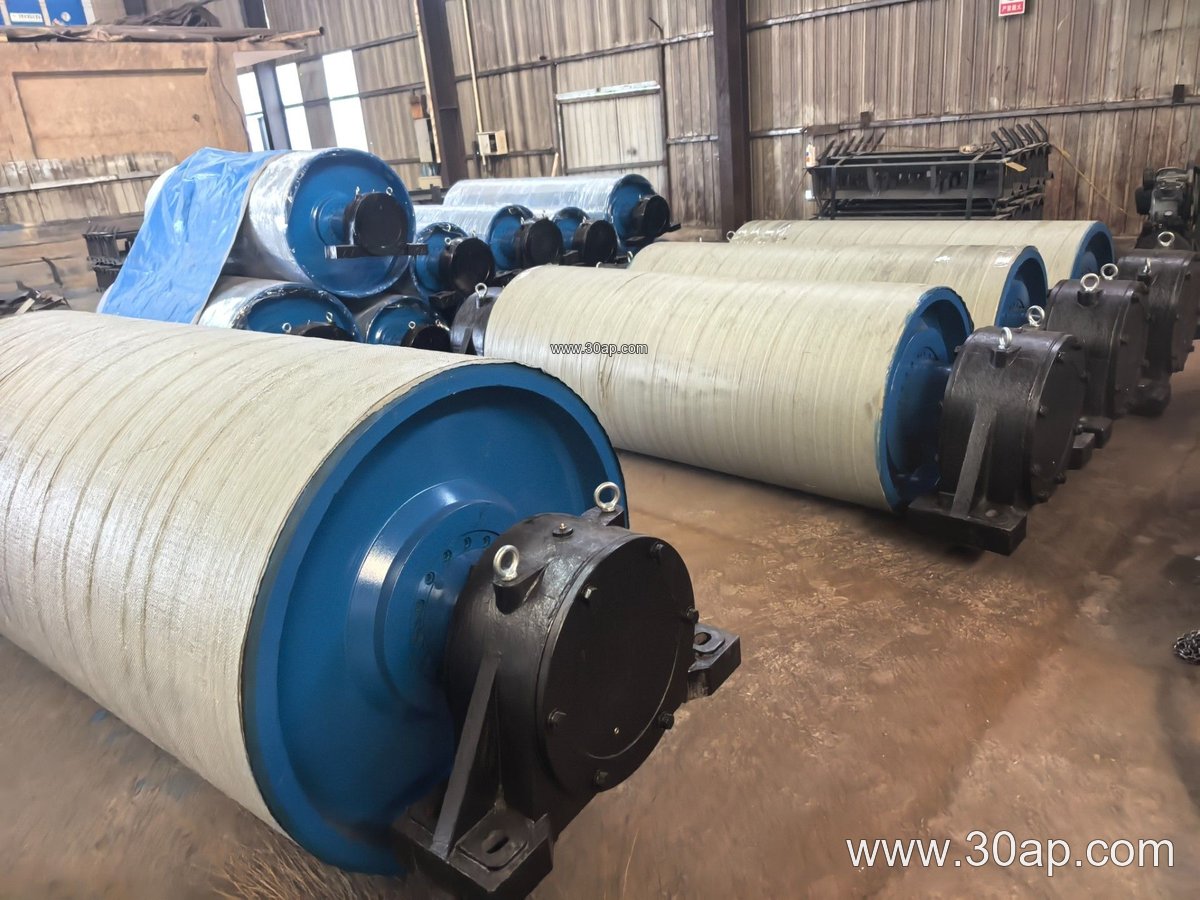
A typical belt conveyor tail pulley is built around a welded steel shell, with end discs, a shaft, bearing housings, and a locking assembly or keyed connection. Many designs use a crowned face to help center the belt, while others are supplied flat for specific tensioning arrangements. The pulley is usually supported by pillow block bearings mounted on a take-up carriage or on fixed conveyor brackets at the tail end.
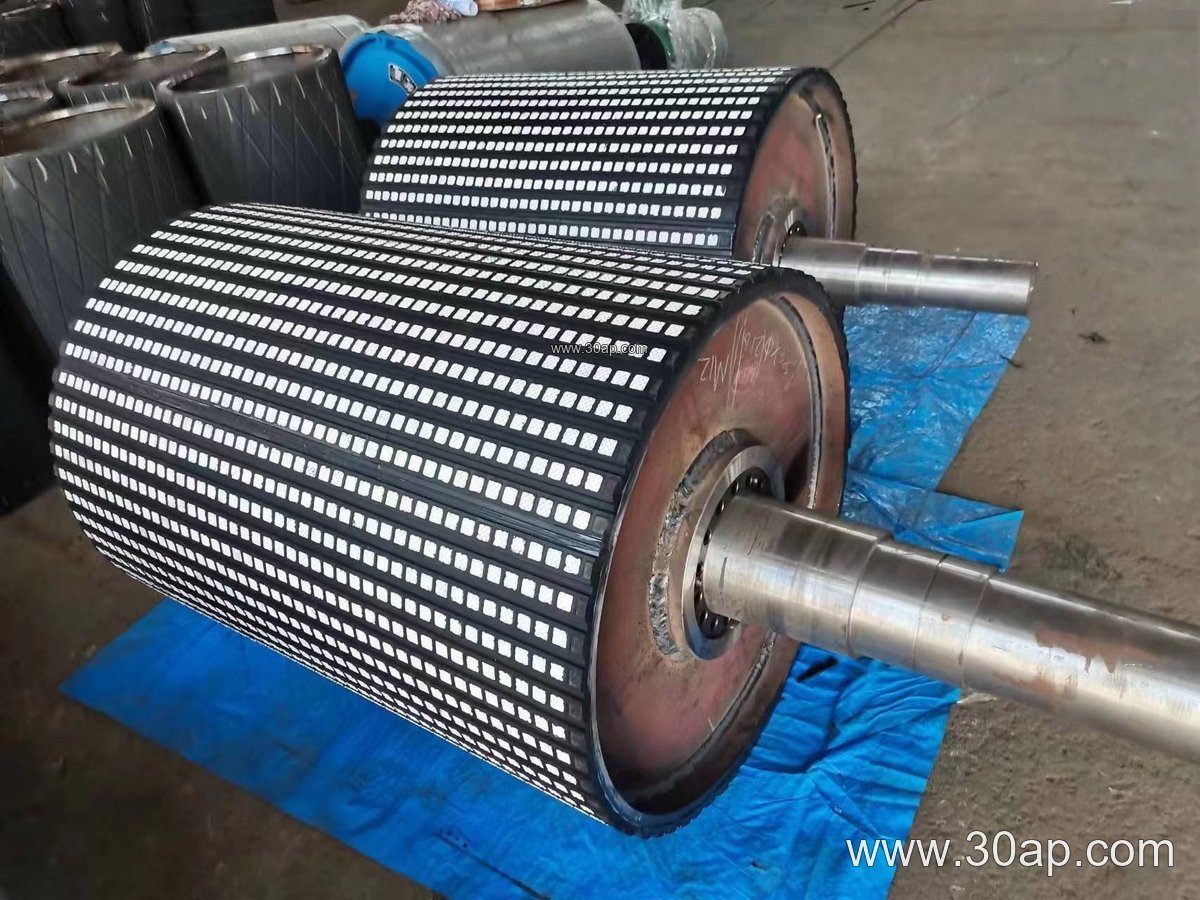
Surface treatment matters in dusty and wet conditions. A plain finish is common in clean applications, while rubber lagging improves grip and protects the shell from abrasive material that collects near the tail. Diamond or herringbone lagging is sometimes specified where slip and tracking need extra help, though on a tail pulley the priority is usually wear protection rather than torque transmission.
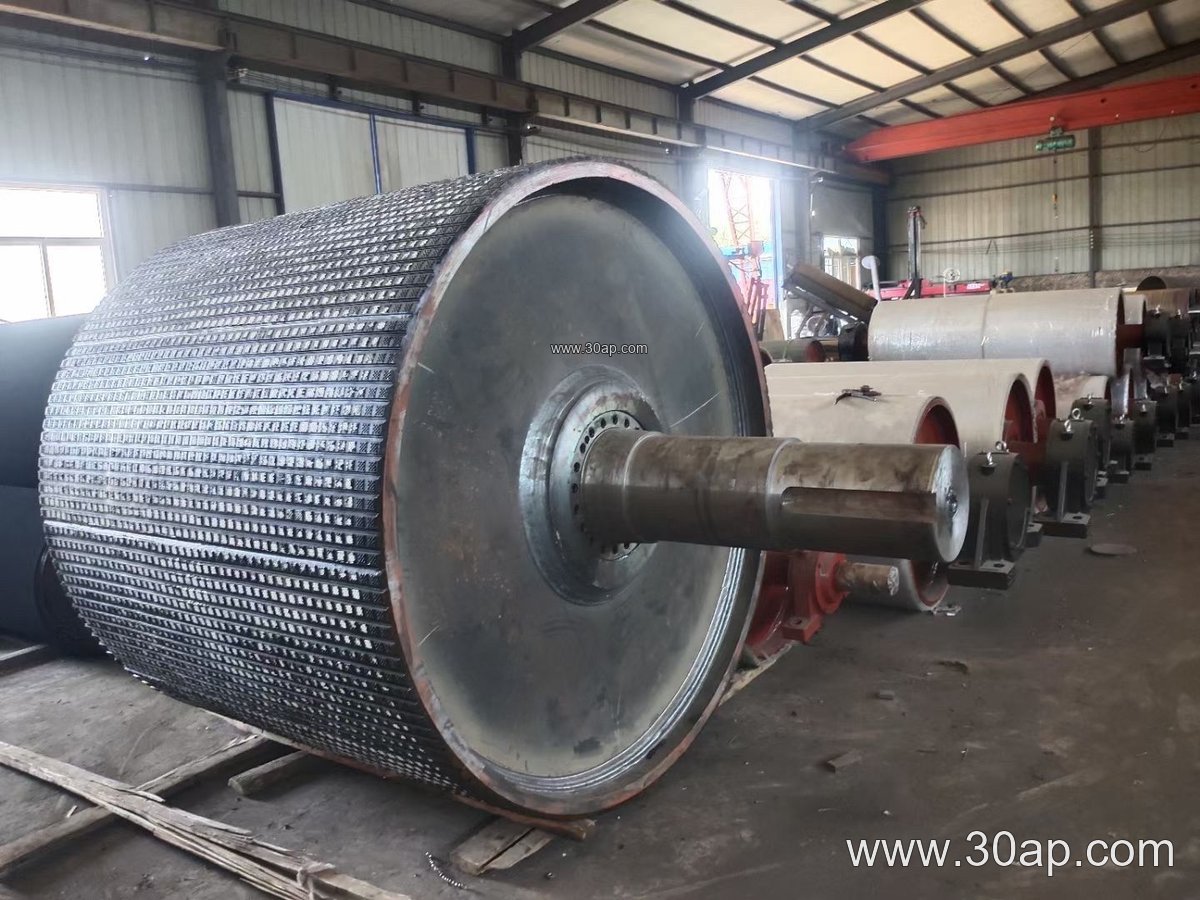
- Shell and end discs welded and machined for balance
- Shaft sized by torque and load, not by belt width alone
- Bearing housings with seals suited to dust and moisture
- Optional lagging: plain rubber, diamond, or ceramic
- Take-up frame or fixed mounting with adjustment travel
Where It Is Used
The tail end appears in almost every bulk handling line. In a quarry or sand and aggregate plant, the tail pulley of a transfer conveyor often works in a wet, gritty environment, so abrasion-resistant lagging and well-sealed bearings are worth considering. In a coal preparation plant or a power plant coal yard, flame-retardant and anti-static requirements usually extend to the whole conveyor system, including the belt and the components around it. Similar arrangements appear in cement plants, lime kilns, fertilizer handling, and tunnel spoil removal.
When the conveyor uses a heavy-duty mining conveyor belt or a steel cord conveyor belt, the tail pulley must be sized for the higher tension and the thicker belt. For long overland lines with a pipe conveyor belt or a corrugated sidewall belt, the tail geometry may need more careful review because the belt cannot be guided in the same way as a flat fabric belt.
Common Dimensions and How They Pair
Tail pulleys are usually described by belt width, shell diameter, face width, shaft diameter, and lagging type. The table below shows common reference values; actual selection depends on belt tension, speed, and the take-up design.
| Belt width | Typical pulley face width | Common shell diameters |
|---|---|---|
| B500 | about 600 mm | Ø250 to Ø400 |
| B650 | about 750 mm | Ø315 to Ø500 |
| B800 | about 950 mm | Ø400 to Ø630 |
| B1000 | about 1150 mm | Ø500 to Ø800 |
| B1200 | about 1400 mm | Ø630 to Ø1000 |
| B1400 | about 1600 mm | Ø800 to Ø1250 |
| B1600 | about 1800 mm | Ø800 to Ø1400 |
| B1800 | about 2000 mm | Ø1000 to Ø1600 |
These are reference ranges, not fixed pairings. A B1200 conveyor may run a Ø1000 tail pulley on one line and a smaller diameter on another, depending on belt speed and available space. Shaft diameter is determined by torque and bearing load; common values range from Ø50 to Ø200, but no single shaft size should be assumed from belt width alone.
Buyer Checklist
Before ordering, confirm the belt width, the belt type, and the take-up travel. A conveyor carrying an EP conveyor belt at moderate tension has different requirements from one running a thick abrasion resistant conveyor belt in a primary crusher discharge. Ask for the lagging thickness if rubber is specified; 8, 10, 12, 15, and 20 mm are common. Check whether the pulley needs a crowned or flat face, and whether the bearings must suit a dusty or wash-down environment.
It also helps to review the whole tail assembly, not just the pulley. The conveyor bracket, the slide rails, and the tensioning screws all affect alignment. On site, keep the tail area clear of spilled material, check lagging wear during shutdowns, and verify that the belt runs centered after any take-up adjustment. For more on compatible conveyor components, see conveyor pulley and idler roller references used across bulk handling lines.