What a Fixed Conveyor Bracket Does on a Belt Line
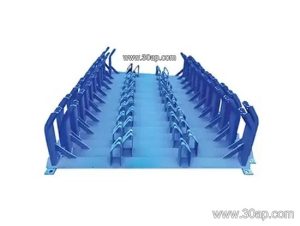
A fixed conveyor bracket is the stationary support that holds idler rollers at a set position along a conveyor frame. Unlike an adjustable bracket, which lets maintenance staff change the trough angle or roller height, the fixed version is built to one geometry and stays there. That makes it a good fit for lines where the belt path is already settled and repeatability matters more than field flexibility. You will see these brackets in quarry conveying, cement plant clinker lines, power plant coal handling, and aggregate plants feeding a crusher conveyor belt.
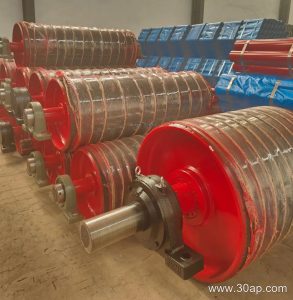
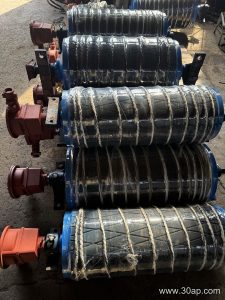
The bracket is not a pulley and should not be confused with one. Drive pulleys, tail pulleys and bend pulleys transmit motion and change belt direction; the bracket simply carries the idler roller and, through it, the belt and the load. Getting that distinction right matters when you order spare parts.
How the Bracket Is Built
Most fixed brackets are fabricated from angle steel, channel steel, or folded steel plate. The frame is drilled or slotted to match the mounting holes on the conveyor stringer, and the roller seats are positioned to hold a specific trough angle. Common materials are mild steel with a painted or galvanized finish; heavier duty versions use thicker section steel for high tonnage lines.
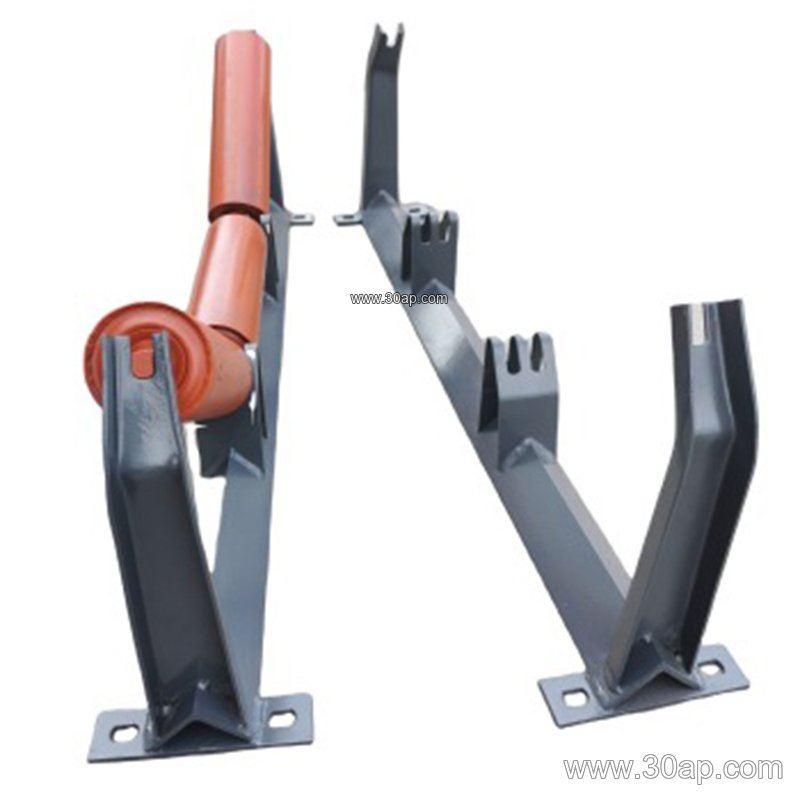
A typical assembly includes:
- Two side arms or a one-piece bent frame
- Roller cradle seats sized for the shaft of the idler roller
- Mounting holes for bolting to the stringer or cross beam
- Optional gussets or stiffeners on wide belt applications
Because the geometry is fixed at manufacture, the bracket must be ordered against the actual belt width, trough angle, and roller diameter. Hole spacing and cross beam length usually change with belt width and trough angle, so these are design values rather than universal numbers.
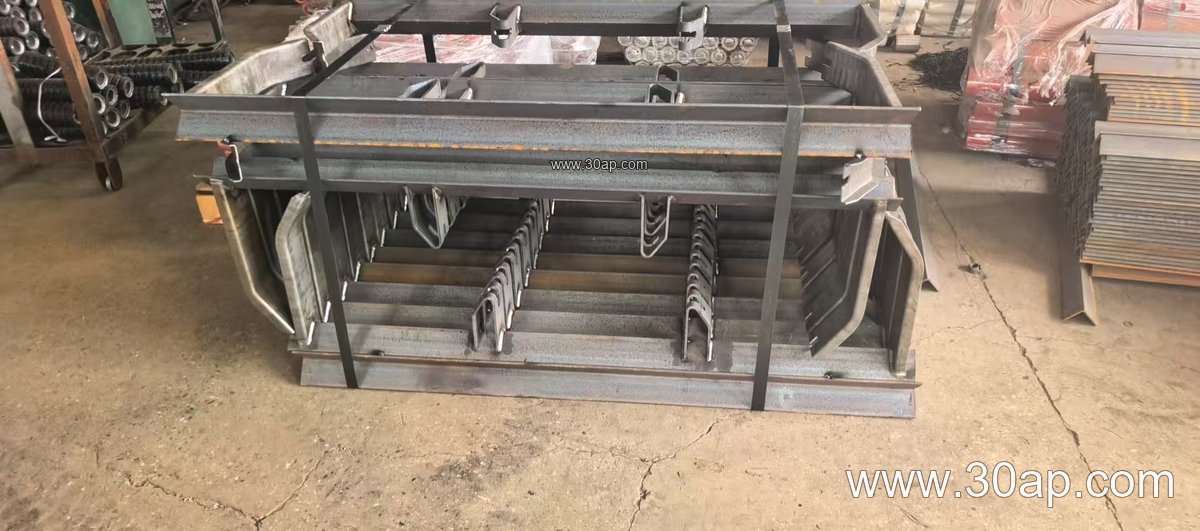
Matching Bracket to Belt Width, Trough Angle and Roller Diameter
Buyers usually specify three things together: belt width, trough angle, and roller diameter. Reference combinations such as B800 with 35 degrees and Ø108, B1200 with 45 degrees and Ø133, or B650 with 30 degrees and Ø89 are useful starting points, but they are examples, not rules. A single belt width can be paired with more than one trough angle, and roller diameter follows load and belt speed rather than width alone.
The table below shows common reference ranges. Treat them as guidance for inquiry, not as a fixed supply promise.
| Parameter | Common reference values | Notes |
|---|---|---|
| Belt width | B500, B650, B800, B1000, B1200, B1400, B1600, B1800, B2000, B2200 | Bracket length and hole spacing follow the selected width |
| Trough angle | 20°, 30°, 35°, 45° | Fixed at build; adjustable types cover several angles |
| Roller diameter | Ø89, Ø108, Ø133, Ø159, Ø194 | Chosen by load, belt speed and idler series |
| Forward tilt | About 1.5° to 2° | Used on forward-tilt brackets for belt training |
For a wide, heavy line carrying iron ore or copper ore, a B1400 or B1600 frame with 35° or 45° trough and Ø159 rollers is a realistic direction. For a smaller sand and gravel line, B650 with 30° and Ø89 may be enough. The point is to size the bracket to the duty, not to copy a neighbour’s specification.
Where Fixed Brackets Are Used
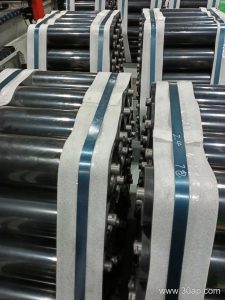
These brackets appear wherever the conveyor profile is stable. In a coal mining conveyor belt system, fixed trough brackets hold the carrying idlers on the main run, while V-return brackets support the return strand. In a limestone quarry or stone crushing plant, fixed brackets are common on transfer and stockpile conveyors that rarely need adjustment. Cement plants use them on clinker and raw meal lines, and port bulk terminals use them on ship loading conveyors where the belt path is engineered once and left alone.
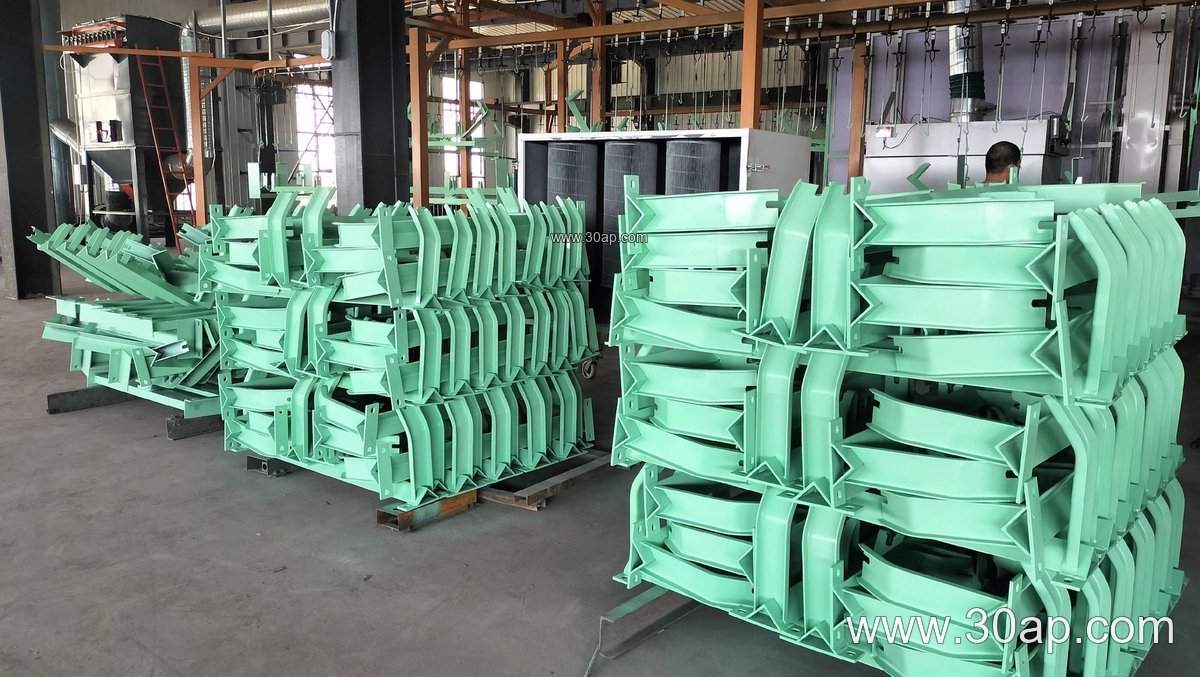
They work alongside the belt, the idler roller, and the pulleys. A well-aligned bracket set helps the belt track straight, which in turn reduces edge wear on an abrasion resistant conveyor belt or a heat resistant conveyor belt running near a kiln.
Fixed versus Adjustable and Other Bracket Types
The main comparison is with the adjustable bracket, which allows the trough angle to be changed between, say, 20° and 45° on site. Fixed brackets are simpler and usually stiffer, but they cannot be re-tuned without replacement. Other subtypes serve different jobs: transition brackets ease the belt from flat to troughed, impact brackets sit under loading points with cushion rollers, and self-aligning brackets correct minor mistracking. None of these replaces the fixed bracket on a standard carrying run; they complement it.
Buyer Checklist
- Confirm belt width and the trough angle already used on the line
- State the idler roller diameter and shaft end type
- Give the stringer or cross beam hole spacing, or ask for a drawing check
- Specify finish and steel section for dusty or wet conditions
- Order brackets as a set per station so alignment stays consistent
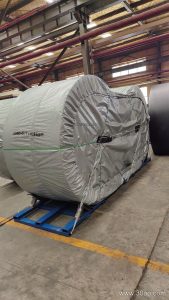
For matching belts and rollers, buyers often review options such as EP conveyor belt, steel cord conveyor belt, and flame retardant conveyor belt at conveyor-bracket.com before finalizing the frame drawing. A short drawing review at the order stage prevents most installation problems later.