What an EP Fabric Core Conveyor Belt Is
An EP Fabric Core Conveyor Belt is a rubber conveyor belt built around a carcass of polyester warp yarns and polyamide weft yarns, commonly called EP fabric. The carcass gives the belt its tensile strength and troughability, while the rubber covers protect the fabric from abrasion, moisture, and the material being carried. It is a fabric core conveyor belt rather than a steel cord design, which makes it a practical choice for many bulk handling lines where moderate to high strength is needed without the stiffness of steel cord reinforcement.
The same product is also described as an EP conveyor belt or EP rubber conveyor belt. These are accurate short names for the same construction. The EP fabric core sits at the center of the design, and buyers should treat the strength class, ply count, cover grade, and width as a package rather than separate choices.
How the Carcass and Covers Are Built
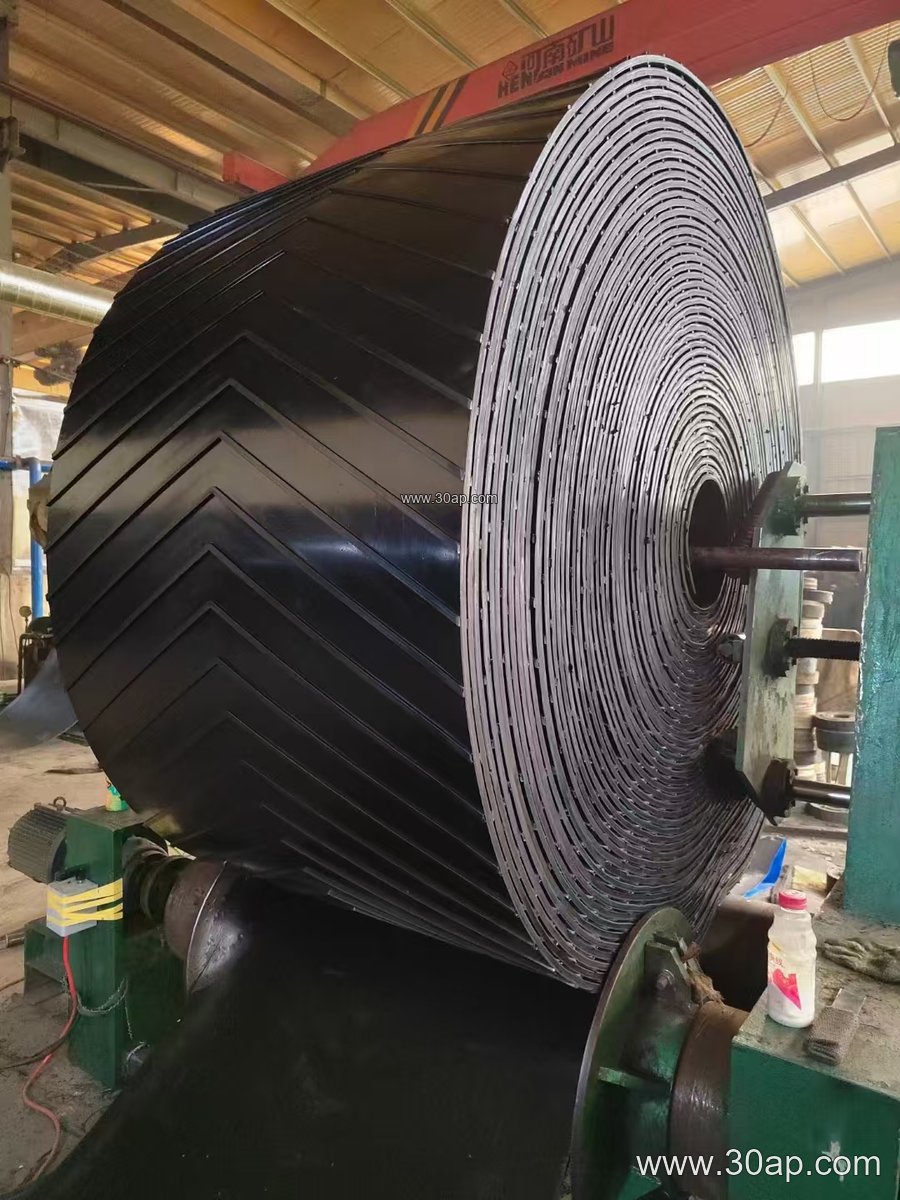
The carcass usually contains several plies of EP fabric bonded together with rubber skim compound. A typical multi-ply fabric core conveyor belt may use two to six plies depending on the required strength and the duty on the line. Higher strength classes such as EP1000 or EP1250 are often associated with more plies or heavier fabric, but the exact build is set by the manufacturer and the application.
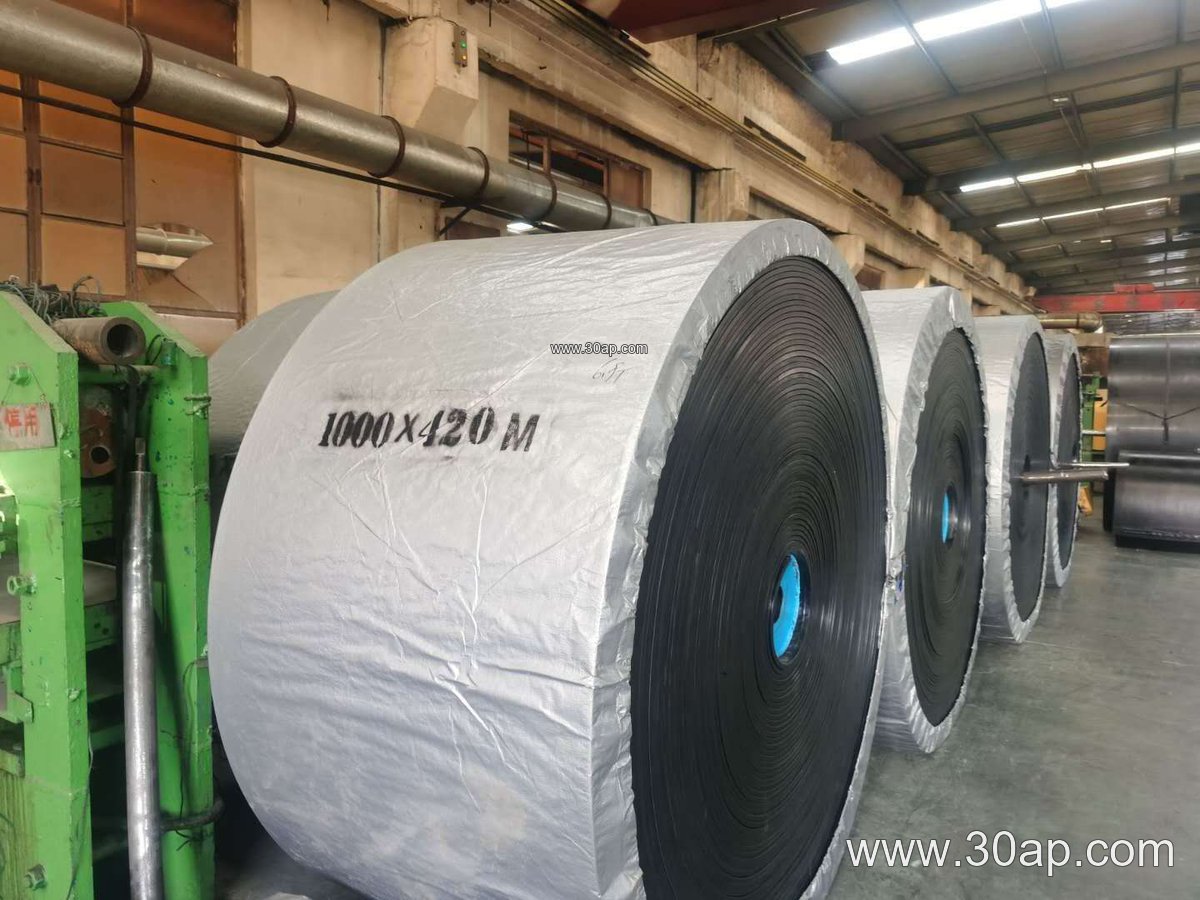
Top and bottom covers are applied over the carcass. Common cover combinations include 3+1.5 mm, 4+2 mm, 5+2 mm, 6+2 mm, and 8+3 mm. The first number is normally the top cover, which faces the material, and the second is the bottom cover, which runs over the idler roller and conveyor pulley. For abrasive stone or ore, a thicker top cover helps, while a thinner bottom cover may be adequate on clean, well-aligned runs.
Typical Strength Classes and Widths
EP fabric core belts are commonly offered in strength classes from EP200 up to EP2000. The class number relates to the nominal tensile strength of the carcass. Standard widths usually run from B500 up to B2000, with B650, B800, B1000, B1200, B1400, and B1600 being common on aggregate and cement lines. Width alone does not determine pulley diameter or shaft size; those values come from the conveyor design, belt tension, and pulley loading.
| Property | Common Reference |
|---|---|
| Strength class | EP200 to EP2000 |
| Belt width | B500 to B2000 |
| Ply count | 2 to 6 plies |
| Cover thickness | 3+1.5, 4+2, 5+2, 6+2, 8+3 mm |
These are reference ranges, not fixed supply promises. A quarry conveyor belt or aggregate conveyor belt may use a different combination from a cement plant conveyor belt handling fine powder.
Where the Belt Fits in Bulk Handling
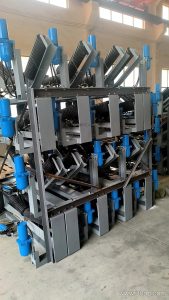
This belt is widely used in mining, coal preparation, cement plants, power plants, sand and gravel yards, and port loading systems. In a mine, the belt may run on a heavy-duty frame with conveyor bracket supports and carry rock or ore toward a crusher. In a cement plant, it may feed clinker or raw meal. In a power plant, it may handle coal. The same belt type can serve as a bulk material conveyor belt in recycling and construction waste lines when the cover compound matches the load.
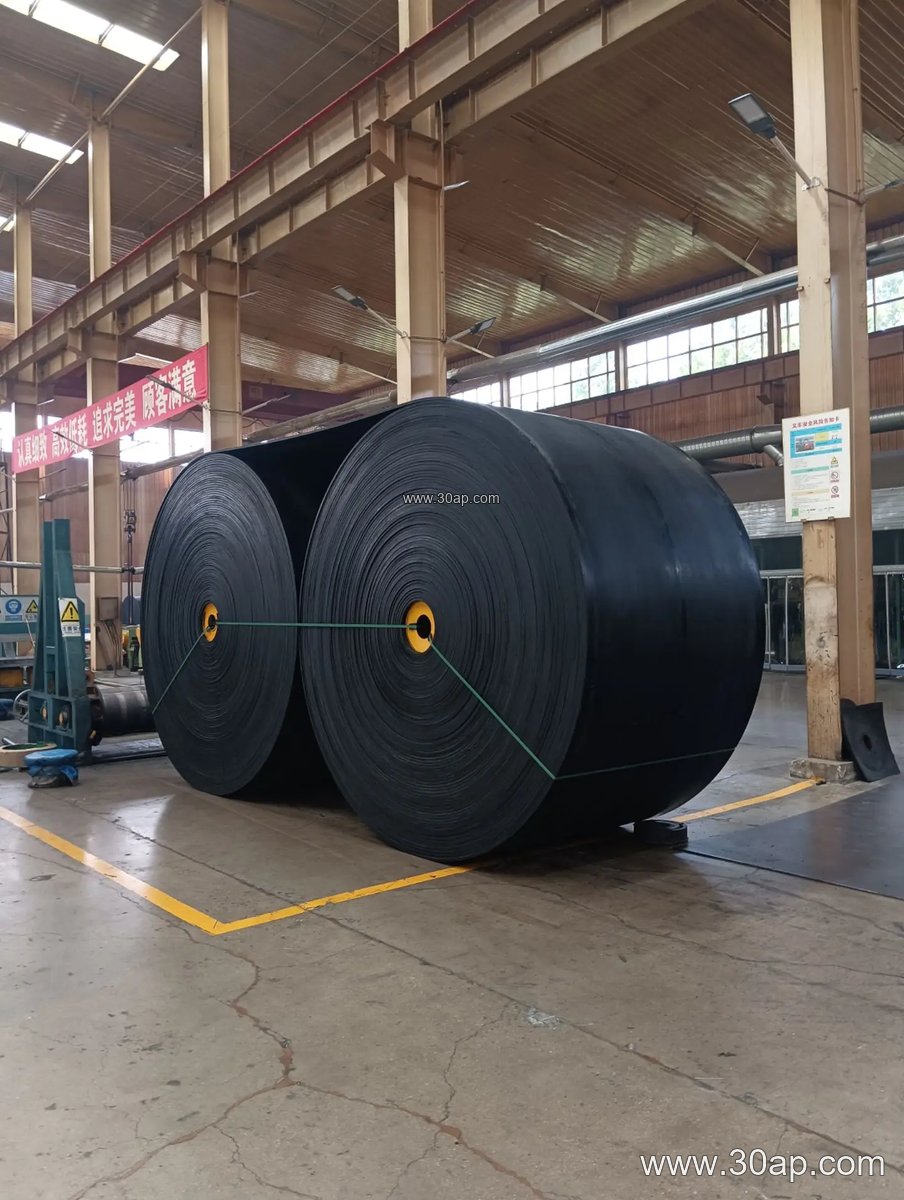
An EP conveyor belt is often compared with an NN conveyor belt, which uses nylon fabric in both directions, and with a steel cord conveyor belt for very long, high-tension runs. The comparison matters because each carcass type has different elongation and splice behavior. For many medium-length lines, the EP fabric core offers a good balance of strength and flexibility.
Cover Grades and Environmental Demands
The rubber cover is selected for the working environment. A flame retardant conveyor belt or fire resistant conveyor belt is common in underground coal mining and other enclosed areas. Heat resistant conveyor belt grades suit hot clinker or sinter, while an abrasion resistant conveyor belt suits sharp stone and ore. Oil resistant, acid resistant, and cold resistant grades are available where the load or climate demands them. Anti-static properties may also be specified for dusty or explosive-risk locations.
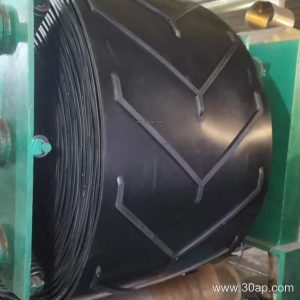
Special surface forms are used for inclined runs. A chevron conveyor belt, skirted conveyor belt, or corrugated sidewall conveyor belt can help retain material on a slope. These are different surface designs, not replacements for the EP fabric core itself.
Buyer Checklist
- Confirm the required strength class, such as EP400, EP630, or EP800, from the conveyor tension calculation.
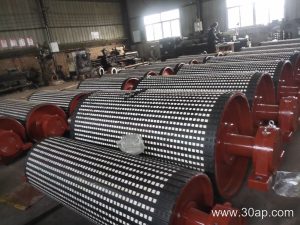
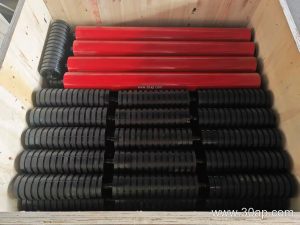
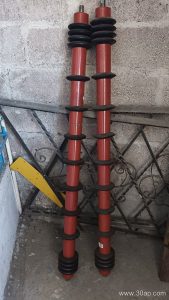
- Match belt width to the existing conveyor frame and check that the idler roller and conveyor pulley are in good condition.
- Choose cover thickness and grade for the material: abrasive rock, hot material, oily scrap, or coal.
- Decide on splice type and confirm that the belt can be installed with the available take-up travel.
- Ask for the manufacturer’s data sheet for the exact EP fabric core conveyor belt rather than relying on a generic table.
A well-matched belt, proper pulley alignment, and regular inspection of rollers and brackets keep a fabric core line running smoothly. Buyers should share the conveyor layout, material type, and operating conditions so the supplier can recommend a suitable construction.