What a Conveyor Belt Support Frame Does
A conveyor belt support frame is the structural element that holds the idler rollers in position along a conveyor line. It carries the weight of the loaded belt, keeps the belt profile stable, and transfers the load into the conveyor stringers or foundations. Without a properly aligned support frame, even a high-quality conveyor belt will track poorly, wear unevenly, and spill material. The frame is a modest component in cost terms, but it determines how well the whole conveyor behaves in daily service.
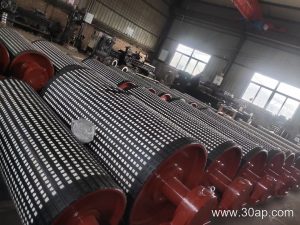
The term is often shortened to belt conveyor support frame or roller support frame. It should not be confused with the pulleys at the ends of the conveyor, such as the drive pulley, tail pulley, or bend pulley, which transmit motion rather than support the belt along its carrying path.
How the Frame Is Built
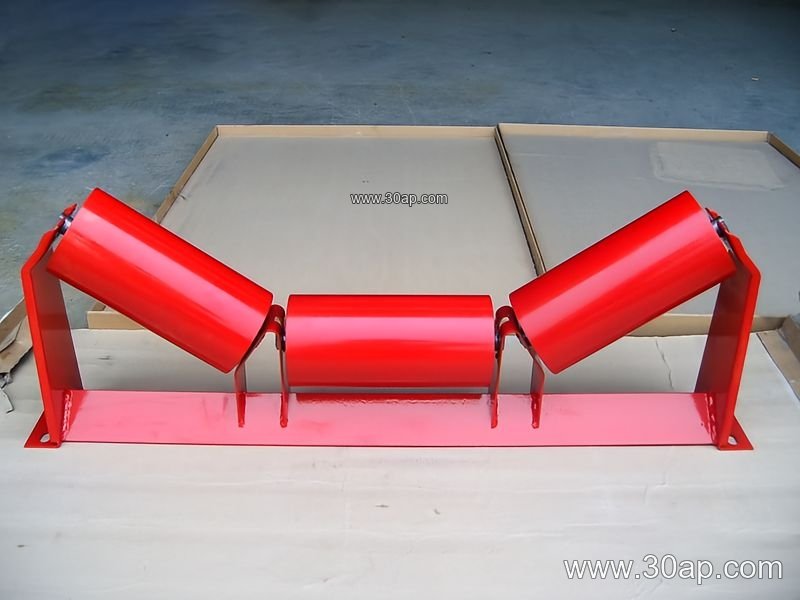
Most support frames are fabricated from angle steel, channel steel, or folded steel plate. The crossbeam length and mounting hole spacing are determined by belt width, trough angle, and the roller diameter specified for the installation. A typical assembly includes the crossbeam, mounting brackets for the idlers, and fixing points to the conveyor structure.
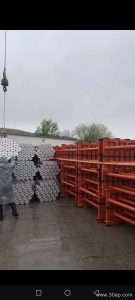
Common forms include troughing frames for the carrying side, transition frames near pulleys, return frames with flat or V-shaped roller arrangements, impact frames under loading points, and self-aligning frames that help correct belt drift. Adjustable frames allow the trough angle to be set within a range, which is useful when a conveyor handles several material types.
Typical Reference Combinations
The values below are common references only. Final dimensions follow the conveyor design and the roller supplier’s drawing.
- B650 with 30 degree trough and Ø89 rollers
- B800 with 35 degree trough and Ø108 rollers
- B1000 with 35 degree trough and Ø133 rollers
- B1200 with 45 degree trough and Ø133 rollers
- B1400 with 35 degree trough and Ø159 rollers
- B1600 to B2000 with 35 to 45 degree trough and Ø159 to Ø194 rollers
Adjustable frames usually cover 20, 30, 35, and 45 degree trough angles, while forward-leaning frames often use about 1.5 to 2 degrees of lead to assist belt centering. None of these figures should be treated as fixed pairings, since a single belt width can be combined with different trough angles and roller diameters depending on load and speed.
Where Support Frames Are Used
These frames appear wherever a belt conveyor moves bulk material. In a limestone quarry or sand and gravel line, troughing and impact frames handle abrasive rock at the loading point. In a coal preparation plant or power station coal yard, flame retardant and anti-static belts run on frames that must stay aligned through long galleries. Cement plants use them on clinker and raw meal lines, while port terminals and ship loading systems rely on heavy frames for high-tonnage conveying.
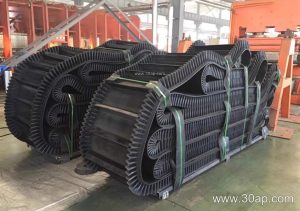
In all these settings, the support frame works together with the conveyor belt, idler roller, and conveyor pulley. A steel cord conveyor belt or a multi-ply fabric core belt may need different roller spacing, and the frame layout should follow that spacing rather than a generic rule.
Selection Points for Buyers
Start with belt width, trough angle, and roller diameter, then confirm the mounting hole spacing and crossbeam length with the conveyor drawing. Check the material thickness and finish against the environment: dusty quarries, wet coal handling, and corrosive fertilizer plants each place different demands on the frame. For a conveyor bracket that sits under a loading chute, impact-resistant frames with cushion rollers are usually worth considering.
Ask whether the frame is fixed or adjustable, how it connects to the stringer, and whether it matches the roller brand already in use. Buyers comparing quotations should also confirm that the frame is designed for the actual belt, whether that is an abrasion resistant conveyor belt, a heat resistant conveyor belt, or a pipe conveyor belt with a different support geometry.
Installation and Maintenance Notes
Alignment matters more than brute strength. Frames should be set square to the conveyor centerline and at a consistent height so the belt sits evenly on every roller. Check bolt tightness after the first weeks of operation, inspect for bent crossbeams after impact events, and replace damaged frames before they cause belt edge damage. Keeping frames clean and correctly adjusted extends the life of the belt and the idler roller set alike.