What the drive pulley does on a conveyor
The belt conveyor drive pulley is the drum that turns the conveyor belt and moves the load. It is the powered pulley, usually at the head end of the conveyor, and it transmits torque from the gearbox or motor to the belt through friction between the pulley surface and the belt’s bottom cover. In a typical aggregates or ore handling line, this single component decides how much of the motor’s power actually reaches the belt, so its diameter, lagging and shaft design matter as much as the belt itself.
Do not confuse it with the tail pulley or a bend pulley. A tail pulley returns the belt at the loading end, and a bend pulley changes belt direction or adds wrap angle. They are different components with different duties, and they are not interchangeable with the drive drum.
How a drive pulley is built
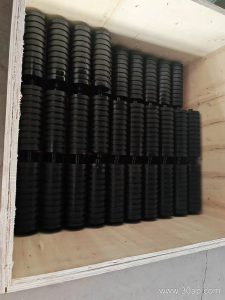
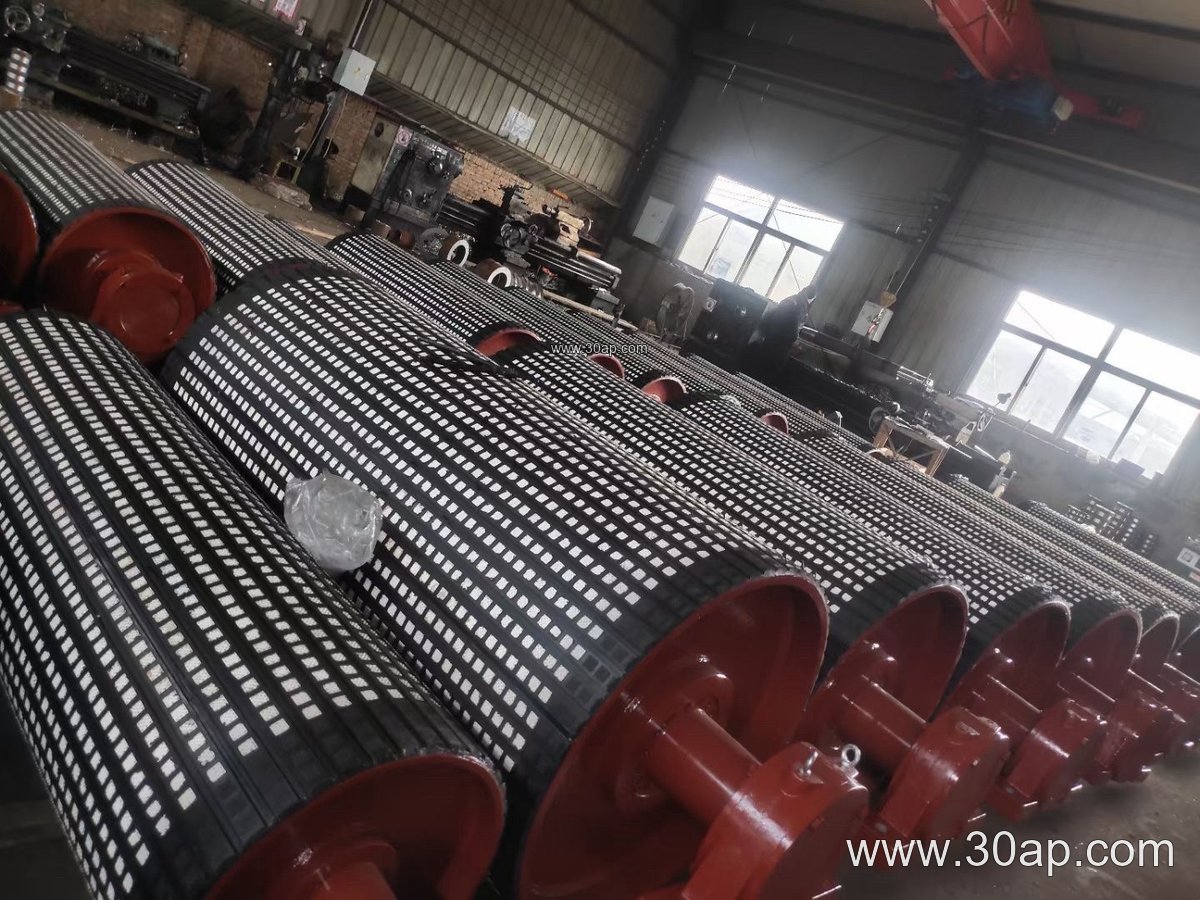
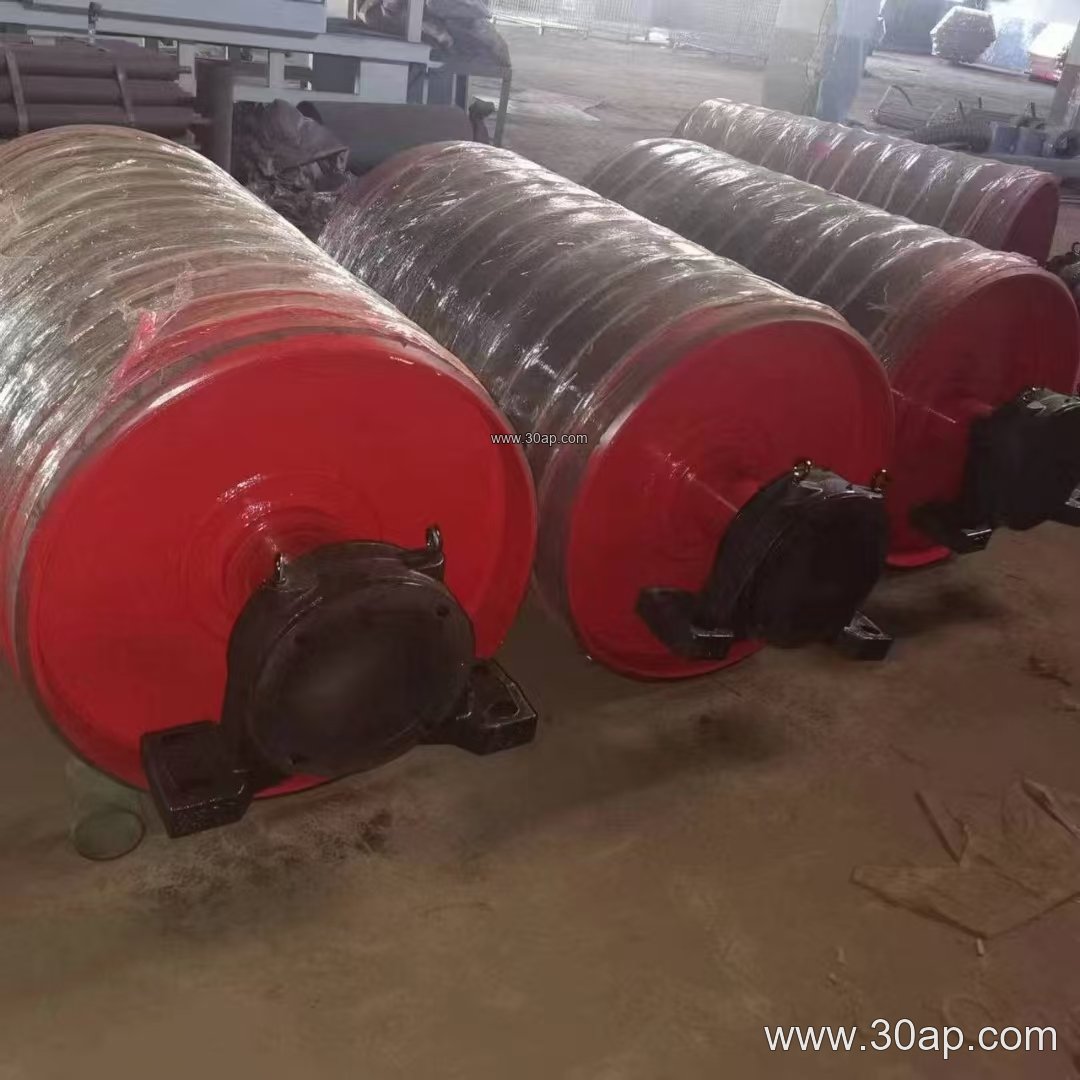
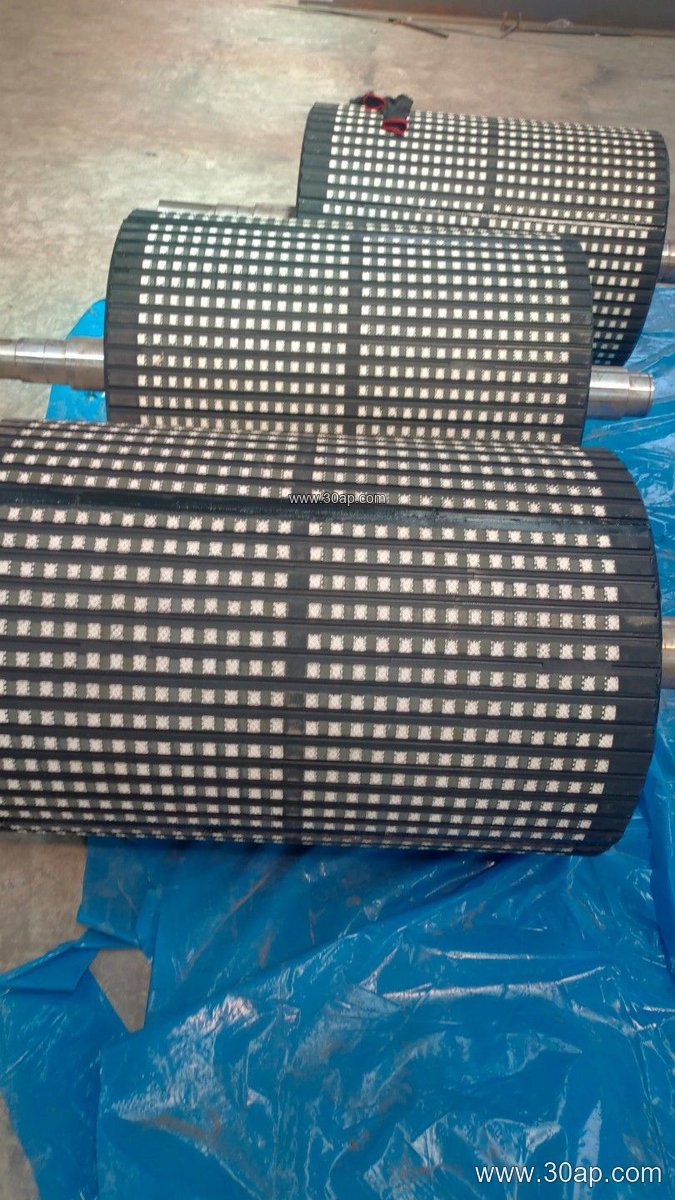
A belt conveyor drive pulley usually consists of a cylindrical shell, two end discs, a shaft, and hub connections. The shell is often rolled steel; the shaft is keyed or shrink-fitted to the hubs. Larger units may use a welded or cast construction. The surface can be plain, or covered with rubber lagging applied by hot vulcanizing, cold bonding, or cast-on processes. Diamond and herringbone grooves improve grip in wet or dusty conditions, while ceramic lagging is chosen where slip and wear are severe.
Common diameters run from Ø200 up to Ø1800, and face widths are normally a little wider than the belt. For example, a B800 belt is often matched with a pulley face around 950 mm, and a B1200 belt with roughly 1400 mm. These are typical references, not fixed rules: the final diameter depends on belt tension, wrap angle and torque, and shaft diameter is determined by load and torque rather than by belt width alone.
Where it is used
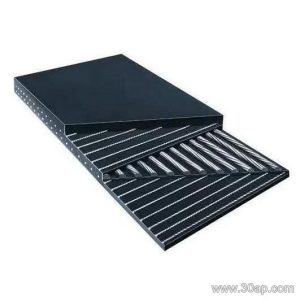
You will find the drive pulley in almost every continuous bulk handling system. In a quarry or stone crushing line it drives the main discharge conveyor; in a cement plant it moves clinker and raw meal; in a coal washing plant or power station coal yard it powers the coal conveyor. Port bulk terminals, iron ore and copper ore concentrators, and fertilizer or grain silo systems all rely on the same principle. The belt itself may be an EP conveyor belt, a steel cord conveyor belt, or a flame retardant conveyor belt in underground coal mining, and the drive drum has to match the belt’s tension and surface requirements.
Matching the pulley to the belt and the duty
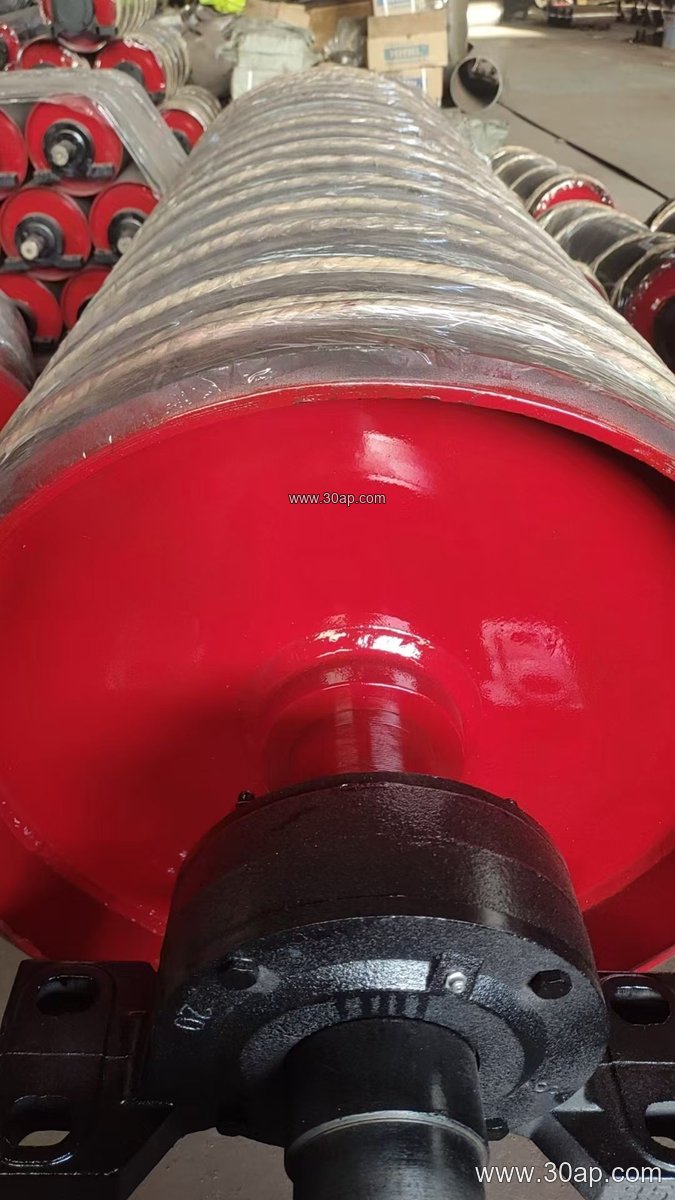
Selection starts with the belt. A heavy-duty mining conveyor belt carrying abrasive rock needs a robust lagged drum, while a pipe conveyor belt or a corrugated sidewall belt may call for a different face width and profile. The table below gives common reference combinations; treat them as starting points for discussion with the designer.
| Belt width | Typical pulley face | Common diameter range | Typical lagging |
|---|---|---|---|
| B500 | about 600 mm | Ø250 – Ø400 | plain or 8–10 mm rubber |
| B800 | about 950 mm | Ø400 – Ø630 | 10–12 mm diamond rubber |
| B1000 | about 1150 mm | Ø500 – Ø800 | 12–15 mm rubber or ceramic |
| B1200 | about 1400 mm | Ø630 – Ø1000 | 15 mm diamond or herringbone |
| B1400 | about 1600 mm | Ø800 – Ø1250 | 15–20 mm rubber |
| B1600 | about 1800 mm | Ø1000 – Ø1400 | 15–20 mm rubber or ceramic |
Lagging thickness commonly runs 8, 10, 12, 15 or 20 mm. A thicker cover adds grip and wear life but also increases the effective diameter, which changes belt speed slightly. Shaft sizes such as Ø80, Ø100, Ø120 or Ø160 appear across many drives, but the correct value comes from torque and bearing load calculations.
What buyers should check
- Confirm the belt width and the required face width, and check that the drum fits the conveyor bracket and bearing housings.
- Ask for the lagging type and thickness, and whether it suits wet, oily or high-abrasion conditions.
- Verify the shaft diameter and hub connection against the actual torque, not just the belt width.
- Check balance and runout requirements, especially for high-speed drives.
- Plan maintenance: lagging wear, belt tracking and bearing condition should be inspected regularly, and a spare drum shortens downtime in a busy quarry or coal yard.
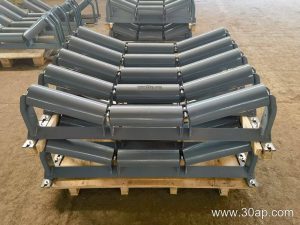
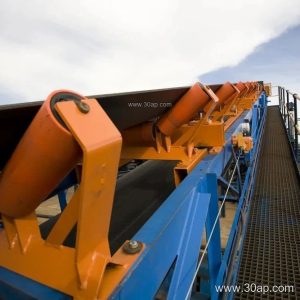
Used together with well-chosen idler rollers and a properly tensioned conveyor belt, a correctly specified belt conveyor drive pulley keeps a bulk handling line running smoothly from the crusher to the stockpile.