What a Belt Conveyor Idler Frame Does
A belt conveyor idler frame is the structural element that holds idler rollers in the correct position under and around the conveyor belt. In a quarry, a cement plant, or a power plant coal yard, these frames keep the belt profile stable, guide the belt, and transfer loads from the material and the belt itself into the conveyor stringer. Without a properly built idler frame, even a high-quality idler roller cannot do its job. The frame is not a passive part; it sets the trough angle, the spacing, and the alignment that determine how well the belt tracks and how long the belt and rollers last.
How the Frame Is Built
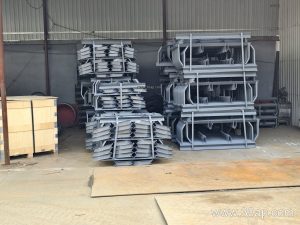
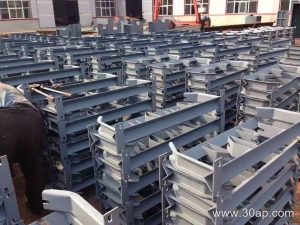
Most idler frames are fabricated from angle steel, channel steel, or folded steel plate. The choice of material and thickness depends on the load and the environment. A frame for a B800 belt in a sand and gravel line may use lighter channel, while a frame for a B1800 belt in an iron ore operation will use heavier sections. The frame includes mounting brackets, cross beams, and idler seats. Installation hole spacing and beam length change with belt width and trough angle; they are not fixed numbers. Welding quality and squareness matter because a twisted frame will misalign the idlers and cause belt edge wear. Surface treatment, such as painting or galvanizing, helps in wet or corrosive conditions.
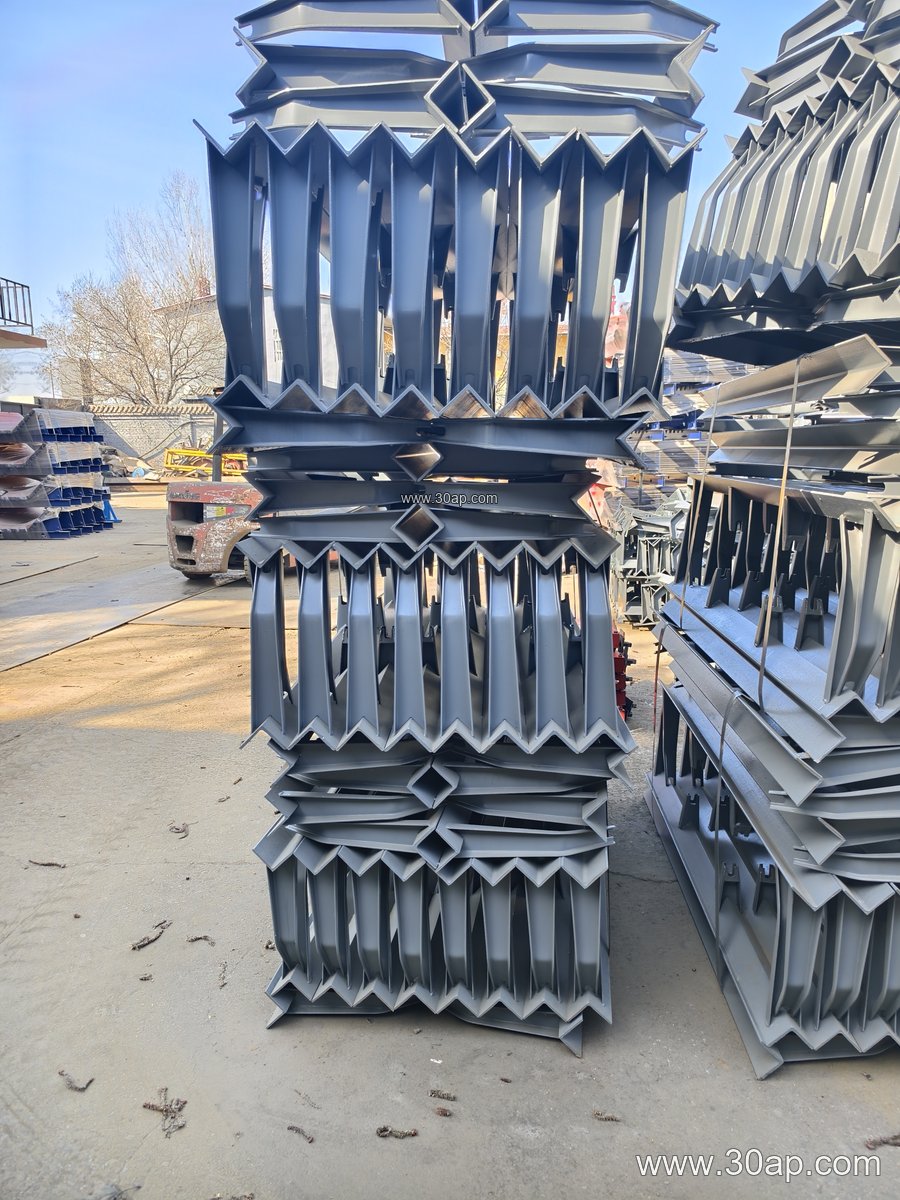
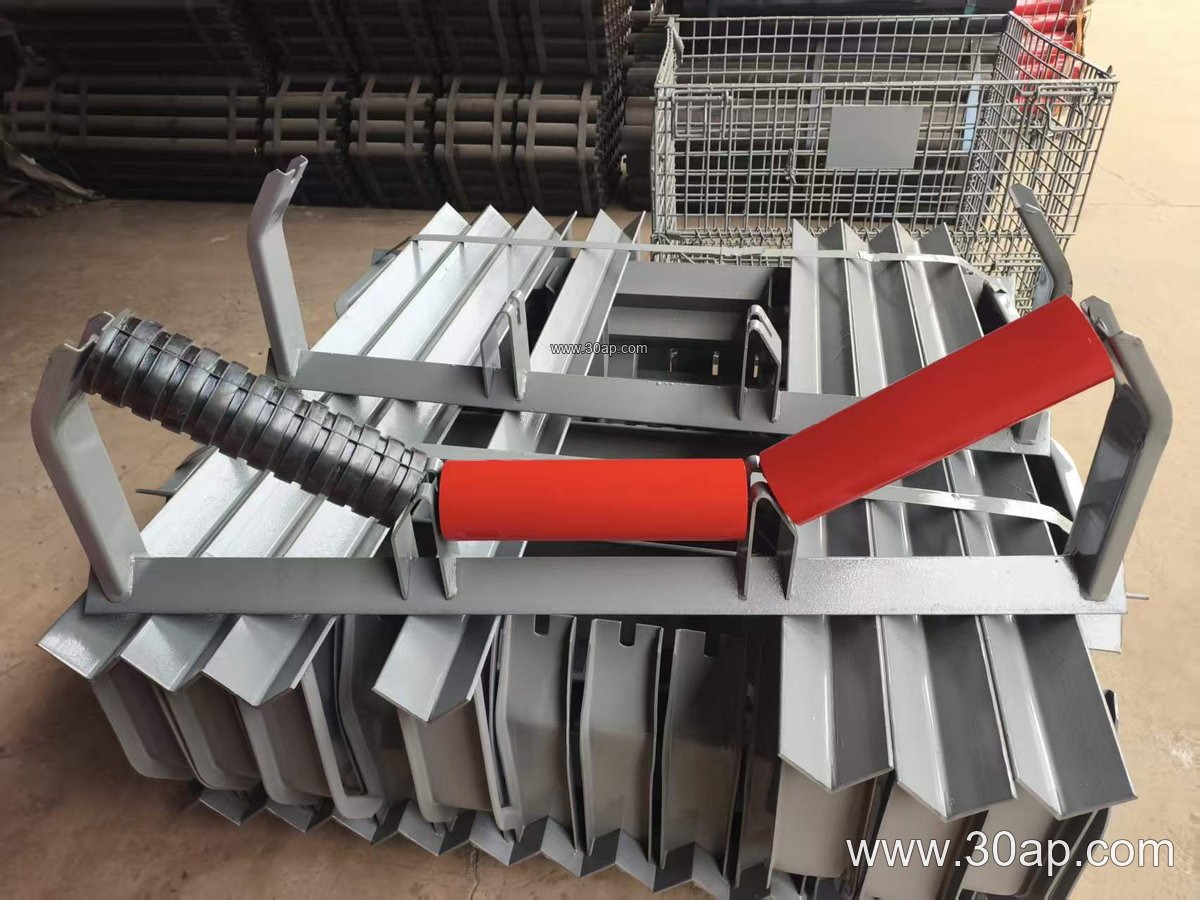
Common Frame Types and Where They Fit
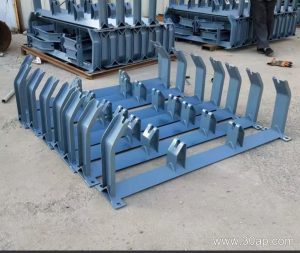
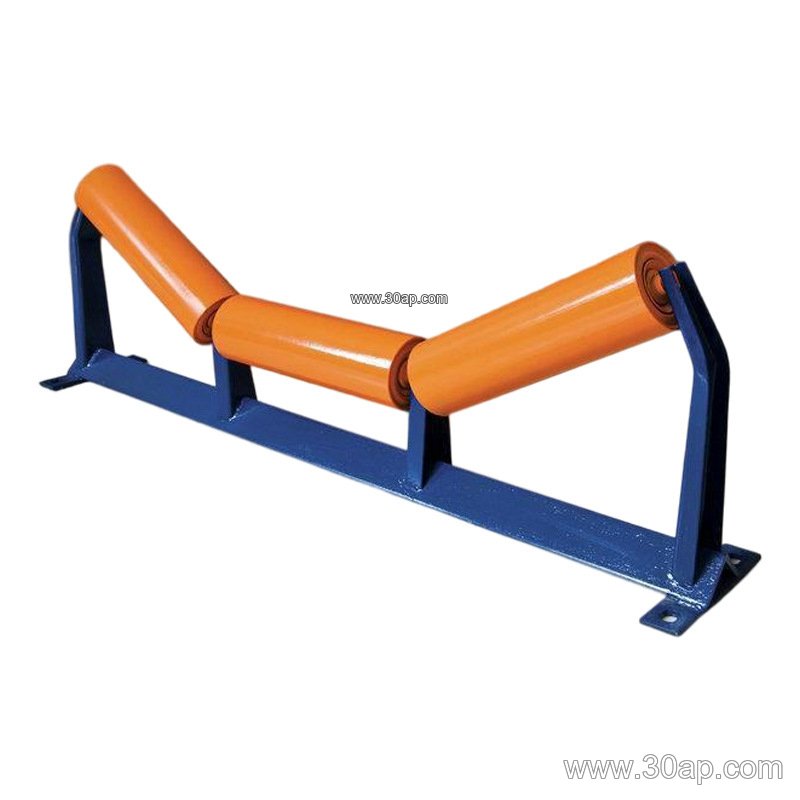
Different positions on the conveyor call for different frame designs. The main carrying side usually uses a troughing idler frame, often called an upper trough frame, with two or three rolls set at a trough angle. Return side frames are typically flat or V-shaped. Transition frames support the belt where it changes from flat to troughed. Impact frames with buffer idlers are used at transfer points. Self-aligning frames help correct belt wander. Adjustable frames allow the trough angle to be set on site.
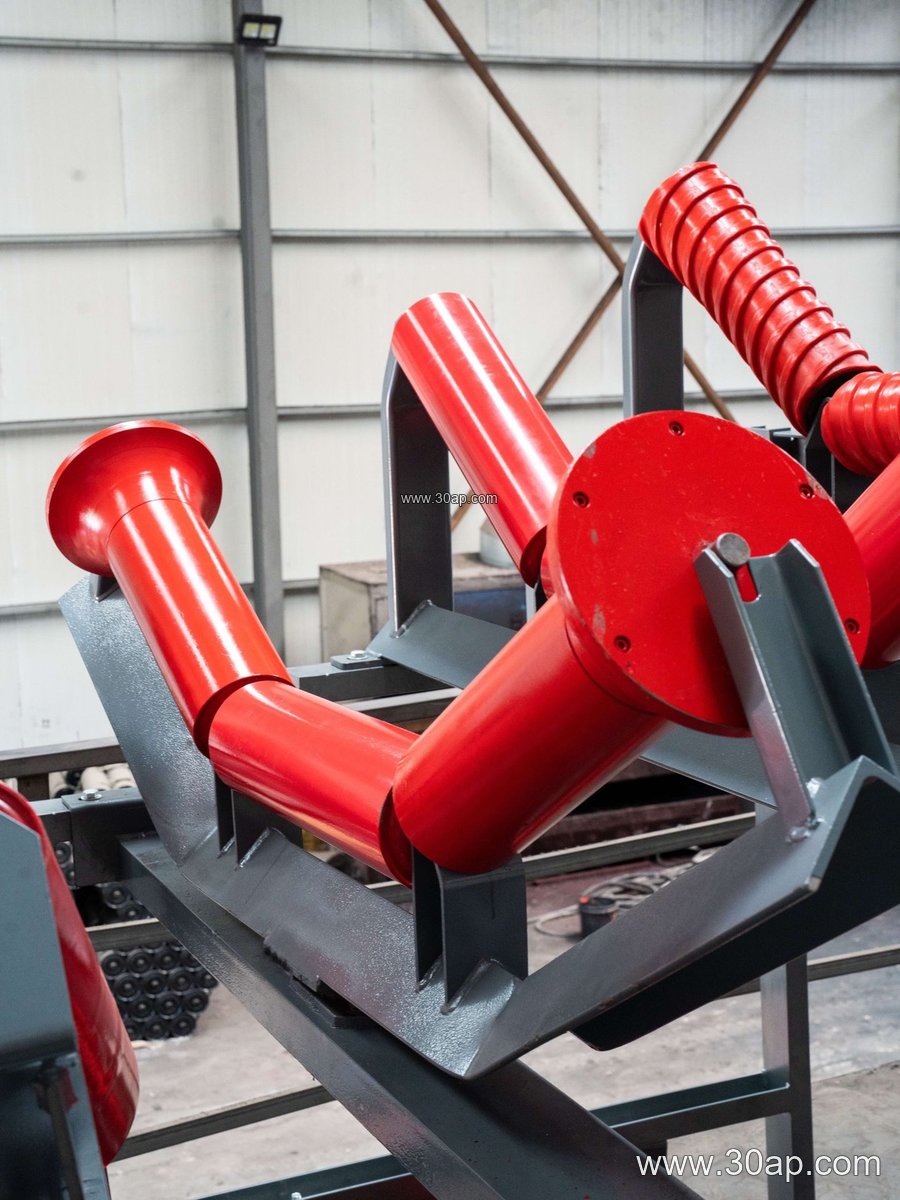
- Troughing idler frame – carries the loaded belt, common trough angles 20°, 30°, 35°, and 45°.
- Return frame – supports the empty belt, flat or V-return design.
- Transition frame – guides the belt from pulley to trough section.
- Impact frame – absorbs shock at loading points.
- Self-aligning frame – helps keep the belt centered.
- Adjustable frame – allows trough angle changes within a range.
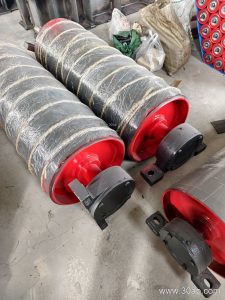
These are frame subtypes, not interchangeable with drive pulleys, tail pulleys, or bend pulleys. A conveyor pulley has a different role and cannot replace an idler frame.
Matching Frame, Idler, and Belt
Frame selection starts with belt width and idler diameter. Common belt widths include B500, B650, B800, B1000, B1200, B1400, B1600, and B1800. Common idler diameters are Ø89, Ø108, Ø133, Ø159, and Ø194. A B650 frame with 30° trough and Ø89 idlers suits a small aggregate line; a B1200 frame with 45° trough and Ø133 idlers is more typical in a heavy-duty mining conveyor. There is no rule that one belt width must use only one trough angle or one idler diameter. The design load, belt speed, material lump size, and transition length all influence the choice. The frame must also match the conveyor bracket and stringer dimensions.
Buyer Checklist
- Confirm belt width and required trough angle before ordering.
- Check idler diameter and mounting dimensions.
- Verify frame material and finish for the site environment.
- Ask for installation hole spacing and beam length as project data, not as universal values.
- Consider adjustable frames where future angle changes are likely.
- Ensure the frame design suits the conveyor bracket and stringer.
For a coal mining conveyor belt or a heat resistant conveyor belt in a cement kiln area, the frame still follows the same structural logic, but corrosion and temperature protection may differ. A fabric core conveyor belt and a steel cord conveyor belt impose different tension and load patterns, so frame spacing and strength should be confirmed with the conveyor design.
Maintenance and Long-Term Reliability
Inspect frames for loose bolts, bent beams, and corrosion. A misaligned frame can wear the belt edge and shorten idler life. In a crusher conveyor belt line, impact frames should be checked for deformation. Keeping frames square and idlers seated properly protects the conveyor belt and reduces downtime. For more information on idler frames, conveyor rollers, and conveyor pulleys, visit www.beltconveyoridler.com and review the frame options for your belt width and trough angle.