What a Single Drive Pulley Does
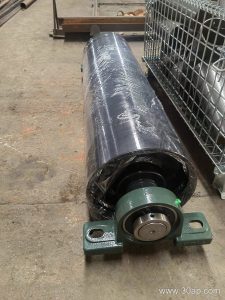
A single drive pulley is the one powered drum that transmits motion to the conveyor belt on a belt conveyor. It is the only driven pulley in the system, as opposed to arrangements where two or more pulleys share the driving duty. In a typical head drive layout, this drum sits at the discharge end, grips the belt through friction between its lagged surface and the belt cover, and pulls the loaded strand toward the head. The same component is often called a single drum drive pulley or a head drive drum, and those names refer to the same product. A tail pulley or a bend pulley may appear in the same conveyor, but neither drives the belt, so they are not substitutes for this item.
The working principle is straightforward. Motor and gearbox torque turn the drum, the lagged shell grips the belt, and the resulting friction moves the belt and its cargo. Everything downstream, from the conveyor belt itself to each idler roller and conveyor bracket, depends on that grip being consistent.
Construction and Surface Options
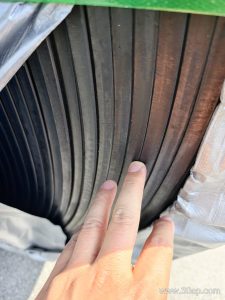
A single drive pulley usually consists of a steel shell, two end discs, a shaft, and bearing housings mounted on a frame. The shell is machined for balance, and the surface is finished according to the duty. Common surface forms include plain, cast rubber, cold-bonded rubber, hot-vulcanized rubber, diamond lagging, herringbone lagging, and ceramic lagging. Lagging thickness is commonly 8, 10, 12, 15, or 20 mm depending on grip and wear requirements.
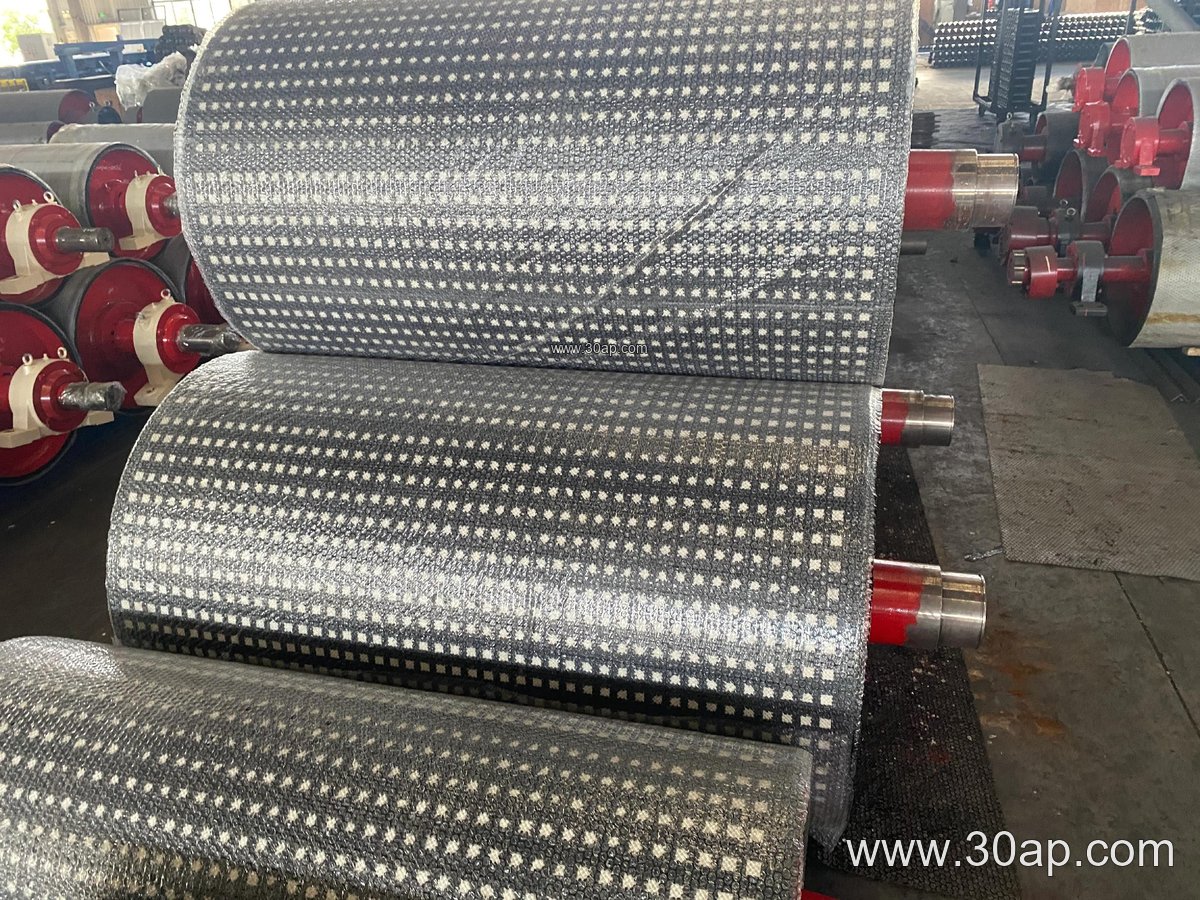
Shaft diameter is determined by torque and radial load, not by belt width alone. Common shaft sizes include Ø50, Ø60, Ø70, Ø80, Ø90, Ø100, Ø120, Ø140, Ø160, Ø180, and Ø200. A buyer should treat these as reference values and confirm the final shaft size through the drive calculation.
Typical Reference Combinations
| Belt width | Pulley face width (typical) | Example diameter |
|---|---|---|
| B500 | about 600 mm | Ø400 |
| B650 | about 750 mm | Ø500 |
| B800 | about 950 mm | Ø500 |
| B1000 | about 1150 mm | Ø630 |
| B1200 | about 1400 mm | Ø1000 |
| B1400 | about 1600 mm | Ø800 |
| B1600 | about 1800 mm | Ø1000 |
| B1800 | about 2000 mm | Ø1250 |
These pairings are examples only. A given belt width can work with more than one drum diameter, and the correct choice depends on wrap angle, belt tension, and space at the drive station.
Where It Fits in the Plant
In a quarry or sand and aggregate line, a single drive pulley at the head of a primary conveyor often handles abrasive rock from a crusher, so abrasion resistant lagging and a rugged shell matter. In a coal washing plant or a power plant coal yard, flame retardant belt grades and anti-static properties are usually part of the specification, and the drive drum must be matched to the belt’s cover compound. The same component appears in cement plants on clinker lines, in iron ore and copper ore handling, and in port bulk terminals where ship loading conveyors run long shifts.
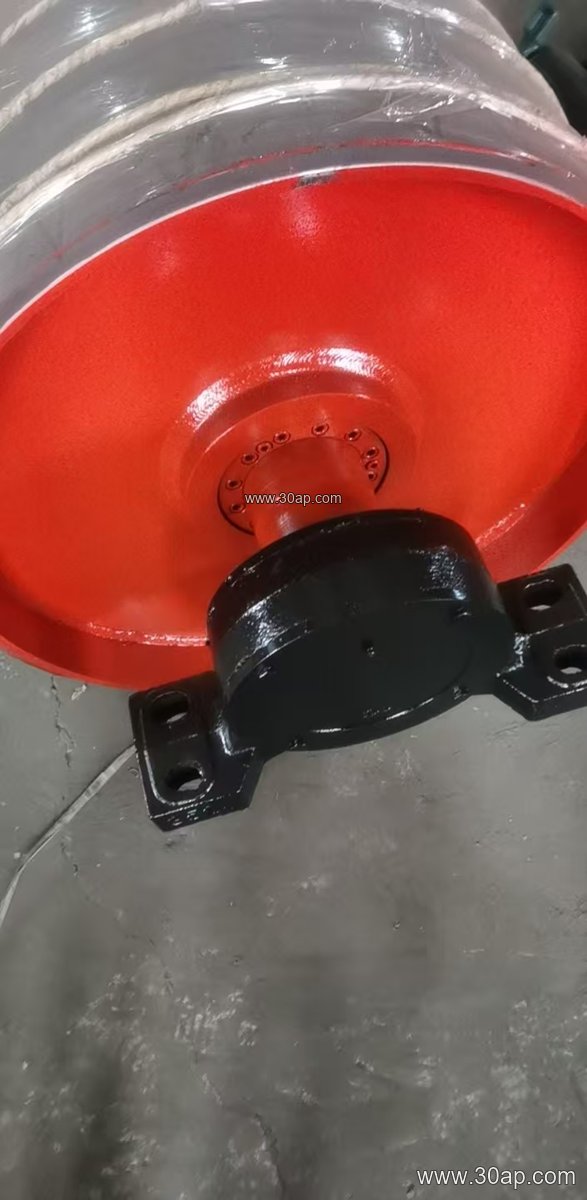
Because the drum is the only driven unit, its lagging and diameter strongly influence belt tracking and the load seen by every conveyor pulley along the route. A worn or glazed lagging surface can cause slip, which in turn affects the whole line from the loading point to the discharge.
Buyer Checklist
- Confirm whether the drive is at the head, and whether the take-up is screw or gravity, since this affects wrap angle and required diameter.
- Specify the belt type and cover, for example an EP conveyor belt, a steel cord conveyor belt, or a flame retardant conveyor belt, so lagging and drum size suit the belt.
- State the duty: continuous or intermittent, dusty or wet, and whether the material is hot.
- Provide belt width, belt speed, and estimated power so the supplier can size the shaft and bearings.
- Decide the lagging form and thickness, and confirm whether grooving or ceramic tiles are needed for grip in wet conditions.
- Check that the pulley face width exceeds the belt width, and plan clearance for the conveyor bracket and bearing housings.
Maintenance Notes
Inspect lagging wear at each scheduled shutdown, check bearing temperature and grease condition, and verify that the drum turns freely without belt slip. Keep the belt cleaner and the loading chute aligned so material does not build up on the shell. On a single drive pulley, a small loss of friction is felt across the entire conveyor, so early attention to surface condition pays off. For spare parts planning, record the shell diameter, face width, shaft size, and lagging type so a replacement can be matched without guesswork.