What an EP300 Conveyor Belt Is
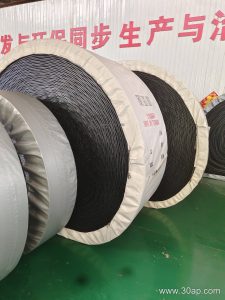
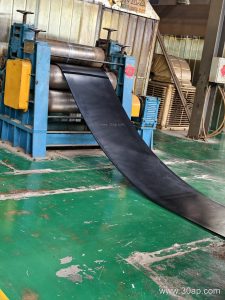
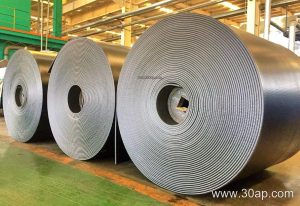
An EP300 conveyor belt is a fabric-core rubber belt built around polyester-polyamide (EP) plies. The number 300 refers to the nominal tensile strength of the carcass, usually expressed in newtons per millimeter of belt width. In practice, this places the product in the medium-to-high strength range of fabric belts: stronger than common EP200 grades, yet more flexible and easier to splice than a steel cord construction. Buyers often meet it under the equivalent name EP300 rubber conveyor belt, and both terms describe the same product.
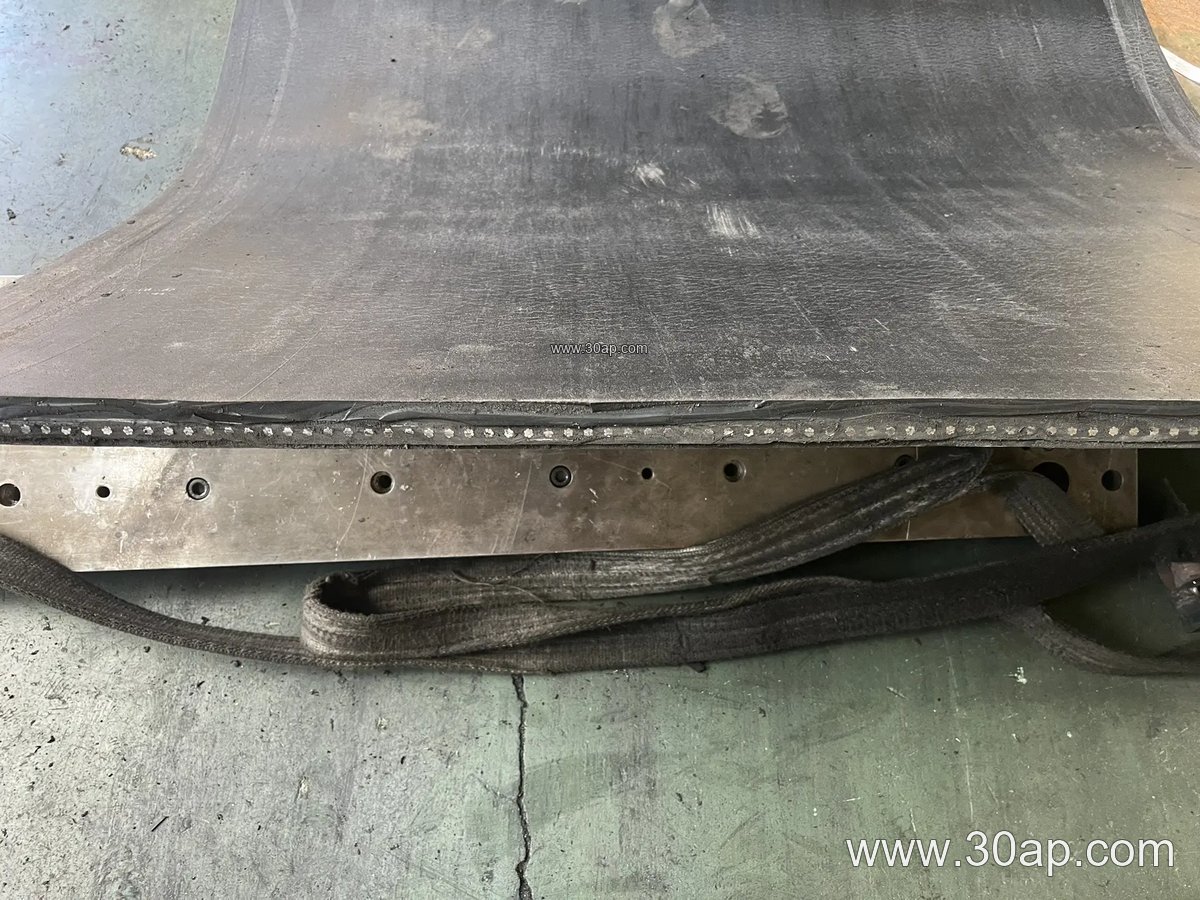
The EP carcass combines polyester warp yarns with polyamide weft yarns. Polyester limits stretch under steady tension, while polyamide adds resistance to impact and flex fatigue. That balance is why this grade appears in many bulk handling lines where a conveyor runs continuously and belt length must stay stable.
Construction and Typical Specifications
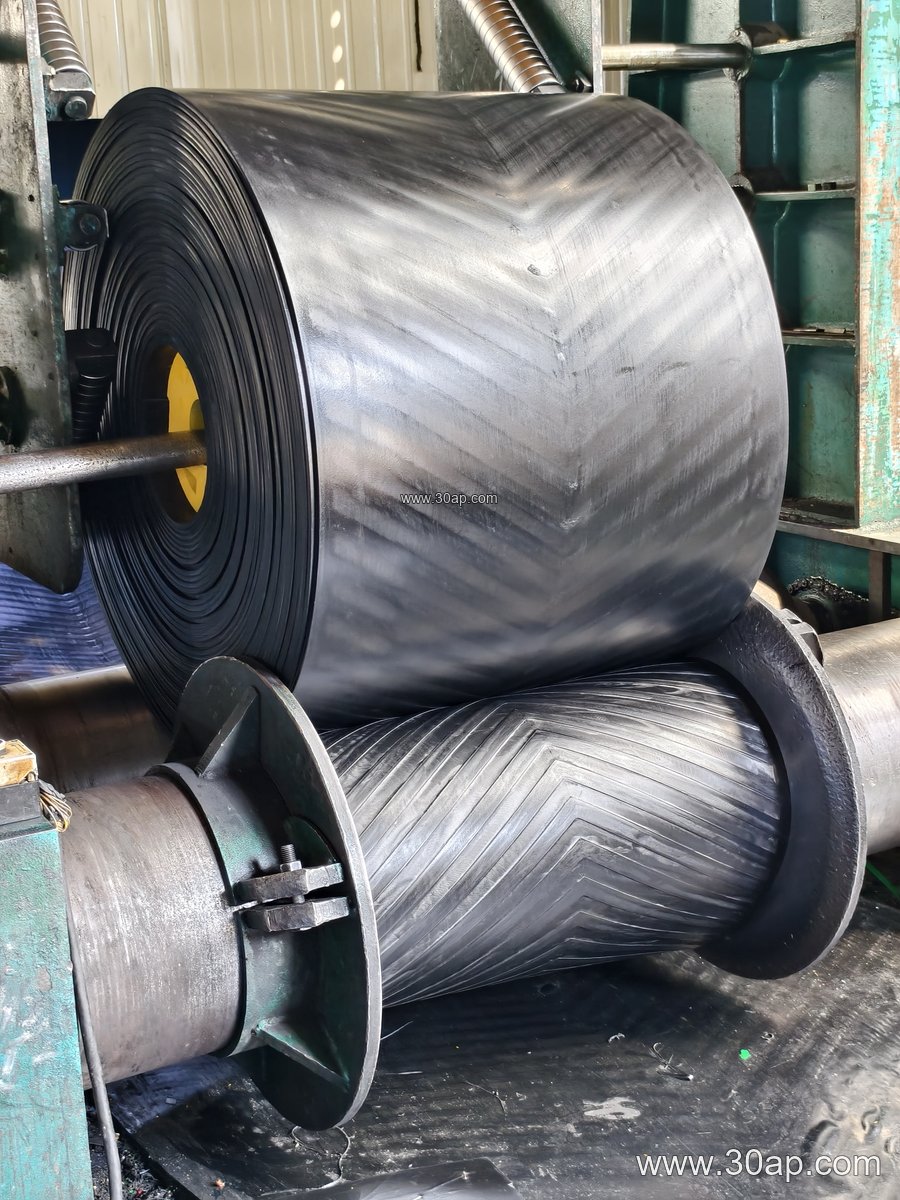
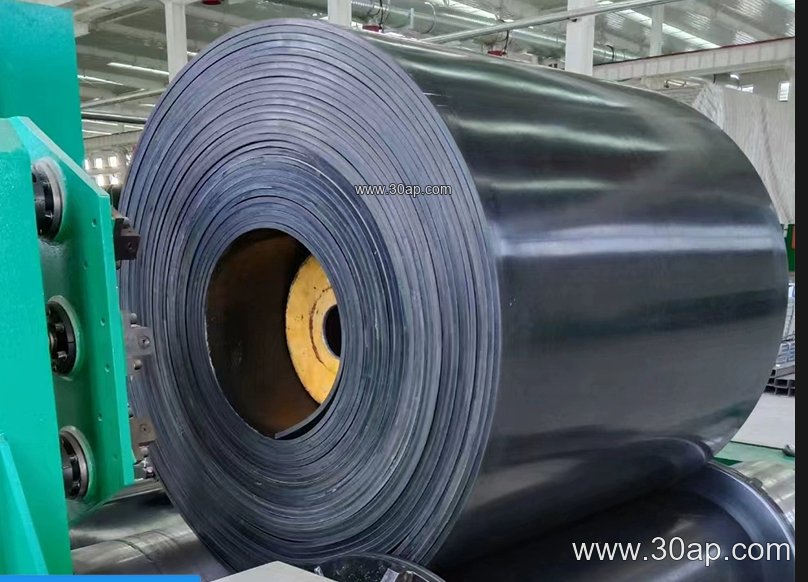
A finished belt usually consists of two to six EP plies, top and bottom rubber covers, and a bond layer between carcass and cover. Cover thickness is selected by duty: light abrasive service may use 3+1.5 mm, general bulk duty 4+2 mm or 5+2 mm, and heavier wear points 6+2 mm or 8+3 mm. These are common references rather than fixed rules, and actual figures follow the design of each conveyor.
Widths are normally matched to the troughing idlers and pulley face. Reference sizes include B500, B650, B800, B1000, B1200, B1400, B1600, B1800 and B2000. A 1000mm or 1200mm belt is common in plant transfer lines, while wider belts serve high-capacity stockyard and port systems. No single width is tied to one pulley diameter; the drive pulley, tail pulley and bend pulley are sized from torque, wrap angle and belt tension, not from width alone.
| Parameter | Typical Reference Range |
|---|---|
| Carcass | EP fabric, 2 to 6 plies |
| Nominal strength | EP300 (grades from EP200 to EP2000 exist in the family) |
| Belt width | B500 to B2000 |
| Cover thickness | 3+1.5, 4+2, 5+2, 6+2, 8+3 mm |
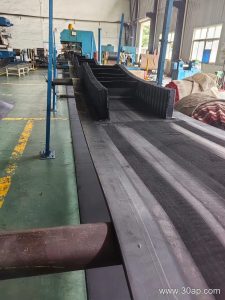
| Surface options | Plain, chevron, corrugated sidewall, skirted |
Where It Fits in Real Installations
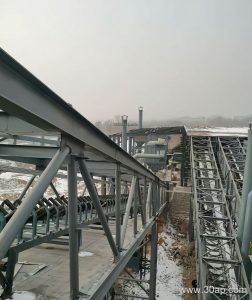
This belt grade is widely used in mining conveyor belts, quarry and aggregate lines, cement plants, power plant coal handling, steel plants, sand and stone crushing circuits, and port loading systems. It suits primary and secondary conveying of crushed rock, ore, clinker, limestone and similar bulk materials. In a coal mining conveyor belt application, a flame retardant and anti-static cover grade is normally specified, while iron ore and copper ore duty often calls for a high abrasion resistant conveyor belt compound.
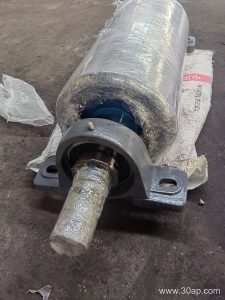
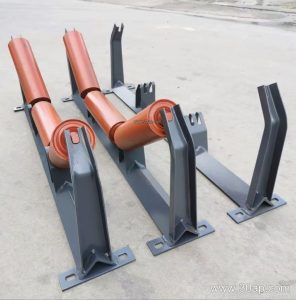
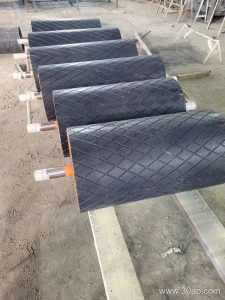
The belt does not work alone. Troughing idler rollers support the loaded strand, return rollers carry the empty side, and conveyor pulleys transmit drive force at the head and maintain tension at the tail. Conveyor brackets and frames hold these components in alignment. A well-aligned structure protects the carcass and extends service life more than any single belt feature.
Selection Points for Buyers
- Confirm the calculated maximum belt tension and choose the ply number accordingly; EP300 is a strength class, not a complete specification.
- State the material, lump size, temperature and moisture. Hot clinker may require a heat resistant conveyor belt, while oily scrap favors an oil resistant conveyor belt.
- Check cover grade for abrasion, flame resistance and anti-static properties required by the site.
- Review pulley diameters and troughing angles with the conveyor designer so the belt flexes within its fatigue limits.
- For steep inclines, compare a chevron conveyor belt or corrugated sidewall design rather than forcing a plain belt beyond its angle.
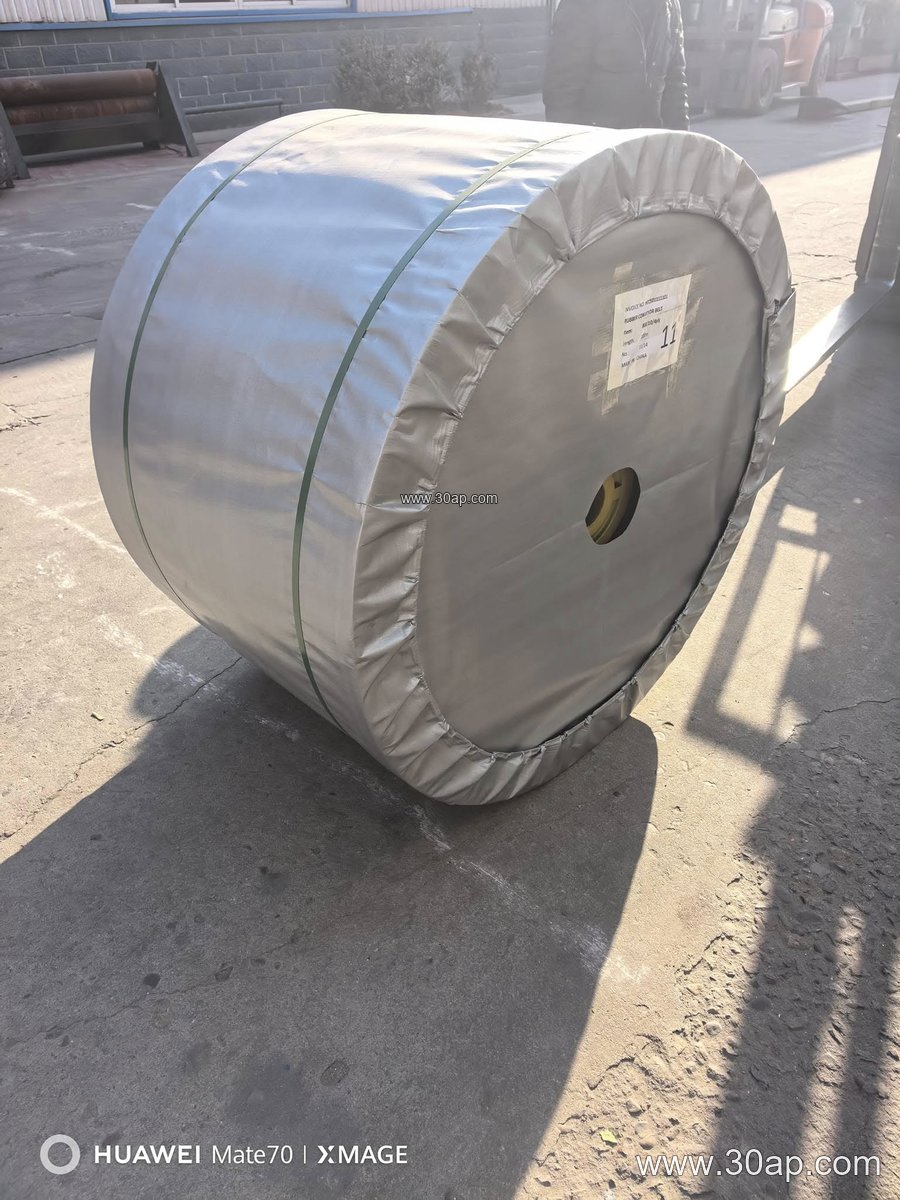
- Plan splicing: vulcanized joints are usual for long, high-tension runs, and endless conveyor belt supply can reduce joint work on site.
Maintenance matters as much as the initial grade. Keep idlers turning freely, correct mistracking early, and avoid material buildup at transfer points. A small investment in roller and pulley inspection prevents edge damage and ply separation on an EP300 belt.
Practical Notes
For very long overland routes or extreme tension, a steel cord conveyor belt may be the better fit, but for many medium-duty plant conveyors the EP fabric construction offers easier handling and repair. When comparing grades, keep the carcass type, cover class and width as separate decisions. A buyer who specifies only the strength class leaves too much open; a complete inquiry includes width, ply count, cover thickness, surface form and the working environment.