What the Drive Pulley Does on a Conveyor
The belt conveyor drive pulley is the powered drum at the head of the conveyor that grips the conveyor belt and pulls the loaded strand forward. Often called the head pulley or drive drum, it is the point where torque from the gearbox and motor enters the belt line. On a quarry face conveyor or a cement plant clinker line, this single component sets the belt speed and carries the highest belt tension in the system.
It is not a tail pulley or a bend pulley, and those cannot be swapped for it. A tail pulley turns freely at the return end, while a bend pulley only changes belt direction. Only the drive pulley transmits power, so its grip, shaft and lagging receive the greatest design attention.
How the Drum Is Built
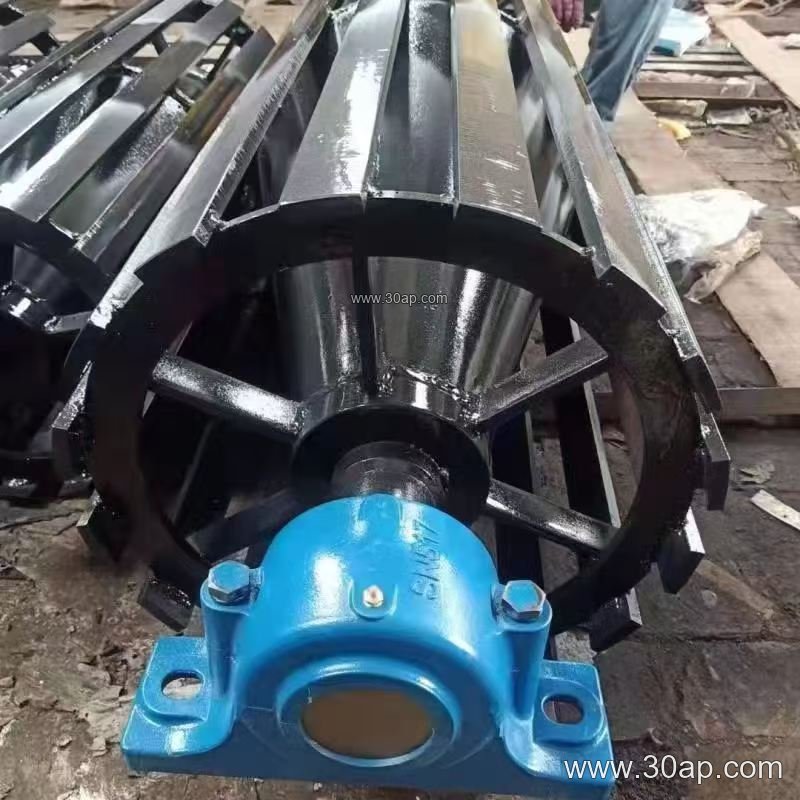
The assembly usually combines a steel shell, two end discs, a through shaft, bearing housings and a lagged surface. The shell is machined so the belt runs true, and the shaft is sized by torque and radial load rather than by belt width alone. A common arrangement uses a keyless shrink disc or a keyed hub to fix the shell to the shaft, and the whole unit sits in bearing blocks bolted to the conveyor bracket or frame.
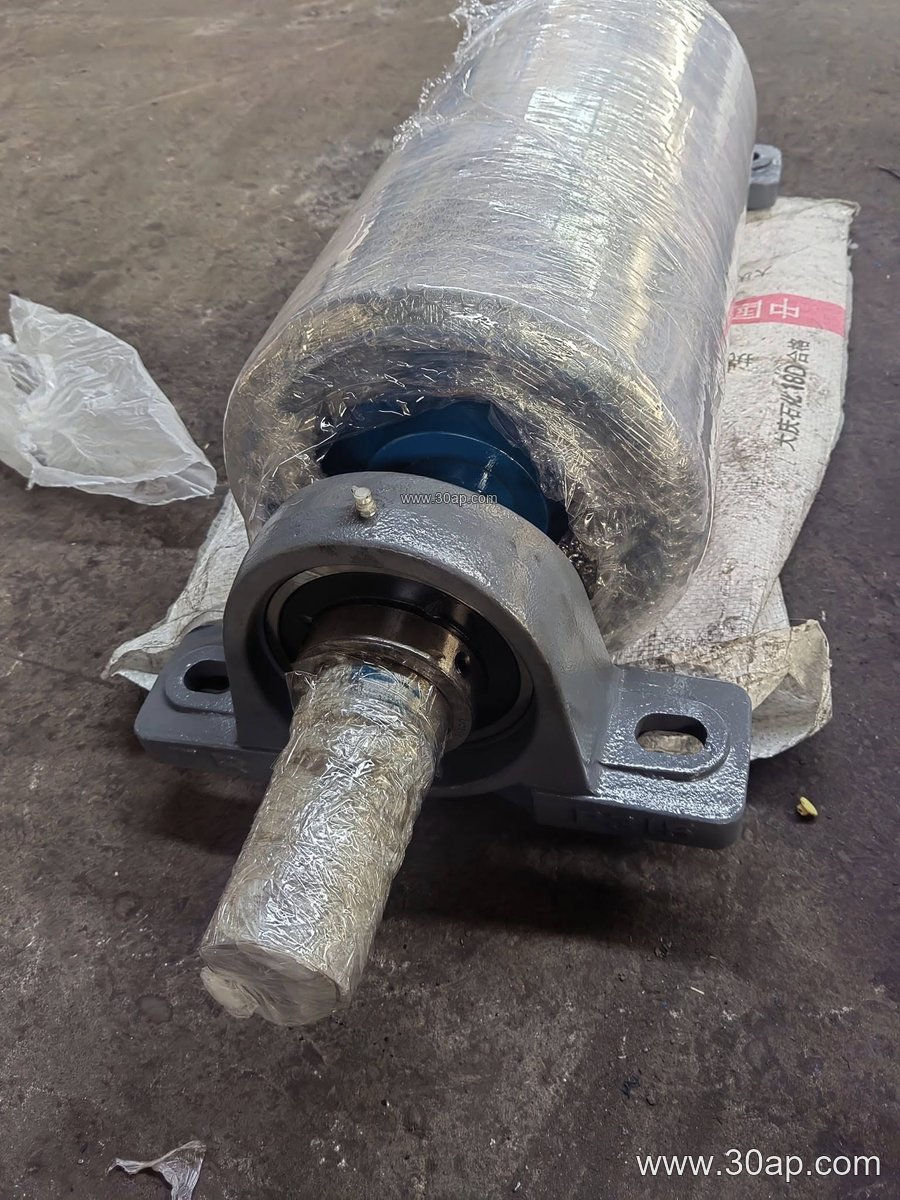
Surface treatment matters as much as the steel. Plain finish is used where grip is adequate; rubber lagging is added where the belt needs more friction or where abrasive dust would polish a bare shell. Heat-vulcanised rubber, cold-bonded rubber, diamond grooving, chevron pattern and ceramic tiles are all common, with lagging thickness typically 8, 10, 12, 15 or 20 mm depending on duty.
Typical Sizes and Combinations
Drum diameter and face width are selected together with the belt and the duty. The face is usually wider than the belt so the belt is supported across its full width. The table below shows common reference pairs; these are examples, not fixed rules, and a B1200 belt may run on more than one diameter depending on tension and wrap angle.
| Belt width | Typical face width | Example diameter |
|---|---|---|
| B500 | about 600 mm | Ø320, Ø400 |
| B800 | about 950 mm | Ø500, Ø630 |
| B1000 | about 1150 mm | Ø630, Ø800 |
| B1200 | about 1400 mm | Ø800, Ø1000 |
| B1400 | about 1600 mm | Ø1000, Ø1250 |
| B1600 | about 1800 mm | Ø1250, Ø1400 |
Shaft ends commonly fall in the range of Ø80 to Ø200 for these sizes, again set by the drive calculation. Larger drums such as Ø1600 or Ø1800 appear on high-tension main lines, for example at a port bulk terminal or a long overland run from a copper mine.
Where It Is Installed
The drive pulley is normally at the discharge end, so material leaves the belt just after the drum. In a crushing and screening circuit it may sit above the primary screen; in a power plant coal handling system it often sits at the transfer tower. Some layouts place the drive at the return end with a snub or pressure pulley to increase wrap angle, which is useful where space is tight.
Because it carries the tight side tension, the drive drum is also the place where belt slip, lagging wear and bearing heat first appear. Checking lagging condition, checking that the conveyor belt tracks centrally, and confirming bearing temperature are routine tasks for maintenance crews.
What a Buyer Should Confirm
- Belt width, belt speed and required power, so the drum diameter and shaft can be calculated.
- Lagging type and thickness, matched to material: wet clay, sharp limestone or hot clinker each need different treatment.
- Bearing type and housing style, plus the bolt pattern needed to fit the existing conveyor bracket.
- Whether a pressure pulley, take-up arrangement or backstop is part of the scope.
- Balancing and inspection records, requested as part of the drawing approval.
Supplying the conveyor layout drawing with belt width, idler roller spacing and expected tonnage helps the manufacturer size the drum correctly. A drive pulley ordered on belt width alone risks being either overbuilt or marginal, and neither outcome serves a busy sand and gravel line or a steel plant sinter conveyor.