What a Trough Idler Bracket Does
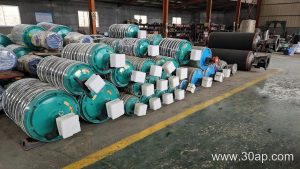
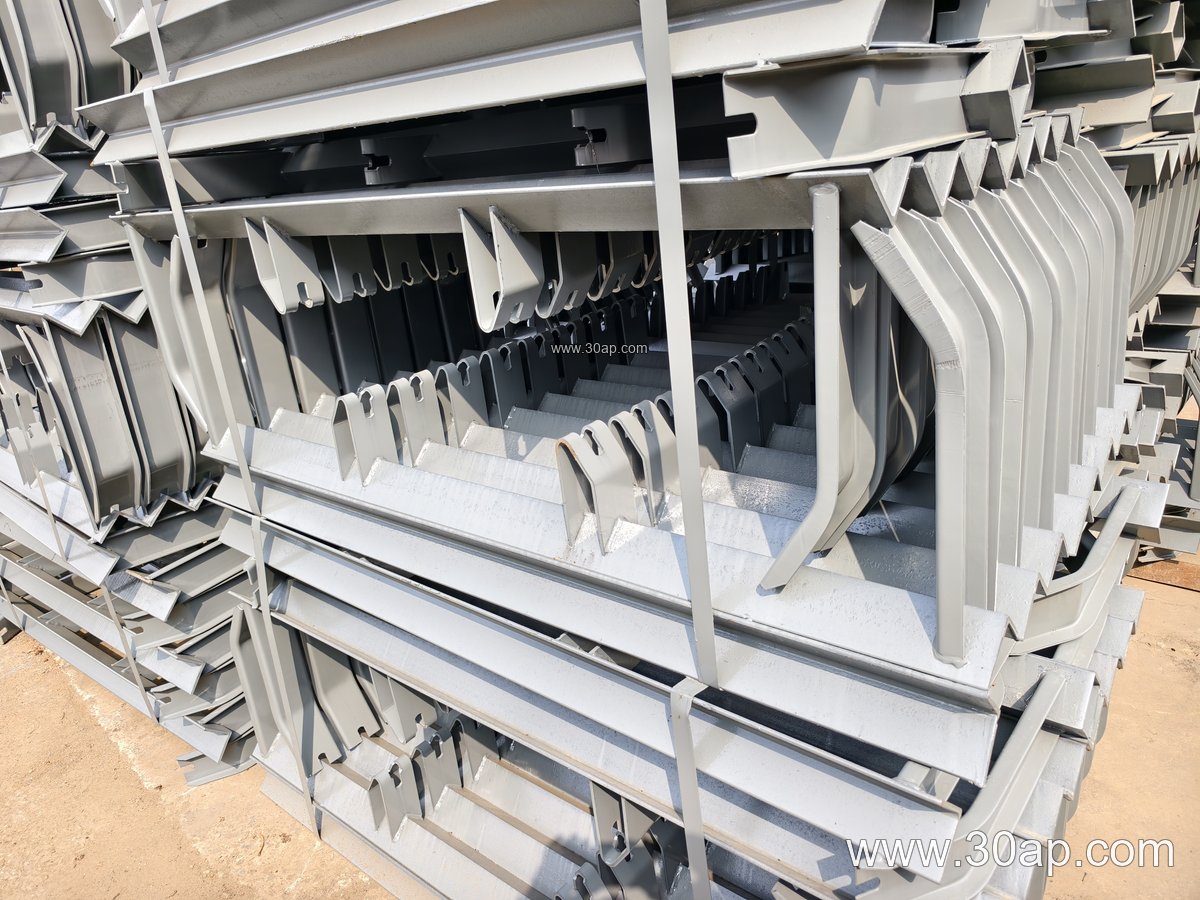
A trough idler bracket is the steel support that holds the three rollers of a troughing set in the familiar U shape. The two wing rollers sit at an angle while the center roller stays flat, so the conveyor belt forms a channel that keeps bulk material centered during travel. This bracket, also called a troughing idler bracket or troughing frame, is bolted to the conveyor’s main frame and carries the load path from the belt and idler roller down into the structure. Without it, the rollers have no fixed geometry and the belt profile collapses.
The bracket is not a pulley. Drive pulleys, tail pulleys and bend pulleys transmit or redirect belt tension and are entirely different components. A trough idler bracket only positions carrying idlers on the load side of the conveyor.
Construction and Common Materials
Most trough idler brackets are fabricated from angle steel, channel steel, or folded steel plate. The material choice depends on load, corrosion exposure, and the belt width it must span. Powder coating or galvanizing is common for cement plants and port terminals where dust and moisture attack bare steel. In a coal mining conveyor or an iron ore line, heavier sections are typical because impact and abrasion are constant.
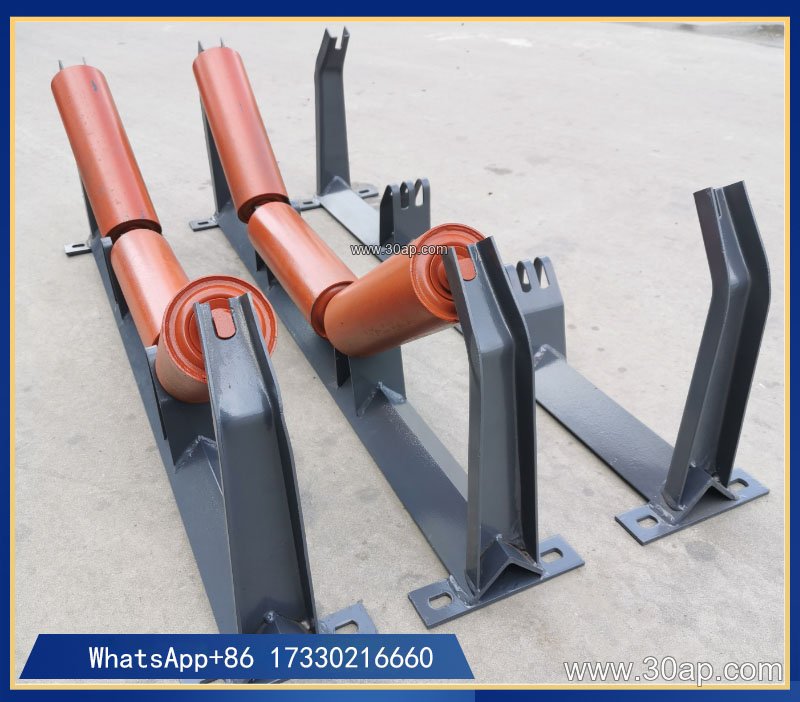
Typical reference data for bracket design is shown below. These values are common references, not fixed supply promises; actual hole spacing and beam length follow the belt width and trough angle chosen by the conveyor designer.
Reference Parameters
- Belt width range: B500, B650, B800, B1000, B1200, B1400, B1600, B1800, B2000, B2200
- Trough angle options: 20 degrees, 30 degrees, 35 degrees, 45 degrees
- Idler roller diameter range: Ø89, Ø108, Ø133, Ø159, Ø194
- Forward tilt on some designs: about 1.5 to 2 degrees
Common combinations seen in practice include B800 with 35 degrees and Ø108, or B1200 with 45 degrees and Ø133, or B650 with 30 degrees and Ø89. A given belt width can be paired with more than one trough angle or roller diameter, so the bracket should match the full troughing set, not a single number.
Where It Fits on the Conveyor
On the carrying side, trough idler brackets appear in long runs through a limestone quarry, a sand and gravel line, or a power plant coal handling system. Transition brackets are used near the head and tail where the belt changes from flat to troughed. On the return side, a different family of brackets holds the return rollers; V-shaped return brackets and flat lower brackets are separate products and are not substitutes for a trough idler bracket.
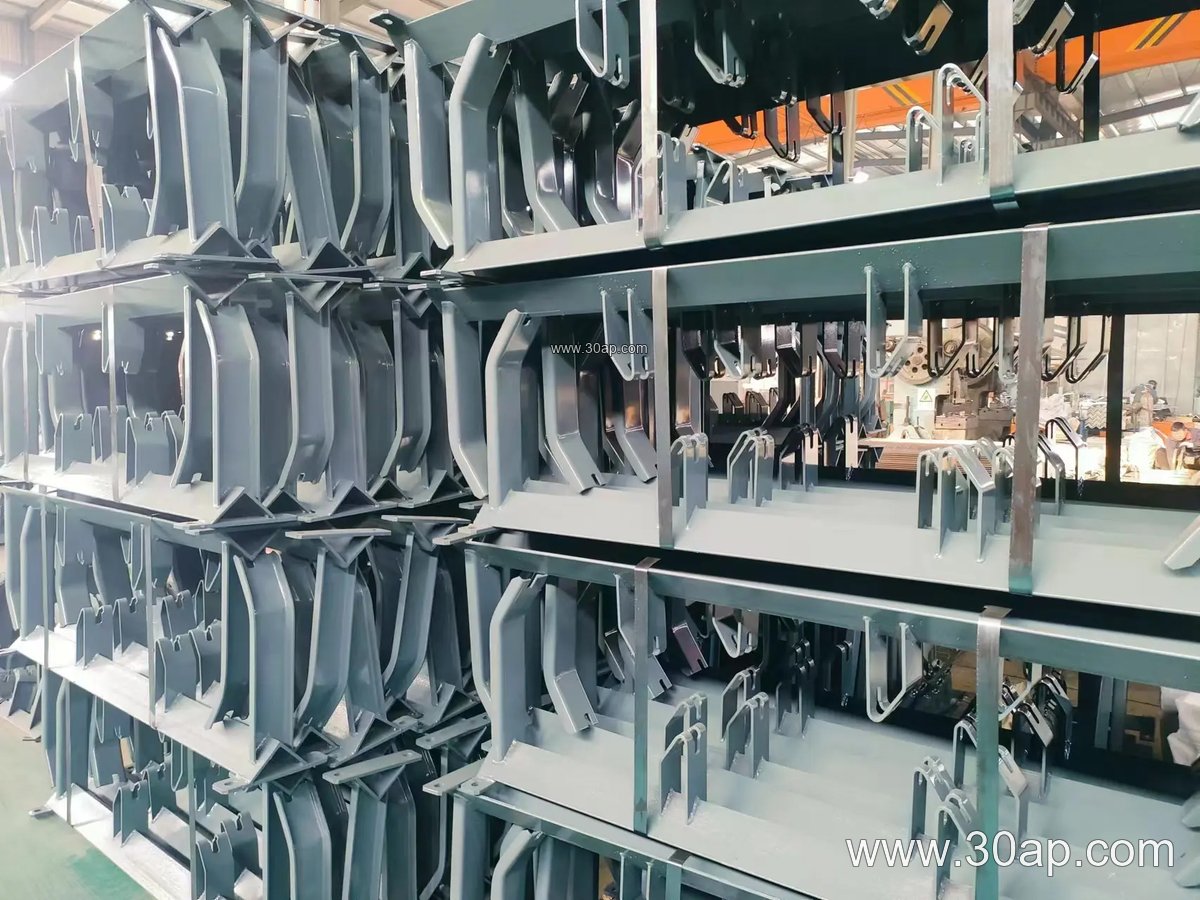
Adjustable brackets let maintenance teams set the trough angle between the common values, which helps when a belt runs better at a slightly different profile. Fixed brackets are simpler and cheaper but commit the line to one geometry. Self-aligning and forward-tilt designs are separate idler bracket types used for belt training, and they are compared with trough brackets rather than swapped for them.
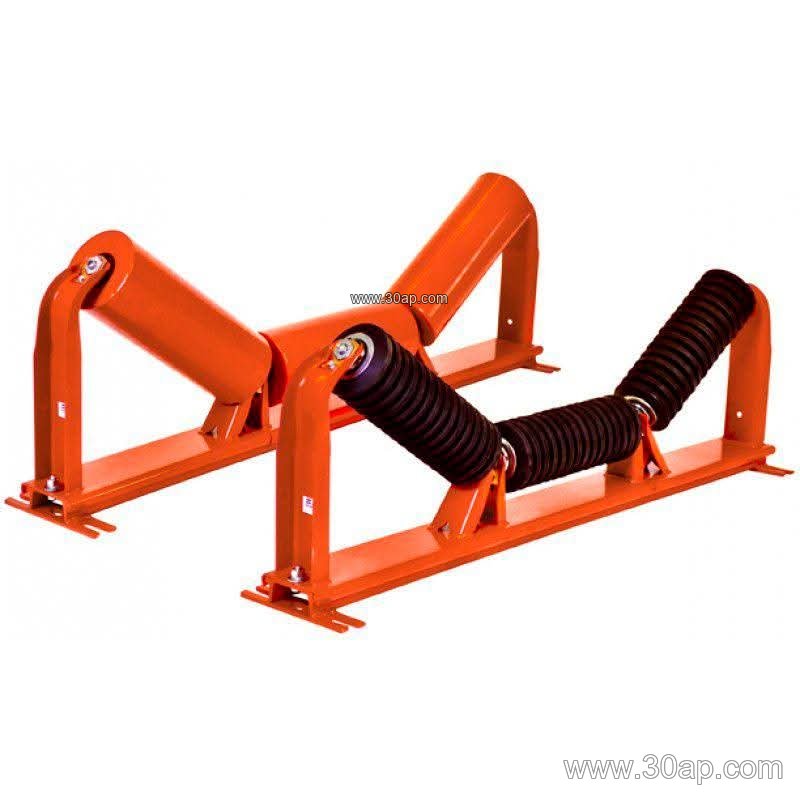
Matching Bracket, Belt and Idler
The trough idler bracket works together with the conveyor belt and the idler roller. A heavy-duty mining conveyor belt carrying crushed rock needs a robust bracket and adequately sized rollers; a lighter aggregate conveyor belt on a short yard conveyor can use a lighter frame. Belt construction matters too: a steel cord conveyor belt or a high abrasion resistant conveyor belt may run at higher tension and load, which the bracket and its mounting bolts must tolerate. Flame retardant conveyor belt used in underground coal mining conveyor systems also calls for brackets that suit the mine’s support structure and inspection routine.
When ordering, confirm the belt width, the trough angle, the roller diameter, the mounting hole pattern, and the surface treatment. Ask whether the bracket is fixed or adjustable, and check that the roller shaft ends match the bracket slots. In a cement plant or a crusher conveyor, spare brackets kept on site reduce downtime when a frame bends after a lump impact.
Buyer Checklist
- Confirm belt width and trough angle before quoting.
- Match idler roller diameter and shaft end shape to the bracket.
- State the environment: washdown, dust, heat, or corrosive atmosphere.
- Decide between fixed and adjustable brackets based on maintenance plans.
- Check that the bracket is for the carrying side, not the return side.
A correctly chosen trough idler bracket keeps the belt profile stable, extends roller life, and keeps material from spilling on the way to the transfer point.