What a Striped Lagged Pulley Does
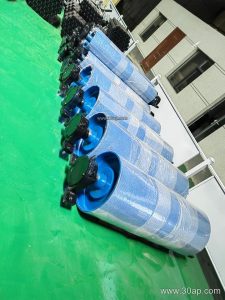
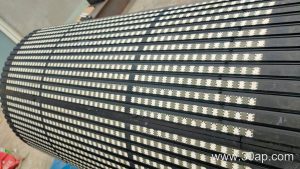
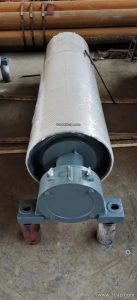
A striped lagged pulley is a conveyor pulley whose shell is covered with a rubber or ceramic lagging that carries a striped pattern. This pattern is usually a series of parallel grooves or ribs running around the pulley face, and it is designed to improve grip between the pulley and the conveyor belt while allowing water, dust and fine particles to escape from the contact zone. The striped lagged pulley is a specific surface form of a lagged conveyor pulley, and it is often chosen for drive positions where slip risk is high but material carryover is a concern. It is not a substitute for a drive pulley, tail pulley or bend pulley; rather, it is a surface option that can be applied to a pulley in any of those roles, though its benefits are most noticeable on the driving side of the conveyor.
How the Striped Lagging Is Built
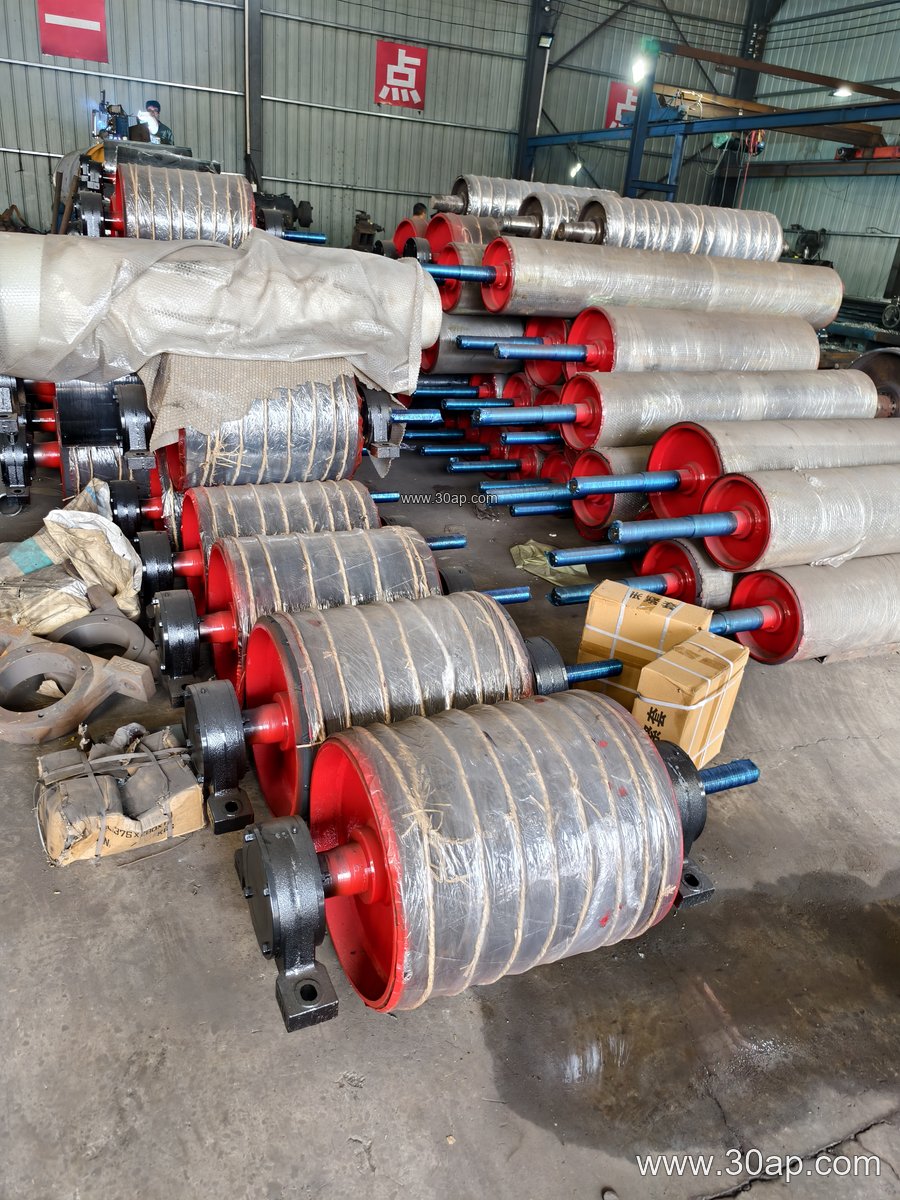
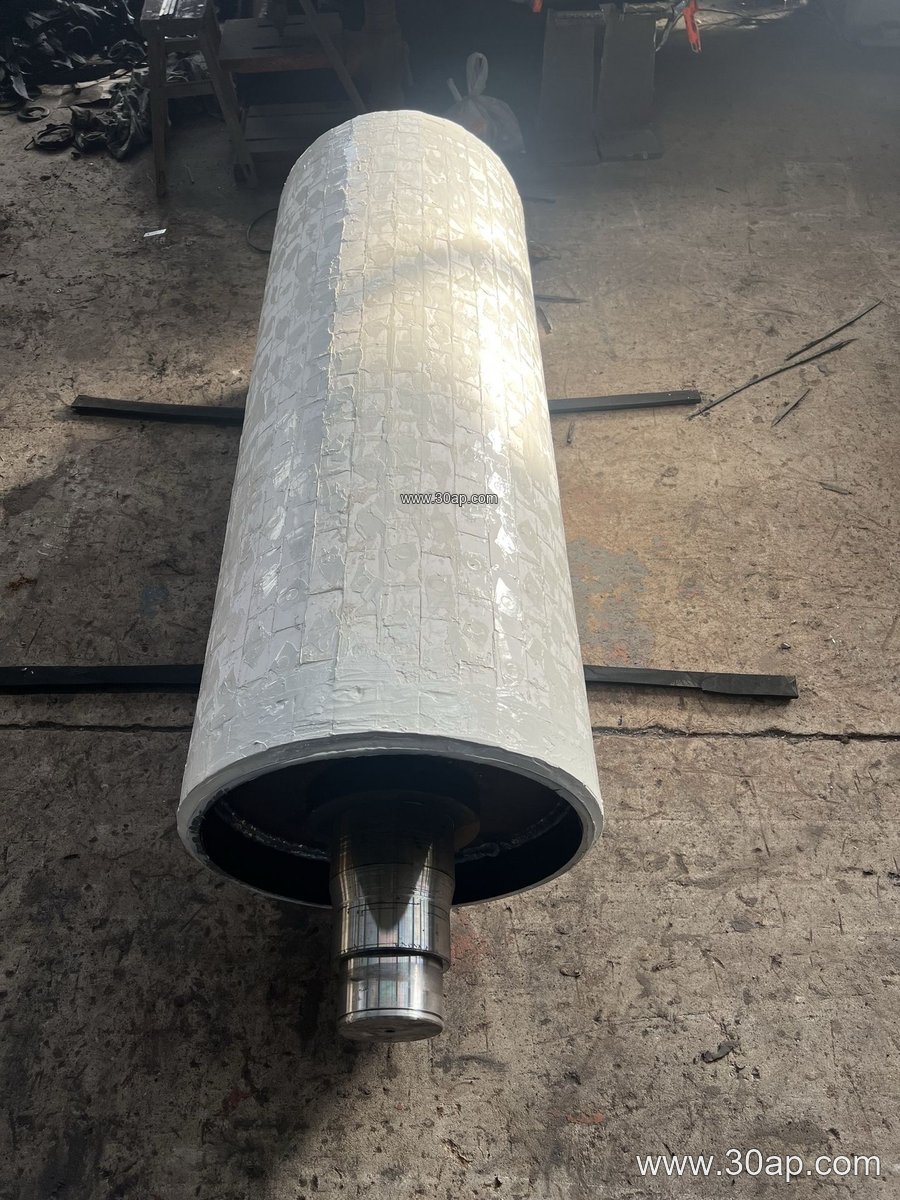
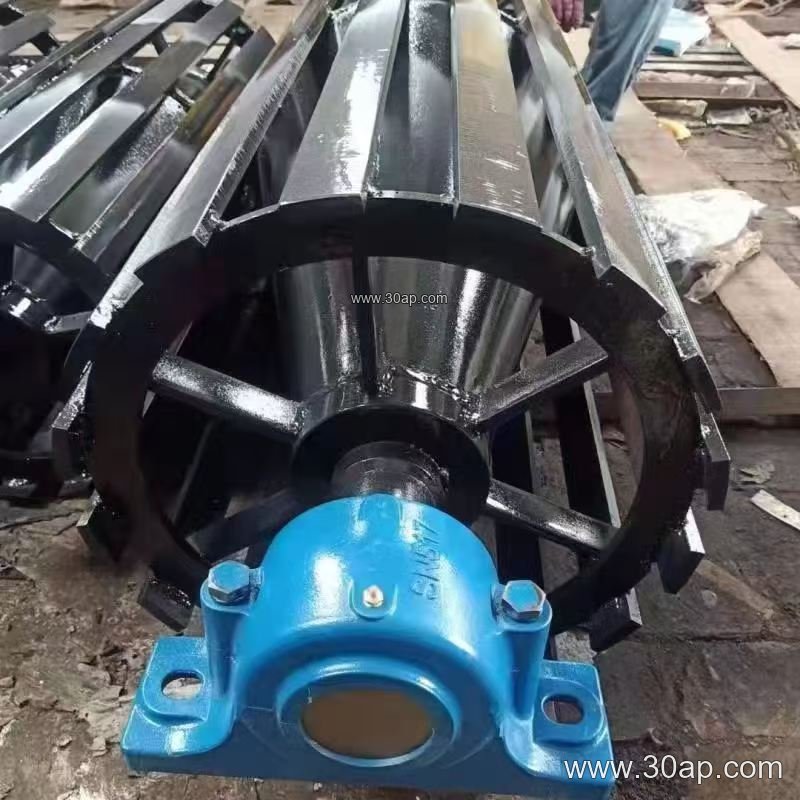
The lagging on a striped lagged pulley is typically applied to a machined steel shell. Common surface forms include cold-bonded rubber, hot-vulcanized rubber, and ceramic lagging. The striped pattern is produced either by molding the rubber during vulcanization or by cutting grooves into a plain lagging sheet. Thickness often falls in the range of 8 mm to 20 mm, with 10 mm and 12 mm being common for medium-duty conveyors and 15 mm or 20 mm used where impact and wear are heavier. The pulley body itself is usually welded steel, with a shaft sized by torque and load rather than by belt width alone. Shaft diameters such as Ø80, Ø100, Ø120, Ø140 and Ø160 are common, but the final choice depends on the conveyor design. The shell face width is normally wider than the belt; for example, a B800 belt may run on a pulley with roughly 950 mm face width, and a B1200 belt may use about 1400 mm. These are typical references, not fixed rules.
Where It Fits in a Conveying System
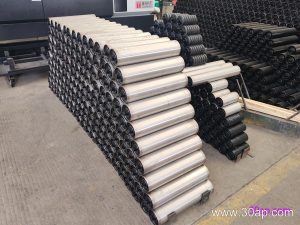
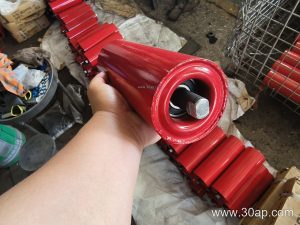
The striped lagged pulley is found in bulk material handling across many industries. In a quarry or aggregate line, it may serve as the drive pulley on a conveyor carrying crushed stone, where dust and small chips can reduce friction on a smooth lagged surface. In a coal preparation plant or a power plant coal yard, a striped lagged pulley can help maintain traction on a conveyor that sees intermittent moisture. Cement plants use them on clinker and limestone conveyors, and steel plants may apply them on sinter or coke lines. The striped pattern is also useful on conveyors that discharge from a crusher, where fines can cling to the belt and transfer to the pulley face. Because the grooves create channels, the pulley tends to self-clean better than a plain lagged surface, which can extend the time between maintenance stops. Related components such as the idler roller, conveyor bracket and conveyor belt all interact with the pulley, so alignment and belt tracking should be checked together.
Matching the Pulley to the Belt and Duty
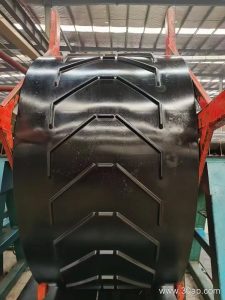
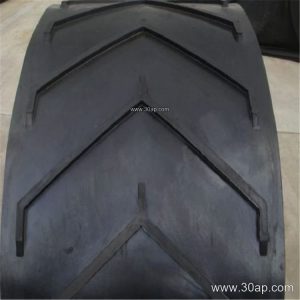
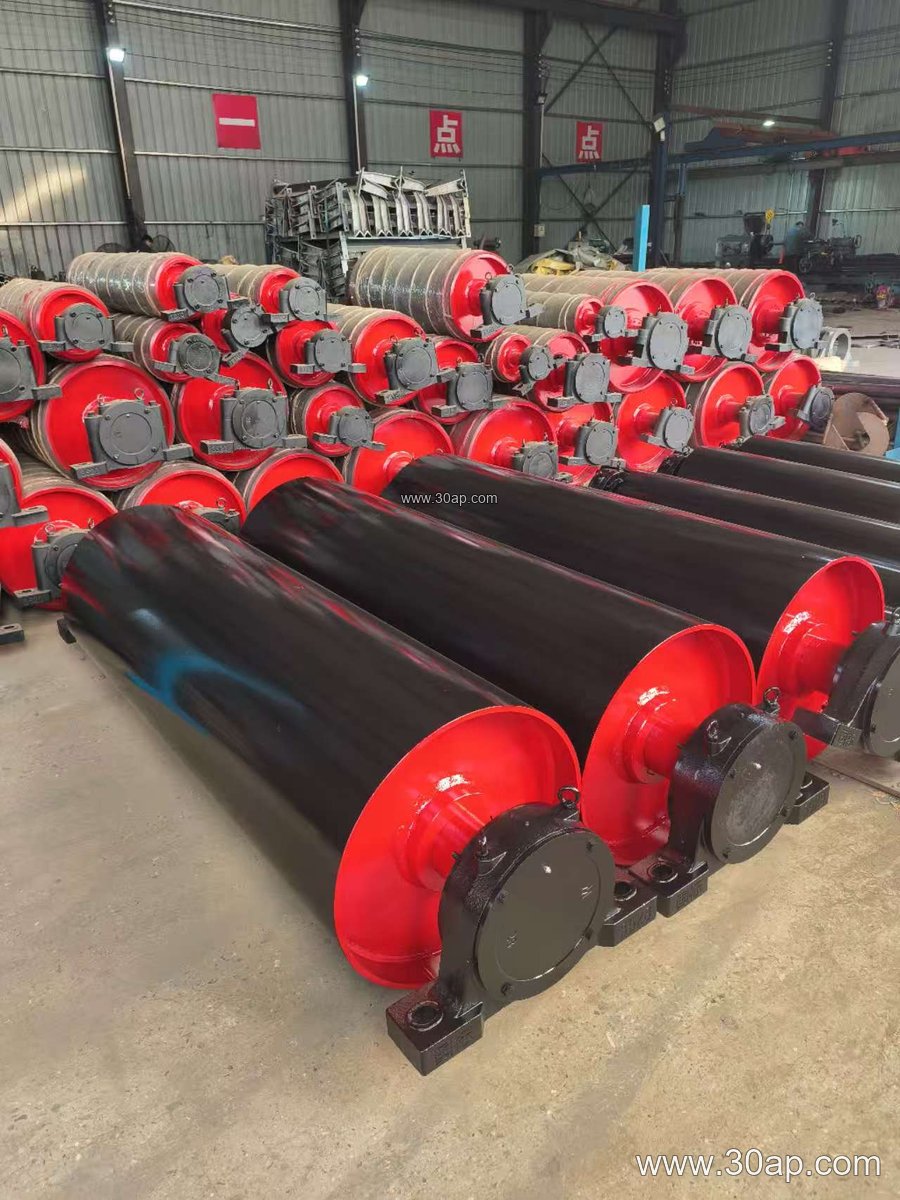
Selecting a striped lagged pulley starts with the belt width and the required traction. A wider belt does not automatically mean a larger diameter; for instance, a B650 belt might run on a Ø400 pulley in one conveyor and a Ø500 pulley in another, depending on belt speed, tension and wrap angle. Tables of common combinations are useful as a starting point, but the final diameter should be confirmed by the conveyor designer. The lagging pattern itself can vary: some striped lagged pulleys use straight grooves, while others use a slight diagonal or chevron-style groove to improve water shedding. For abrasive conditions, a high abrasion resistant conveyor belt may be paired with a thicker lagging, while a flame retardant conveyor belt in an underground coal mine calls for lagging that meets the same fire safety requirements. Oil resistant and heat resistant conveyor belts may also influence the lagging compound choice. The pulley should be balanced and the lagging bonded uniformly; an uneven surface can cause belt tracking problems and premature wear on the conveyor belt.
Buyer Checklist and Maintenance Notes
Before ordering, confirm the pulley role (drive, tail, bend or take-up), the belt width, the required shaft diameter, the lagging thickness and the groove pattern. Ask for the face width and the bearing centers, since these affect installation. A common reference table for belt width and pulley face width looks like this:
- B500 belt — approx. 600 mm face width
- B650 belt — approx. 750 mm face width
- B800 belt — approx. 950 mm face width
- B1000 belt — approx. 1150 mm face width
- B1200 belt — approx. 1400 mm face width
- B1400 belt — approx. 1600 mm face width
These values are typical and may change with the conveyor frame design. During operation, inspect the striped lagging for embedded material, cuts or glazing. A glazed surface can reduce friction, and a cut can spread. Keep the conveyor belt tension correct and the conveyor bracket bolts tight, because a loose pulley can wear the lagging unevenly. In dusty plants, a weekly wash-down or air clean of the pulley face helps the stripes do their job. For high-temperature service, check that the lagging compound is rated for the belt surface temperature. The striped lagged pulley is a practical choice when traction and self-cleaning matter together, but it should always be specified as part of the complete conveyor pulley assembly rather than as a standalone item.