What a Ceramic Lagged Drive Pulley Does
A ceramic lagged drive pulley is the head pulley that transmits motion to a conveyor belt. Unlike a plain steel drum, its shell carries a ceramic tile lagging that raises the coefficient of friction between drum and belt, which is exactly what a heavily loaded conveyor needs at the discharge end. In a quarry, a cement plant, or a coal handling system, this drum is usually the single point where the whole belt drive is applied, so grip and wear life matter more here than anywhere else on the machine.
The same product is often called a ceramic rubber lagged head pulley or a ceramic tiled drive drum. Those names describe the same item. It is not a tail pulley, not a bend pulley, and not a tension pulley, although a ceramic surface is sometimes specified on a high-tension take-up drum as well.
How the Ceramic Lagging Is Built
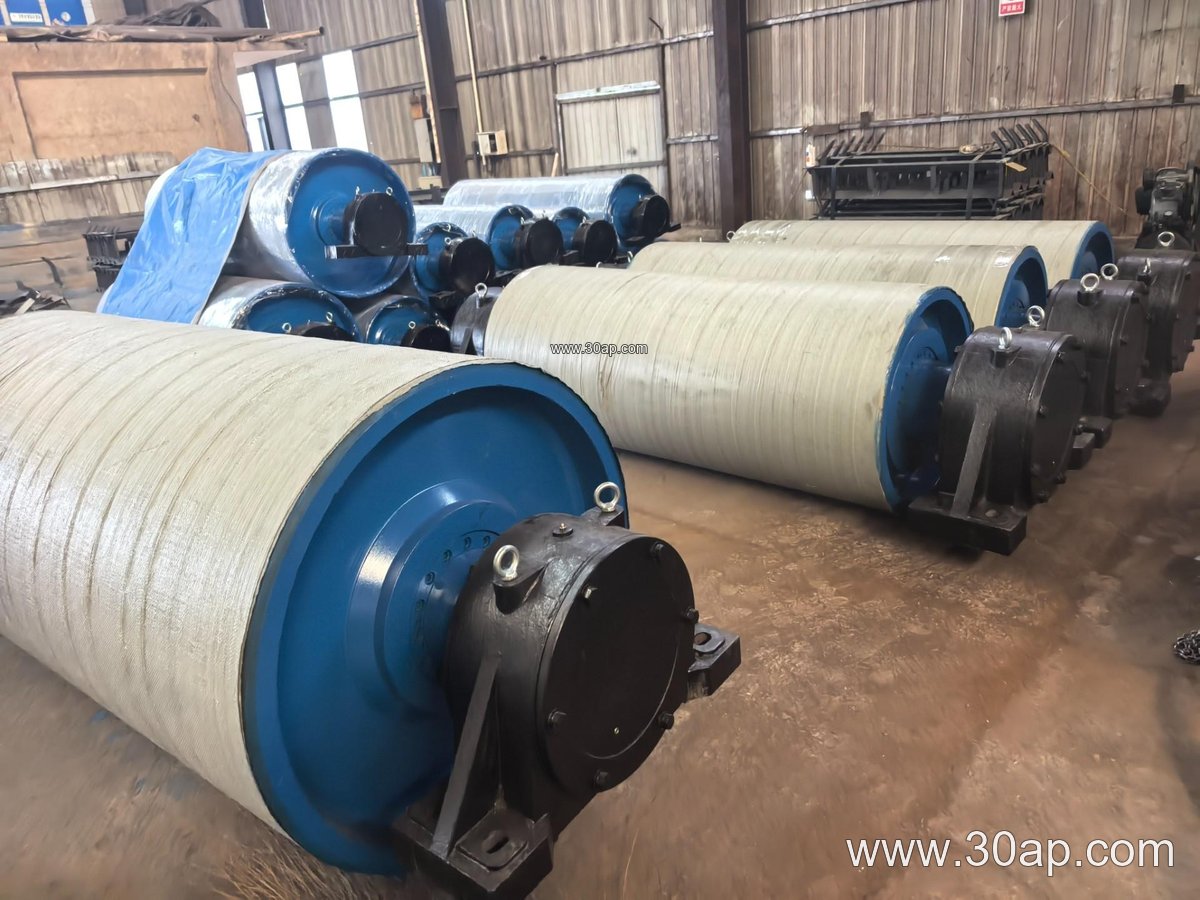
The pulley body is a welded steel shell with end discs and a shaft, machined so the lagging seats evenly. Ceramic lagging is applied as small alumina tiles bonded into a rubber or polymer backing layer. The backing absorbs shock and conforms slightly to the belt, while the tiles provide the hard, sharp-edged contact surface. Tiles are normally set in a staggered or diamond pattern with small gaps between them; those gaps let water and fine dust escape instead of building a slippery film.
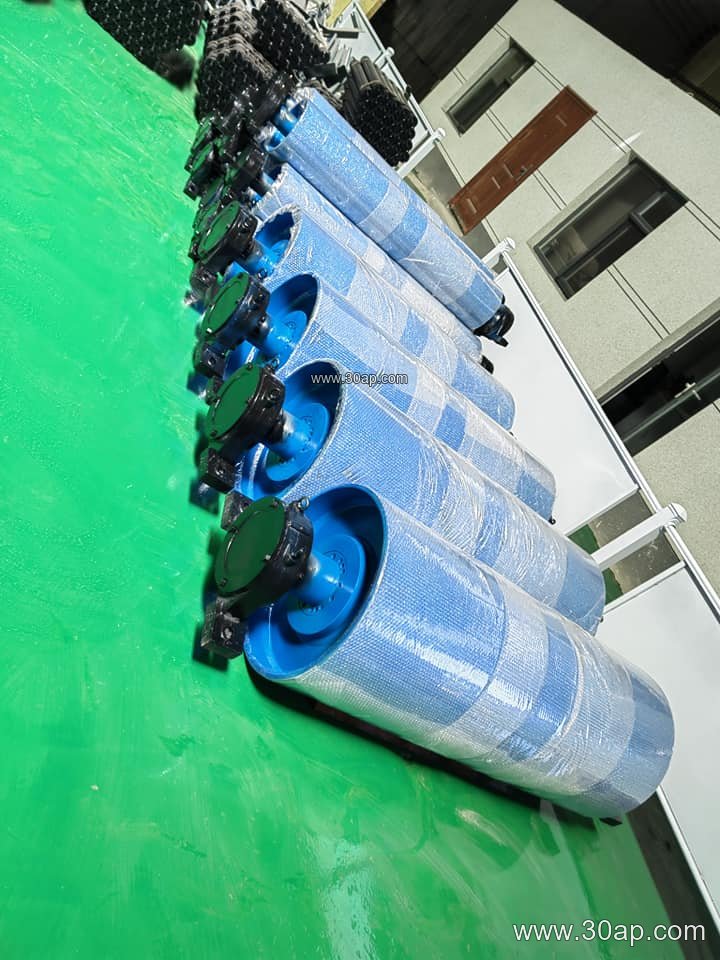
- Tiles: wear-resistant alumina, typically 10 to 20 mm thick depending on duty
- Backing: vulcanized or bonded rubber layer, often 8 to 15 mm
- Surface form: plain tile layout, diamond tile layout, or grooved pattern
- Shell: steel drum with machined faces and keyed or shrink-fitted shaft
The ceramic surface is harder than rubber but less forgiving, so belt tracking and alignment must be correct before the drum is put into service. A misaligned belt will wear the tile edges quickly.
Where It Fits in the Conveyor
The most common location is the head of a long inclined conveyor, where the belt leaves the drum and the load is heaviest. In an iron ore or copper ore line, a ceramic faced drive drum helps prevent slip when the belt is wet or coated with fines. In a power plant coal yard, the same drum keeps the belt moving through winter conditions where rubber alone may lose grip.
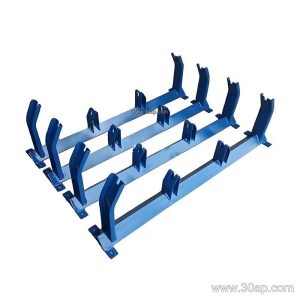
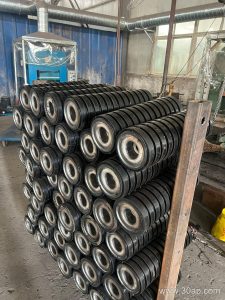
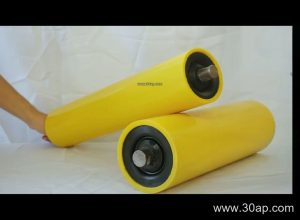
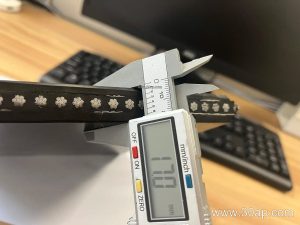
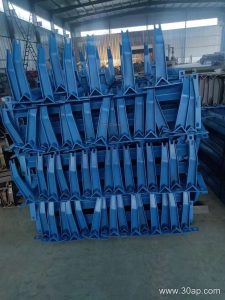
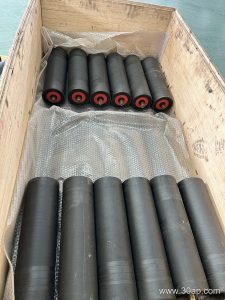
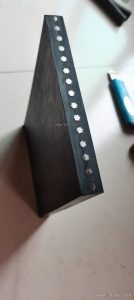
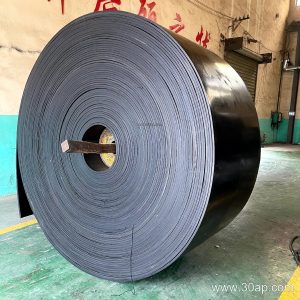
It is usually paired with a matching conveyor belt, a set of troughing idler rollers, and a sturdy conveyor bracket at the drive frame. The belt itself may be an EP conveyor belt or a steel cord conveyor belt on larger installations; the drum surface should be chosen to suit the belt cover rather than the other way round.
Sizing and Selection Notes
Drive pulleys are selected by belt width, required torque, and belt tension, not by belt width alone. A B800 conveyor may use a Ø500 drum in one plant and a Ø630 drum in another, depending on wrap angle and load. The table below shows common reference combinations; treat them as examples, not fixed rules.
| Belt width | Typical drum diameter | Typical face width | Common lagging thickness |
|---|---|---|---|
| B650 | Ø400 – Ø500 | about 750 mm | 10 – 12 mm |
| B800 | Ø500 – Ø630 | about 950 mm | 10 – 15 mm |
| B1000 | Ø630 – Ø800 | about 1150 mm | 12 – 15 mm |
| B1200 | Ø800 – Ø1000 | about 1400 mm | 15 – 20 mm |
| B1400 | Ø800 – Ø1250 | about 1600 mm | 15 – 20 mm |
| B1600 | Ø1000 – Ø1400 | about 1800 mm | 15 – 20 mm |
Shaft diameter is set by torque and bearing load. Common values run from Ø80 to Ø200, but the correct figure comes from the drive calculation, never from belt width alone.
What Buyers Should Check
Ask for the tile pattern drawing, the backing compound, and the bond test method, because a poorly bonded tile can lift and tear the belt cover. Confirm the face width exceeds the belt width by a suitable margin and that the drum is balanced for the intended speed. On a heavy-duty mining conveyor, a ceramic lagged drive pulley is a long-term investment, so spare tiles and a repair procedure are worth requesting at the same time. For lighter duty lines, a rubber lagged drum may be sufficient, but where slip risk is high, the ceramic version earns its place.