What an Acid Resistant Conveyor Belt Is
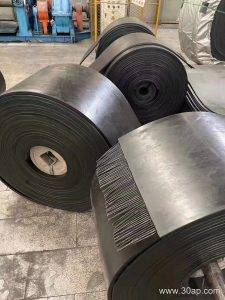
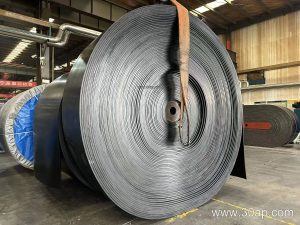
An acid resistant conveyor belt is a fabric-reinforced rubber belt built to carry materials that would attack ordinary rubber compounds. In a fertilizer plant, a phosphate terminal, or a chemical warehouse, spillage and dust can contain acidic residues that slowly degrade a standard belt cover. The acid resistant conveyor belt uses a cover compound selected to resist that chemical attack while still providing the mechanical strength needed for continuous conveying. It is a chemical resistant conveyor belt variant, and the two names are often used for the same product family.
The belt is not a universal answer to every corrosive duty. It is specified when the carried material or the surrounding atmosphere is known to be acidic, and the compound is matched to that condition.
Construction and Typical Specifications
Most acid resistant belts are built on a fabric core, either EP (polyester-cotton) or NN (nylon-nylon) canvas, with a protective rubber cover on the carrying side and a thinner cover on the pulley side. The carcass provides tensile strength and troughability, while the cover provides the chemical resistance. A buyer may see an EP Conveyor Belt construction or an NN Conveyor Belt construction offered for the same acid duty, so the carcass choice should follow the load and the pulley diameters rather than the chemical label alone.
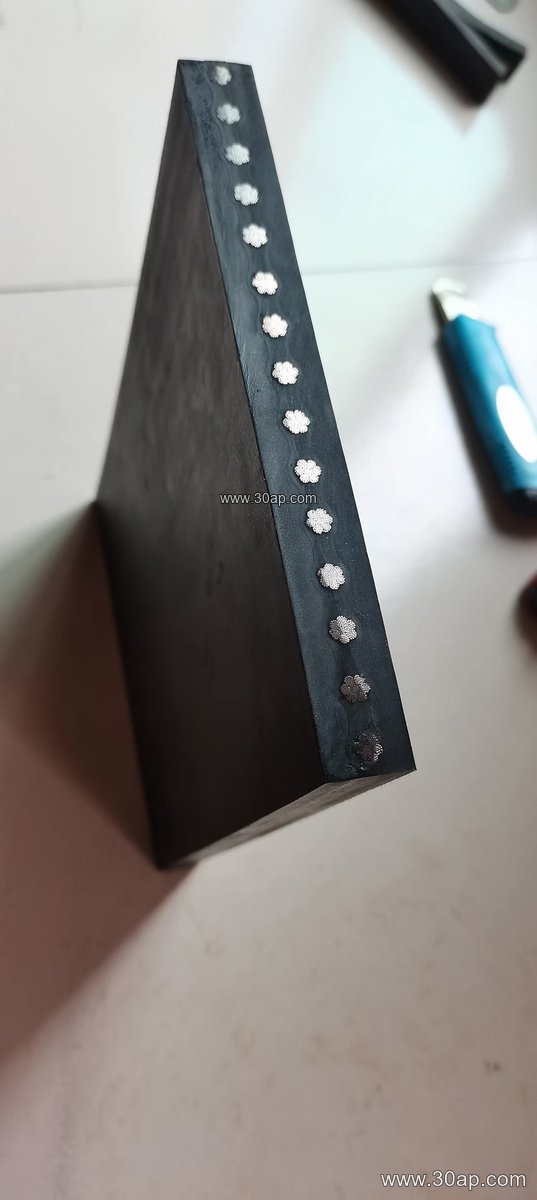
Common reference values for this product family are shown below. They are typical ranges, not fixed supply promises, and each project should be confirmed with the belt manufacturer.
- Fabric core: 2 to 6 plies, EP or NN
- Cover thickness: 3+1.5 mm, 4+2 mm, 5+2 mm, 6+2 mm, 8+3 mm
- Belt width: B500, B650, B800, B1000, B1200, B1400, B1600, B1800, B2000
- Strength grades: EP200, EP315, EP400, EP500, EP630, EP800, EP1000, EP1250, EP1600, EP2000
For heavy acid duties with sharp or hot material, a thicker cover and a higher strength grade are usually selected. A Steel Cord Conveyor Belt is sometimes considered for very long hauls, but the acid resistance of the cover compound still has to be confirmed separately.

Where It Is Used
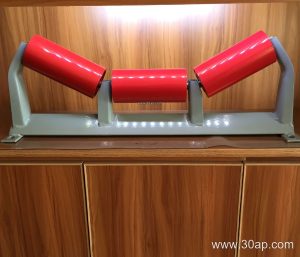
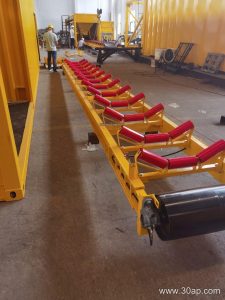
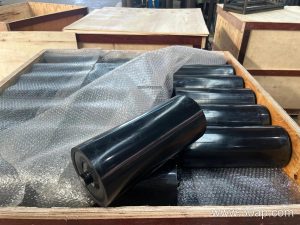
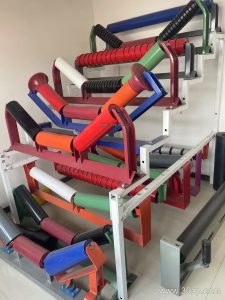
The most common applications are in fertilizer production, phosphoric acid and sulfuric acid handling, chemical plants, and some mineral processing lines where acidic slurries or damp ore are conveyed. It also appears in wastewater treatment sludge handling, certain food processing streams, and battery recycling plants. In these settings the belt often works alongside idler rollers, conveyor pulleys, and conveyor brackets that also need a corrosion-resistant finish, because a protected belt on unprotected hardware still creates maintenance problems.
Acid resistance is often combined with other properties. A plant handling both acidic and abrasive material may ask for an Abrasion Resistant Conveyor Belt compound with chemical resistance, while a coal or cement site with acidic water may need a Flame Retardant Conveyor Belt grade. These combinations are common, but each property should be specified explicitly rather than assumed.
Selection Points for Buyers
Start with the chemistry. The concentration, temperature, and contact time of the acid determine which cover compound will work. A belt that resists dilute acid at ambient temperature may fail quickly in a hot concentrated stream. Ask the supplier for the compound data and, where possible, a sample test in the actual liquid.
Then check the mechanical duty. Belt width, ply count, and strength grade should be calculated from the tonnage, the incline, the material lump size, and the drive arrangement. A 1200mm wide belt and a 1500mm wide belt can both be correct on different conveyors, so width must not be chosen from a single pulley size. The drive pulley, tail pulley, and bend pulley are separate components with their own diameters, and the belt manufacturer needs those diameters to confirm the minimum bend radius.
Finally, plan the maintenance. Acid attack often shows first at the edges, at splice areas, and under spillage points. Regular washing, correct belt tracking, and prompt repair of cover damage extend service life. Keeping the idler rollers turning freely and the conveyor pulley lagging intact reduces the chance of belt slip and edge damage.
Practical Notes
An acid resistant conveyor belt is a targeted product, not a general-purpose upgrade. When the duty involves mixed chemicals, high temperature, or oil together with acid, state all conditions in the enquiry. For more information on related belt and conveyor components, visit blbelt.com and review the Acid Resistant Conveyor Belt range together with the pulley and roller options. Matching the belt, the idler roller, and the conveyor pulley to the same corrosive environment is the most reliable way to keep a chemical handling line running.