What a Conveyor Belt Guide Idler Does
A conveyor belt guide idler is a small but important component in a belt conveyor system. It sits along the belt path and helps keep the conveyor belt centered, especially on long runs where misalignment can cause edge damage, spillage, and uneven wear. In many plants, this idler is also called a self-aligning idler or training idler, and it works by using angled rollers or a pivoting frame to nudge the belt back toward the center line.
The guide idler is not a drive pulley, tail pulley, or bend pulley. Those components transmit power or change the belt direction. The guide idler only guides and supports the belt, and it is usually mounted on a conveyor bracket at intervals along the carrying or return side.
How It Is Built
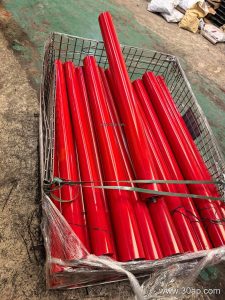
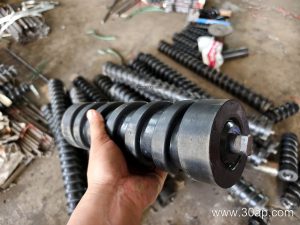
A typical guide idler uses a steel tube shell, a shaft, and bearing housings with sealed bearings. The roller surface may be plain steel, nylon, rubber-covered, or ceramic-covered depending on the duty. In dusty or wet conditions, good sealing matters more than a fancy surface. Common bearing sizes include 6204, 6205, 6305, 6306, 6308, and 6310, but the bearing is matched to the idler design, not to belt width alone.
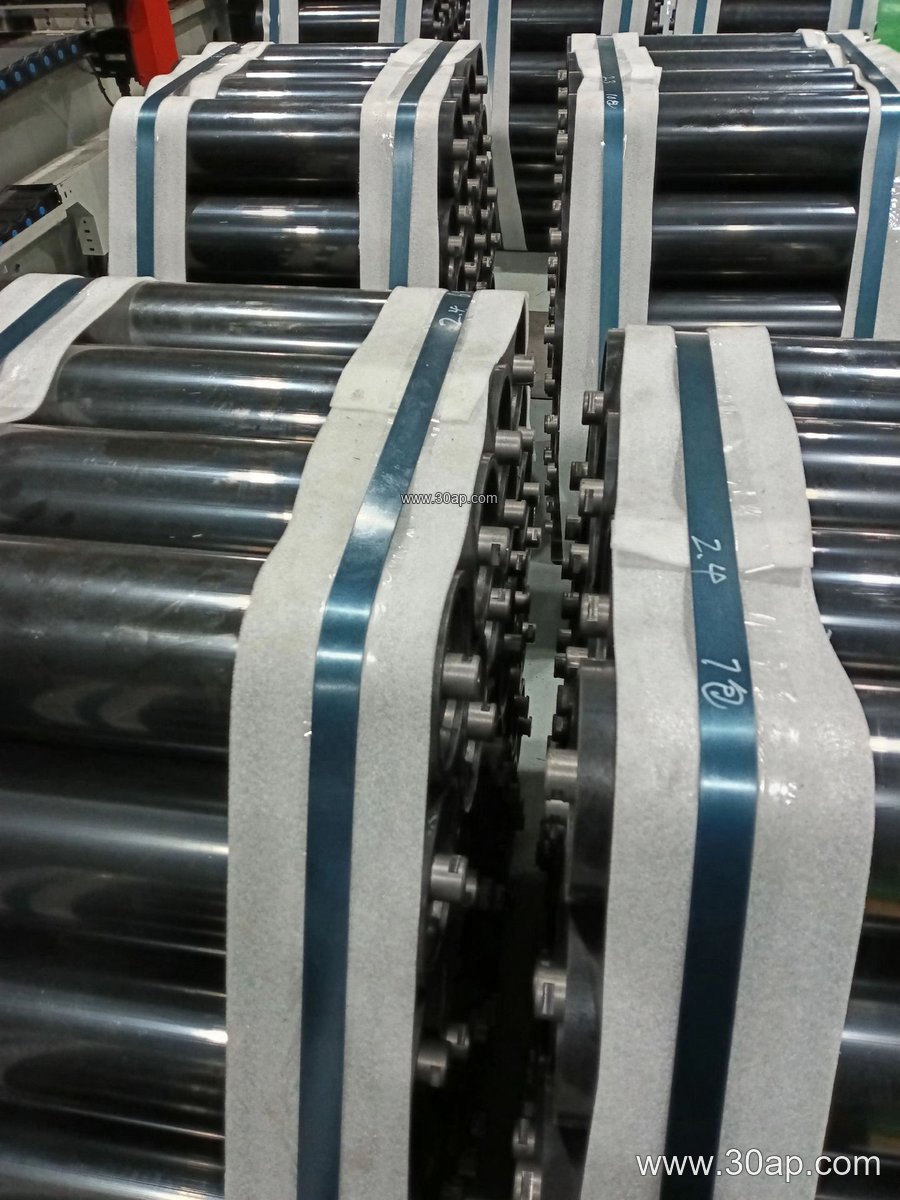
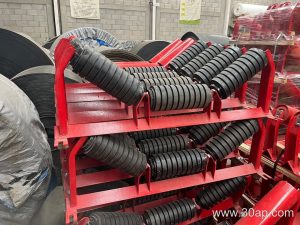
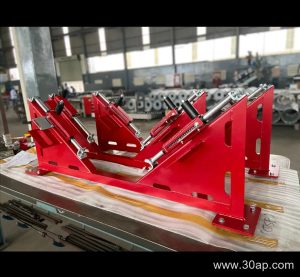
Guide idlers often come as a pair of angled rollers or as a single roller with a vertical pivot. Some designs use a friction self-aligning arrangement, and others use a conical self-aligning roller. The frame may be fixed or pivoting. The roller diameter is usually chosen from a range such as Ø63, Ø76, Ø89, Ø102, Ø108, Ø127, Ø133, Ø159, Ø178, Ø194, or Ø219 mm, with the final choice depending on belt speed, load, and available space.
Where Guide Idlers Fit in the System
Guide idlers are common in quarry conveyor lines, coal handling systems, cement plants, and power plant coal yards. They are also used in sand and aggregate plants, crushing and screening circuits, and port loading conveyors. A few well-placed guide idlers can reduce belt wander on a long run, but they are not a substitute for proper pulley alignment and correct loading.
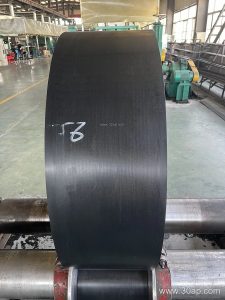
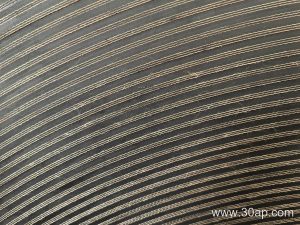
On the carrying side, a guide idler may be installed after the loading point or before a transfer. On the return side, a V-type return idler or a flat return roller may handle the main support, while a guide idler helps with tracking. The belt itself may be a Rubber Conveyor Belt, an EP Conveyor Belt, or a Steel Cord Conveyor Belt. In coal mining, a Flame Retardant Conveyor Belt or Fire Resistant Conveyor Belt is often specified, and the idler must work with that belt without causing edge wear.
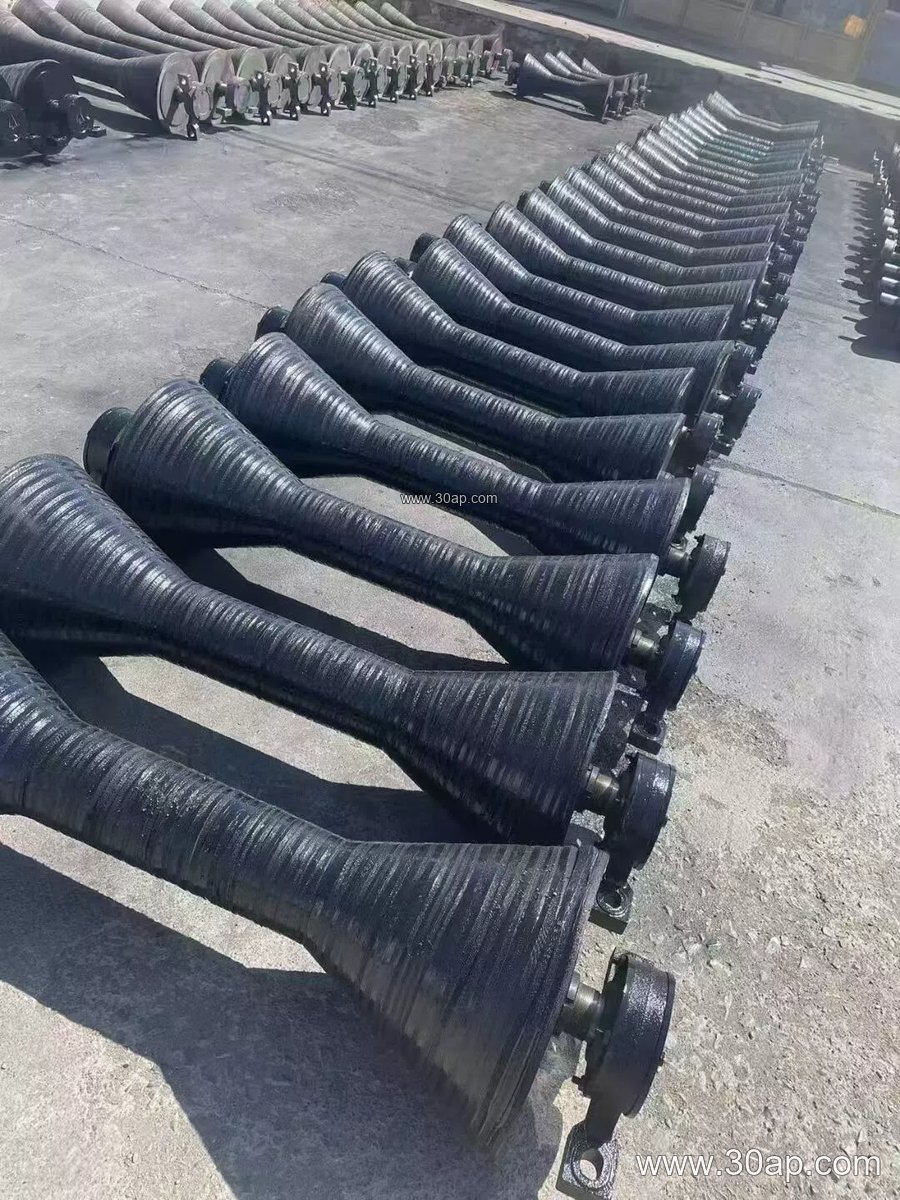
Matching the Idler to Belt Width and Trough Angle
Belt width and trough angle affect the roller length and the frame geometry. A three-roll troughing set for B500 may use a roller length of about 200 mm, while B800 may use about 315 mm and B1200 about 465 mm. These are common examples, not fixed rules. Side rollers and center rollers can differ, and the guide idler frame must be ordered for the actual belt width and trough angle.
Trough angles of 20, 30, 35, and 45 degrees are common. A steeper trough holds bulk material better but can increase belt edge pressure. For a guide idler, a small forward tilt of about 1.5 to 2 degrees is sometimes used to help centering, but this should follow the conveyor design.
| Belt width | Typical three-roll idler length (example) | Common trough angle |
|---|---|---|
| B500 | 200 mm | 20 to 35 degrees |
| B800 | 315 mm | 30 to 35 degrees |
| B1000 | 380 mm | 30 to 35 degrees |
| B1200 | 465 mm | 30 to 45 degrees |
| B1400 | 530 mm | 30 to 45 degrees |
| B1600 | 600 mm | 35 to 45 degrees |
What Buyers Should Check
- Confirm the belt width, trough angle, and whether the guide idler is for the carrying or return side.
- Check the roller diameter and shaft size against the existing conveyor bracket and frame.
- Ask about bearing size and sealing for dusty, wet, or washdown conditions.
- Match the roller surface to the belt type, especially with abrasive or high-temperature belts.
- Keep spare rollers and brackets on hand for critical lines in a coal yard, cement plant, or quarry.
A guide idler is a low-cost part, but poor selection can cause belt edge damage and downtime. Buyers should treat it as a system component, not a generic roller. For more information on conveyor belt, idler roller, and conveyor pulley selection, visit our site at www.example.com/conveyor-belt-guide-idler.