What a Fabric Core Conveyor Belt Is
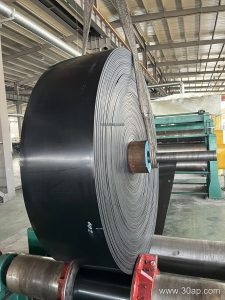
A fabric core conveyor belt is a composite belt whose load-bearing skeleton is made from woven textile plies, usually polyester or nylon, bonded between rubber cover layers. The textile carcass gives the belt its tensile strength and flexibility, while the covers protect the fabric from abrasion, moisture, heat, oil, or flame. Because the plies flex easily, this belt family suits conventional troughing idlers and relatively small pulley diameters, which is why it remains a workhorse in quarry, cement, power plant, and bulk material handling circuits.
The same product is also described as a textile carcass belt or ply-type belt. Two common carcass materials dominate the market: EP (polyester warp, nylon weft) and NN (nylon warp, nylon weft). An EP Conveyor Belt stretches less under load, while an NN Conveyor Belt absorbs impact well and is often chosen for crusher discharge lines.
How the Belt Is Built
Construction starts with fabric plies that are calendered with rubber friction and skim compounds, then assembled into a multi-ply stack. Top and bottom covers are applied, and the whole slab is vulcanized under heat and pressure. Edge construction may be cut-edge or molded-edge, and the finished belt can be supplied as an Endless Conveyor Belt for critical transfer points where a mechanical splice is not acceptable.
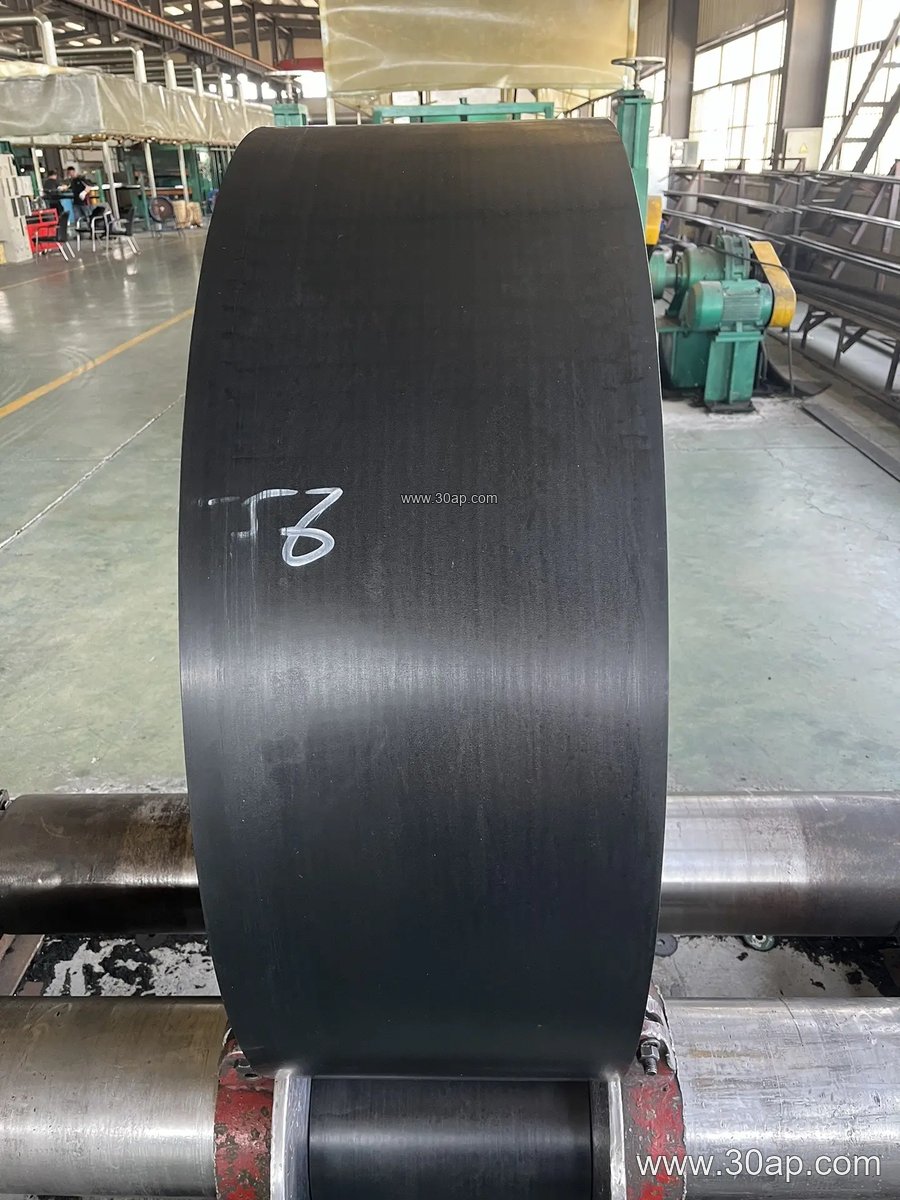
- Carcass: usually 2 to 6 plies of EP or NN fabric.
- Covers: common gauge combinations include 3+1.5 mm, 4+2 mm, 5+2 mm, 6+2 mm, and 8+3 mm.
- Grades: abrasion resistant, heat resistant, oil resistant, flame retardant, anti-static, cold resistant, and acid or chemical resistant variants.
Cover quality matters as much as ply count. A high abrasion resistant conveyor belt in a sand and gravel plant may outlast a thicker but softer belt, while a heat resistant conveyor belt is essential where clinker or sinter carries residual heat.
Typical Duty Points and Industries
You will find this belt on primary and secondary conveyors in mines, coal preparation plants, cement works, steel plants, power stations, ports, and aggregate yards. In a quarry, a fabric belt often runs from the crusher to the screening tower; in a coal mining conveyor system, flame retardant and anti-static grades are normally specified for underground service. A mining conveyor belt of this type may also feed stockpiles or ship loading booms.
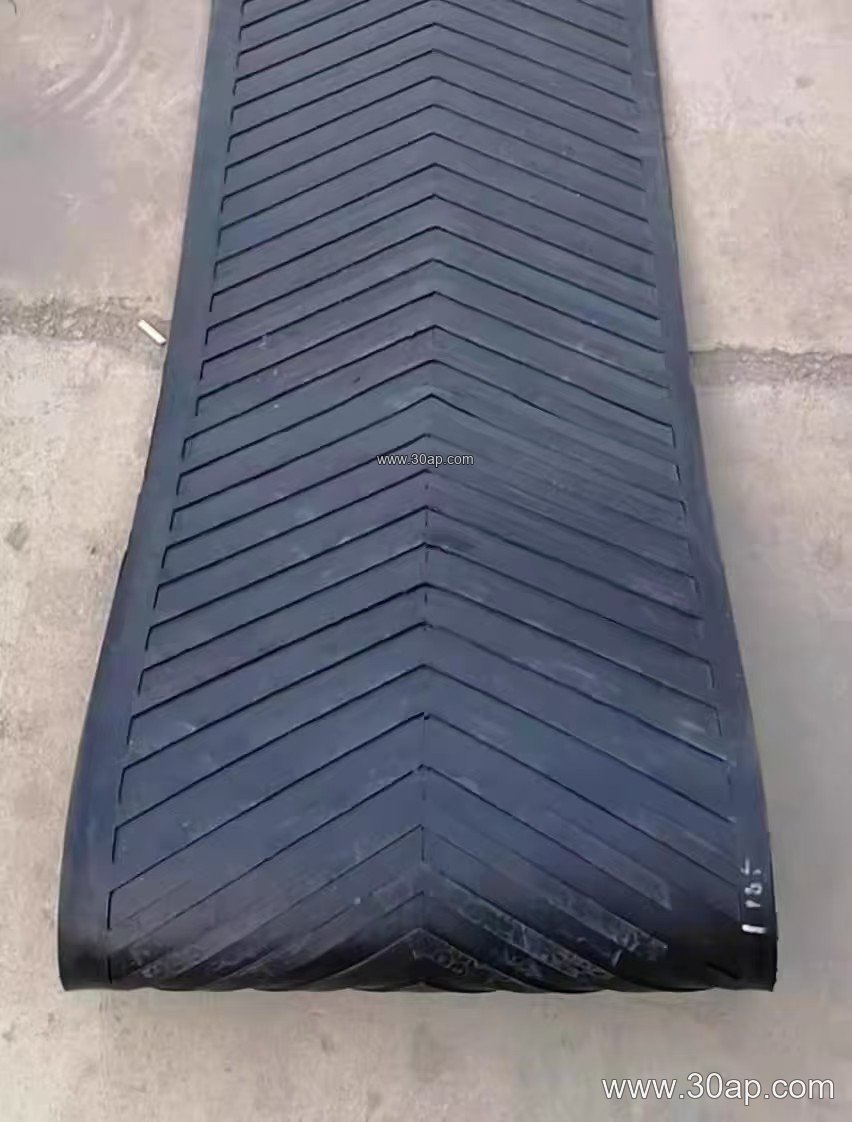
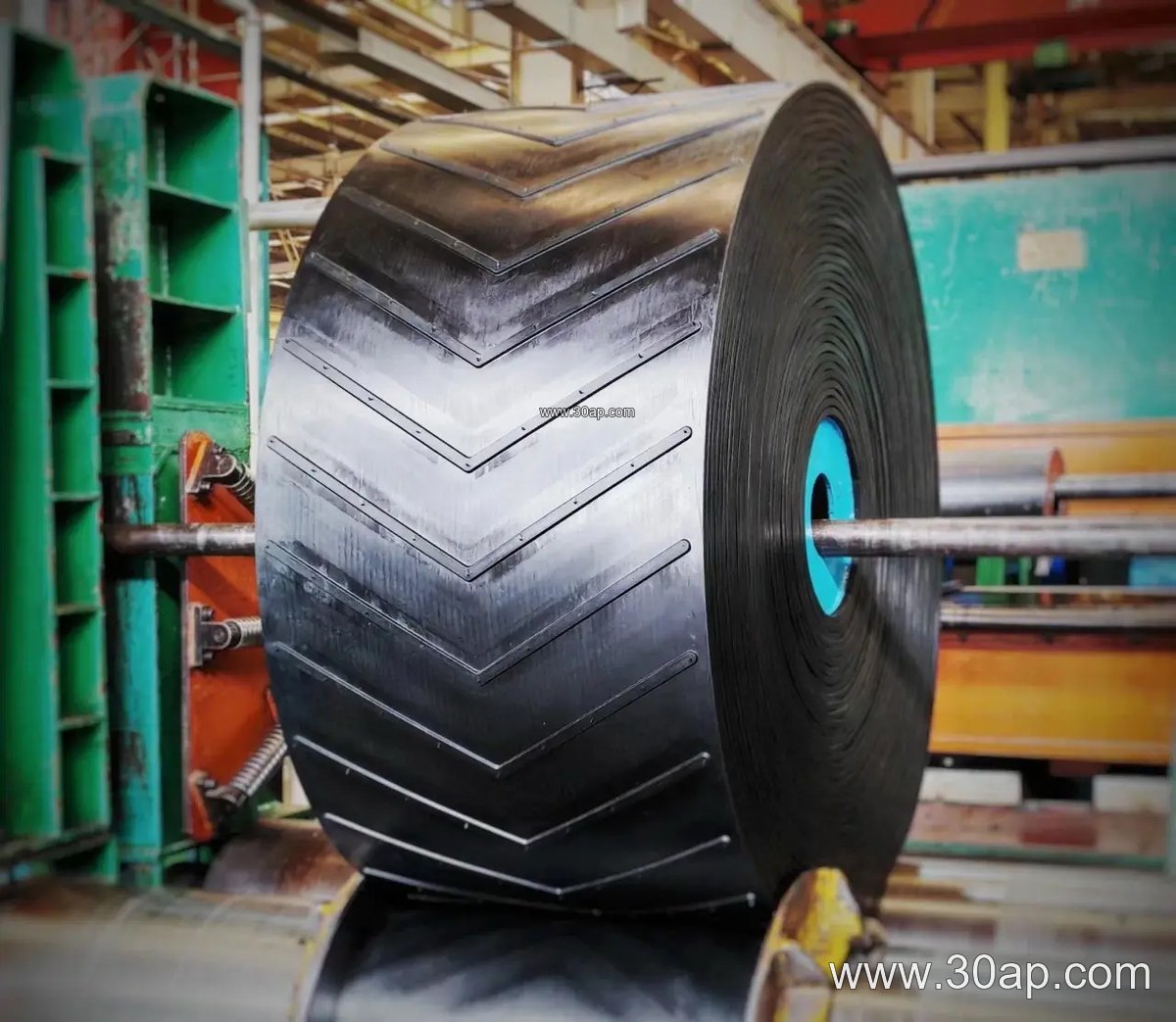
Profile variants solve specific problems. A Chevron Conveyor Belt or Corrugated Sidewall Conveyor Belt handles steep inclines, while a Skirted Conveyor Belt contains material at transfer chutes. Pipe Conveyor Belt designs enclose the load for dust control and curved routes. None of these replaces the fabric core belt itself; they are configurations of the same carcass concept.
Strength Classes and Widths
Buyers usually specify a strength class and a belt width together. EP grades are commonly quoted from EP200 up to EP1600 or higher, while NN grades follow a similar progression. Belt widths in common industrial use include B500, B650, B800, B1000, B1200, B1400, B1600, B1800, and B2000. The table below shows representative pairings; final selection depends on the conveyor design, not on a fixed rule.
| Strength Class | Typical Carcass | Common Width Range | Typical Cover Gauge |
|---|---|---|---|
| EP200 / NN200 | 2 to 3 plies | B500 to B800 | 4+2 mm |
| EP400 / NN300 | 3 to 4 plies | B650 to B1200 | 5+2 mm |
| EP630 / NN400 | 4 to 5 plies | B800 to B1400 | 6+2 mm |
| EP1000 | 5 to 6 plies | B1000 to B1600 | 6+2 or 8+3 mm |
| EP1250 to EP1600 | 5 to 6 plies | B1200 to B2000 | 8+3 mm |
These figures are reference data only. A 1200 mm wide belt may run on quite different pulley sizes from one plant to another, and no belt width dictates a single shaft diameter. Belt width, speed, load, trough angle, and pulley diameter must be checked together by the conveyor designer.
Selection and Maintenance Notes
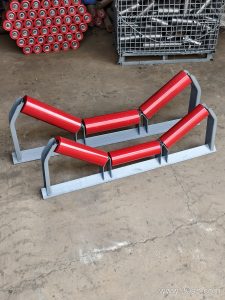
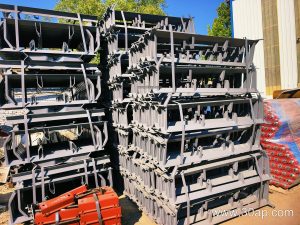
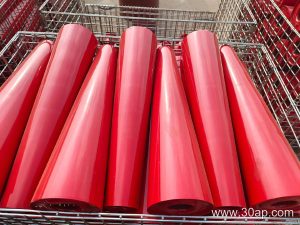
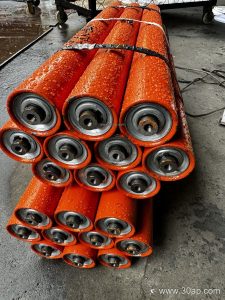
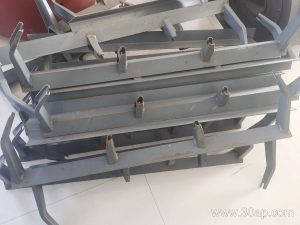
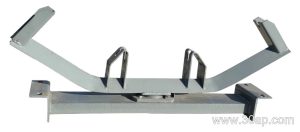
Start with the material: lump size, temperature, moisture, oil content, and abrasiveness decide the cover grade. Then confirm the required tensile strength from the conveyor tension calculation, and check that the selected ply count is compatible with the drive, tail, and bend pulleys. A conveyor pulley with too small a diameter can over-stress a thick carcass, so pulley geometry belongs in the same conversation as belt specification. Idler roller spacing and conveyor bracket condition also affect belt life, because poor support leads to edge damage and ply fatigue.
On site, keep the belt tracking straight, maintain skirt rubber and chute liners, and repair small cover cuts before moisture reaches the fabric. Store spare rolls indoors, away from ozone and sunlight. When replacing a belt, record the strength class, cover gauge, width, and splice type so the next order matches the duty point.
For buyers comparing suppliers, request the carcass construction, cover grade, ply count, and splice method in writing, and ask how the belt will be delivered, whether as an open roll or an endless belt ready for installation.