What an 800mm Drive Pulley Does
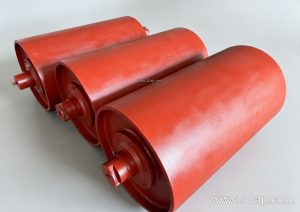
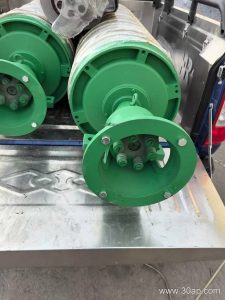
An 800mm drive pulley is the head-end drum that transmits motor torque into the conveyor belt and sets the belt speed. The 800 mm figure refers to the drum diameter; the pulley face width is normally wider than the belt so the belt is fully supported. In a typical arrangement the drive pulley, sometimes called the head pulley or discharge pulley, sits at the discharge end, with a conveyor bracket and take-up system keeping tension stable. It is not a tail pulley and not a bend pulley, and it should not be swapped for either during design or replacement.
A drive pulley is built around a steel shell, welded end discs, a shaft and hub assembly, and bearing housings. The shell may be machined smooth or covered with lagging for grip. Larger units often use a welded or rolled shell with reinforcing ribs. Shaft diameter is set by torque and radial load, not by belt width alone, so an 800 mm drum may be supplied with different shaft sizes depending on the drive duty.
Construction and Surface Options
The drum body and lagging are the parts a buyer should review most closely. Lagging improves friction between the drum and the belt, which matters on inclined or heavily loaded lines.
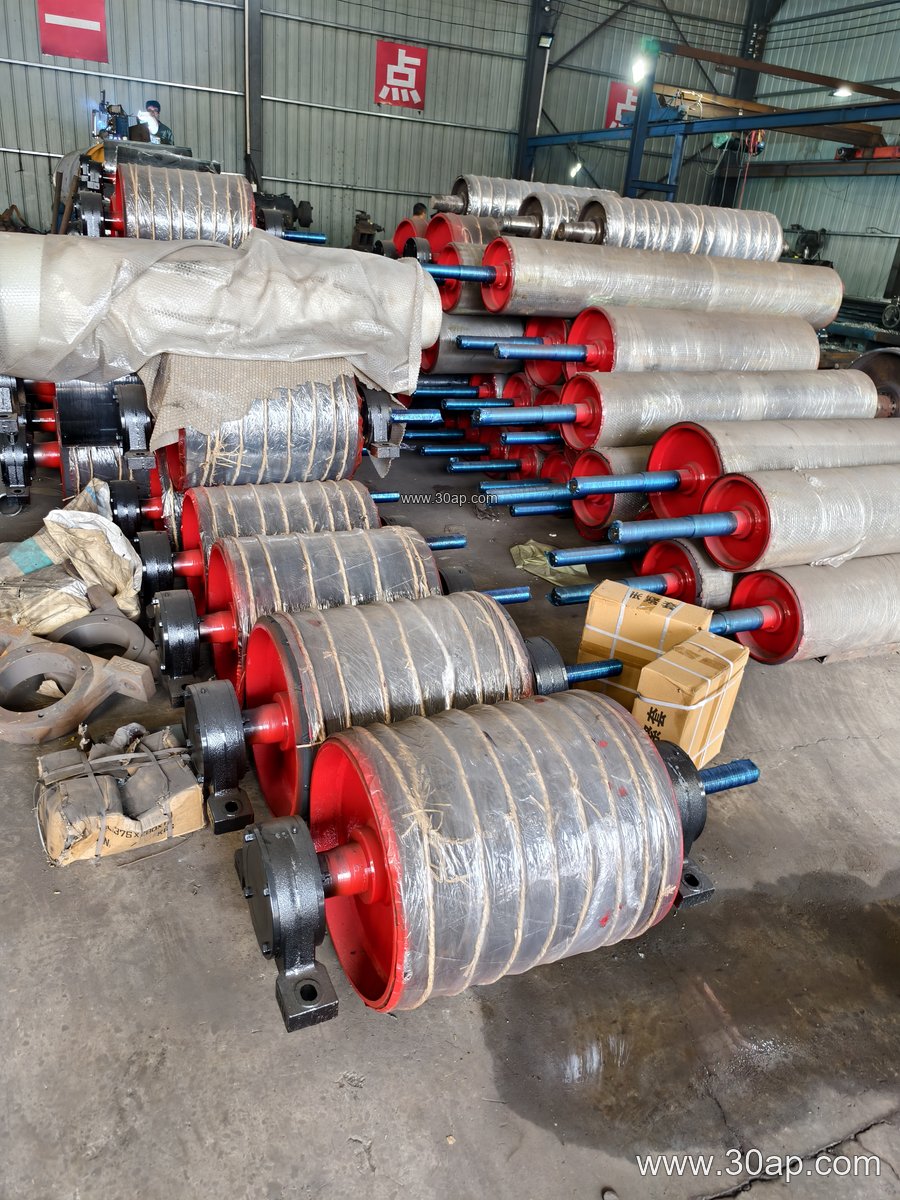
- Plain machined shell for light, clean duty
- Cold-bonded rubber lagging, often 8–12 mm thick
- Hot-vulcanized rubber lagging for higher grip and longer wear
- Diamond or herringbone grooved lagging to help shed water and fines
- Ceramic lagging for abrasive, wet or slippery conditions
Common lagging thicknesses are 8, 10, 12, 15 and 20 mm. A pulley working in a quarry or aggregate line may need deeper, harder lagging than one handling dry sand. Surface choice should follow the material and the risk of belt slip, not a single default.
Matching the Pulley to the Belt Line
An 800mm drive pulley is often seen on B800 conveyors, but face width and diameter are separate decisions. The pulley face is usually wider than the belt: B650 around 750 mm, B800 around 950 mm, B1000 around 1150 mm and B1200 around 1400 mm. Diameter is selected from belt tension, wrap angle, belt construction and space, so a B800 line may use a smaller drum in a light application and a larger one where tension is high. Do not assume that one belt width locks in one drum diameter or one shaft size.
Typical reference combinations
The following values are common reference points, not fixed supply promises.
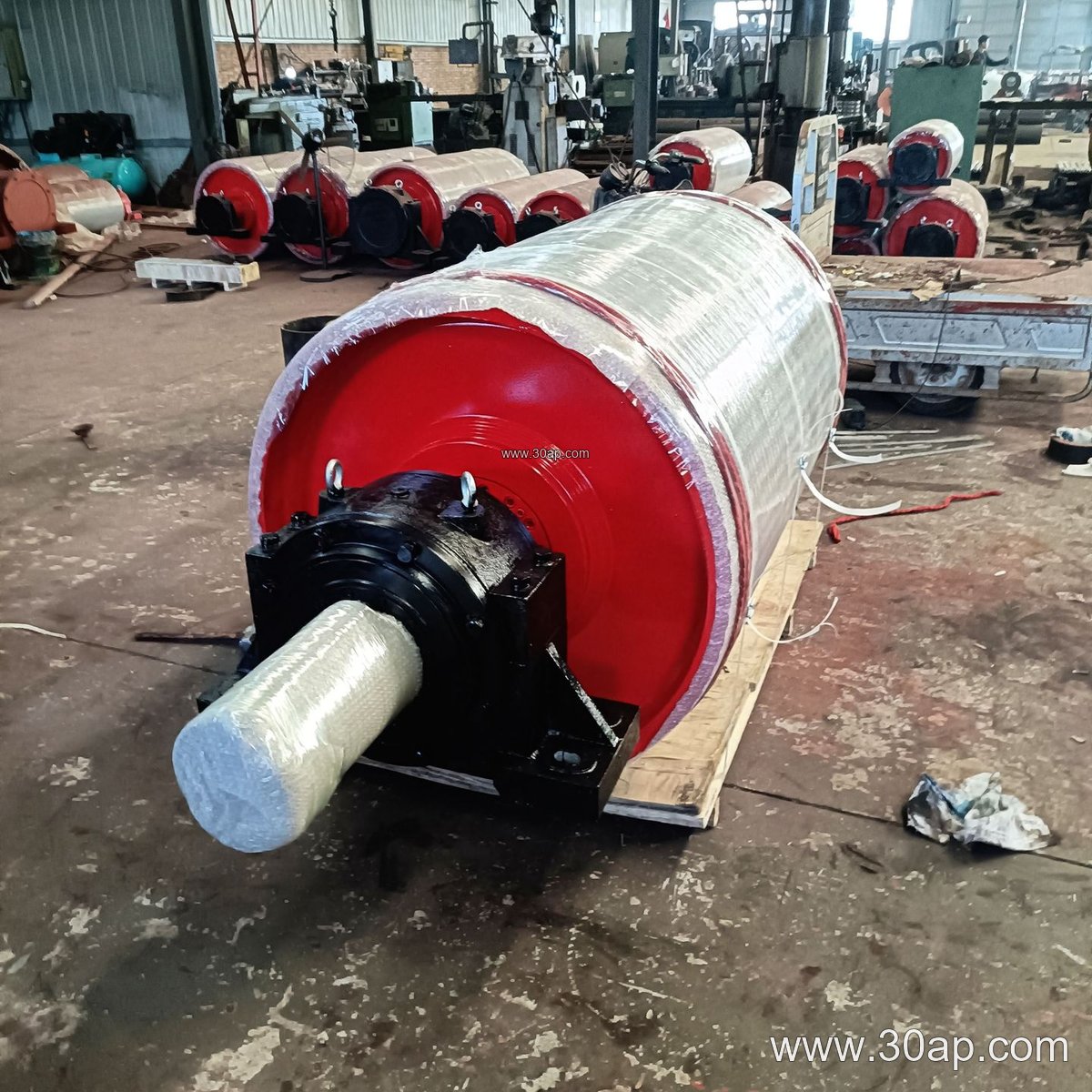
- B800 × Ø500
- B800 × Ø630
- B800 × Ø800
- B1000 × Ø800
- B1200 × Ø1000
- B1400 × Ø800
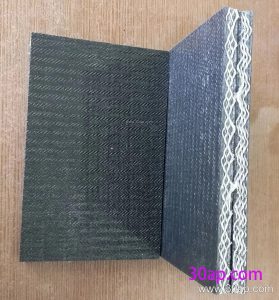
Where the conveyor is long or heavily loaded, a steel cord belt such as ST1250 or ST1600, or a high-strength EP belt, can raise the torque demand and push the shaft and bearing selection upward. On a coal mining conveyor, a flame retardant belt and fire resistant lagging may be specified together; on a cement plant clinker line, heat resistant grades and abrasion resistant belt covers are more relevant.
Where It Is Used
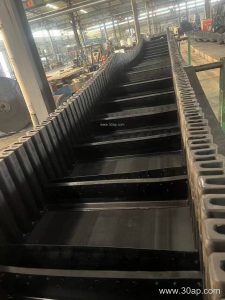
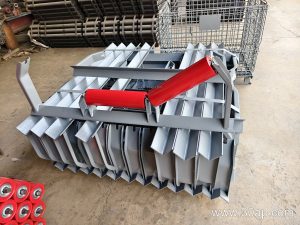
An 800mm drive pulley appears in crushing and screening plants, sand and gravel lines, coal preparation plants, power plant coal handling, and port bulk terminals. It also suits medium-width transfer conveyors in a steel plant or a fertilizer warehouse. In these settings the head drive works with conveyor idlers, a conveyor bracket frame and a take-up to keep the belt tracking and tensioned.
Buyer Checklist
- Confirm the duty: belt width, belt type, speed and slope
- State the required diameter and face width separately
- Specify lagging type and thickness, e.g. 10 mm diamond rubber
- Provide shaft and bearing data from the drive calculation
- Check balance, runout and weld quality before dispatch
- Plan access for lagging inspection and bearing lubrication
For spare-part planning, record the drum diameter, face width, shaft diameter, bearing model and lagging spec. A correctly sized 800mm drive pulley, paired with suitable conveyor belt and idler roller components, keeps the head station reliable. More conveyor pulley and belt guidance is available at gkdconveyor.com.