What a Fixed Conveyor Bracket Does on a Belt Conveyor
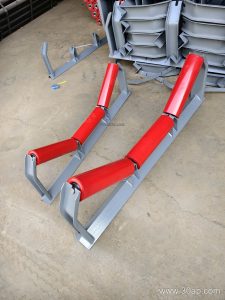
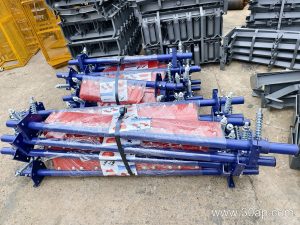
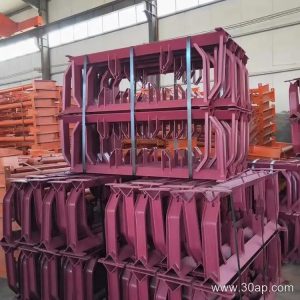
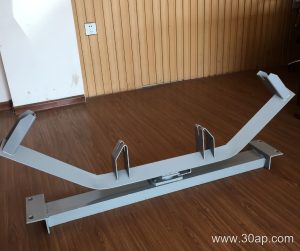
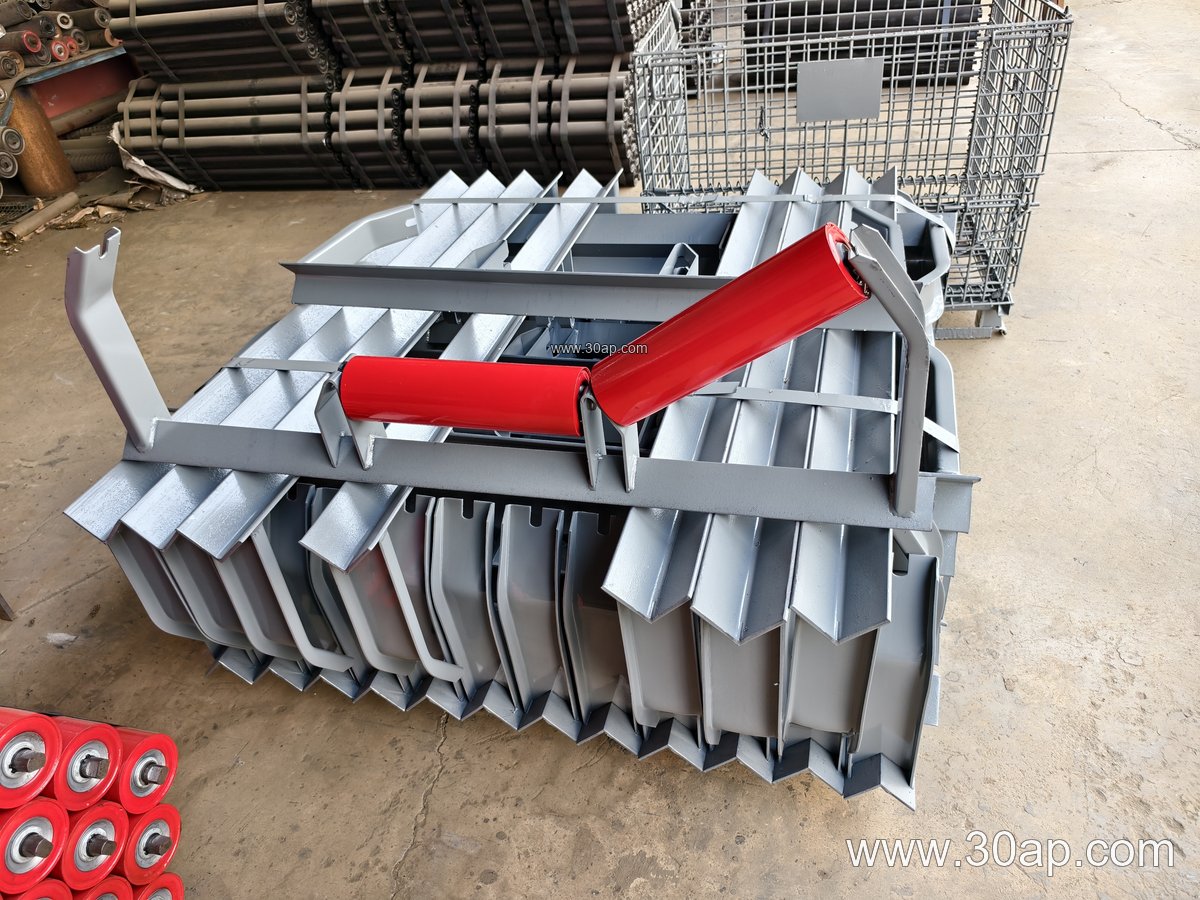
A fixed conveyor bracket is the non-adjustable support frame that holds the carrying-side idler rollers at a set trough angle. Once bolted to the conveyor stringer, it keeps the roller positions constant, so the conveyor belt runs on a stable, repeatable profile from the load point to the discharge. In a quarry, a cement plant or a power plant coal yard, this rigid positioning is often what keeps material centered and reduces spillage along the line.
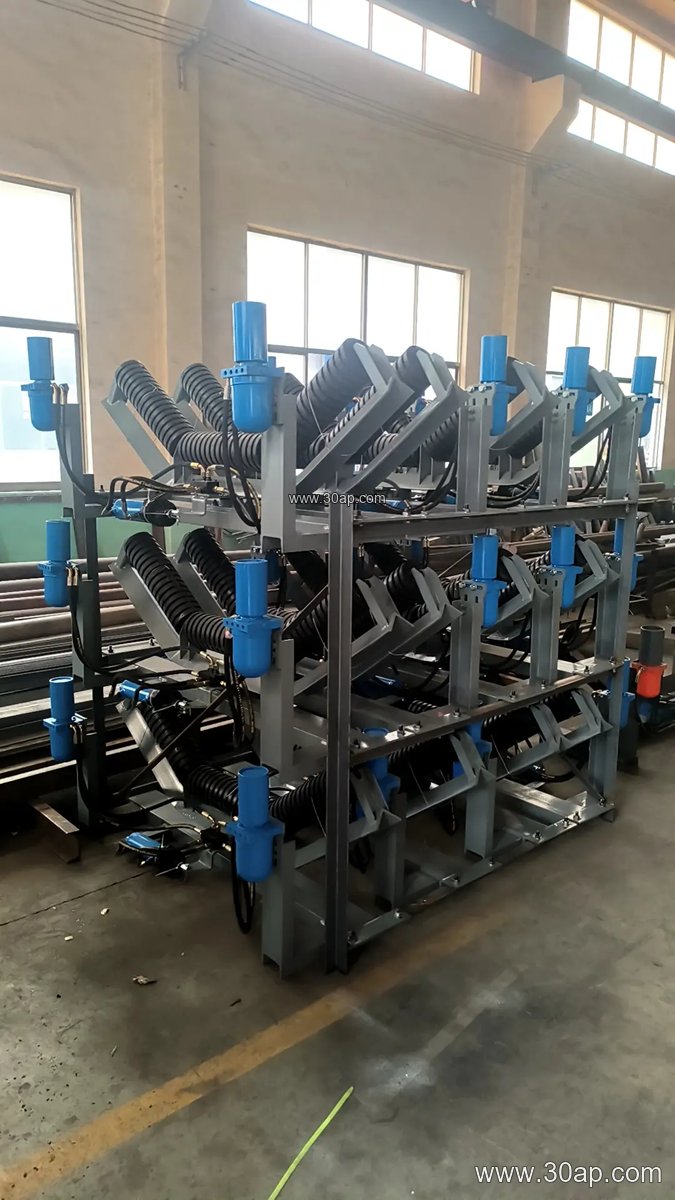
The bracket is usually described together with the rollers it carries. A fixed trough bracket, sometimes simply called a stationary idler bracket, differs from an adjustable bracket: the adjustable version lets maintenance crews change the trough angle, while the fixed type locks the geometry at the design value. Neither is a substitute for a drive pulley, tail pulley or bend pulley — those are separate components with their own functions.
Construction and Common Materials
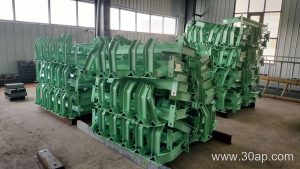
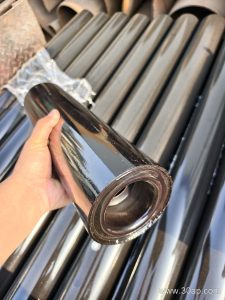
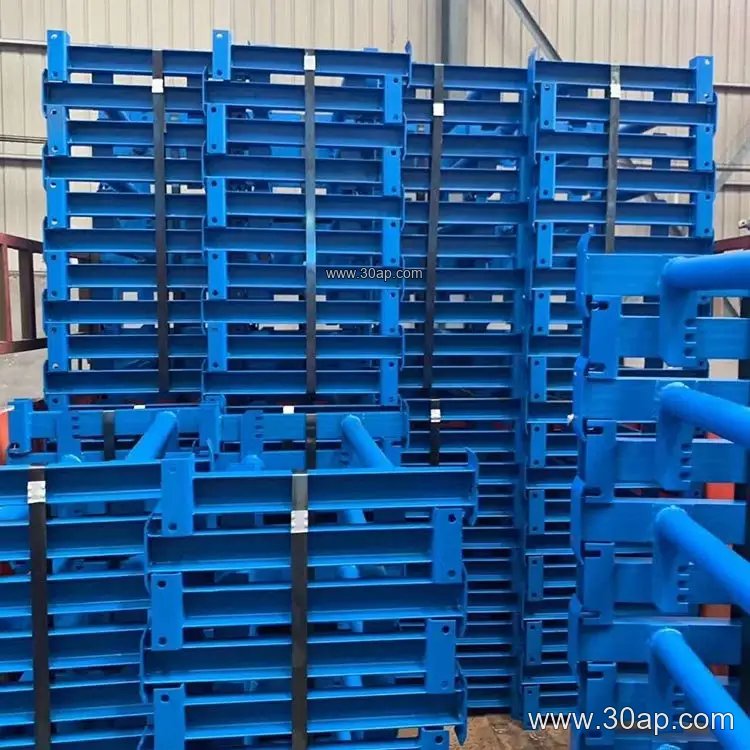
Most fixed conveyor brackets are fabricated from angle steel, channel steel or folded steel plate. The crossbeam length and mounting hole spacing follow the belt width and trough angle, so they are determined by design rather than fixed for every conveyor. Common roller diameters used with these frames include Ø89, Ø108, Ø133, Ø159 and Ø194, matched to the load and belt speed of the installation.
Typical reference combinations look like B800 with 35 degrees and Ø108, B1200 with 45 degrees and Ø133, or B650 with 30 degrees and Ø89. These are examples, not mandatory pairings; one belt width can work with more than one trough angle and roller diameter depending on the conveyor design.
Reference data for trough angles and belt widths
| Parameter | Common options |
|---|---|
| Trough angle | 20°, 30°, 35°, 45° |
| Belt width | B500, B650, B800, B1000, B1200, B1400, B1600, B1800 |
| Roller diameter | Ø89, Ø108, Ø133, Ø159, Ø194 |
| Material | Angle steel, channel steel, folded plate |
Where Fixed Brackets Fit in the Conveyor Layout
On a typical belt conveyor, fixed brackets appear in several positions. Carrying-side trough brackets support the loaded run; return brackets or V-return brackets hold the belt on the return side; impact brackets sit under the loading chute where material falls onto the belt. A fixed bracket is chosen where the trough profile should not move, while an adjustable bracket is preferred where operators expect to fine-tune the angle later.
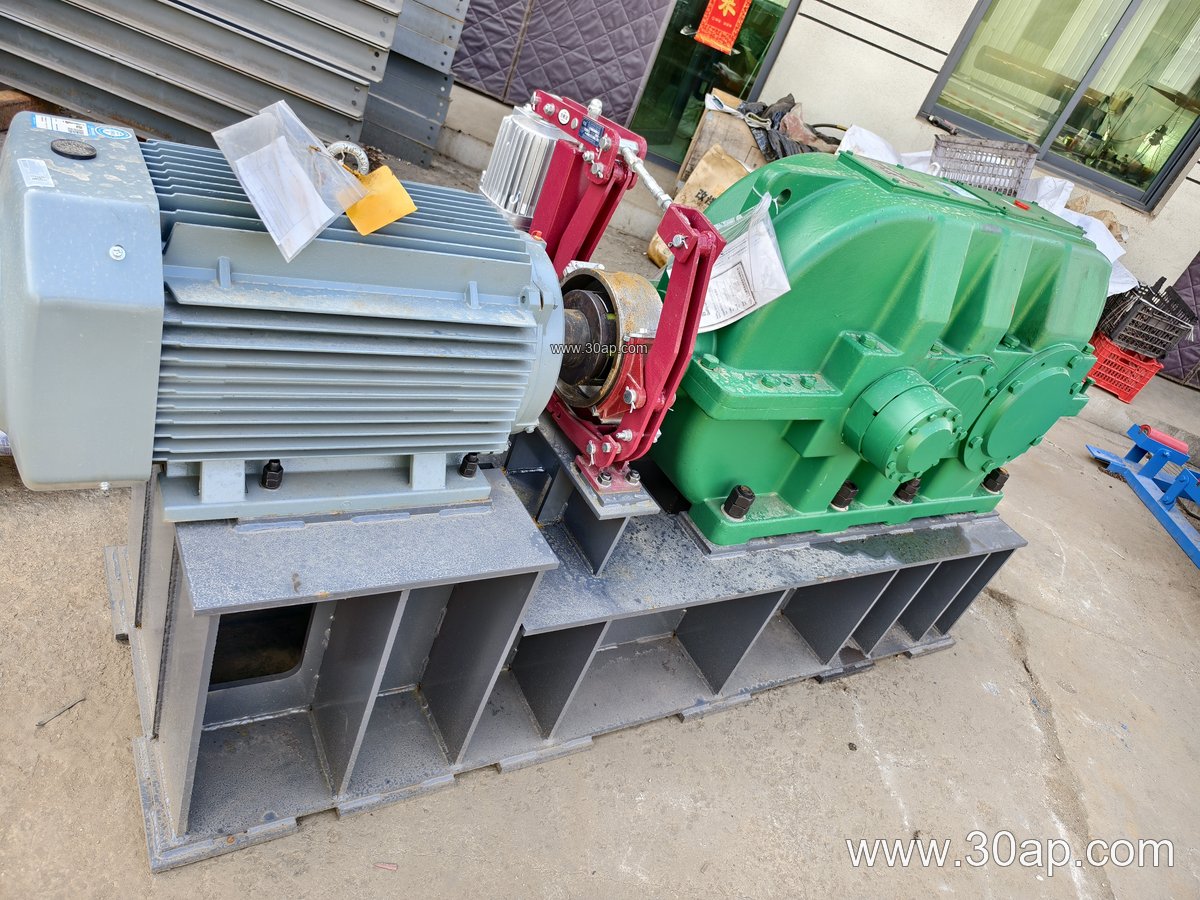
These frames work alongside the conveyor belt and the conveyor pulley, but each part has its own job. The bracket positions the idler roller; the roller supports the belt; the pulley drives or redirects it. In an underground coal mining conveyor or a limestone crushing line, getting all three aligned is what limits belt wander and edge damage.
Selection Notes for Buyers
- Confirm the belt width and the required trough angle before ordering, since the crossbeam and hole spacing depend on both.
- Match the roller diameter to the bracket saddle; a Ø108 roller will not seat correctly in a frame built for Ø133.
- Check the stringer hole pattern on the existing conveyor so the new bracket bolts on without field drilling.
- For dusty or wet service in a coal handling plant or aggregate yard, consider galvanized or painted finishes and confirm with the supplier.
- State the application clearly — a heavy-duty mining conveyor and a light transfer in a food or fertilizer plant may call for different plate thicknesses.
Installation and Maintenance Basics
Fixed brackets are normally bolted to the stringer with the roller seats aligned across the frame. After installation, check that all brackets in a section sit at the same height and angle; a single high or low bracket can tilt the belt and cause tracking problems. During routine inspection, look for loose bolts, bent crossbeams and worn roller seats. Replacing a damaged fixed bracket with the same model keeps the original trough geometry intact, which is simpler than readjusting a set of adjustable frames.
Because the bracket is a low-cost but load-bearing part, it is worth keeping a few spares on hand for continuous operations such as a port conveyor or a steel plant sinter line. For related components, see our rubber conveyor belt, conveyor idler roller and conveyor pulley pages. A well-matched EP conveyor belt and correctly seated conveyor bracket together give the conveyor a stable, long-running profile.