What a Heavy-Duty Steel Conveyor Bracket Does
A heavy-duty steel conveyor bracket is the structural support that holds the idler roller in place and keeps the conveyor belt at the right profile along the whole run. In a quarry, a coal preparation plant or a cement kiln feed line, the bracket carries the weight of the belt, the material and the idlers, so its job is both load-bearing and geometry-setting. It is not a small accessory; it decides how the belt sits, how the load is distributed and how easily the line can be serviced.
How the Bracket Is Built
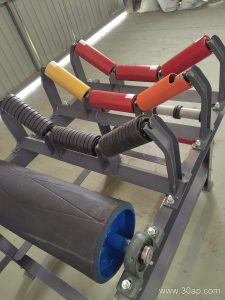
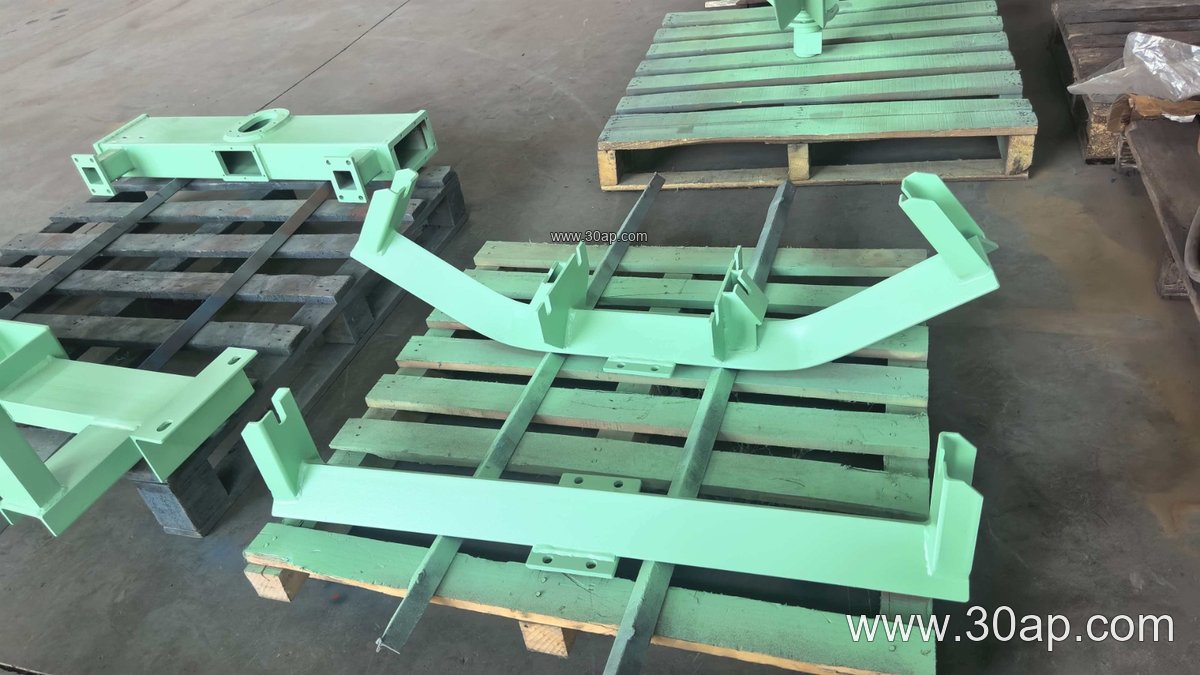
Most heavy-duty steel conveyor brackets are fabricated from angle steel, channel steel or folded steel plate, then welded into a rigid frame. The design usually includes a cross beam, mounting pads for the idler roller, and bolt slots that allow fine adjustment during installation. A well-made bracket keeps its shape under vibration and repeated impact from lump material, which is why the steel grade and weld quality matter as much as the dimensions.
The same family of conveyor bracket appears in several positions along a conveyor. Trough brackets support the carrying side, return brackets hold the belt on the way back, and transition or impact brackets take care of the zones where the belt changes shape or receives falling material. A heavy-duty version simply adds thickness, reinforcement and a stronger frame for high-tonnage lines.
Where It Fits on the Conveyor
The bracket works together with the conveyor belt, the idler roller and the conveyor pulley. In a typical crushing and screening circuit, the belt leaves the drive pulley, runs over trough brackets and returns on lower brackets before reaching the tail pulley. A well-aligned bracket set keeps the belt centered and reduces edge damage, which is especially useful when the belt carries abrasive rock or ore.
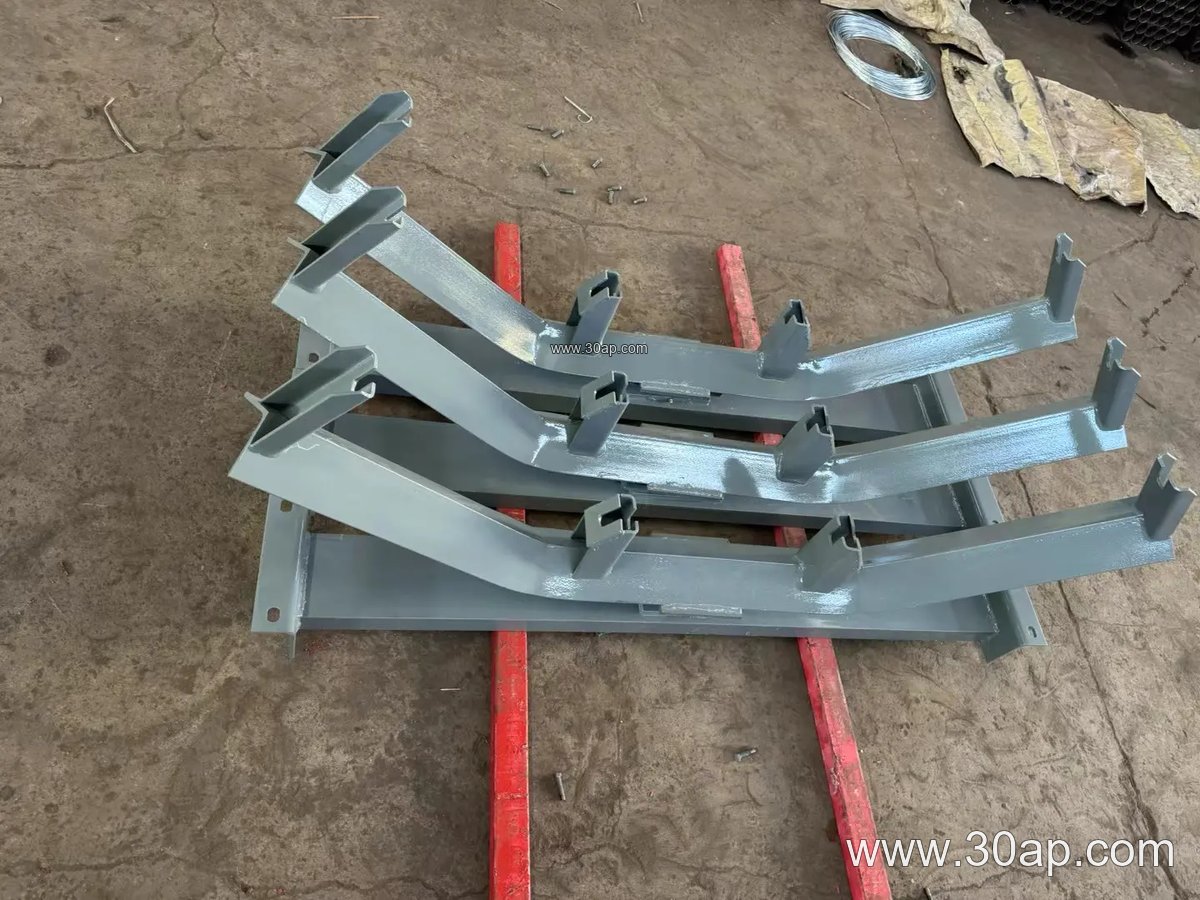
Different industries stress the bracket in different ways. A coal mining conveyor line needs brackets that survive dust and moisture, while a power plant coal yard may see constant load and long operating hours. In a sand and gravel plant, impact zones under the crusher discharge are the hardest on both the bracket and the belt.
Common Configurations and Reference Data
Bracket dimensions follow the belt width, the trough angle and the idler diameter used on the line. The values below are common reference ranges, not fixed combinations, and the final selection should always match the conveyor design.
| Belt width | Trough angle | Idler diameter |
|---|---|---|
| B500 to B650 | 20 to 30 degrees | Ø89 |
| B800 to B1000 | 30 to 35 degrees | Ø108 to Ø133 |
| B1200 to B1400 | 35 to 45 degrees | Ø133 to Ø159 |
| B1600 to B1800 | 35 to 45 degrees | Ø159 to Ø194 |
| B2000 to B2200 | 35 to 45 degrees | Ø194 and above |
Adjustable brackets can be set between common trough angles, while fixed brackets are welded to one angle. Forward-leaning brackets are usually set at about 1.5 to 2 degrees to help belt tracking. Mounting hole spacing and beam length vary with belt width and trough angle, so they are always confirmed against the drawing.
Matching the Bracket to the Rest of the Line
Choosing a heavy-duty steel conveyor bracket is mainly a question of load, belt width and environment. A wide belt carrying dense material needs a stiffer frame and more frequent support points. A line using an abrasion resistant conveyor belt or a heat resistant conveyor belt may also need brackets that tolerate high temperature or gritty dust around the idlers.
Buyers should check the steel thickness, the welding pattern, the hole positions and the surface treatment before ordering. It also helps to confirm how the bracket connects to the conveyor frame and whether the same bracket type can be used on both the carrying and return sides. On a long overland line, a small mismatch in bracket height can cause belt misalignment, so consistency across the whole order matters.
Installation and Maintenance Notes
- Align brackets to a string line before tightening the bolts.
- Check bolt torque after the first few days of operation.
- Inspect for bent beams or cracked welds after heavy impact events.
- Keep the area around the idler roller clear so material does not build up.
- Replace damaged brackets in pairs where possible to keep the belt profile even.
For more conveyor components, visit yuyinconveyor.com to compare conveyor bracket options and related conveyor belt accessories.