What a Ceramic Pulley Is and Where It Fits
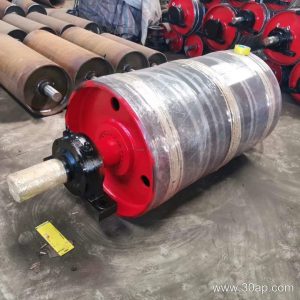
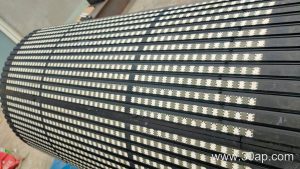
A ceramic pulley is a conveyor drum whose shell carries embedded ceramic tiles instead of plain steel or rubber lagging. Because the ceramic pads sit proud of the shell and present a hard, textured face to the belt, the drum keeps traction in wet, dusty or gritty conditions where smooth surfaces begin to slip. In a coal washing plant or a limestone crushing circuit, that extra grip often decides whether a drive drum can hold its load without excessive belt tension. The same product is also called a ceramic-lagged conveyor pulley or a drum with ceramic lagging, and both names describe the same component.
It is a surface variant rather than a separate position in the conveyor. A ceramic pulley can serve as a drive drum at the head end, as a tail drum, or as a bend drum on a long run, but the ceramic lagging must suit the duty of that position. Drive, tail and bend pulleys are not interchangeable, and the ceramic option should be chosen for the role the drum actually plays.
How the Ceramic Surface Is Built
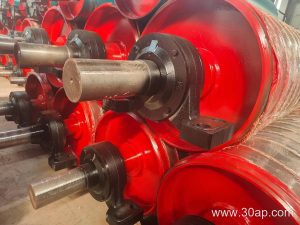
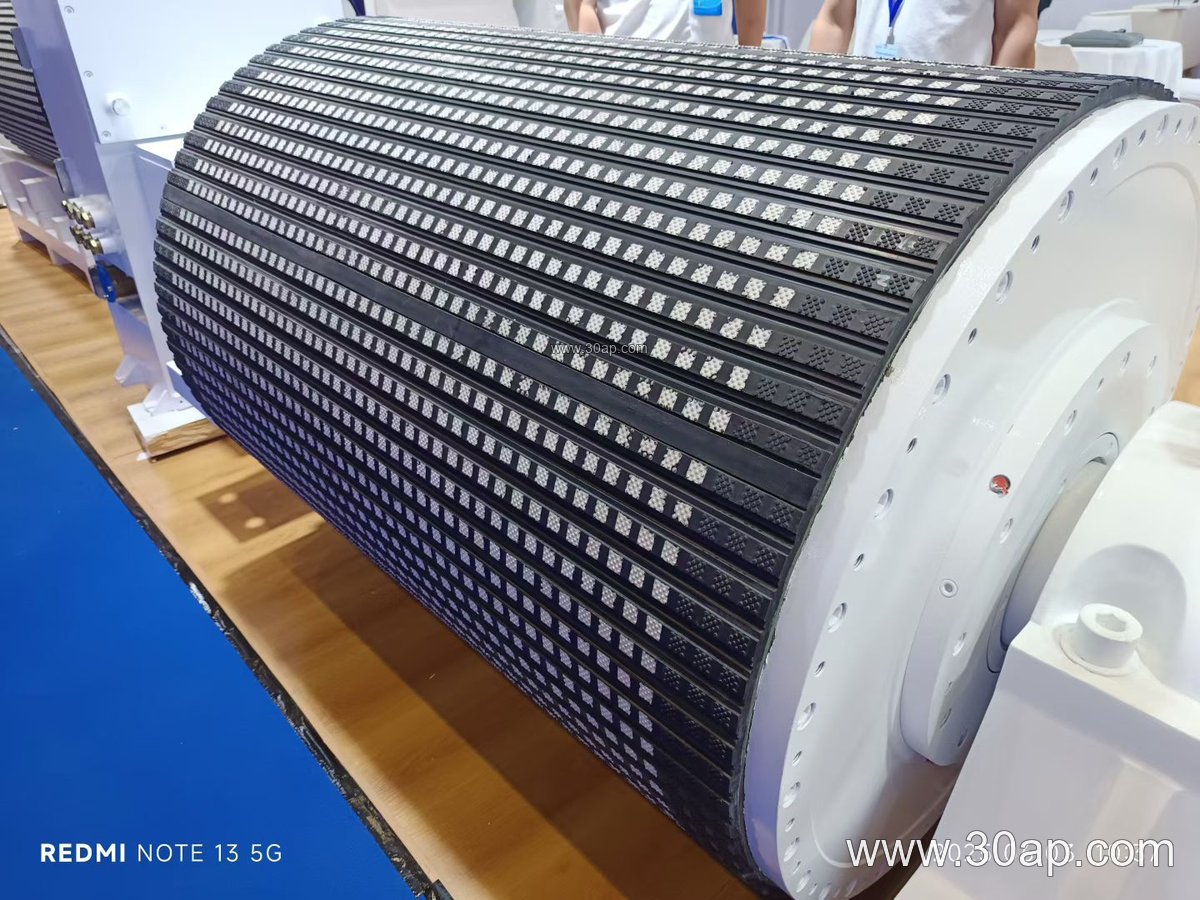
The base is a fabricated or cast steel shell machined true, with shaft, hubs and bearing seats finished to the required tolerance. Ceramic tiles, usually small blocks with a raised pattern, are bonded into a rubber or adhesive layer vulcanized or cold-cured onto the shell. The tiles are spaced so that water and fines can escape between them, which is why the surface keeps biting when a rubber-lagged drum would glaze over.
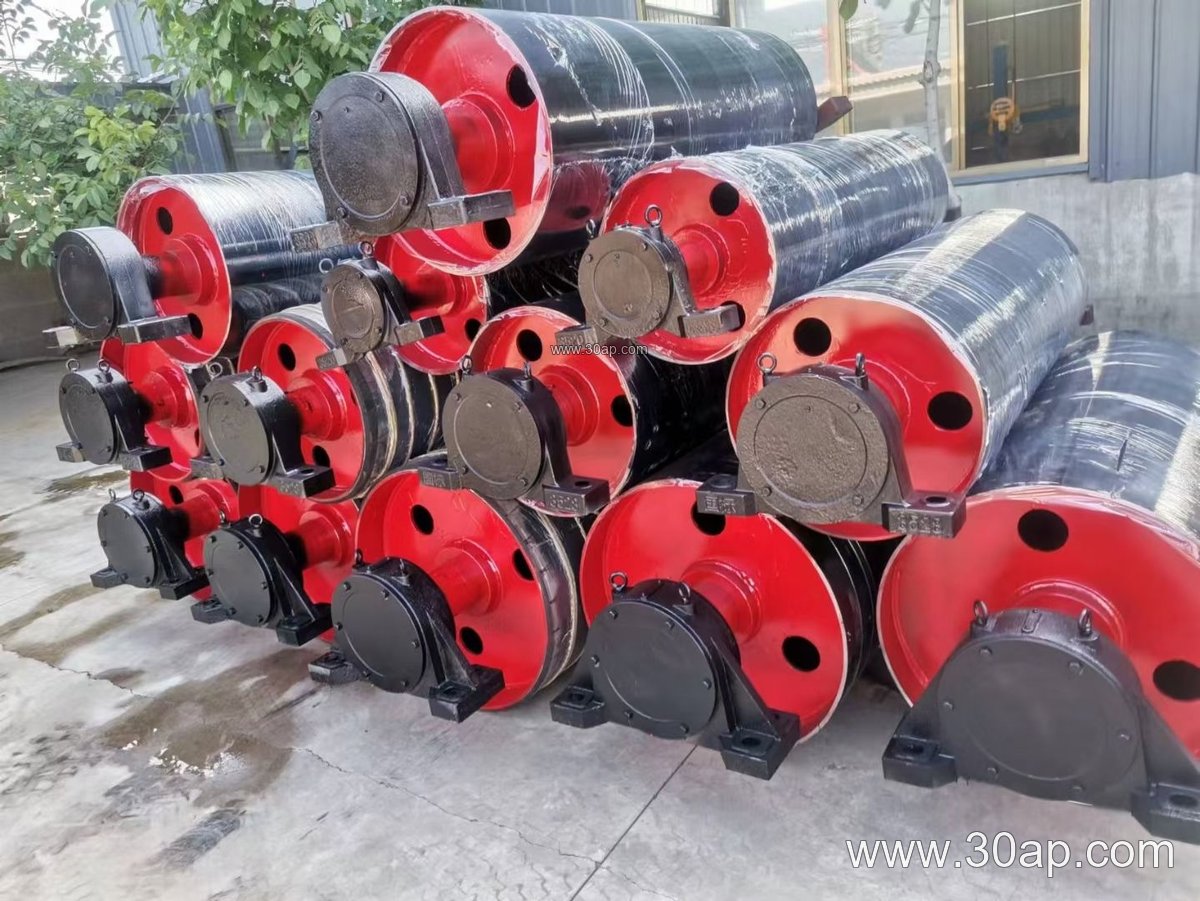
- Ceramic tile pattern: dimpled, grooved or plain block forms
- Bonding layer: hot-vulcanized or cold-bonded rubber
- Lagging thickness: commonly 8, 10, 12, 15 or 20 mm
- Shell surface: machined and balanced before lagging
Some designs combine a ceramic strip with a rubber base so the drum can be re-lagged without replacing the shell. The trade-off is that ceramic is harder on the belt cover than rubber, so it is usually reserved for positions where slip is the real problem.
Typical Duty Points in Aggregate and Power Plants
In a sand and gravel line, a ceramic pulley often appears on the head drive of a short, steep conveyor that carries damp material. In a power station coal yard, the same lagging helps a drive drum start a fully loaded belt after a weekend shutdown. Cement plants use ceramic-faced drums on clinker and raw-material conveyors where fine dust combines with moisture. A quarry face conveyor and a tunnel spoil line are two more places where the hard surface earns its cost.
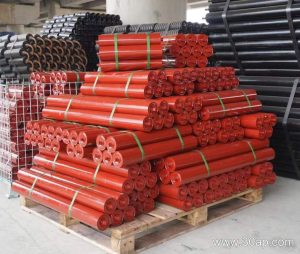
On the return side, an idler roller and a conveyor bracket do different work, and the ceramic drum should not be confused with them. Where a bend drum is needed to change belt direction, a ceramic surface can be used if slip risk is high, but a plain bend drum is often enough.
Matching the Drum to Belt Width and Shaft Load
Belt width sets the face width, not the diameter. A B800 belt typically runs on a drum face of about 950 mm, while a B1200 belt is usually matched with roughly 1400 mm of face. Diameter is chosen from belt tension, wrap angle and the required lagging life; a B800 drum might be Ø500 in one layout and Ø630 in another. Shaft diameter follows torque and bearing load, commonly Ø80 to Ø160 on mid-size drums, and should never be picked from belt width alone.
| Belt width | Typical face width | Example drum pairing |
|---|---|---|
| B500 | about 600 mm | Ø400 ceramic drum |
| B800 | about 950 mm | Ø500 or Ø630 ceramic drum |
| B1000 | about 1150 mm | Ø800 ceramic drum |
| B1200 | about 1400 mm | Ø1000 ceramic drum |
| B1400 | about 1600 mm | Ø800 or Ø1000 ceramic drum |
These are reference pairings, not fixed rules. The final combination is set by the conveyor design, and a B1200 belt may run on more than one drum diameter depending on tension and space.
What Buyers Should Check Before Ordering
Confirm the drum position first, because a ceramic drive drum and a ceramic tail drum carry different loads. Then state belt width, required face width, drum diameter, shaft diameter and the lagging thickness the duty calls for. Ask how the tiles are bonded and whether the drum can be re-lagged in place. Check that the ceramic pattern suits the belt cover; very aggressive tiles can wear a thin belt faster. Finally, confirm balance, bearing fit and the interface with the conveyor bracket so the drum drops into the frame without shimming.