What a Composite Idler Is
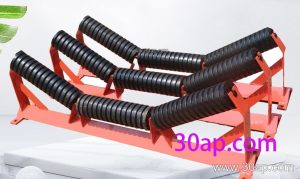
A composite idler is a conveyor idler roller built with a composite shell—typically a polymer or reinforced plastic tube—rather than a conventional steel tube. In a conveyor belt system, the idler roller supports the belt and the material load, and the composite version is chosen when lower weight, corrosion resistance, or reduced belt wear matter. The term is sometimes written as composite conveyor idler or composite roller idler, and it refers to the same product category.
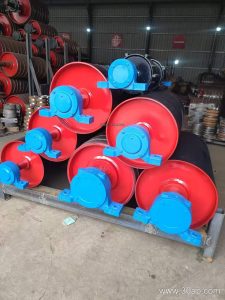
Composite idlers appear in quarry, cement, power plant coal handling, and aggregate lines where moisture, dust, and moderate chemical exposure shorten the life of painted steel rollers. They are not a replacement for drive pulleys, tail pulleys, or bend pulleys; those are conveyor pulleys with different construction and duty. A composite idler belongs to the idler family and works together with the conveyor bracket and frame.
How It Is Built
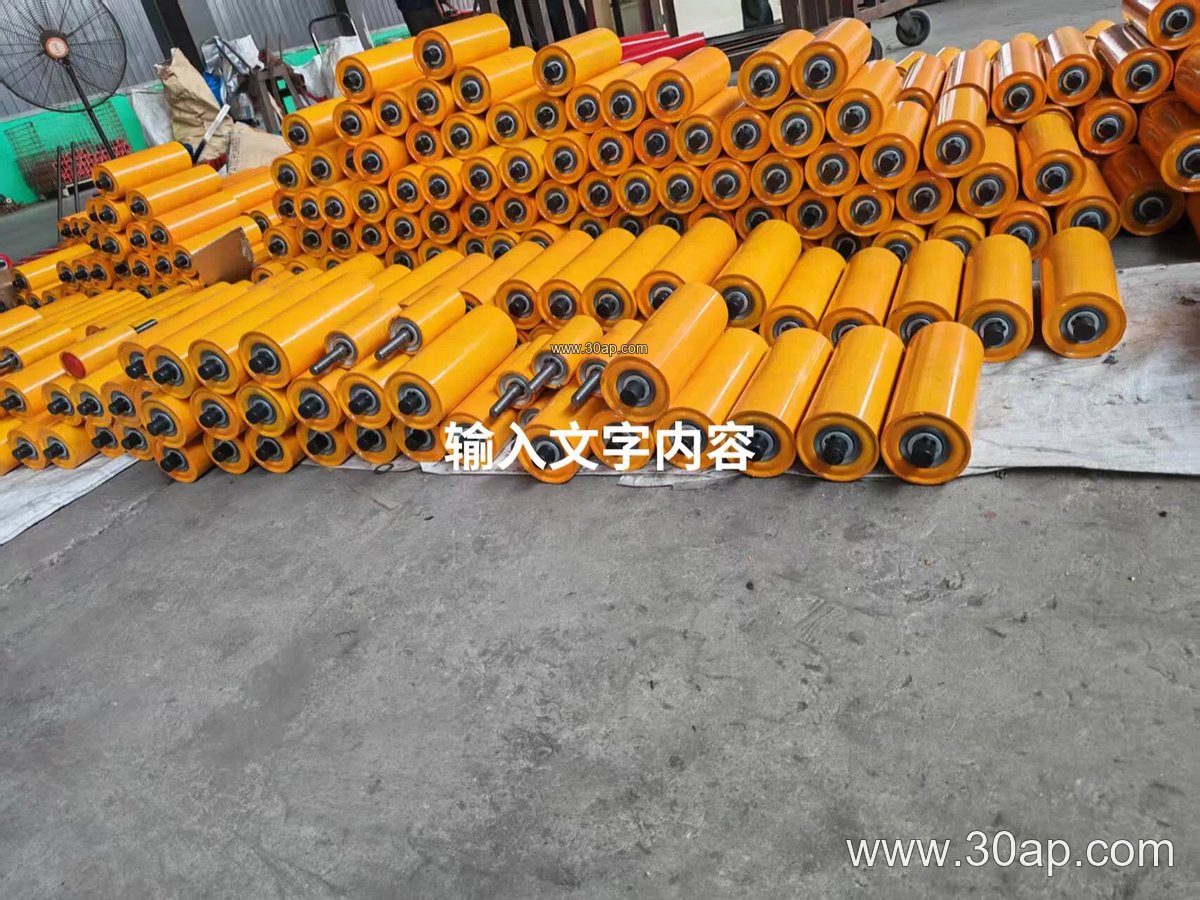
The typical composite idler uses a composite tube, sealed bearing housings, and a shaft. Bearing sizes often follow common series such as 6204, 6205, 6305, 6306, 6308, or 6310, but the bearing is selected by load and speed, not by roller diameter alone. The shell may be a glass-reinforced polymer, and the surface can be smooth or fitted with rubber rings for impact sections. Seals are critical: a composite body does not compensate for a poor seal in a dusty cement plant or a wet quarry.
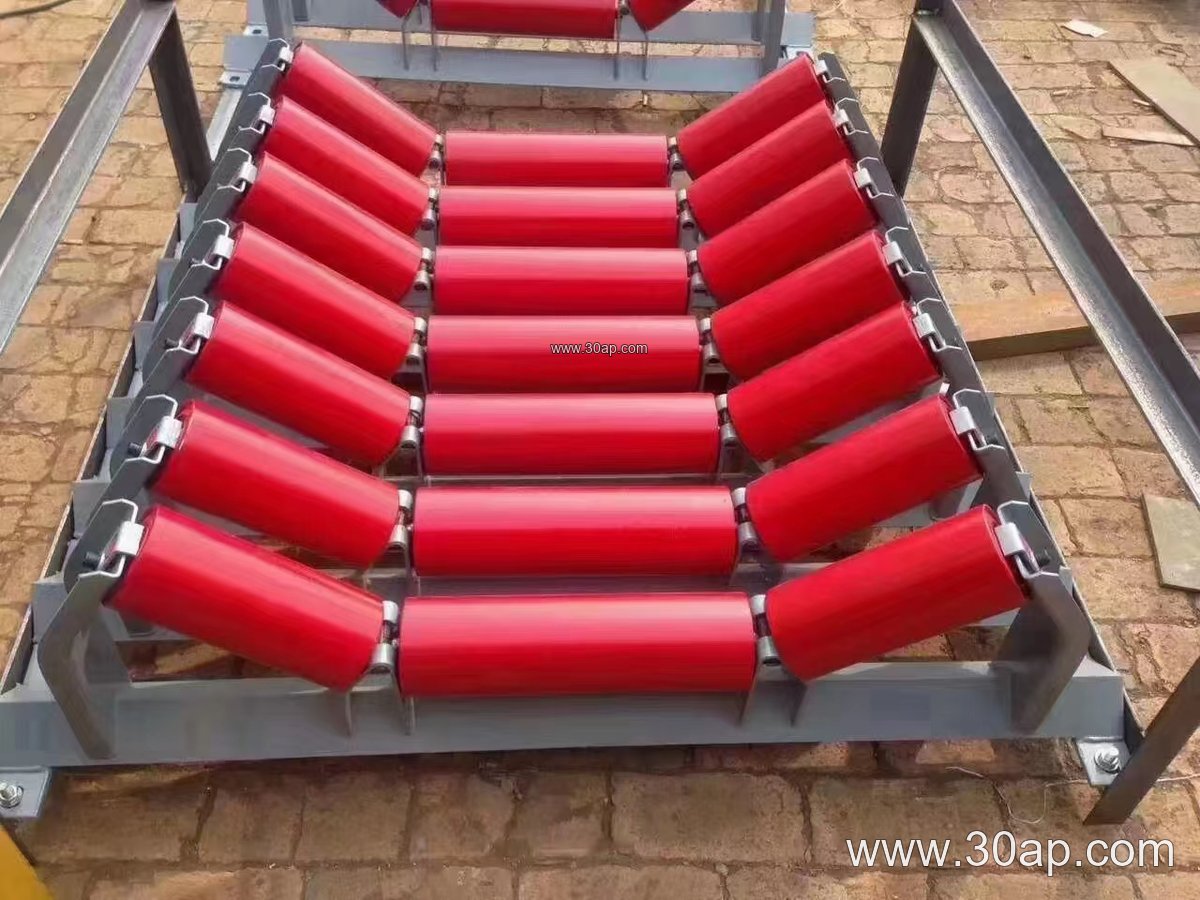
Common roller diameters for idlers include Ø63, Ø76, Ø89, Ø102, Ø108, Ø127, Ø133, Ø159, Ø178, Ø194, and Ø219 mm. These are reference values, not a fixed match to any belt width. Roller length varies with belt width, trough angle, and idler arrangement. For a three-roll troughing set, common roller lengths are roughly 200 mm for B500, 250 mm for B650, 315 mm for B800, 380 mm for B1000, 465 mm for B1200, 530 mm for B1400, 600 mm for B1600, 670 mm for B1800, and 750 mm for B2000. Side rollers and center rollers can differ, so the set should be confirmed by design.
Where It Fits on the Conveyor
Composite idlers are used in carrying idler positions, return idler positions, and transition zones. Trough angles of 20, 30, 35, and 45 degrees are common; the choice depends on material angle of repose and belt stiffness. In a quarry or aggregate line, a three-roll troughing set with 35-degree trough angle is a frequent arrangement, while a cement plant may use a 30-degree set on a long overland conveyor. Return positions may use a flat return roller or a V-return idler, and composite versions of both exist.
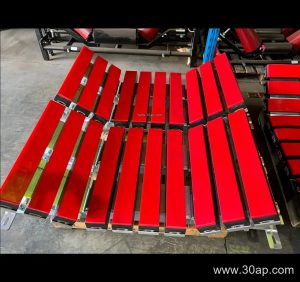
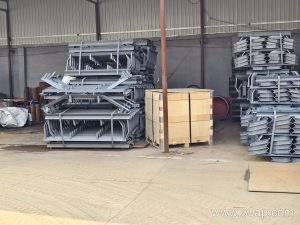
For impact zones under a crusher discharge or a transfer chute, a composite idler with rubber rings can absorb some of the shock, but a dedicated impact idler with a heavier frame is often more suitable. Self-aligning idlers are a separate type used to correct belt tracking; a composite idler is not automatically a training idler. The conveyor bracket and frame must match the shaft end design, and mixing bracket types is a common cause of premature failure.
Selection and Maintenance Notes
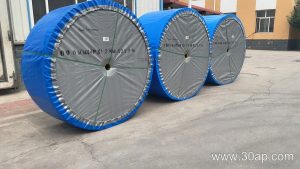
Buyers should confirm the belt width, the idler arrangement (single-roll, two-roll, or three-roll troughing), the roller diameter, the shaft diameter, and the bearing series. Belt width alone does not determine shaft diameter or bearing size. A 1200mm wide conveyor belt may use different idler sizes depending on load and speed, and a 1500mm wide belt does not automatically require one fixed roller. The conveyor belt type also matters: a heavy-duty mining conveyor belt or a steel cord conveyor belt carries higher tension and may need a stiffer idler frame, while a fabric core conveyor belt on a shorter run may allow a lighter composite roller.
In coal mining and underground coal mining, flame retardant conveyor belt and anti-static conveyor belt requirements may extend to idler materials, so the buyer should state the environment. In a power plant or cement plant, heat resistant conveyor belt sections may need heat-resistant idlers or a different bearing lubricant. Composite idlers are not a universal answer for high-temperature clinker or very high impact; in those cases a steel idler with the right bearing and seal may be the better choice.
Maintenance is straightforward: check for seized bearings, worn shells, and missing rubber rings. A composite idler that has lost its seal should be replaced rather than regreased in the field, because the composite shell hides internal corrosion poorly. Spare idlers should match the original roller length and shaft end, and the conveyor bracket should be inspected for wear at the same time. For any conveyor system, the idler is a small component, but a failed idler roller can damage the conveyor belt and stop a production line.