What a Q235 Conveyor Bracket Does on the Line
A Q235 conveyor bracket is the steel support that holds a idler roller in position under or beside the conveyor belt. It is a structural part, not a moving part, and its job is to keep the roller at the right height, angle and spacing so the belt runs straight and carries material without spilling. Because Q235 is a common low-carbon structural steel, the bracket is easy to weld, drill and bend, which is why it appears in so many conveyor frames in quarries, sand and gravel lines, cement plants and power plant coal handling systems.
In practice, the bracket is usually referred to as a Q235 conveyor idler bracket or a Q235 belt conveyor bracket. The two names describe the same steel support, and both point to the same material grade and function.
How the Bracket Is Built
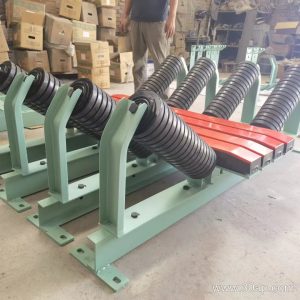
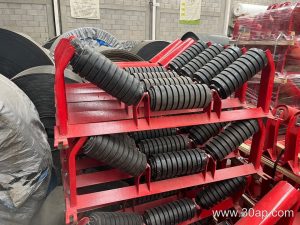
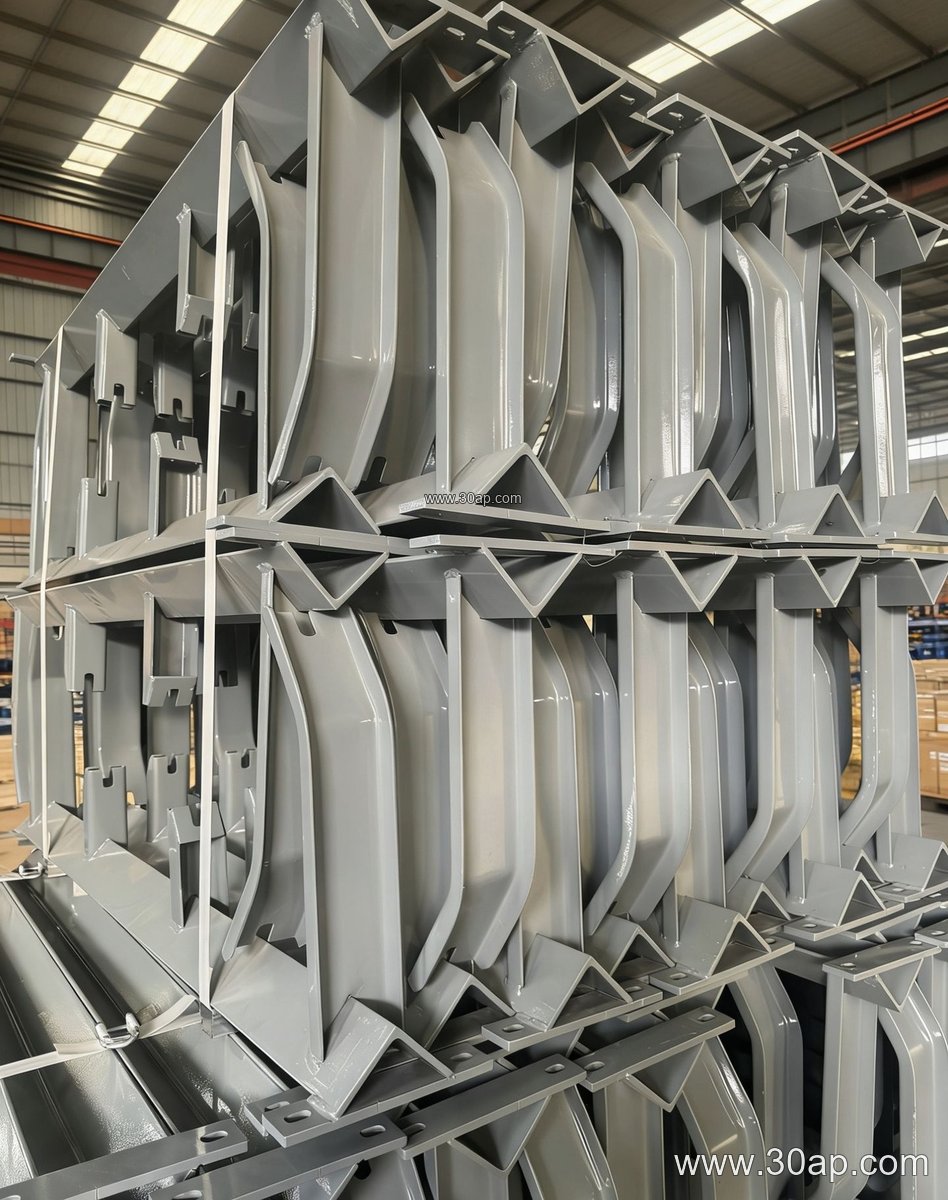
Most brackets are fabricated from angle steel, channel steel or bent steel plate. The frame is cut to length, punched with mounting holes, then welded or bolted into a rigid shape. A troughing bracket carries three rollers in a trough profile; a return bracket carries one or two rollers under the returning belt. The steel surface is often painted or galvanized to slow corrosion in damp or dusty conditions.
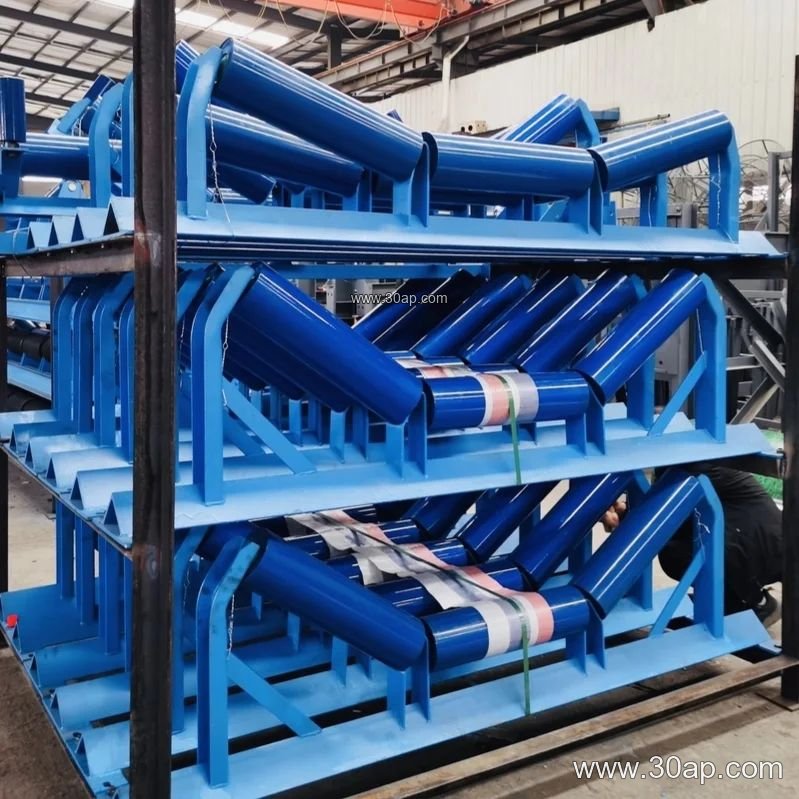
Typical forming options include:
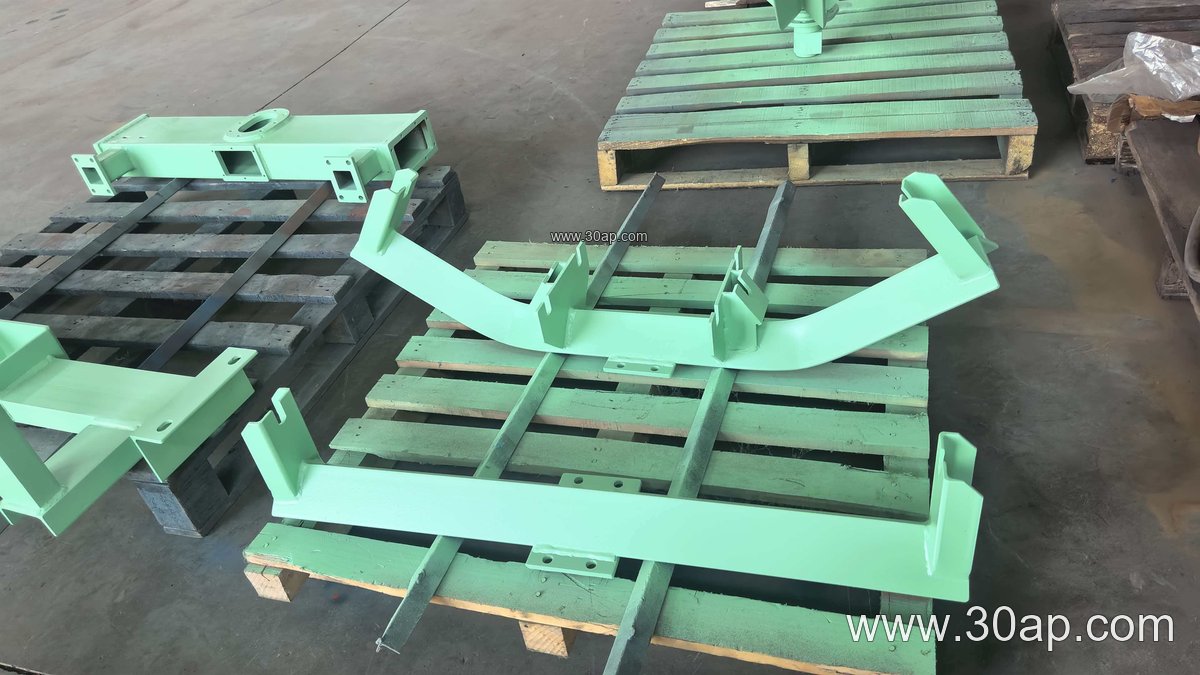
- Troughing bracket with 20, 30, 35 or 45 degree trough angle
- Transition bracket near the tail pulley and head pulley
- Return bracket and V-return bracket for the lower strand
- Impact bracket with rubber cushions under the loading point
- Self-aligning bracket for belt tracking
- Adjustable bracket that can be set to different trough angles
Bracket length, hole spacing and crossbeam size change with belt width and trough angle, so these dimensions are usually confirmed against the drawing rather than taken from a single fixed table.
Matching Belt Width, Trough Angle and Roller Diameter
Buyers often ask which bracket fits a given line. The answer depends on three linked choices: belt width, trough angle and roller diameter. A few common combinations are shown below as reference points, not as mandatory matches.
| Belt Width | Trough Angle | Roller Diameter | Typical Use |
|---|---|---|---|
| B500 | 20–30 degrees | Ø89 | Small sand and gravel lines |
| B650 | 30 degrees | Ø89 or Ø108 | Aggregate and crusher discharge |
| B800 | 35 degrees | Ø108 | General bulk material duty |
| B1000 | 35–45 degrees | Ø108 or Ø133 | Cement plant and quarry main lines |
| B1200 | 45 degrees | Ø133 | Power plant coal handling |
| B1400–B1600 | 35–45 degrees | Ø159 | Heavy iron ore and port duty |
| B1800–B2000 | 35–45 degrees | Ø159 or Ø194 | Large tonnage bulk systems |
One belt width does not lock in one roller diameter, and one trough angle does not fit every material. A wider belt with a deep trough may need a larger roller to handle the load, while a narrow belt on a light duty line can run well with a small roller.
Where the Bracket Is Used
Quarries and stone crushing plants use Q235 brackets along the primary and secondary belts, where dust, grit and impact load are constant. Power plants use them on coal handling conveyors that feed the bunkers and mills. The bracket works together with the conveyor pulley, the conveyor belt and the idler roller, so alignment at the tail pulley and head pulley matters as much as the bracket itself. A poorly seated bracket can cause the roller to sit off-centre, which leads to edge wear on a heavy-duty conveyor belt and uneven loading.
In a cement plant or a sand making plant, the same bracket type may be used on both the raw material belt and the finished product belt, but the trough angle and roller spacing are often set differently for each line.
What a Buyer Should Check
- Confirm the belt width and the required trough angle before ordering.
- Match the bracket hole pattern to the roller shaft and frame drawing.
- State the roller diameter so the bracket saddle height is correct.
- Choose a painted, galvanized or bare finish according to the site environment.
- For dusty or wet sites, check that the bracket drains and does not trap material.
- Ask whether a fixed or adjustable bracket suits the line, since adjustable types allow trough angle changes on site.
For conveyor systems that also need a rubber conveyor belt, an EP conveyor belt or a flame retardant conveyor belt, the bracket should be selected alongside the belt and roller specification so the whole support section works as one unit.