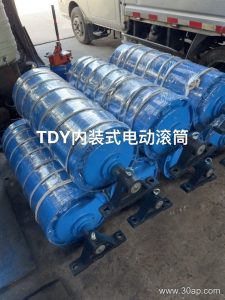
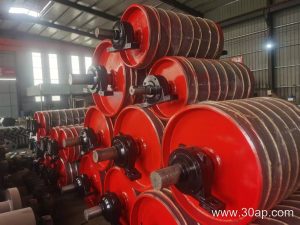
What Pulley Custom Machining Covers
Pulley custom machining is the engineering and fabrication work that turns a conveyor pulley from a catalog item into a component matched to a specific belt line. The conveyor pulley is the cylindrical drum that carries and drives the conveyor belt, and when a plant needs a non-standard face width, a particular shaft diameter, a specific lagging pattern or a mounting arrangement that fits an existing conveyor bracket, custom machining fills that gap. In a limestone quarry, a coal washing plant or a cement clinker line, the difference between a stock drum and a machined one often shows up in belt tracking, splice life and how quickly a maintenance crew can swap the unit during a shutdown.
The work usually starts from the application rather than from a size list. A drive pulley needs enough grip and torque capacity; a tail pulley needs a clean profile that sheds material; a bend pulley only redirects the belt and carries a lighter load. Each position on the conveyor imposes different demands, so the machined result differs even when the belt width is the same.
How a Machined Drum Is Built
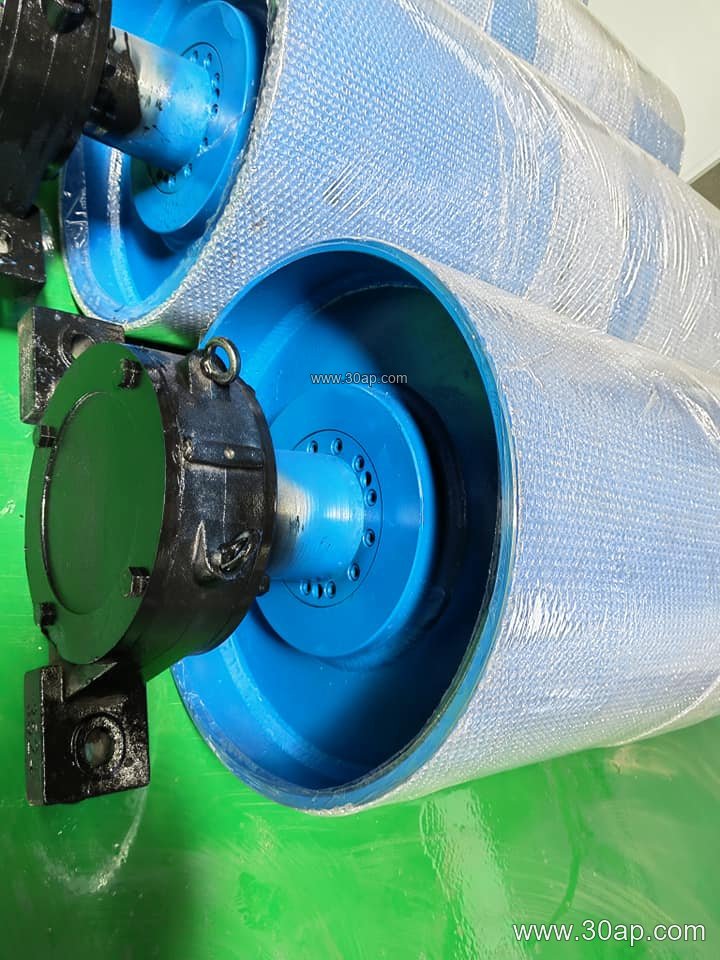
The body is typically a rolled steel shell, machined at the ends and welded to end discs and a hub. The shaft is turned to the required journal dimensions, keyways are cut, and bearing seats are finished to the tolerance the bearing supplier requires. For larger units, the shell may be machined in a lathe after welding to keep the running surface concentric with the shaft, which helps the conveyor belt run true and reduces edge wear.
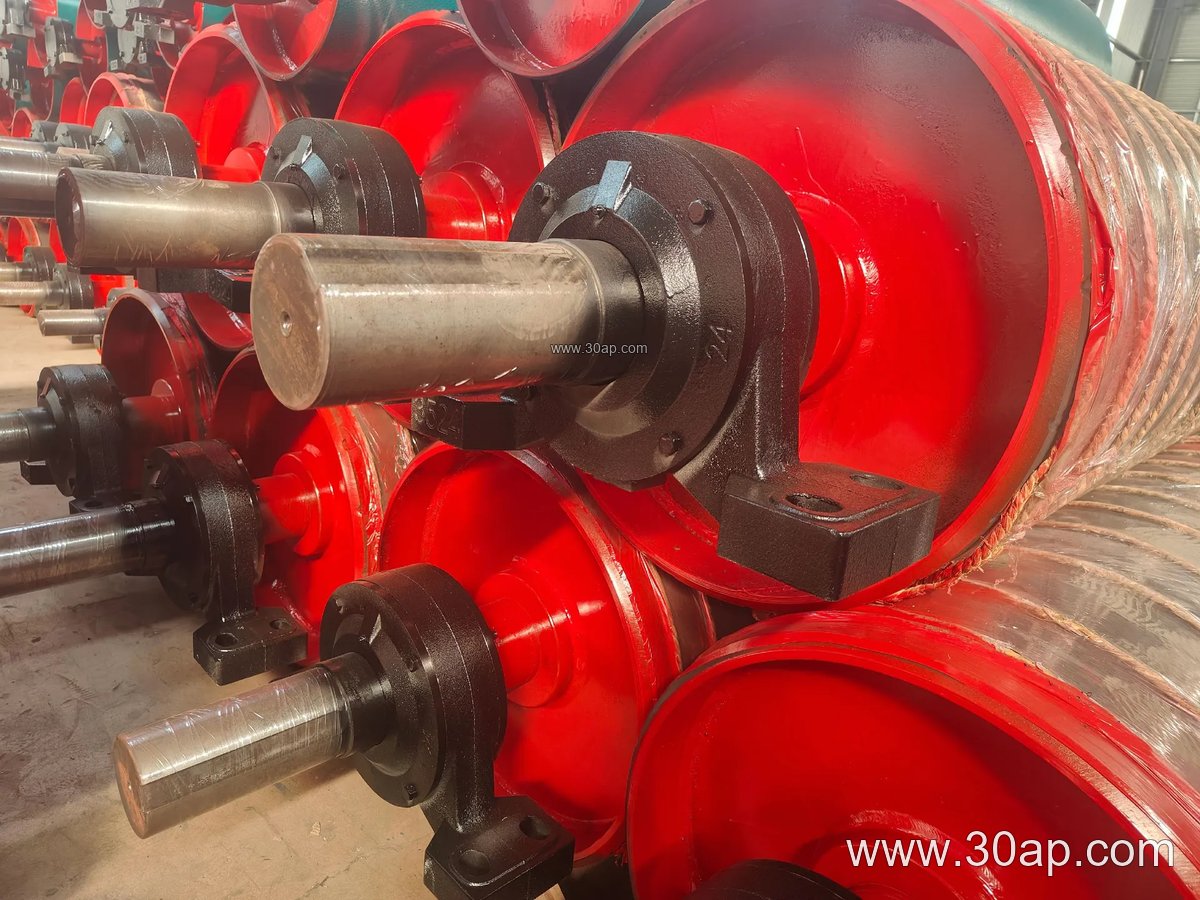
Surface preparation is part of the machining scope. A plain finish may be specified for a tail or bend position where material build-up is a concern, while a drive or head pulley usually receives rubber lagging for friction. The table below shows common reference values; final dimensions are set by the design calculation, not by belt width alone.
Common reference dimensions
| Item | Typical range or value | Notes |
|---|---|---|
| Belt width | B400 to B2400 | Face width is usually larger than belt width, e.g. B800 about 950 mm, B1200 about 1400 mm |
| Pulley diameter | Ø200 to Ø1800 | Selected from belt tension, wrap angle and belt minimum pulley diameter |
| Lagging thickness | 8, 10, 12, 15, 20 mm | Plain, hot vulcanized rubber, cold bonded rubber, diamond or herringbone pattern |
| Shaft diameter | Ø50 to Ø200 | Determined by torque and load, not by belt width alone |
| Example combinations | B800 × Ø500, B1200 × Ø1000, B1400 × Ø800 | Reference only; many diameter options fit one belt width |
Where the Machining Matters
In a copper mine or an iron ore concentrator, a drive pulley on a long overland conveyor carries high tension, so the shaft, hub and lagging are all machined to tight limits and the surface is often hot vulcanized rubber with a diamond pattern. At the tail end, a self-cleaning profile and a plain or lightly lagged shell may be preferred so that wet fines do not pack against the drum. A bend pulley in a transfer tower rarely needs the same grip, but its face width, bearing centers and mounting holes still have to match the conveyor bracket on site.
Aggregate plants and sand and gravel lines often order a machined head pulley together with a matching idler roller set so the whole belt line is aligned from the start. Power plant coal handling and port bulk terminals tend to specify heavier lagging and larger shafts because the belt runs continuously and downtime is expensive.
Selection Points for Buyers
- State the belt width, belt speed and the pulley position — drive, tail, bend, take-up or snub — because each has different load and grip requirements.
- Provide the shaft diameter driven by the torque calculation, plus bearing type and keyway details, so the machined journals match the bearings on hand.
- Choose the lagging form with the material in mind: diamond or herringbone for wet and slippery belts, plain or grooved for sticky fines, ceramic where abrasion is severe.
- Confirm face width, mounting hole pattern and bearing center distance against the existing conveyor bracket before machining starts.
- Ask for the balancing and runout check on larger drums; a concentric shell protects the conveyor belt splice and reduces vibration.
A well-specified custom pulley is not simply a bigger or smaller copy of a standard drum. It is a matched component whose shell, shaft, lagging and mounting details are chosen for one position on one conveyor, and that is the value a machining shop brings to a quarry, a coal preparation plant or a cement works.