What a Belt Conveyor Bracket Does
In a belt conveyor system, the belt conveyor bracket is the structural element that holds the idler roller in place and maintains the belt’s profile along the carrying and return runs. Unlike the conveyor pulley, which drives or redirects the belt, the bracket is a stationary support component. Its geometry directly affects how the conveyor belt tracks, how the load is distributed, and how easily maintenance can be performed. Whether the conveyor operates in a limestone quarry, a coal washing plant, or a cement kiln feed line, the bracket must match the belt width, the idler diameter, and the trough angle specified for that section of the route.
Common Types and Their Mounting Positions
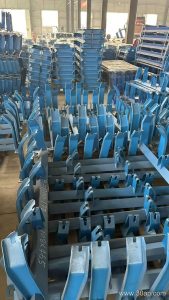
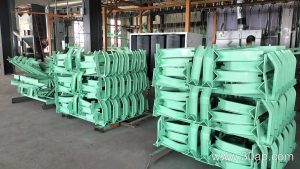
Brackets are typically classified by their location and function on the conveyor structure. The main categories include:
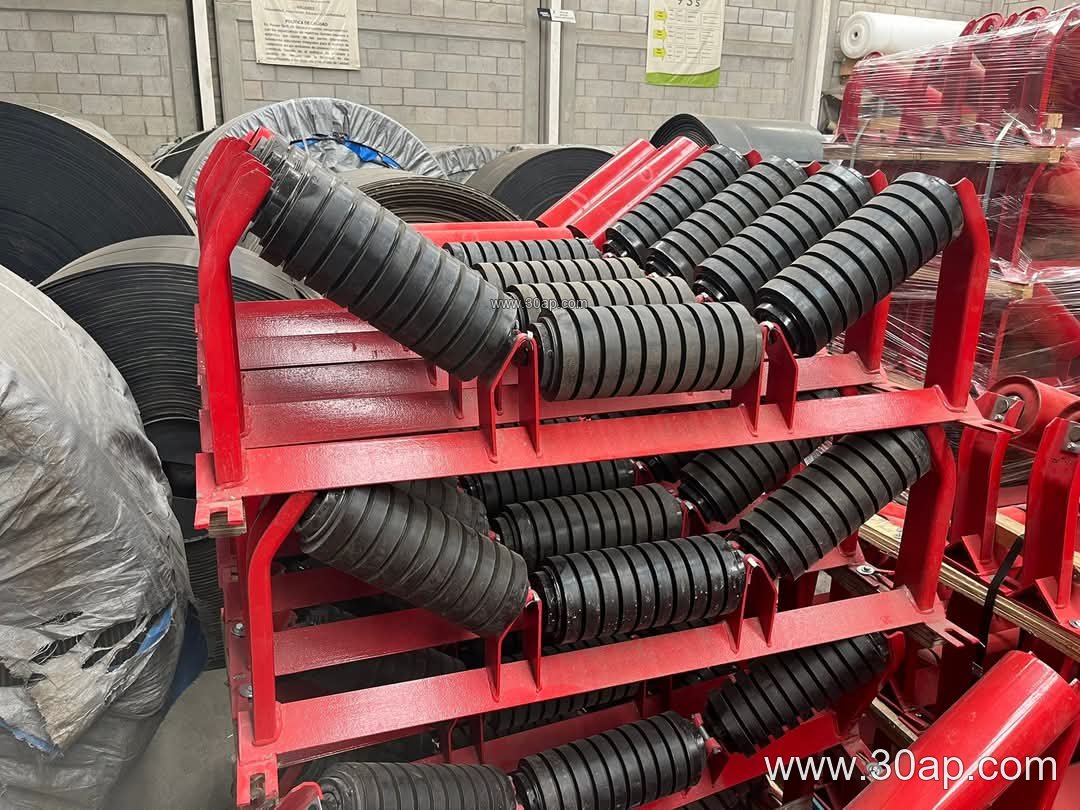
- Troughing bracket (carry side): Supports three or more idlers to form a trough that keeps bulk material centered on the belt. Often called a troughing idler bracket.
- Return bracket: Supports the belt on the return run. Flat return brackets and V-type return brackets are common; the V-shape helps with belt training.
- Impact bracket: Positioned at transfer points to absorb the energy of falling material, usually fitted with impact idlers or buffer rollers.
- Transition bracket: Used where the belt changes from flat to troughed, helping to avoid edge stress.
- Self-aligning bracket: Allows slight rotation to correct belt misalignment; often combined with forward-leaning idlers at about 1.5 to 2 degrees.
- Adjustable bracket: Permits field adjustment of the trough angle, typically between 20 and 45 degrees, to suit different material characteristics.
Each type is a distinct subtype; a return bracket is not a substitute for a troughing bracket, and a bend pulley is not interchangeable with a tail pulley. The bracket family should be selected as a system, not as isolated parts.
Construction and Materials
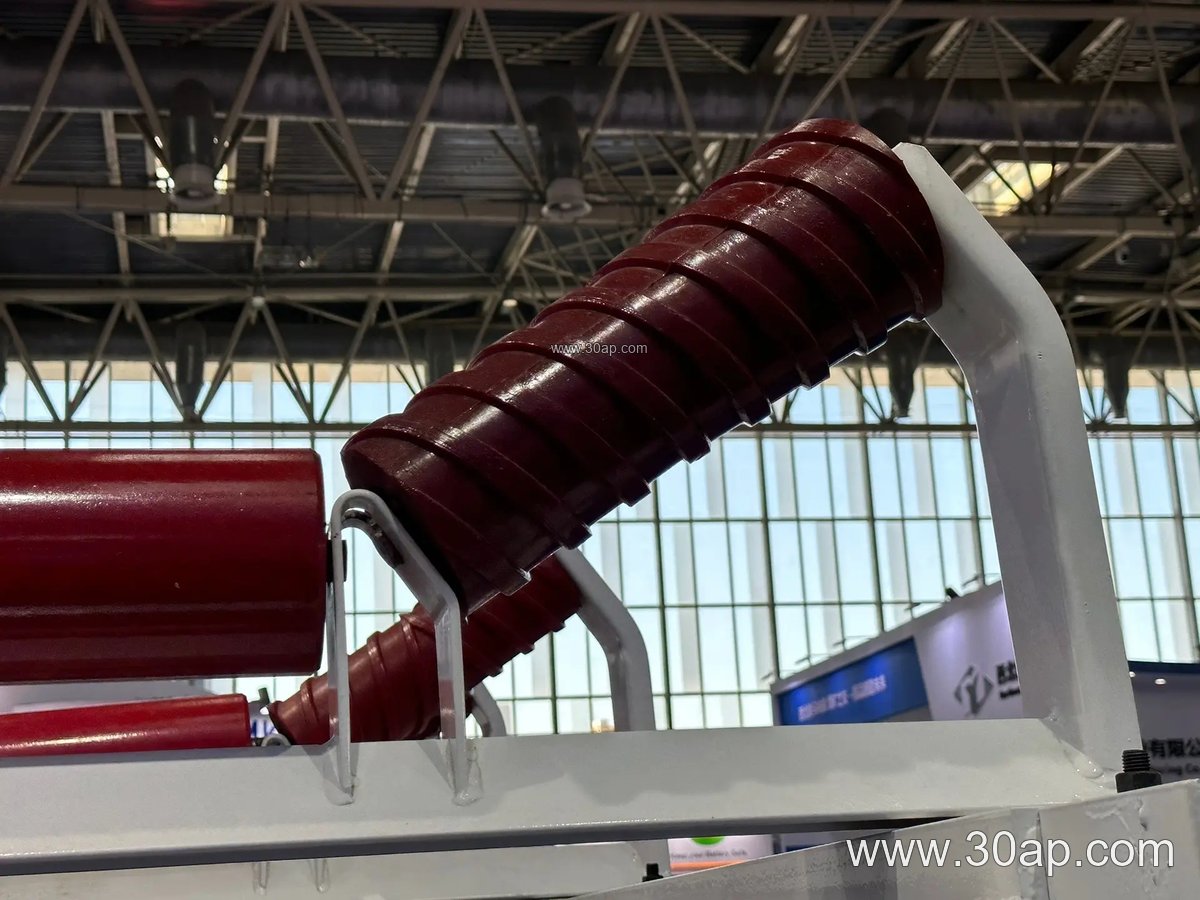
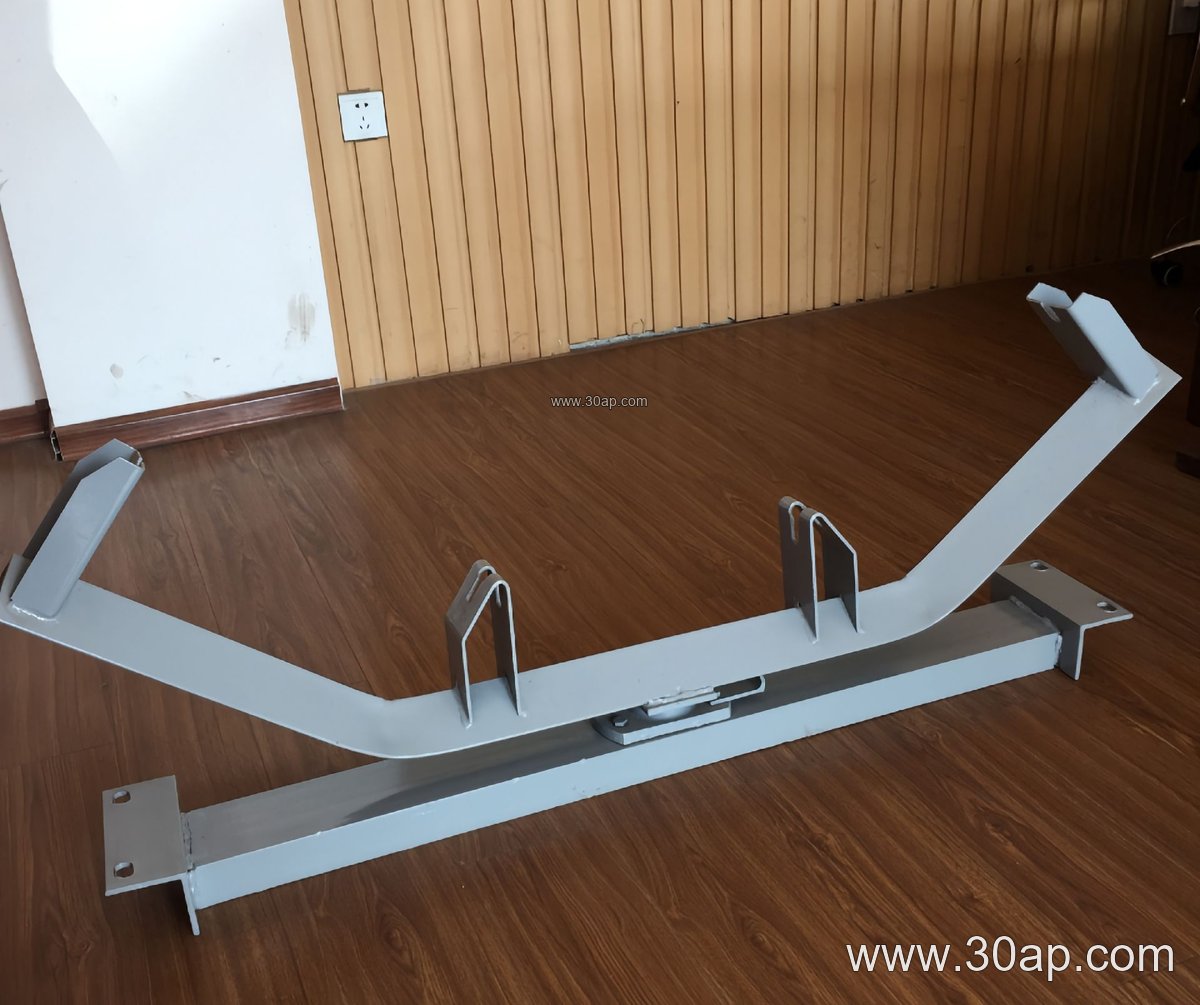
Most belt conveyor brackets are fabricated from angle steel, channel steel, or bent steel plate. The choice depends on load, belt width, and environmental conditions. For example, a B800 conveyor carrying 35-degree troughed idlers with Ø108 rollers may use a lighter channel section, while a B1600 conveyor in a primary crushing circuit with 45-degree troughing and Ø159 idlers will require a heavier fabricated bracket. Installation hole spacing and crossbeam length are not fixed; they are determined by belt width and trough angle, and should always be confirmed against the conveyor layout drawing. Surface treatment, such as painting or galvanizing, is usually specified for corrosive environments like port terminals or fertilizer plants.
Matching Brackets to Belt Width, Trough Angle, and Roller Diameter
There is no single bracket size that fits every conveyor. The table below shows typical reference combinations, but these are examples for orientation, not mandatory pairings. A B650 belt can be used with 30-degree troughing and Ø89 idlers; a B1200 belt may run 45-degree troughing with Ø133 idlers. The bracket must be ordered with the correct mounting dimensions for the selected idler and belt width.
| Belt Width (B) | Trough Angle | Typical Idler Diameter | Bracket Style Example |
|---|---|---|---|
| B500 | 20°–30° | Ø89 | Troughing, fixed |
| B650 | 30°–35° | Ø89–Ø108 | Troughing, adjustable |
| B800 | 35°–45° | Ø108–Ø133 | Troughing, transition |
| B1000 | 35°–45° | Ø108–Ø159 | Troughing, impact |
| B1200 | 35°–45° | Ø133–Ø159 | Troughing, self-aligning |
| B1400–B1600 | 35°–45° | Ø159–Ø194 | Heavy-duty troughing |
| B1800–B2200 | 35°–45° | Ø159–Ø194 | Heavy-duty, impact |
These combinations are common in mining, coal preparation, and aggregate plants, but final selection should follow the conveyor design. Never assume that a given belt width dictates a single trough angle or roller diameter.
Where Belt Conveyor Brackets Are Used
Brackets appear in almost every bulk handling circuit. In a sand and gravel line, troughing brackets keep the belt centered through screening and stockpiling. In a coal-fired power plant, return brackets and self-aligning brackets help maintain belt tracking on long overland runs. In a cement plant, impact brackets at the clinker transfer point protect the belt from high-drop damage. The same bracket family also supports conveyor belts in fertilizer granulation, grain silos, and tunnel muck removal. The working environment—dust, moisture, temperature—influences material and coating choices, but the fundamental function remains the same.
Buyer Checklist
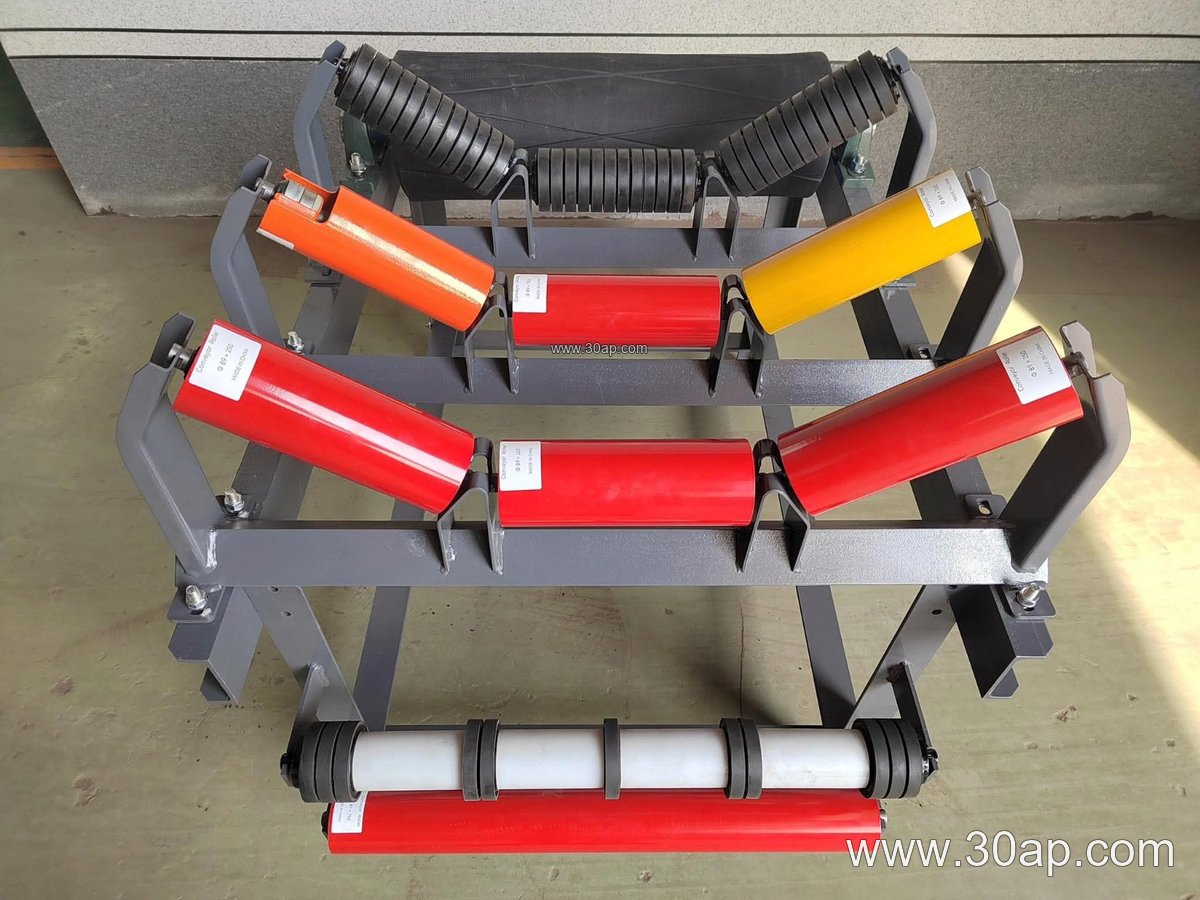
Before ordering, confirm the belt width, trough angle, idler diameter, and mounting hole pattern. Decide whether fixed or adjustable brackets are needed; adjustable types offer flexibility during commissioning but may cost more. Check that the bracket material matches the load and corrosion exposure. Ask for dimensional drawings that show crossbeam length and hole spacing, because these vary with belt width and trough angle. Finally, remember that the bracket works with the idler roller and conveyor belt as a system—correct selection of one component cannot compensate for a mismatch in another. For heavy-duty applications, verify that the bracket can accept the selected roller shaft and that the frame will not interfere with pulley or take-up assemblies.
Whether the project is a small B500 yard conveyor or a B2200 trunk conveyor in an iron ore terminal, the belt conveyor bracket is a small but critical part of reliable operation. Specify it with the same care as the conveyor pulley and idler roller, and it will support the belt as intended for the life of the installation.