What a Custom Conveyor Bracket Really Is
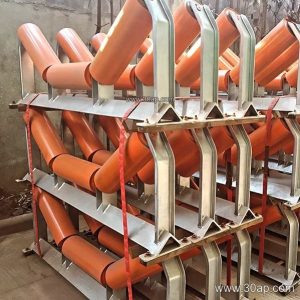
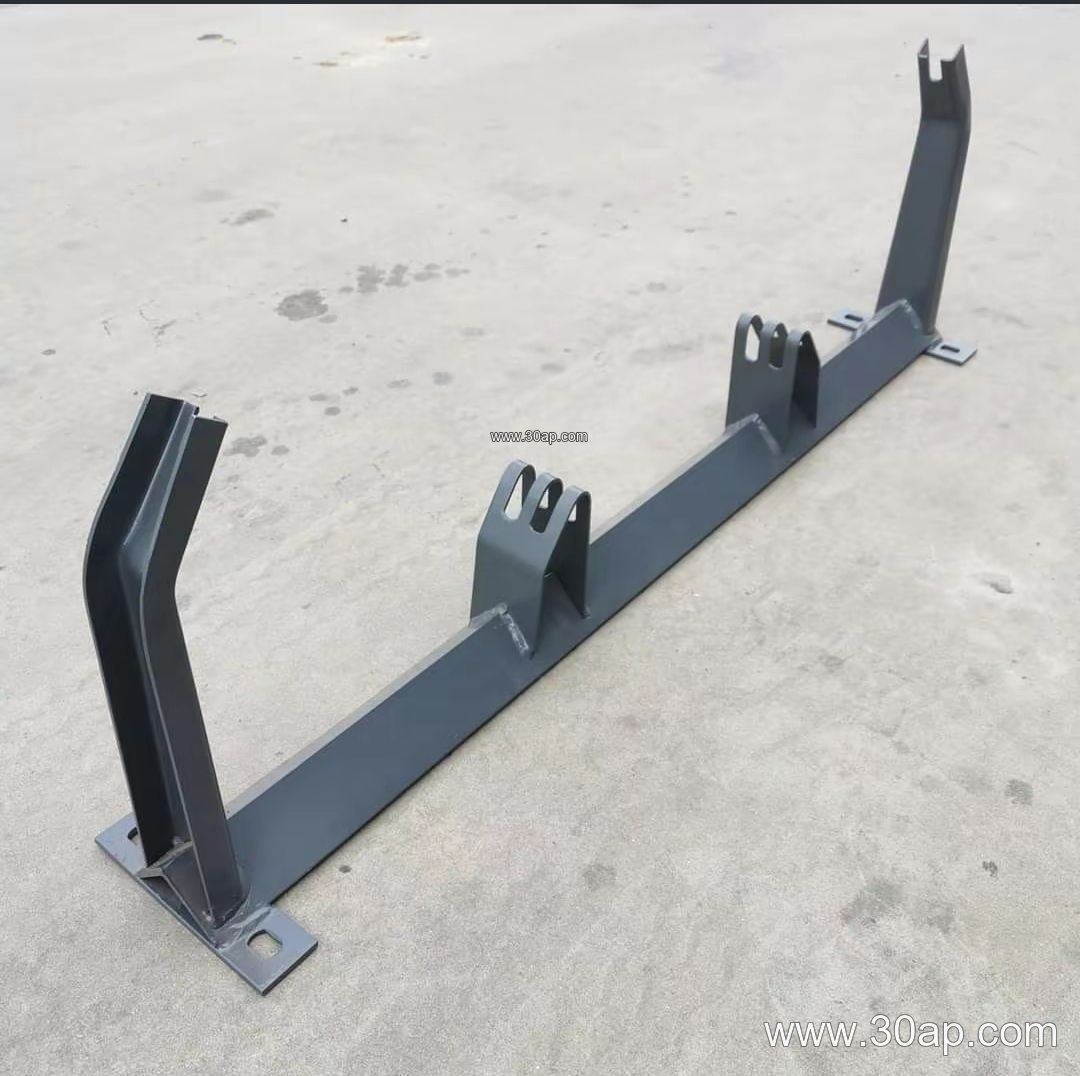
A custom conveyor bracket is a made-to-fit support component that holds idler rollers in the correct position under or along a conveyor belt. Rather than forcing a standard frame onto an existing structure, the bracket is built around the actual belt width, trough angle, roller diameter and mounting hole spacing of the line. In a quarry, a coal preparation plant or a cement kiln feed line, the difference between a bracket that fits and one that nearly fits shows up quickly as belt misalignment, edge wear and unnecessary downtime.
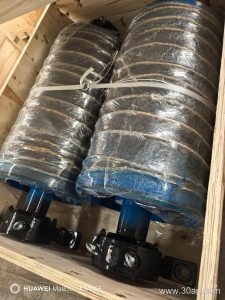
Buyers often search for this part as a custom conveyor support bracket or a bespoke idler mounting frame. Both names describe the same product. The bracket is not a drive pulley, a tail pulley or a bend pulley, and it should never be ordered as a substitute for one of those components. It is the structural interface between the conveyor frame and the idler roller.
How the Bracket Is Built
Fabrication usually starts with angle steel, channel steel or folded steel plate. The gauge is chosen to suit the load carried by the belt and the material being transported, so a heavy-duty mining conveyor belt handling iron ore will call for a sturdier bracket than a light aggregate line. Welding, drilling and surface treatment follow, and the finished part is checked against the mounting dimensions of the roller set it will carry.
Because every line is different, a custom bracket can be supplied as an upper trough bracket, a transition bracket, a return bracket, a flat return bracket, a V-return bracket, an impact bracket, a self-aligning bracket or an adjustable bracket. Trough angles commonly run at 20, 30, 35 or 45 degrees, and an adjustable version can move between those angles. Forward tilt is usually around 1.5 to 2 degrees where it is used.
Matching Belt Width, Roller Diameter and Trough Angle
The three values that shape a bracket most are belt width, roller diameter and trough angle. Reference combinations are often written in the form B800, 35 degrees, Ø108, or B1200, 45 degrees, Ø133, or B650, 30 degrees, Ø89. These are examples, not fixed rules. A given belt width can work with more than one trough angle and more than one roller diameter, and the final choice depends on capacity, material characteristics and the existing frame.
Typical Reference Data
- Belt width range commonly referenced: B500, B650, B800, B1000, B1200, B1400, B1600, B1800, B2000, B2200
- Trough angle options: 20 degrees, 30 degrees, 35 degrees, 45 degrees
- Idler roller diameters: Ø89, Ø108, Ø133, Ø159, Ø194
- Materials: angle steel, channel steel, folded steel plate
Mounting hole spacing and crossbeam length change with belt width and trough angle, so they are determined by design rather than taken from a single universal number. A bracket for a 1000mm conveyor belt on a stone crushing line will not share the same hole pattern as one for a 2200mm wide belt at a port ship loader.
Where These Brackets Are Used
Any conveyor that carries bulk material needs reliable roller support. In a limestone mine or a sand and gravel plant, dust and impact load make the impact bracket and the self-aligning bracket common choices. In a power plant coal handling system, flame retardant conveyor belt and anti-static belt requirements often come with tighter alignment demands, so adjustable brackets help keep the belt centered. A fertilizer plant or a grain silo may prefer simpler flat return brackets where the load is lighter and the environment is less abrasive.
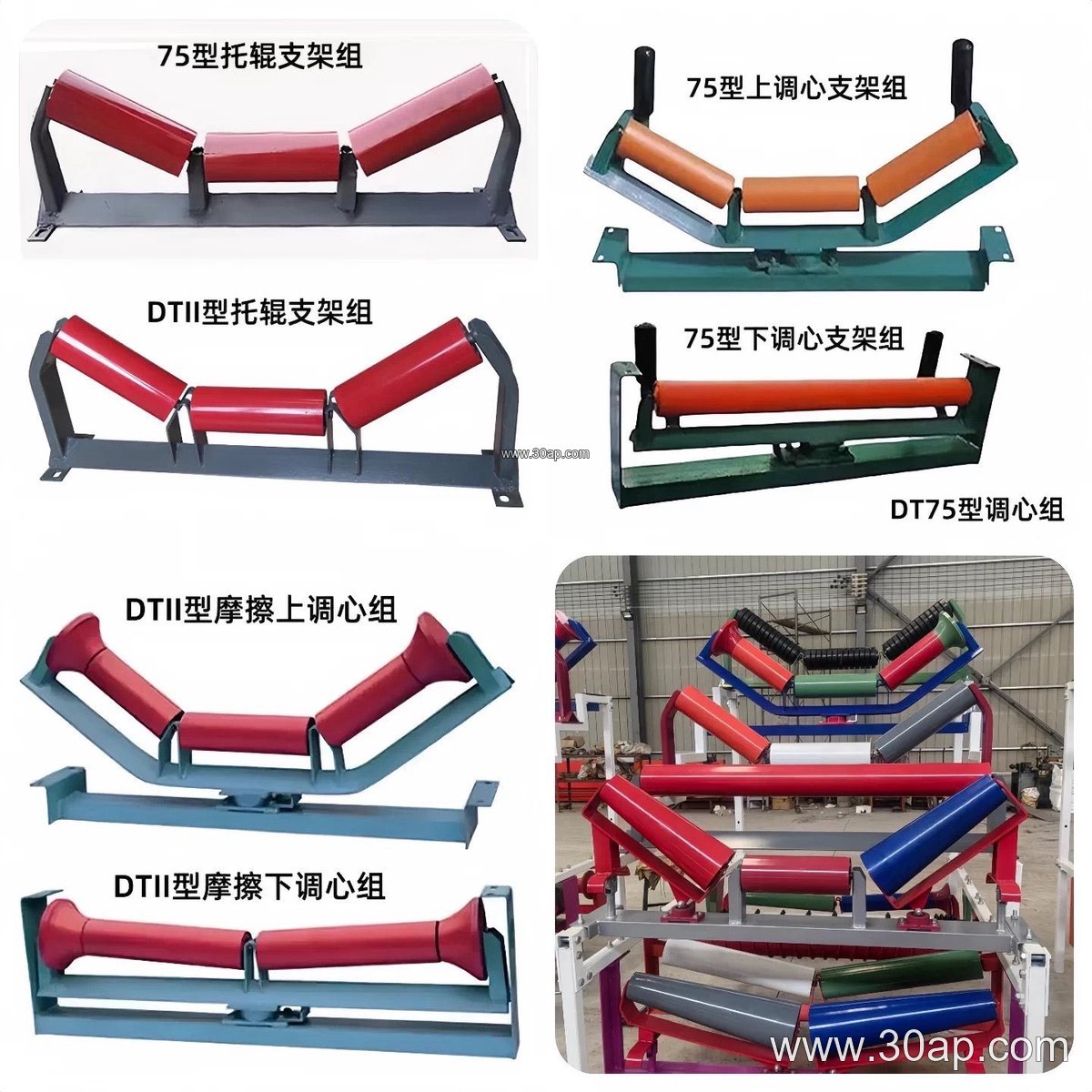
The bracket also works alongside other components rather than in isolation. A well-matched idler roller, a correctly sized conveyor pulley and a bracket with the right trough angle together determine how smoothly the belt tracks. A custom conveyor bracket is the part that ties those pieces to the steel structure.
What to Confirm Before Ordering
Accurate ordering starts with measurement. Confirm the belt width, the roller diameter, the required trough angle and the existing hole spacing on the frame. State whether the bracket is for the carrying side or the return side, and whether it needs to be fixed or adjustable. Mention the working environment, because a coal mining conveyor belt application may require different treatment from a copper ore or gold mining line.
Ask for a drawing before production. A dimensioned sketch showing hole centers, overall length and angle is the simplest way to avoid a mismatch on site. If the line uses an EP conveyor belt or a steel cord conveyor belt, note that the belt tension and weight may influence the bracket gauge, but the belt construction itself does not fix one bracket size.
Finally, treat the bracket as part of a system. Replacing one bracket without checking the roller and pulley alignment rarely solves a tracking problem, and a bracket that is overbuilt for a light line adds cost without benefit. The right custom conveyor bracket is the one that matches the real dimensions and duty of the conveyor it serves.