What a Self-Aligning Idler Bracket Does
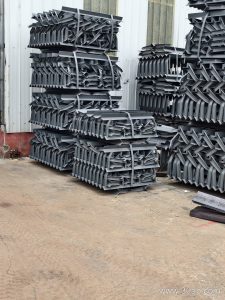
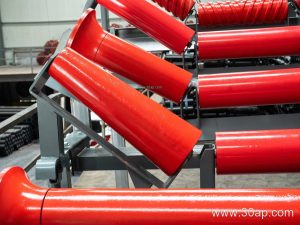
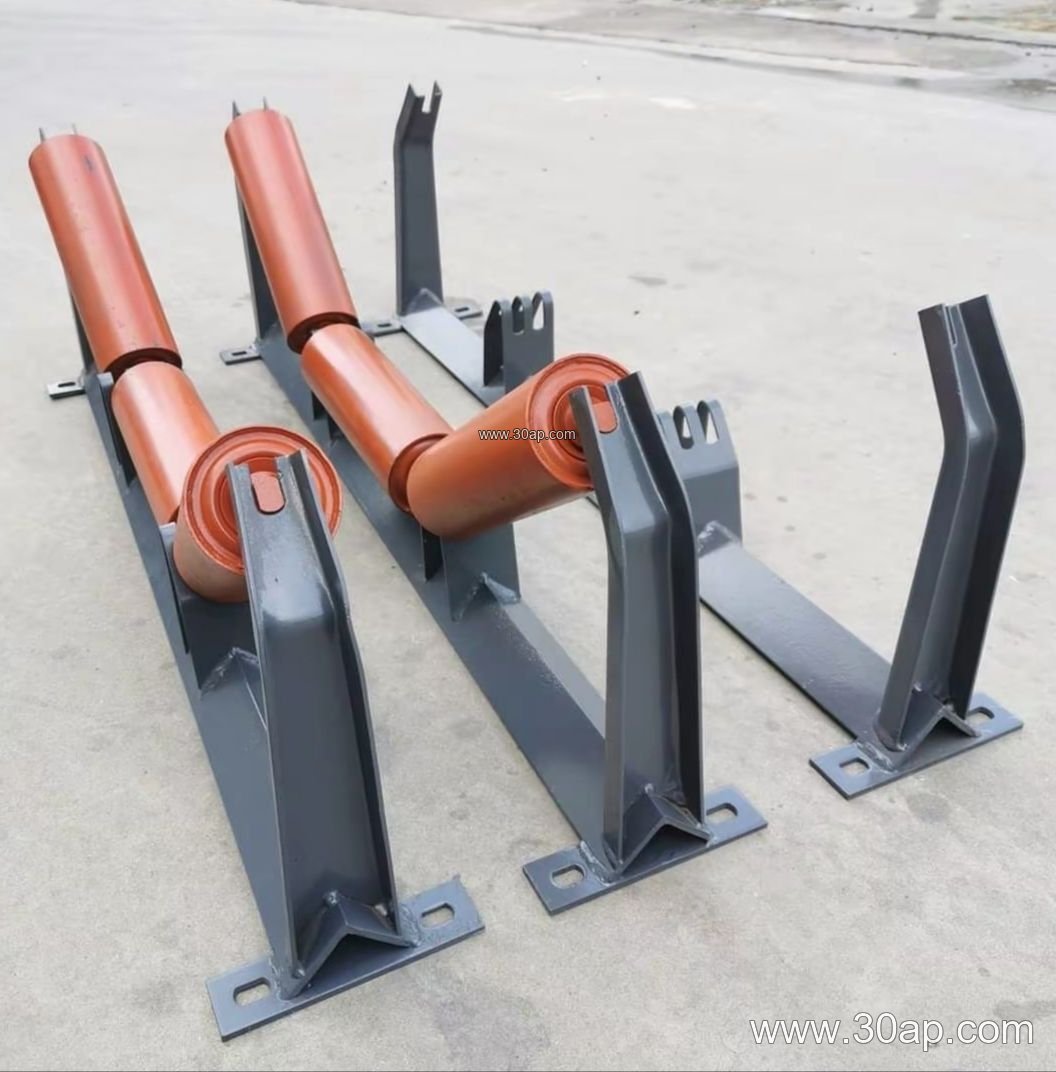
A self-aligning idler bracket is the mounting frame that holds the training idlers on a conveyor and lets them pivot slightly so the belt stays centered. In a quarry, power plant coal yard, or cement plant, a belt that wanders off-center can damage edges, spill material, and shorten the life of the conveyor belt. The self-aligning idler bracket, also called a self-training idler bracket, solves this by turning a small belt deviation into a corrective swing of the idler set.
It is not a drive pulley, tail pulley, or bend pulley. Those are separate components with their own alignment duties. The bracket works at the idler station, supporting the idler roller and reacting to belt contact.
How the Bracket Is Built
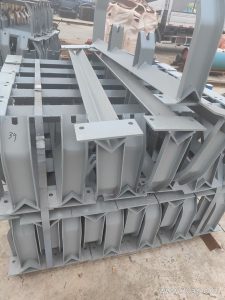
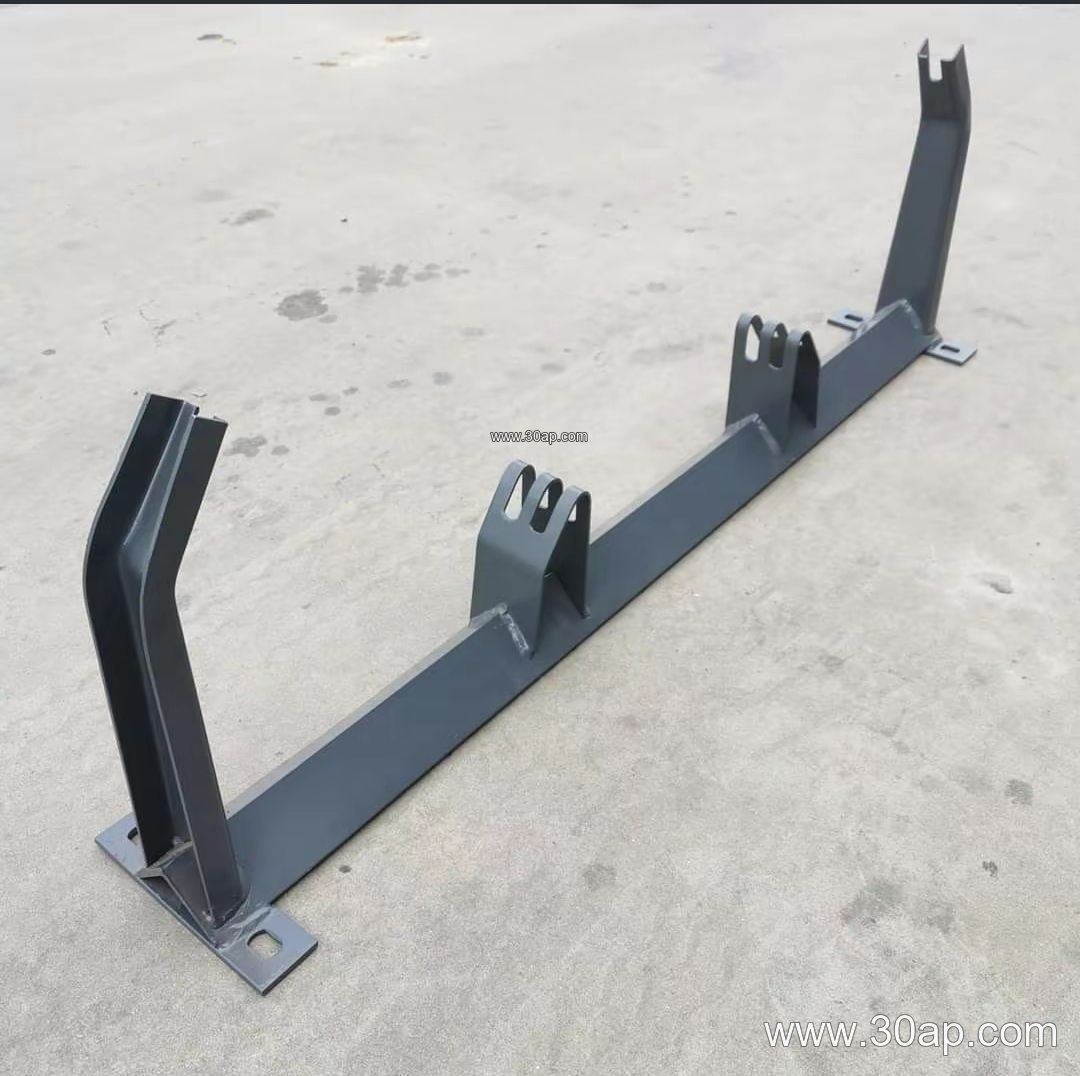
Most units are fabricated from angle steel, channel steel, or folded steel plate. The frame carries a pivot or swivel point, usually a vertical shaft or bearing seat, and a cross beam that sets the trough angle of the carrying idlers. A small forward tilt of about 1.5 to 2 degrees is common on training stations, because it encourages the idler to steer the belt back to the center line.
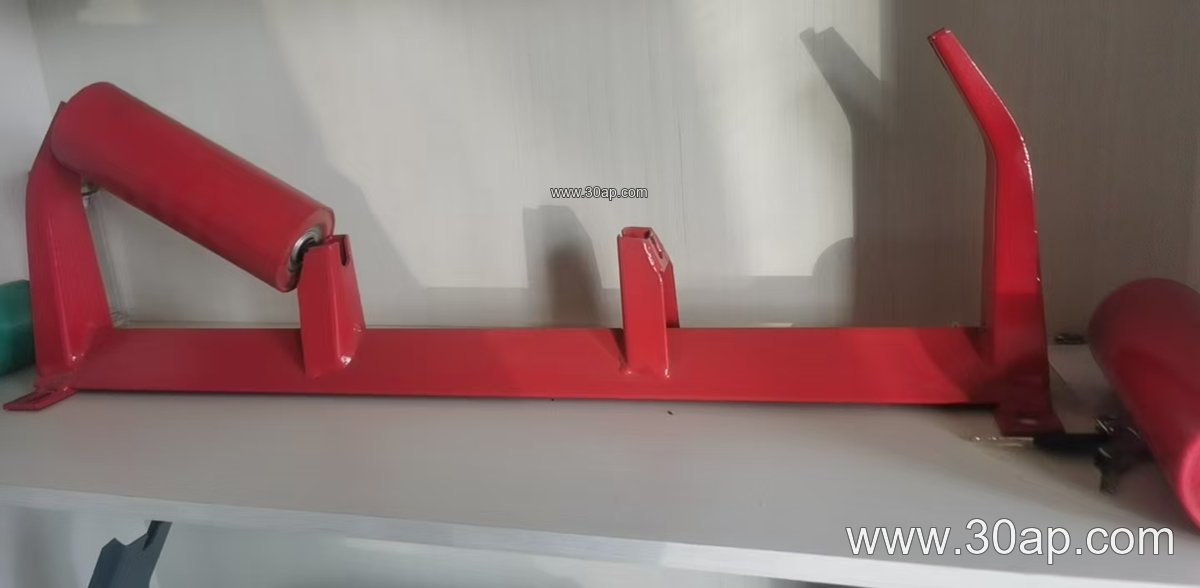
- Pivot base and stop lugs to limit swing
- Cross beam sized to the belt width and trough angle
- Mounting holes for the idler roller shafts
- Optional adjustment slots for fine tracking
Installation hole spacing and beam length change with belt width and trough angle, so these are set by design rather than a single fixed figure.
Where Self-Aligning Idler Brackets Are Used
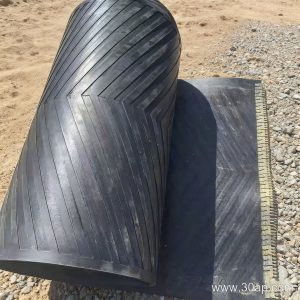
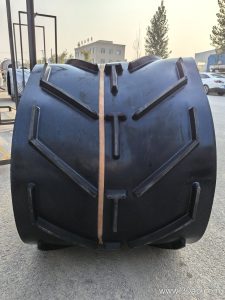
These brackets appear wherever a conveyor is long enough to drift. In a limestone mine or aggregate line, they sit on the carrying side after the loading point and before the head end. In a coal handling system feeding a power plant, they help keep a flame retardant conveyor belt or a fire resistant conveyor belt running true through transfer towers. In a cement plant, they are often paired with an abrasion resistant conveyor belt on clinker and raw meal lines.
They are also used on the return strand in a V-return or flat-return arrangement, where a self-aligning idler bracket supports the return idler roller and corrects belt wander before it reaches the tail pulley.
Matching the Bracket to Belt and Idler Size
Selection starts with belt width and trough angle. Common widths include B500, B650, B800, B1000, B1200, B1400, B1600, B1800, B2000, and B2200. Trough angles of 20, 30, 35, and 45 degrees are typical, and adjustable brackets can move between these angles. Idler diameters such as Ø89, Ø108, Ø133, Ø159, and Ø194 are matched to load and belt speed. A bracket for B800 at 35 degrees with Ø108 idlers is a common arrangement, but B1200 at 45 degrees with Ø133 idlers is equally valid where the design calls for it.
| Belt Width | Trough Angle | Typical Idler Diameter |
|---|---|---|
| B500 / B650 | 20 to 30 degrees | Ø89 / Ø108 |
| B800 / B1000 | 30 to 35 degrees | Ø108 / Ø133 |
| B1200 / B1400 | 35 to 45 degrees | Ø133 / Ø159 |
| B1600 to B2200 | 35 to 45 degrees | Ø159 / Ø194 |
These are reference combinations, not fixed rules. The bracket should be chosen with the idler set, belt tension, and material load in mind. A heavy-duty mining conveyor belt carrying iron ore needs a stiffer frame than a light aggregate conveyor belt.
Buyer Checklist
- Confirm belt width, trough angle, and idler diameter before ordering.
- Check whether the frame is fixed or adjustable, and whether the pivot has a bearing or a simple pin.
- Ask how the bracket handles a reversing belt, since some self-aligning designs need a specific orientation.
- Match the steel thickness to the duty, especially on a crusher conveyor belt or underground mining conveyor belt.
- Keep spare pivot pins and stop lugs on hand for maintenance.
For related conveyor components, see our conveyor idler roller and rubber conveyor belt pages. A well-chosen self-aligning idler bracket is a small part of the conveyor bracket system, but it protects the belt, the idler roller, and the whole conveying line.