What a Chemical Resistant Conveyor Belt Is
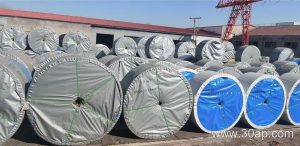
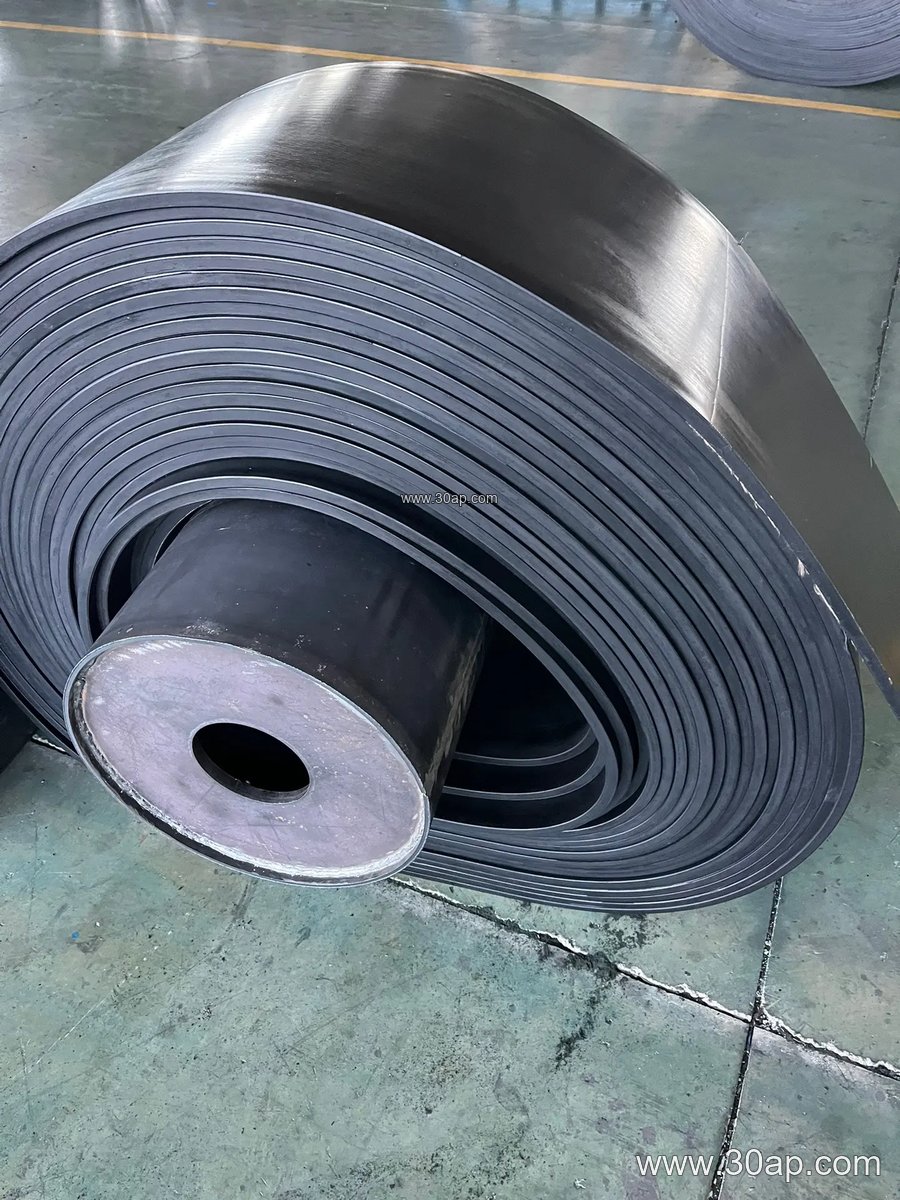
A chemical resistant conveyor belt is a fabric-reinforced rubber belt whose cover compounds are selected to withstand contact with acids, alkalis, salts, solvents, and other aggressive substances. It is not a single fixed formula. The rubber grade, carcass, and cover thickness are matched to the chemical family, concentration, temperature, and exposure time of the site. In plants where spillage, dust, or washdown water carries reactive residues, this belt protects the carcass from swelling, cracking, and premature failure. It is also known as an acid and alkali resistant conveyor belt, and that equivalent name describes the same product.
Chemical attack rarely acts alone. A belt may also face abrasion from bulk material, heat from a process stream, or the risk of static discharge. Buyers should therefore treat chemical resistance as one requirement among several, and confirm the full duty with the belt supplier.
Construction and Compound Choices
The belt is built around a fabric core, usually EP (polyester-cotton) or NN (nylon) canvas, protected by top and bottom rubber covers. The cover compound is the first barrier. Formulations based on chloroprene, nitrile, EPDM, or other polymers are chosen according to the chemicals involved. A thicker cover extends service life where splash and fumes are constant.
- Top cover and bottom cover thickness are often written as a pair, for example 4+2 mm, 5+2 mm, or 6+2 mm.
- Carcass plies commonly range from 2 to 6 layers, depending on strength and load.
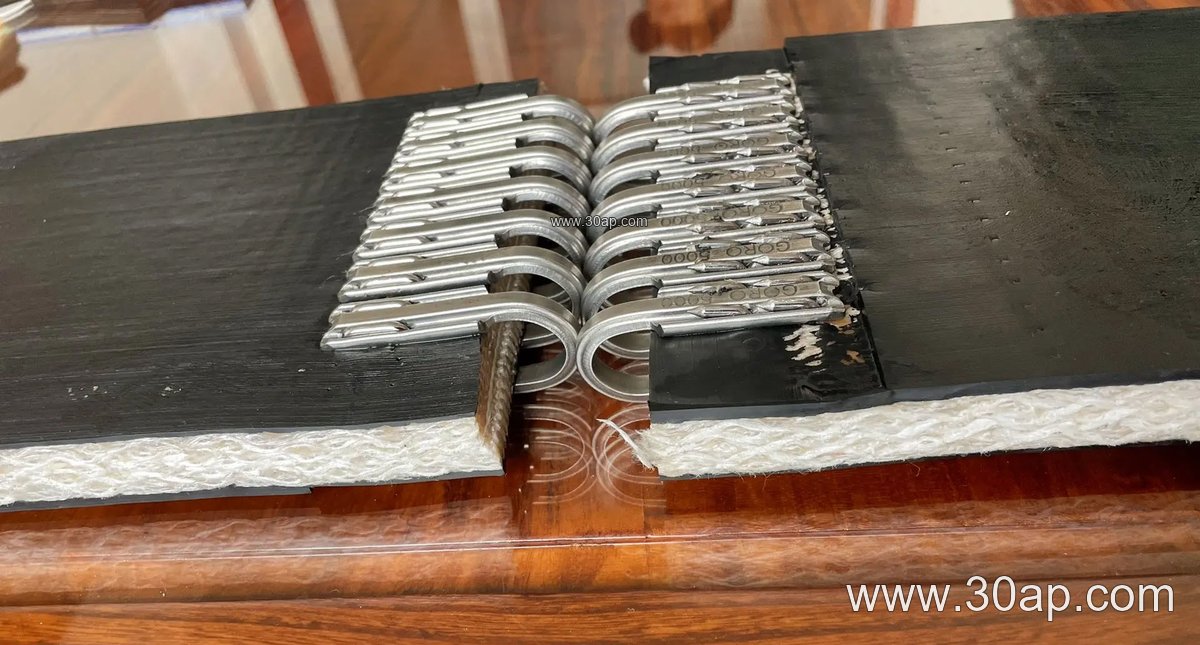
- Edge protection and skim rubber between plies help stop wicking along the fabric.
When a process also needs oil resistance, flame retardance, or anti-static behaviour, the compound must be balanced rather than simply stacked. An oil resistant conveyor belt and a chemical resistant belt may share polymers, but the final formulation is different. The same applies to flame retardant and anti-static grades used in coal mining or enclosed plants.
Typical Industrial Applications
These belts appear in chemical plants, fertilizer production, salt handling, pulp and paper mills, battery material lines, and wastewater sludge transport. They also serve in cement plants and power plants where flue-gas treatment residues or acidic wash water contact the belt. In mining and quarry operations, acid-bearing ore or process water can make a chemical resistant grade useful, though abrasion resistance usually dominates the specification.
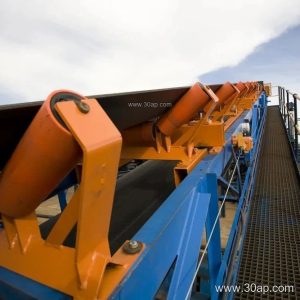
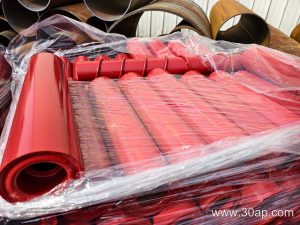
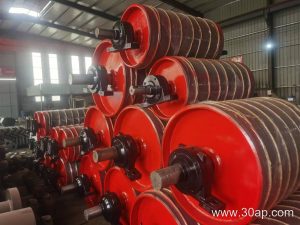
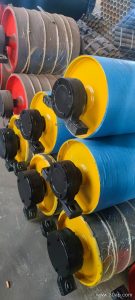
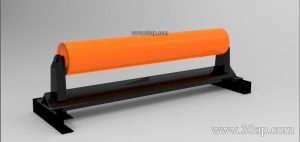
On the conveyor itself, the belt works with idler rollers, conveyor pulleys, and conveyor brackets. Drive pulleys, tail pulleys, and bend pulleys each have a distinct role; none of them should be treated as interchangeable names. Belt width, pulley diameter, and shaft size are separate design decisions, and a given width does not dictate one pulley diameter.
Reference Dimensions and Strength Grades
The values below are common reference points, not universal specifications. Actual supply depends on the manufacturer and the project design.
| Parameter | Common reference values |
|---|---|
| Fabric core type | EP or NN canvas |
| Strength grade | EP200, EP315, EP400, EP500, EP630, EP800, EP1000, EP1250 |
| Belt width | B500, B650, B800, B1000, B1200, B1400, B1600 |
| Cover thickness | 3+1.5 mm, 4+2 mm, 5+2 mm, 6+2 mm |
| Carcass plies | 2 to 6 layers, by design |
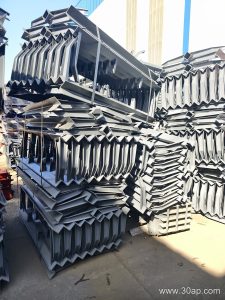
For heavier duties, a steel cord conveyor belt may be considered where tensile strength is the limiting factor, but the cover still has to resist the chemical environment. For steep inclines, a chevron conveyor belt or corrugated sidewall belt may be needed to contain the load; the chemical grade of the cover should be specified at the same time.
Selection and Maintenance Notes
Start with a clear list of the substances the belt will touch, including dilute mixtures and cleaning agents. Note the concentration, the temperature, and whether contact is continuous or occasional. Ask for the recommended polymer and cover thickness, and confirm that the chosen grade does not soften or swell in the actual service condition. Where the belt is used underground or in a dusty plant, verify anti-static and flame retardant behaviour separately.
During operation, keep the belt tracking correctly and check that idler rollers turn freely. Spillage left on the return side can trap chemicals against the cover. Inspect edges and splices for wicking, and wash down according to the site procedure. A conveyor pulley with worn lagging can cause slip and extra heat, so pulley condition matters as much as belt grade.
For chemical resistant conveyor belt specifications, visit example.com/chemical-resistant-conveyor-belt. Related equipment such as conveyor idlers and pulleys can be reviewed at example.com/conveyor-pulley.