What a Spiral Return Idler Does
A spiral return idler is a rotating roller placed under the carrying side of a conveyor belt, on the return strand, with a helical strip of rubber or polymer wound around its shell. The spiral shape is the defining feature. As the belt passes over the roller, the raised helix contacts the belt surface and continuously scrapes off sticky material that would otherwise build up on the roller or fall away in lumps further along the line. In day-to-day language, this component is often called a spiral roller or helical return roller, and it belongs to the broader family of return idlers.
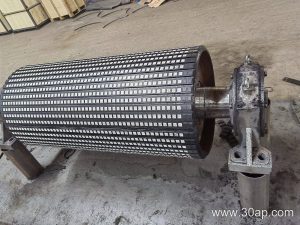
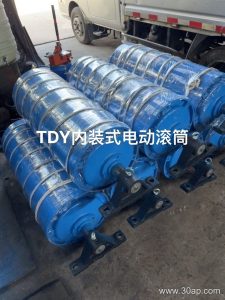
It is not a drive pulley, a tail pulley, or a bend pulley. Those are pulleys that transmit motion or change belt direction at the ends and corners of a conveyor. A spiral return idler simply supports the belt on its return run while helping keep the belt and the roller face clean.
Construction and Materials
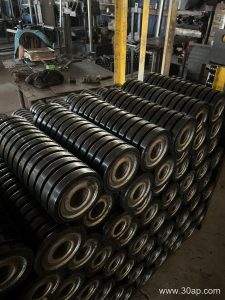
A typical unit starts with a steel tube shell, fitted with end discs, a shaft, and bearing housings. The bearings are usually sealed and pre-lubricated, with common sizes such as 6204, 6205, 6305, 6306, 6308, or 6310 selected according to the load and roller diameter. The spiral itself is usually a rubber strip bonded or clamped to the shell in a continuous helix. Some designs use a molded polymer spiral instead of rubber.
The shell may be plain steel, nylon-coated, or covered with rubber in other idler types, but on a spiral return idler the helical profile is the working surface. Roller diameters commonly fall in the range of Ø63 to Ø219, and the choice depends on belt width, belt speed, and the amount of material being carried back. Roll face widths are matched to the conveyor belt width and to the support arrangement, not to a single fixed formula.
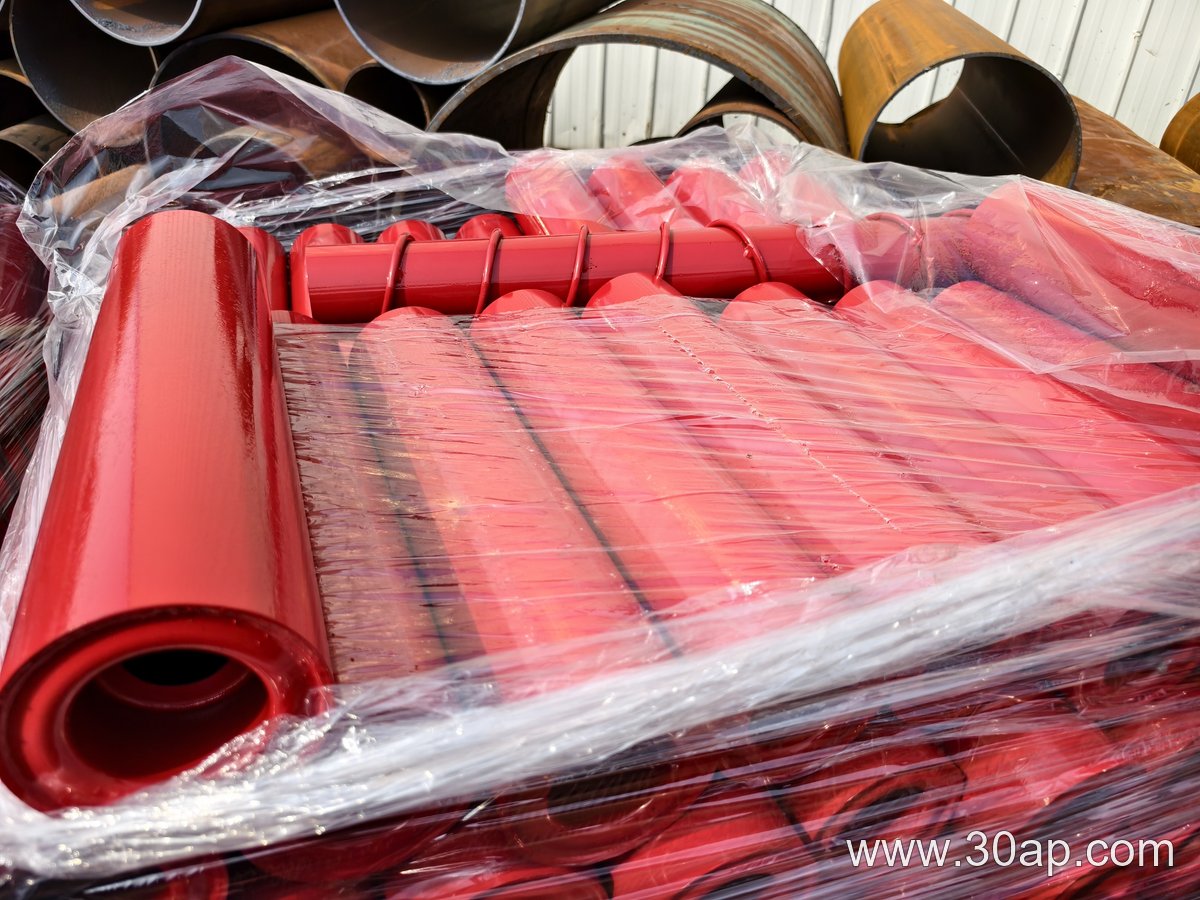
Where It Is Used
Spiral return idlers are common in bulk handling where the conveyed material is damp, fine, or prone to sticking. Two typical settings are a limestone crushing and screening line and a coal handling system at a power plant. In both cases, fines and moisture can cling to the belt after discharge, and a standard flat return roller can become coated, out of balance, or covered in a layer of hardened mud.
They are also found in sand and gravel plants, cement works, and port bulk terminals. In these locations the return strand is often long, and keeping it clean reduces the labor needed for manual scraping and lowers the risk of material dropping onto walkways or into the tail area.
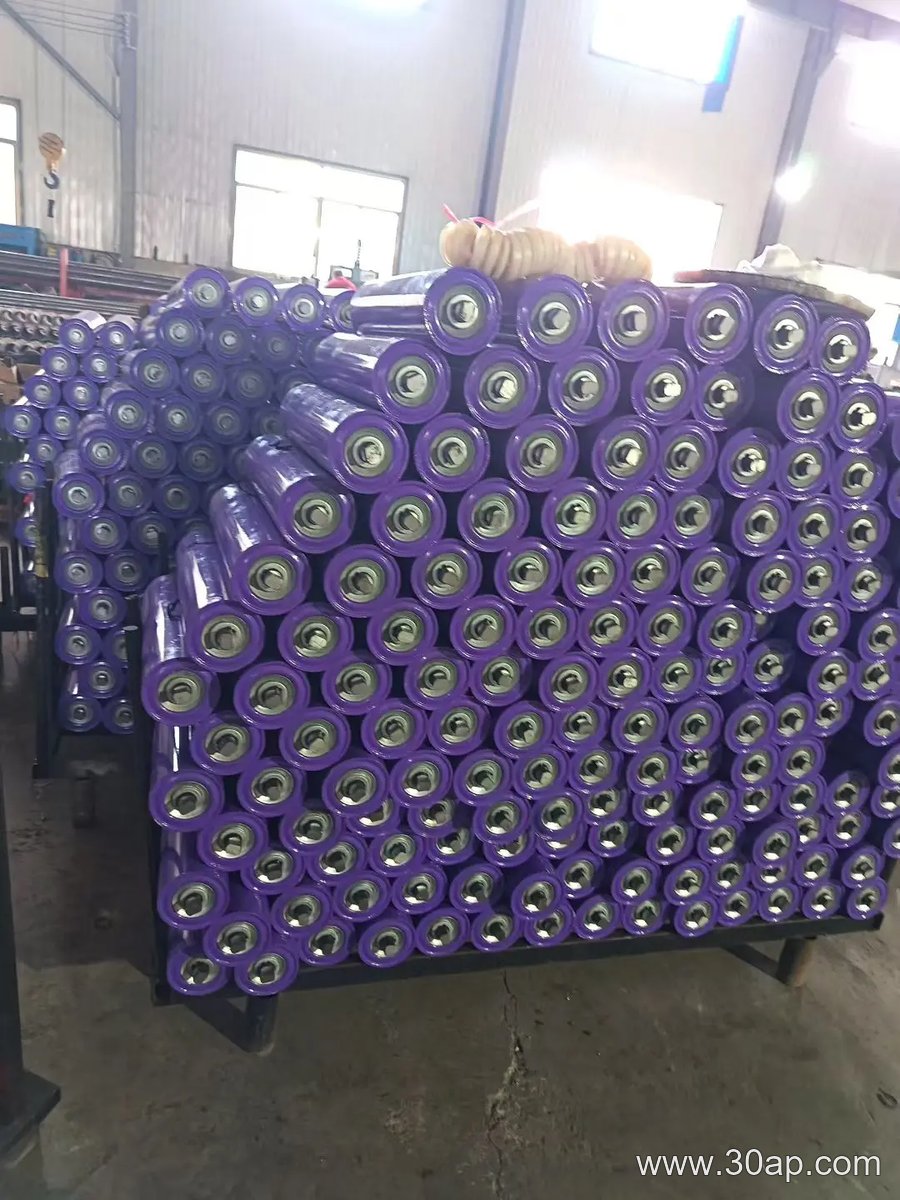
How It Differs from Other Return Idlers
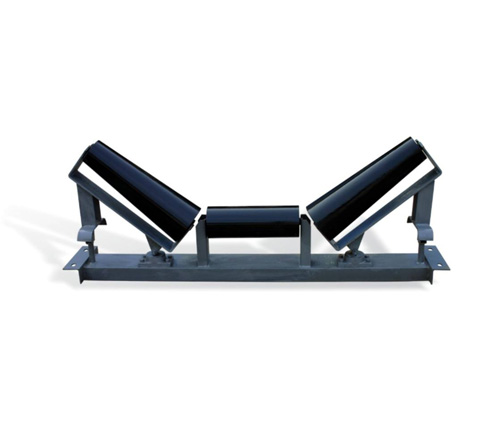
A flat return idler is the simplest option, with a smooth cylindrical shell. A V-type return idler uses two rollers set at an angle to center the belt, and it is often chosen where belt tracking is the main concern. A spiral return idler is selected primarily for cleaning and material release. It can be used alongside a V-return or a training idler on the same conveyor, but it does not replace them in function.
On the carrying side, troughing idlers, impact idlers, and self-aligning idlers do different jobs. A spiral roller is a return-side component, so it should not be confused with those carrying-side groups. When a conveyor also needs belt training, a separate self-aligning or friction self-aligning idler is normally installed at a suitable point.
Selection Points for Buyers
- Belt width and return strand layout: the roller length and the number of rollers per set should follow the actual conveyor design, whether the return run is supported by a single roller or a pair.
- Roller diameter: common sizes range from Ø63 to Ø219. Larger diameters generally suit wider belts and higher loads, but the final choice is a design decision.
- Spiral material and pitch: rubber is widely used for abrasive duties, while polymer may be chosen where material release is the main goal. Pitch affects how aggressively the surface cleans.
- Bearing and sealing: sealed bearings in sizes such as 6204, 6205, 6305, 6306, 6308, or 6310 are typical, with the exact selection based on load, speed, and environment.
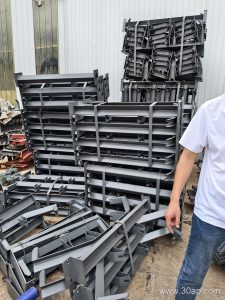
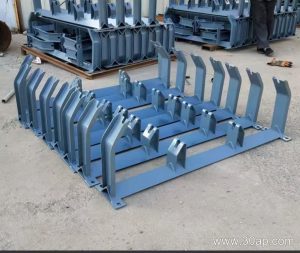
- Mounting: the roller shaft fits into a conveyor bracket or frame. Confirm the bracket type and fixing dimensions before ordering.
- Environmental conditions: dusty, wet, or corrosive sites may call for additional sealing or a different shell finish.
Specifications vary by manufacturer and by project. Treat any listed diameter, bearing number, or roller length as a reference point, not as a universal match. A belt width such as B800 or B1200 does not by itself dictate one roller diameter or one shaft size. The right approach is to match the spiral return idler to the conveyor duty, the material, and the existing return idler frame.
Maintenance Notes
Inspect the spiral for wear, missing rubber, or buildup between the helix and the shell. A worn spiral loses its cleaning effect, and a damaged one can snag the belt. Check that the roller turns freely, listen for bearing noise, and confirm that the bracket and shaft are secure. Where a conveyor belt carries wet or sticky material, a spiral return idler can reduce carryback, but it works best as part of a complete belt cleaning and return-side support plan.