What a Heavy-Duty Conveyor Belt Is
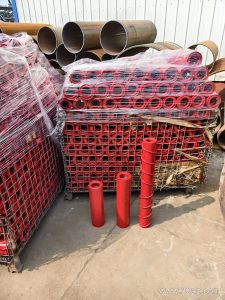
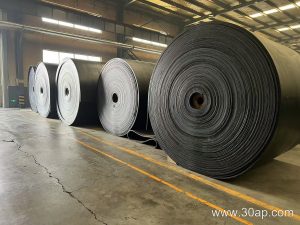
A heavy-duty conveyor belt is the load-carrying component of a bulk handling system built for continuous service under high tension, abrasive material, and harsh operating conditions. In mines, coal preparation plants, cement works, power stations, and sand and gravel yards, this belt is expected to move large tonnages over long distances without frequent stoppage. It is more than a rubber strip: the carcass, cover compounds, and edge construction are all engineered to work together with the conveyor pulleys, idler rollers, and frame brackets that support the system.
The accurate equivalent name for the same product is a high-capacity industrial conveyor belt, or simply a heavy-duty belt. Within this family, the carcass type and cover grade define how the belt behaves, so buyers should treat these as distinct choices rather than interchangeable labels.
Construction and Common Specifications
The belt usually combines a fabric or steel cord carcass with top and bottom rubber covers. Fabric types include EP (polyester-cotton) and NN nylon constructions, while steel cord belts are chosen for very long runs and high tensile loads. Cover grades address wear, heat, oil, flame resistance, antistatic behavior, cold, and acid or alkali exposure. Surface forms such as plain, patterned, chevron, and corrugated sidewall designs serve different inclination and material-retention needs.
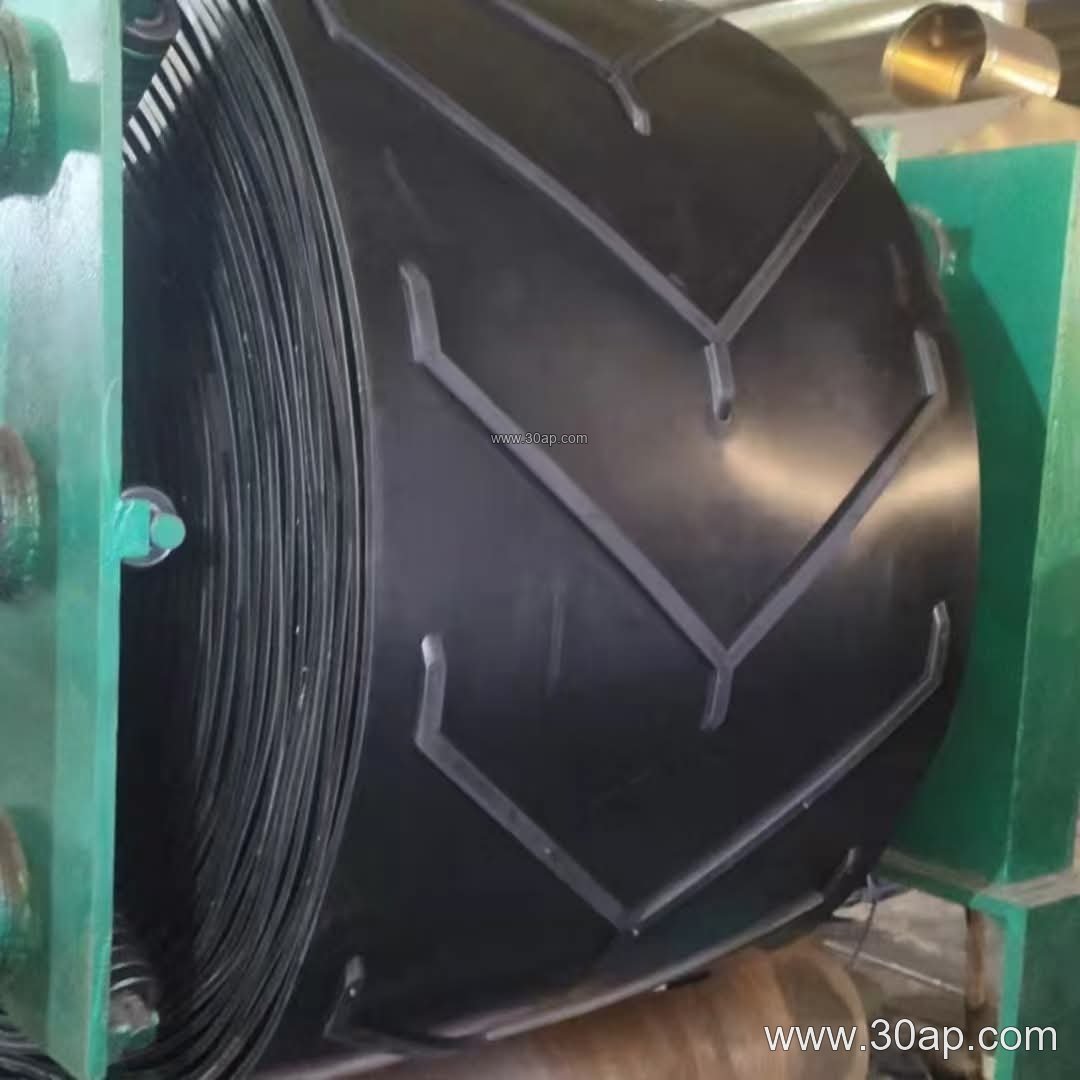
Reference data below shows typical ranges; actual values are set by design and vary between manufacturers.
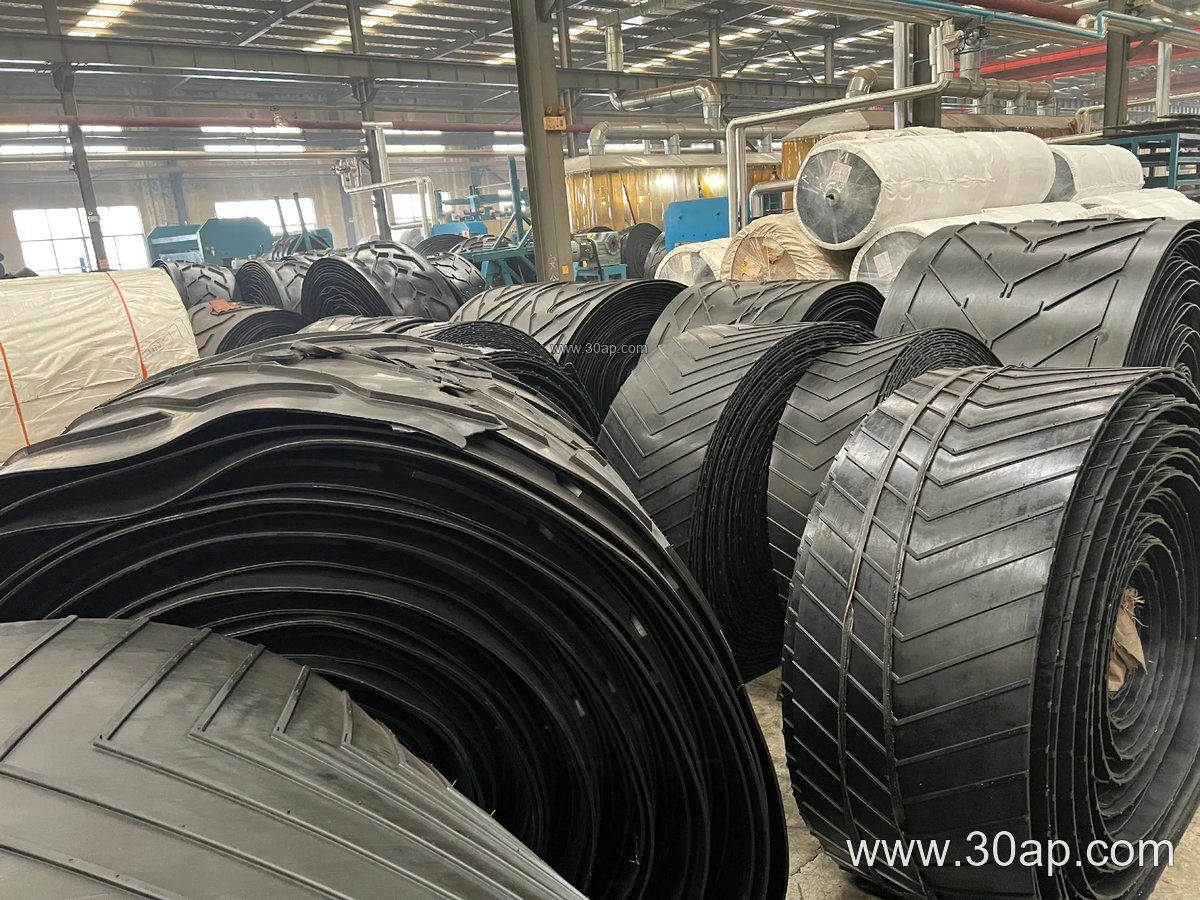
Common Strength Grades
- EP200, EP315, EP400, EP500, EP630
- EP800, EP1000, EP1250, EP1600, EP2000
Common Belt Widths
- B500, B650, B800, B1000, B1200
- B1400, B1600, B1800, B2000
Cover Thickness and Carcass Layers
Cover combinations are usually quoted as top plus bottom thickness, for example 3+1.5, 4+2, 5+2, 6+2, or 8+3 mm. The carcass commonly has 2 to 6 fabric layers, depending on the required strength and pulley arrangement.
Where It Fits in the Conveyor
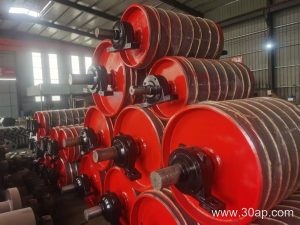
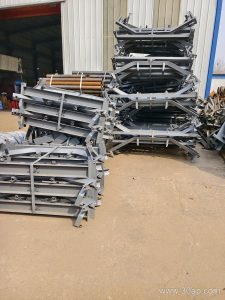
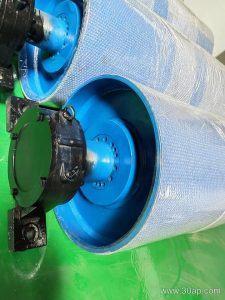
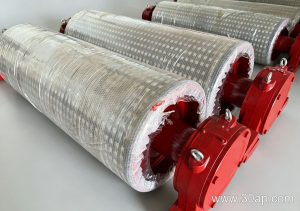
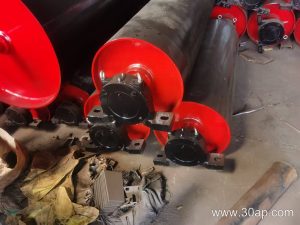
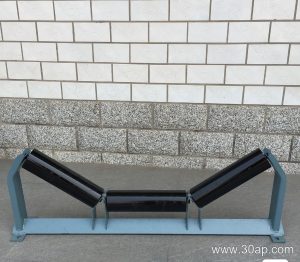
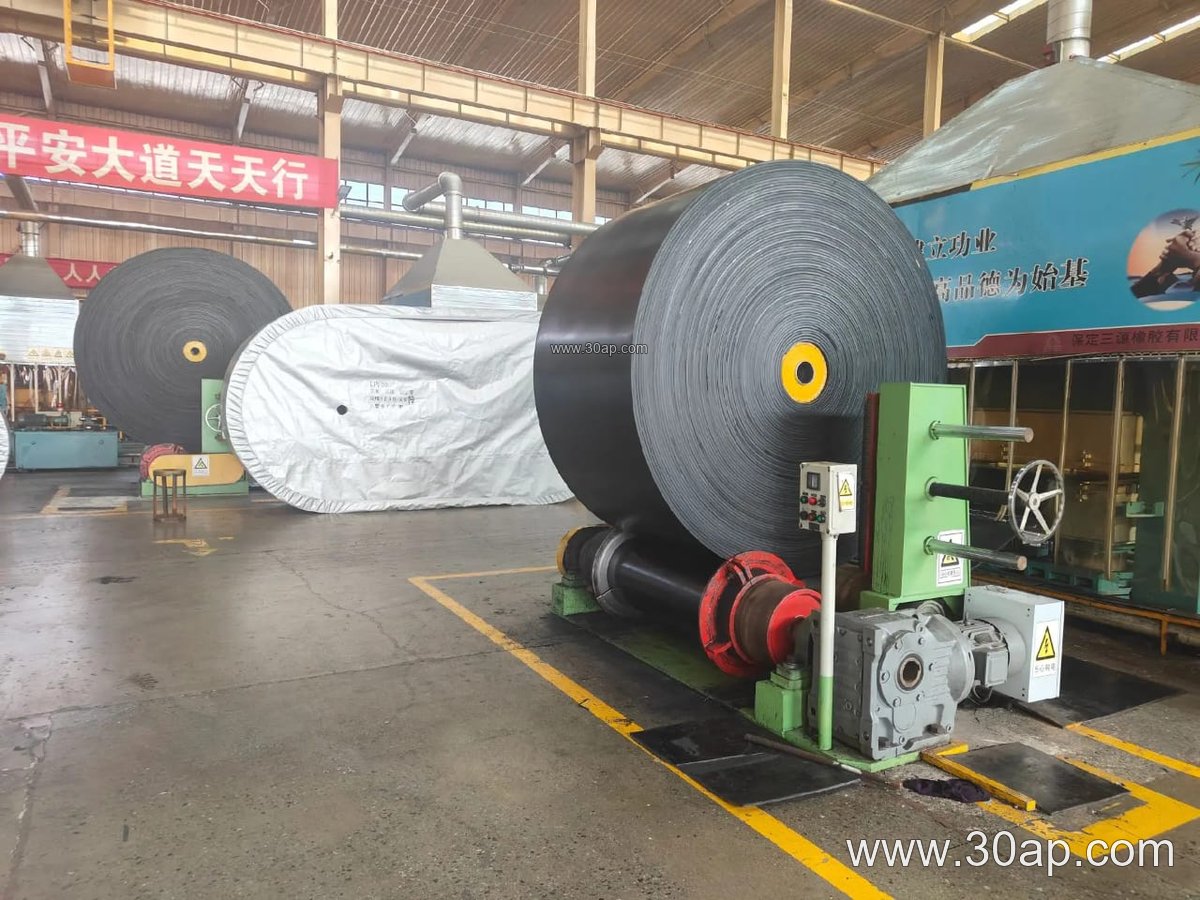
The belt runs over drive, tail, and bend pulleys, each with a specific role. A drive pulley transmits motion, a tail pulley returns the belt at the loading end, and a bend pulley changes direction along the route; these are not interchangeable terms and should be specified separately. Idler rollers support the loaded strand and influence belt sag, while conveyor brackets hold the idlers and pulleys in alignment. In a coal yard or cement plant, poor alignment of these components shortens belt life faster than many operators expect.
Heavy-duty belts are also used in crushing circuits, stockyard conveyors, ship loading lines, and quarry transport. In these duties, impact at the transfer point, abrasive stone, and wet or dusty conditions all affect cover wear and carcass fatigue.
What Buyers Should Check Before Ordering
Start with the material being carried and its lump size, moisture, temperature, and chemical nature. Then confirm the required tensile strength, belt width, cover thickness, and carcass layers against the conveyor design. Ask how the belt will interact with the drive pulley diameter, troughing idlers, and transition distances, because belt stiffness and pulley size must be matched by the system designer rather than assumed from width alone. A wider belt does not automatically require one fixed pulley diameter, and shaft size should never be guessed from belt width.
For inclined routes, consider whether a patterned or chevron surface helps material retention. For dusty coal or grain handling, antistatic and flame-resistant grades may be relevant. For hot clinker or cement, heat-resistant covers deserve attention. Buyers should also confirm splice method, edge condition, and delivery length, and request the manufacturer’s actual data sheet before approving a specification.
Maintenance and Service Life
Regular inspection of belt edges, cover wear, splice condition, and idler rotation prevents small faults from becoming shutdowns. Keeping pulleys clean and aligned, maintaining correct tension, and correcting material spillage at transfer points all extend service life. In sand and gravel plants, wash water and fine grit can accelerate cover abrasion, so cleaning and inspection intervals may need to be shorter than in a dry cement operation. A heavy-duty conveyor belt performs best when the whole conveyor, including rollers, pulleys, and brackets, is treated as one coordinated system.