What an EP200 Conveyor Belt Actually Is
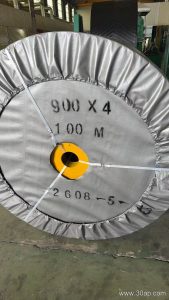
An EP200 conveyor belt is a multi-ply rubber belt built on a polyester (E) and polyamide (P) fabric carcass. The number 200 refers to the nominal tensile strength of the carcass, usually expressed in newtons per millimetre of belt width. That places it among the lighter-to-mid range EP belts, below EP315 and EP400, and well below heavy-duty grades such as EP630 or EP1000. It is a general-purpose workhorse for medium-load conveying rather than a replacement for steel cord belting or high-tension fabric grades.
Because the carcass is EP fabric, the belt combines low elongation in the warp direction with good flexibility in the weft. That behaviour helps it track on a conveyor pulley and tolerate repeated flexing over idler rollers without the belt growing excessively or wandering.
How the Belt Is Built
A typical construction stacks several fabric plies, bonds them with rubber skim compound, and covers both faces with rubber. Common layering includes 2 to 6 plies, and cover thickness is often described as a top-plus-bottom figure such as 3+1.5, 4+2, 5+2, 6+2 or 8+3 mm. These are reference values only; the correct combination depends on the load, the material being carried and the pulley diameters in the system.
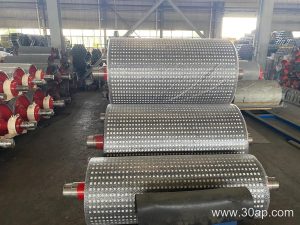
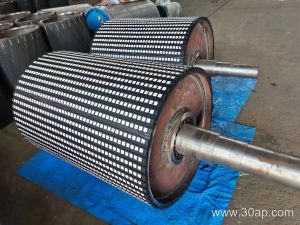
Selection also considers the smallest pulley the belt must bend around. A thicker belt with more plies needs a larger conveyor pulley, while a thin two-ply or three-ply EP200 belt can run over smaller pulleys. Drive, tail and bend pulleys are not interchangeable terms: the drive pulley transmits torque, the tail pulley returns the belt, and bend pulleys simply redirect it. Each imposes different demands on the belt.
Common Widths and Strength Range
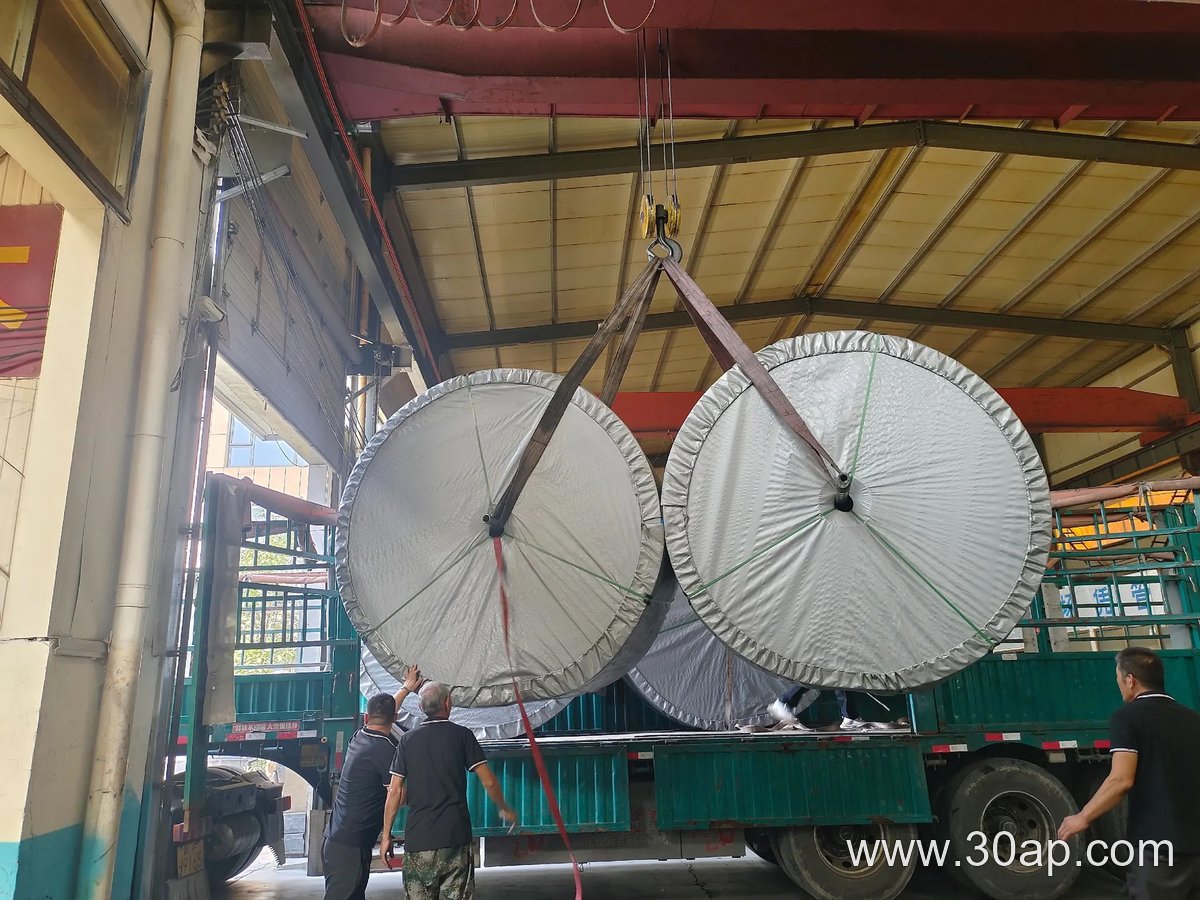
EP200 belt is commonly supplied in widths from B500 and B650 up to B1000, B1200 or wider, though any specific width must be confirmed against the conveyor frame and pulley face. Wider belts carry more material but need matching pulley and idler roller support. The table below lists typical reference data for orientation only.
| Parameter | Common reference values |
|---|---|
| Belt type | EP200 conveyor belt (polyester-polyamide, 200 N/mm) |
| Belt width | B500, B650, B800, B1000, B1200, B1400 |
| Fabric plies | 2 to 6 plies, typically 2–4 for EP200 |
| Cover thickness | 3+1.5, 4+2, 5+2, 6+2 mm |
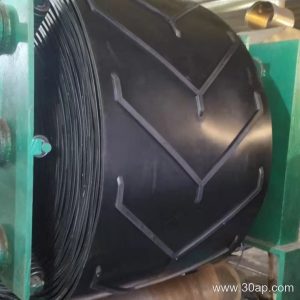
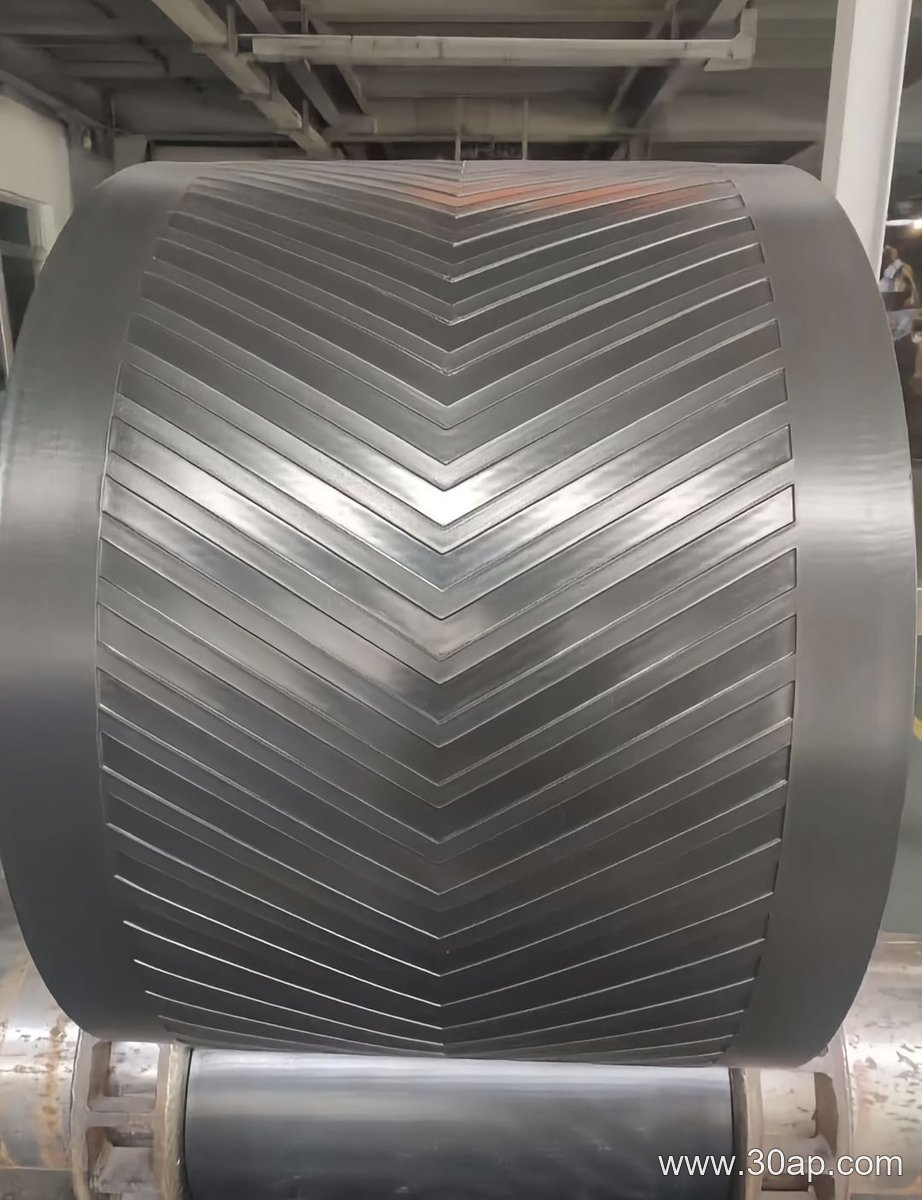
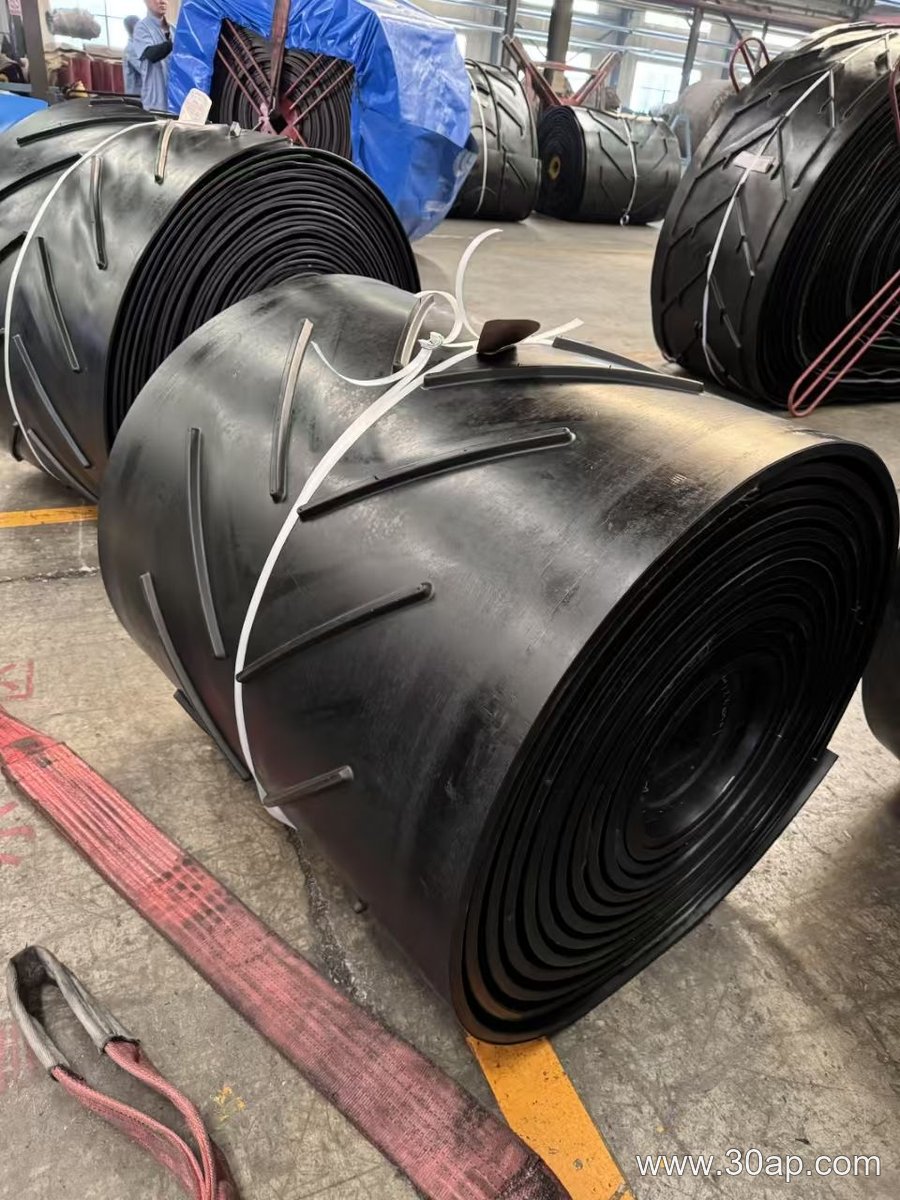
| Surface forms | smooth, patterned, chevron, cleated or sidewall |
EP200 sits below EP315, EP400 and EP500 in the EP family. It is not a substitute for a higher-strength grade where the calculated belt tension demands more. If a conveyor needs EP500 or a steel cord belt, fitting EP200 would be a mismatch, just as using a heavy EP1000 belt on a short, light conveyor adds unnecessary stiffness and cost.
Where It Fits on a Conveyor
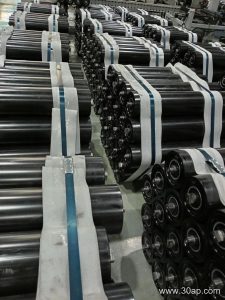
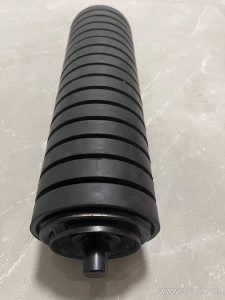
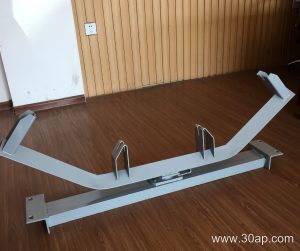
This belt suits medium-duty conveying of bulk materials such as sand, gravel, grain, coal, fertiliser, packaged goods and general industrial bulk. It works with a range of conveyor brackets and frames, and can run on troughing idler rollers or flat carrying idlers. On the return side, it typically passes over return idler rollers and a tail pulley.
Cover compound choice matters as much as the carcass. Wear-resistant covers suit abrasive rock and clinker, heat-resistant covers suit hot materials, oil-resistant covers suit oily or greasy loads, and flame-retardant or anti-static covers are used in underground or flammable dust environments. Cold-resistant and acid-alkali-resistant versions are available for specific conditions. A patterned surface or chevron profile helps on inclines where material would otherwise slide back; a smooth surface is preferred for general horizontal transport.
What a Buyer Should Check
- Calculate the required belt tension and confirm EP200 is adequate; do not choose by habit or by the belt already on the machine.
- Match the belt width to the conveyor frame, pulley face and idler roller lengths.
- Confirm the minimum pulley diameter allowed for the chosen ply count and cover thickness.
- State the material, lump size, temperature, moisture and any oil, chemical or fire risk so the correct cover compound is supplied.
- Decide on surface form: smooth for standard duty, patterned or chevron for inclined conveying.
- Ask about splicing method, since vulcanised or mechanical joints affect belt performance and downtime.
EP200 conveyor belt is a sensible general-duty choice when the tension calculation supports it. The right answer comes from matching carcass strength, ply count, cover grade and belt width to the actual conveyor, not from a single number on a data sheet.