What a Conveyor Carrying Bracket Does
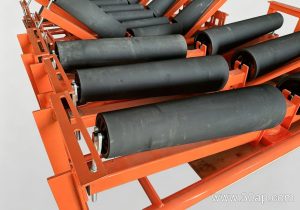
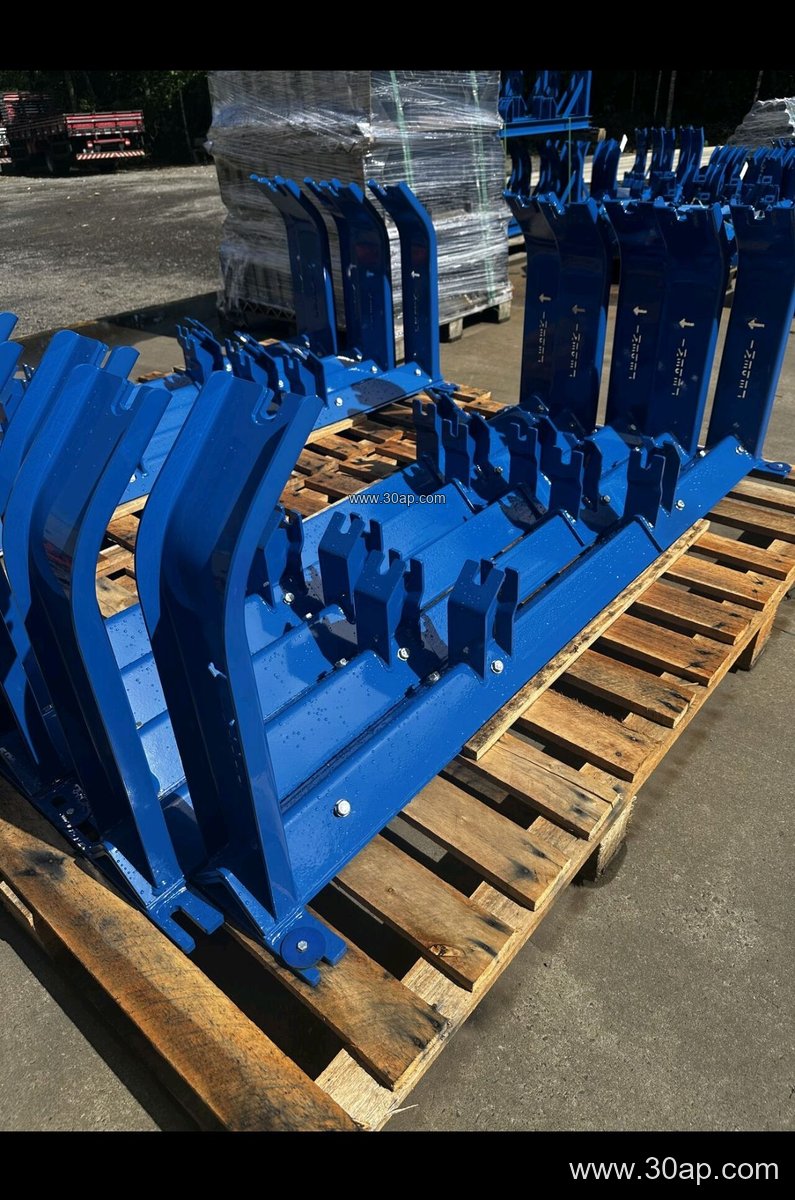
A conveyor carrying bracket is the steel support that holds the idler rollers in place along the loaded side of a belt conveyor. It sits between the conveyor frame rails and positions the troughing idlers so the conveyor belt forms a stable channel for bulk material. Without a properly aligned bracket, the belt would sag, drift, or spill its load long before reaching the discharge point.
In daily plant language, this part is often called a carrying idler bracket, troughing bracket, or carrying roller support. It is not the same as a return bracket, which supports the empty belt on the lower run, and it should not be confused with the pulleys that drive or redirect the belt.
How the Bracket Is Built
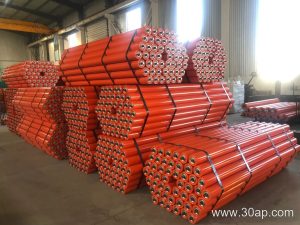
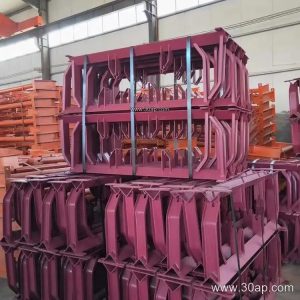
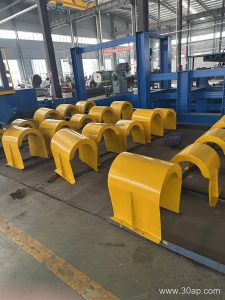
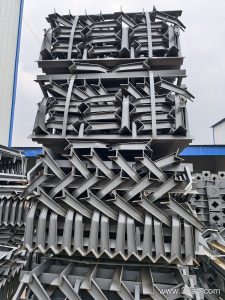
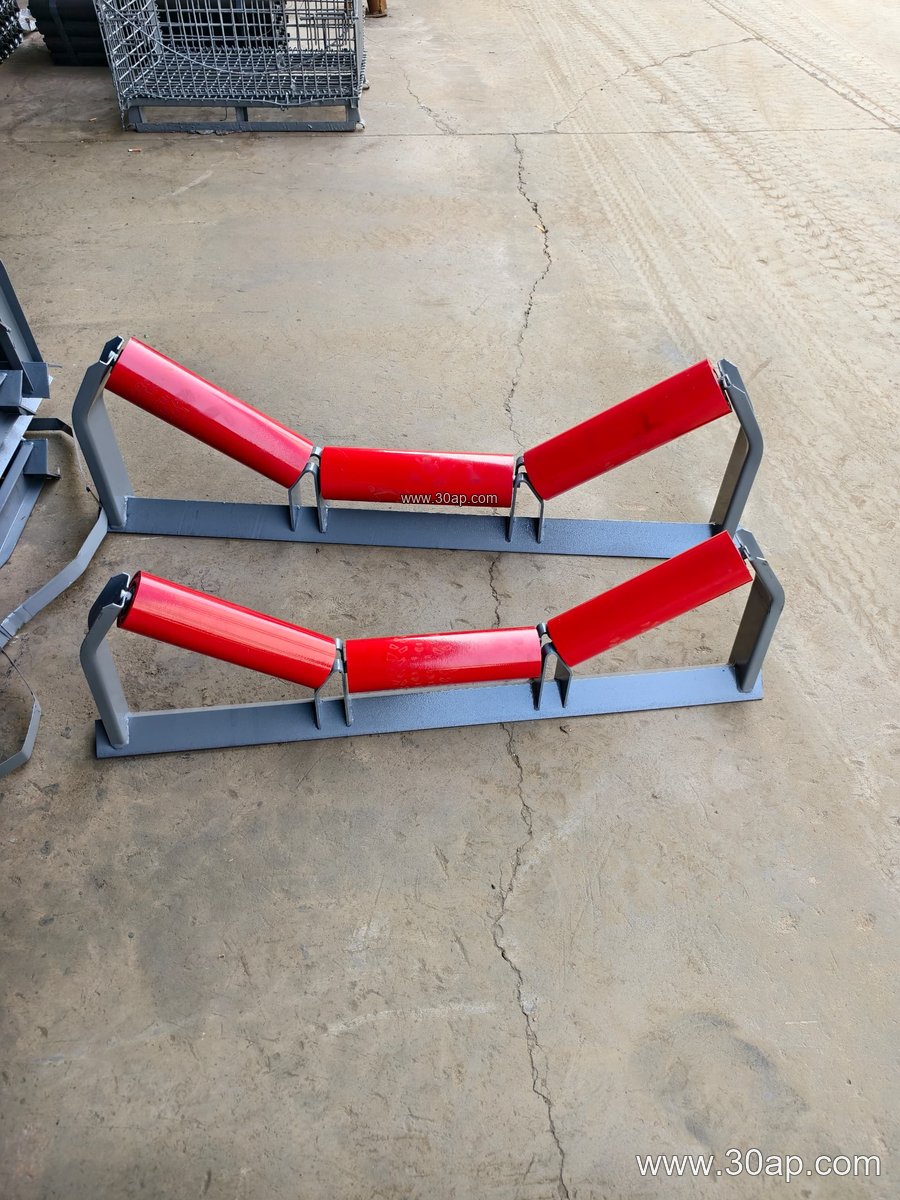
Most carrying brackets are fabricated from angle steel, channel steel, or folded steel plate. The frame includes mounting slots or holes that match the conveyor stringer spacing, plus angled seats that set the trough angle of the idlers. A typical three-roller arrangement uses a central horizontal idler and two side idlers tilted upward.

Common trough angles are 20, 30, 35, and 45 degrees. Adjustable brackets let maintenance teams change the angle within that range, while fixed brackets are welded or bolted at one preset angle. Forward-leaning designs, usually around 1.5 to 2 degrees, help keep the belt centered on the carrying run.
- Material options: angle steel, channel steel, folded plate
- Typical belt width range: B500 to B2200
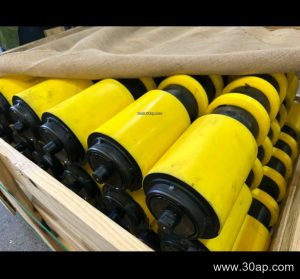
- Common roller diameters: Ø89, Ø108, Ø133, Ø159, Ø194
- Mounting hole spacing and crossbeam length vary with belt width and trough angle
The bracket must match the idler shaft ends, so the roller diameter and bearing housing style matter as much as the belt width. A B800 frame at 35 degrees may use Ø108 idlers, while a B1200 frame at 45 degrees often carries Ø133 rollers. These are common combinations, not fixed rules.
Where Carrying Brackets Are Used
These supports appear wherever a troughed belt moves bulk material. In a quarry or sand and gravel line, carrying brackets hold the idlers under crusher discharge belts and screening feed belts. In a coal washing plant or power station coal yard, they support belts that handle damp, abrasive coal.
The same bracket type is used in cement plants, steel sintering lines, fertilizer handling, and grain silos. On a long overland conveyor, carrying brackets repeat every few meters, so small alignment errors add up over the full length. That is why installation quality and regular inspection matter as much as the steel thickness.
Matching the Bracket to the Belt and Idlers
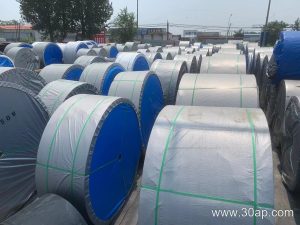
Selection starts with the belt width and the expected load. A wider belt needs a longer crossbeam and stronger brackets. Heavier material calls for larger roller diameters and, in impact zones, cushion brackets or impact idler frames. Where the belt carries a steel cord conveyor belt or a heavy-duty fabric belt such as an EP400 or NN300 construction, the bracket spacing and roller load rating should be checked against the belt tension profile.
Transition brackets are used near the tail pulley, where the belt changes from flat to trough. Their angle differs from the standard carrying bracket, so they should be ordered as a separate item. Troughing brackets along the main run should keep a consistent angle unless the design calls for a change.
| Belt width | Common trough angle | Typical roller diameter |
|---|---|---|
| B650 | 30 degrees | Ø89 |
| B800 | 35 degrees | Ø108 |
| B1000 | 35 degrees | Ø108 or Ø133 |
| B1200 | 45 degrees | Ø133 |
| B1400 | 45 degrees | Ø133 or Ø159 |
| B1800 | 35 to 45 degrees | Ø159 or Ø194 |
Use this table as reference only. Final dimensions depend on the conveyor design, idler type, and load calculation.
Buyer Checklist Before Ordering
- Confirm belt width, trough angle, and idler diameter together.
- Check the mounting hole pattern on the existing stringers.
- State whether the bracket is fixed, adjustable, or forward-leaning.
- Ask for the surface treatment, such as painted or galvanized finish.
- Order transition and impact brackets separately from standard carrying brackets.
For abrasive duty, pair the right bracket with an abrasion resistant conveyor belt and quality idler rollers. In coal or dusty service, a flame retardant conveyor belt is often specified alongside anti-static components. Keeping spare brackets and conveyor bracket hardware on site shortens downtime when a damaged frame is found during a walk-through inspection.