Preparing Specifications and Evaluating Suppliers for a Conveyor Bracket in a Dusty Quarry
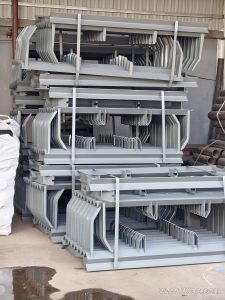
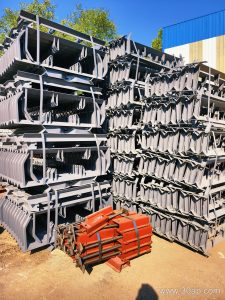
In a dusty quarry, a conveyor bracket must hold idler rolls steady despite constant vibration and abrasive dust. Sourcing that bracket from China starts with clear specifications and a supplier evaluation that goes beyond price.
Essential Specifications for a Quarry Conveyor Bracket
Begin with a drawing or data sheet that states the bracket’s function and limits. For a quarry, include:
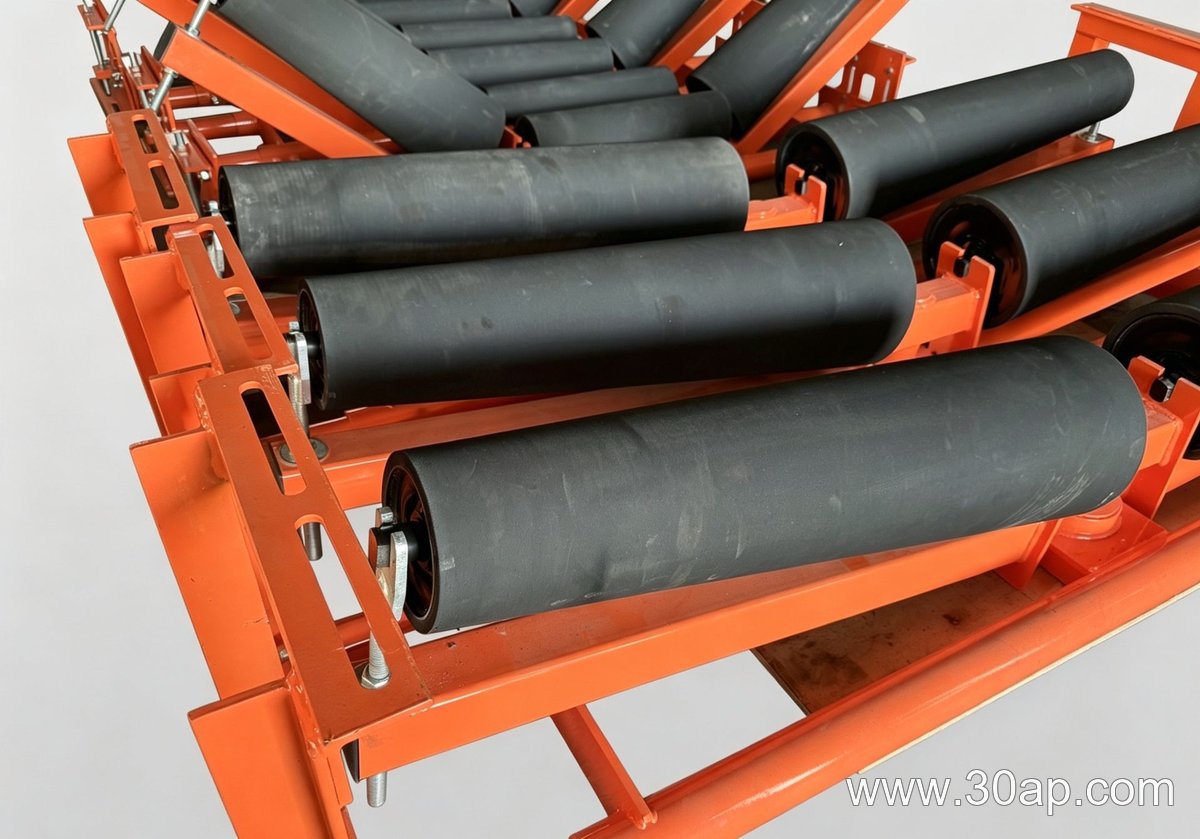
- Load capacity: the bracket must support the idler roll plus the belt and material load. State the maximum load per bracket in newtons or kilograms, based on your conveyor’s actual capacity.
- Material and finish: for dusty, mildly corrosive conditions, hot-dip galvanized steel is common. Specify the steel grade (e.g., Q235 or equivalent) and coating thickness if known.
- Dimensions: mounting hole pattern, overall length, height, and angle. These must match your existing conveyor structure.
- Adjustability: fixed or adjustable? Adjustable brackets help align the belt but need locking features to resist vibration.
- Dust resistance: avoid pockets where dust can pack. Specify drain holes or smooth surfaces if relevant.
- Testing and documentation: request material certificates and a sample inspection report. For critical applications, a dimensional check and load test may be warranted.
Evaluating a Chinese Supplier for Conveyor Brackets
Once specifications are ready, screen suppliers on capability and consistency.
- Manufacturing process: ask whether they weld, cast, or stamp the bracket. Each process has different tooling and quality control needs.
- Quality control: request their inspection plan. Do they check dimensions, weld quality, and coating thickness? A supplier who cannot describe this may struggle with repeat orders.
- Material traceability: can they provide mill certificates for the steel? This matters when the bracket must meet a project specification.
- Communication: clear English or a responsive technical contact reduces misunderstandings. Ask for a sample or a detailed quotation with tolerances.
- Capacity and lead time: confirm they can produce your order size without rushing. For a quarry, downtime is costly, so reliable delivery is part of the bracket’s value.
Avoid selecting a supplier on unit price alone. A conveyor bracket that fails early can stop the entire conveyor. Spend time on the specification, then verify that the supplier can meet it consistently.
How to Stop a Conveyor Belt from Misaligning in a Dusty Quarry
In a dusty quarry, a conveyor belt that drifts to one side is more than a nuisance. It can spill material, damage the edge, and shut down production. The problem is rarely the belt alone; dust, idler condition, and loading are common culprits. Below is a focused troubleshooting sequence to correct misalignment without replacing the belt prematurely.
1. Inspect the Loading Point First
Uneven material placement is the most frequent cause of drift. Check that the chute loads the conveyor belt centrally and consistently. In a dusty quarry, fines can build up on one side of the chute, pushing the stream off-center. Adjust the chute or add a wear liner to restore a centered load.
2. Check Idler Alignment and Condition
- Walk the entire length and look for idlers that are skewed, seized, or missing. A single misaligned idler can steer the belt.
- Ensure all idlers are perpendicular to the belt centerline. Use a string line for accuracy.
- In dusty conditions, idlers may not turn freely. Clean or replace them. A non-rotating idler acts as a fixed guide and forces the belt sideways.
3. Verify Pulley Squareness
Drive and tail pulleys must be square to the belt path. Even a small skew at the tail pulley will cause the belt to run off. Measure from the pulley face to a fixed reference on both sides. If the difference exceeds a few millimeters, realign the pulley bearing blocks.
4. Adjust the Take-Up System
Insufficient or uneven tension allows the belt to wander. Check that the take-up moves freely and applies uniform tension across the width. In a dusty quarry, accumulated dust on the take-up carriage can cause it to stick, leading to slack on one side.
5. Train the Belt with Return Idlers
If all mechanical checks pass, use return idlers to fine-tune tracking. Shift one idler slightly in the direction of drift—no more than a few millimeters—and observe the belt over several revolutions. Do not over-adjust; small moves are effective.
6. Clean the Belt and Structure
Dust buildup on the pulley face or belt edge changes the effective diameter and can pull the belt. Install or maintain belt cleaners and wash down the structure regularly. A clean conveyor belt tracks more predictably.
Work through these steps in order. Most misalignment in dusty quarries is solved by correcting the load, freeing idlers, or squaring a pulley—not by installing a new conveyor belt.
How to Group Idler Rollers by Construction and Duty
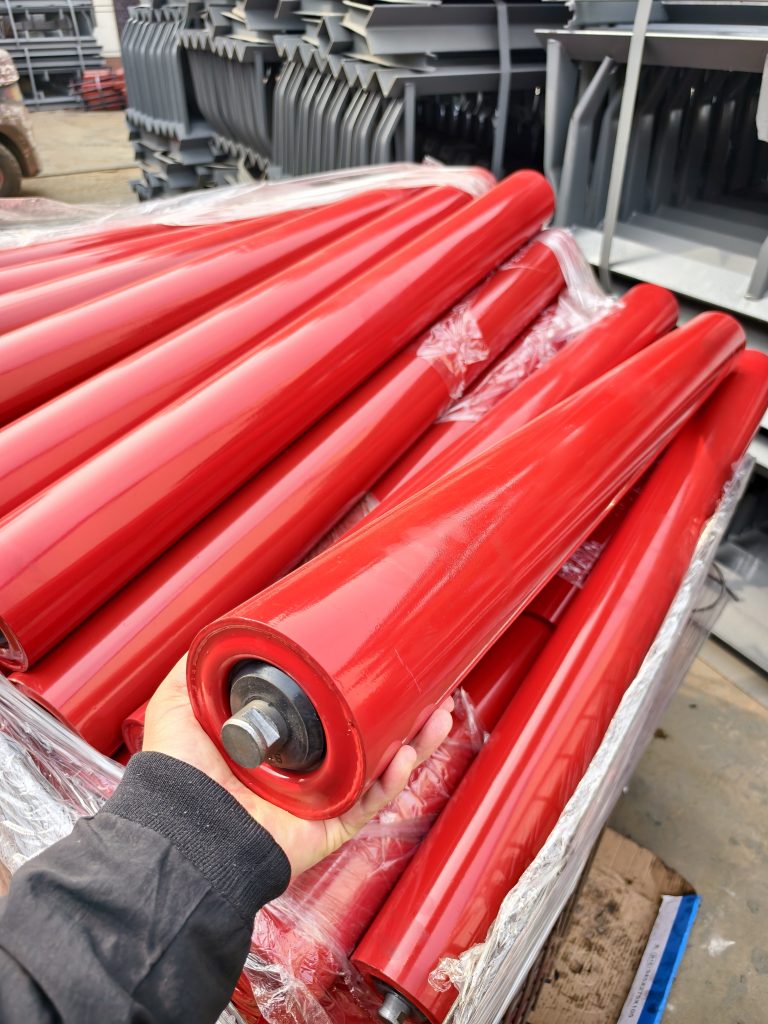
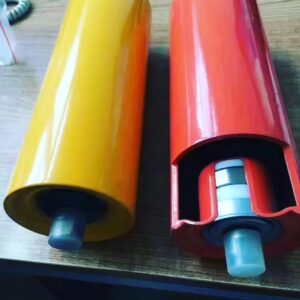
On a general manufacturing line, an idler roller supports the conveyor belt and the load it carries. Because lines vary in speed, load, and environment, no single idler roller suits every position. Grouping idler rollers by construction, duty, or performance helps you match the roller to the job rather than over- or under-specifying it.
Construction-Based Groups
Construction defines how an idler roller is built and where it can operate.
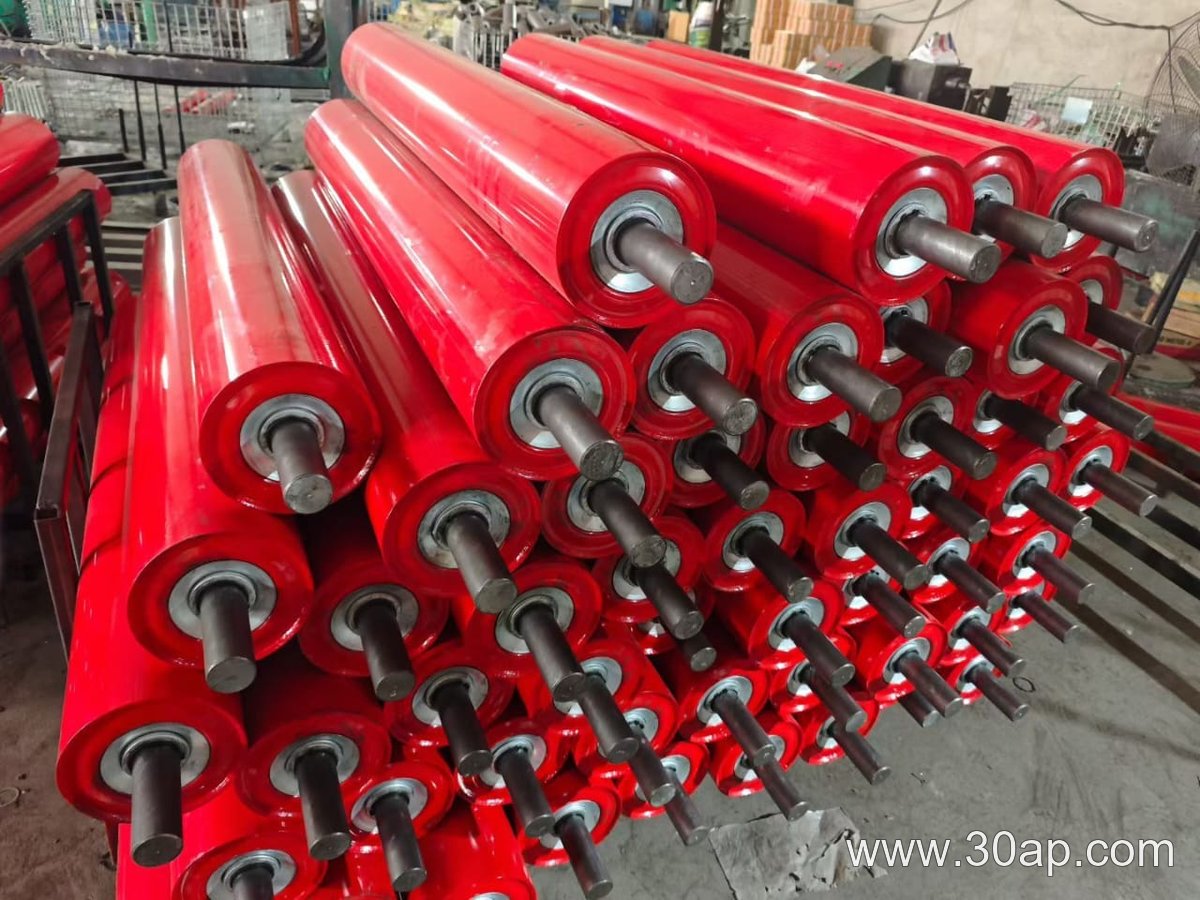
- Steel tube idler roller: The standard workhorse for general manufacturing. It handles moderate loads and clean to mildly dusty conditions. Use it where cost and availability matter more than extreme wear resistance.
- Impact idler roller: Built with thicker shells or rubber discs to absorb falling material. Place these at transfer points where lumps drop onto the belt.
- Sealed idler roller: Uses labyrinth or contact seals to keep fine particles out. Choose this group for dusty lines or washdown areas.
- Self-aligning idler roller: Includes a pivoting frame that nudges the belt back to center. Use it on long runs or where belt tracking is a recurring problem.
Duty-Based Groups
Duty describes the load and service intensity an idler roller must withstand.
- Light-duty idler roller: For low belt tensions and intermittent operation, such as packaging or assembly lines.
- Medium-duty idler roller: The default for continuous general manufacturing with moderate loads and speeds.
- Heavy-duty idler roller: Thicker bearings and reinforced shafts for high tension, heavy material, or 24/7 service.
A heavy-duty idler roller may be unnecessary on a light line, while a light-duty roller will fail early under constant shock loading.
Performance-Based Groups
Performance groups address specific environments rather than load alone. Abrasion-resistant idler rollers use hardened shells or coatings for gritty material. Corrosion-resistant idler rollers use stainless or coated components for wet or chemical exposure. Heat-resistant idler rollers use high-temperature bearings and lubricants for hot processes. Each group solves one dominant threat; mixing them without cause adds cost without benefit.
Matching the Group to the Line
Start with the conveyed material, then add speed, load, and environment. A clean, low-speed assembly line needs only a standard steel tube idler roller. A dusty transfer point calls for a sealed or impact idler roller. A long, drifting belt benefits from a self-aligning idler roller. When in doubt, select the next higher duty group and verify that its dimensions and mounting fit the existing frame.
Specifying a conveyor pulley for a mineral-processing plant often begins with a belt width and a calculated tension. In this hypothetical project, a 1500 mm wide belt carries copper ore at 2.5 m/s. The required steady-state tension is 180 kN, and the drive pulley has a 210° wrap angle. These values are assumed for illustration only; actual projects require site-specific engineering.
Conveyor Pulley Diameter: Bending Stress vs. Torque
The first decision is diameter. A larger conveyor pulley reduces belt bending stress, which can extend belt life. However, it also increases torque and requires more space. For this example, assume a belt with a rated allowable bending stress that suggests a minimum pulley diameter of 800 mm. A 1000 mm diameter pulley provides a safety margin without excessive cost. The trade-off is clear: going larger adds weight and bearing load, while going smaller risks premature belt failure.
Face Width and Lagging for the Conveyor Pulley
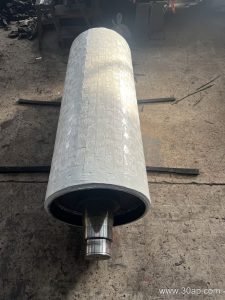
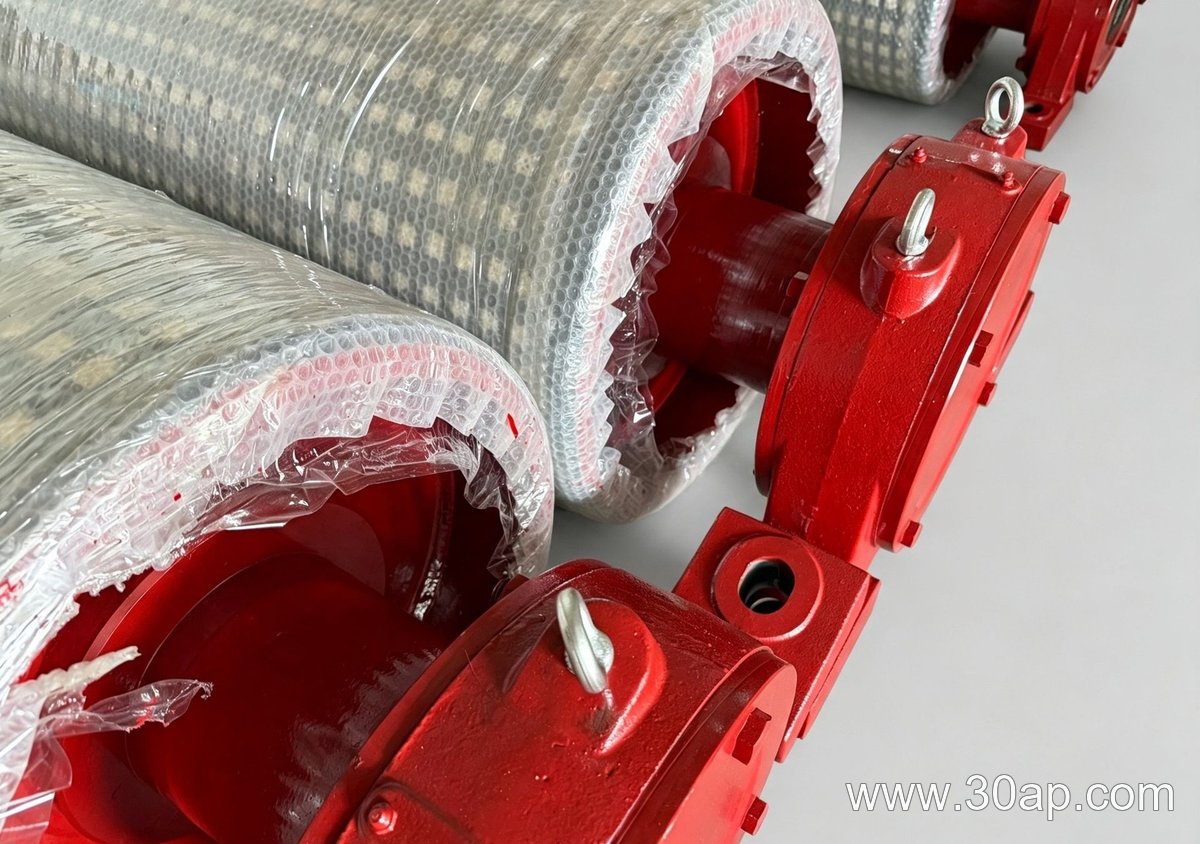
Face width must be at least belt width plus allowance for tracking. For a 1500 mm belt, a 1600 mm face is a reasonable starting point. Lagging improves traction, especially with a 210° wrap angle. In a mineral-processing plant, wet or dusty ore can reduce friction, so a 10 mm rubber lagging with a grooved pattern is selected. This is a hypothetical choice; actual lagging depends on belt tension and environmental conditions.
Welding and Machining Considerations
The conveyor pulley shell, hubs, and shaft are typically welded and then machined. For this project, the shell is carbon steel, and the shaft is forged 1045 steel. After welding, the pulley is stress-relieved and the end discs are machined to ensure concentricity. This step is critical because imbalance at 2.5 m/s can cause vibration and bearing wear. The hypothetical specification calls for dynamic balancing to ISO 1940-1, grade G6.3.
Bearing and Shaft Selection
Shaft diameter is sized from the bending moment and torque. With 180 kN tension and a 1000 mm pulley, the resultant shaft load is approximately 360 kN (assuming tension acts on both sides). A 200 mm diameter shaft at the bearing seats is assumed to keep stress within allowable limits. Spherical roller bearings are chosen to accommodate misalignment. These numbers are illustrative, not universal.
In summary, a conveyor pulley for this mineral-processing plant is defined by a 1000 mm diameter, 1600 mm face, rubber lagging, and a 200 mm shaft. Each choice balances belt life, cost, and reliability. Real projects should validate these assumptions with detailed calculations and vendor input.