What Belt Conveyor Pulley Lagging Does
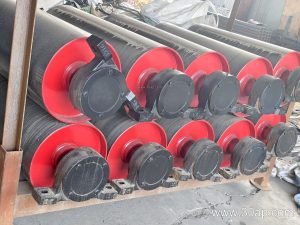
Belt conveyor pulley lagging is the rubber or ceramic layer bonded to the shell of a conveyor pulley where it meets the conveyor belt. Its job is simple to state and important to get right: it raises friction between the pulley and the belt, protects the steel shell from wear, and helps keep the belt tracking straight under load. On a quarry conveyor or a cement plant clinker line, a bare steel shell can slip once the belt surface is damp or dusty. Lagging restores the grip that the drive needs to transmit torque.
The same covering is sometimes called pulley rubber lagging or drum lagging. It is a wear part, not a structural one, and it is replaced without changing the pulley itself in most cases.
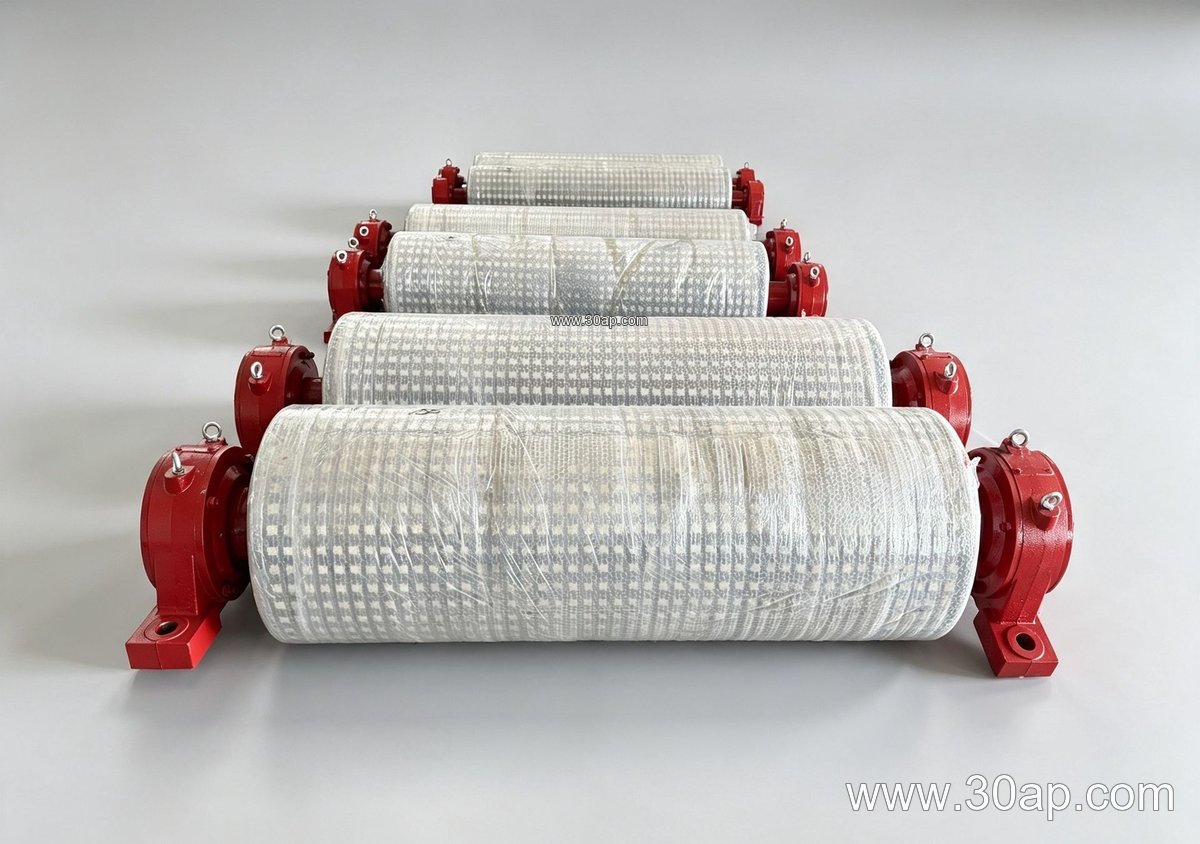
How the Lagging Is Built and Attached
Most lagging starts as a rubber sheet with a fabric backing. The backing is what bonds to the pulley shell, while the outer face carries the tread pattern. Common attachment methods include hot vulcanized rubber, cold bonded rubber, and cast or molded rubber applied directly to the drum. Thickness usually falls between 8 mm and 20 mm, with 10 mm and 12 mm being frequent choices for general duty and heavier sections used where impact and slip are both concerns.
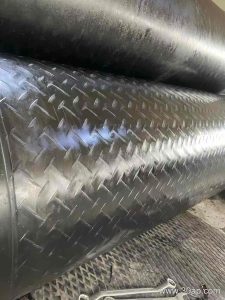
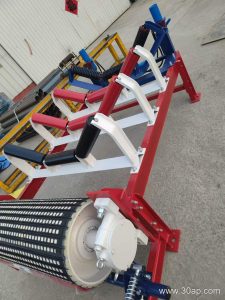
Surface form matters as much as thickness. Plain lagging suits light duty and cleaning-friendly duties. Diamond lagging sheds water well and is a common default for drive pulleys. Herringbone patterns push water toward the edges of the drum. Ceramic lagging embeds hard tiles in rubber for high-torque drives in wet conditions. The right choice depends on belt speed, load, and how wet the site gets.
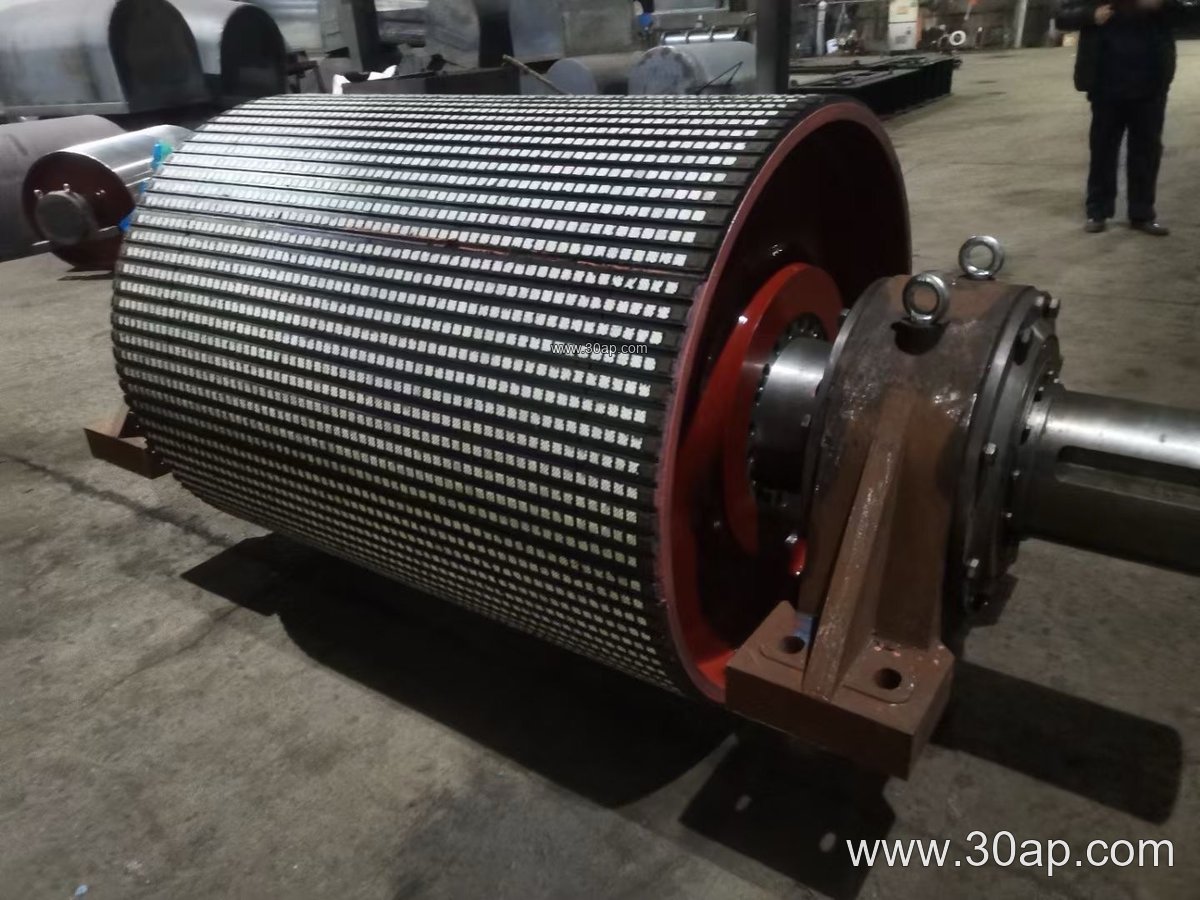
Where It Is Used Across Bulk Handling
Lagging appears on drive pulleys, head or discharge pulleys, tail pulleys, take-up pulleys, and bend pulleys, but the requirements differ by position. A drive pulley needs maximum grip and usually gets diamond or ceramic lagging. A tail pulley mostly needs protection from abrasive material and may use plain or lightly patterned rubber. Bend and snub pulleys see lower torque and often run with thinner covers.
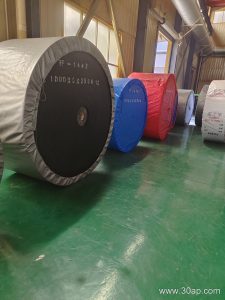
Typical sites include sand and gravel plants, limestone mines, iron ore concentrators, coal washing plants, power station coal handling, port bulk terminals, and concrete batching plants. In these places the conveyor belt may be an abrasion resistant conveyor belt, a heat resistant conveyor belt near kilns or sinter, or a flame retardant conveyor belt underground. Lagging selection should follow the belt and the duty, not the other way around.
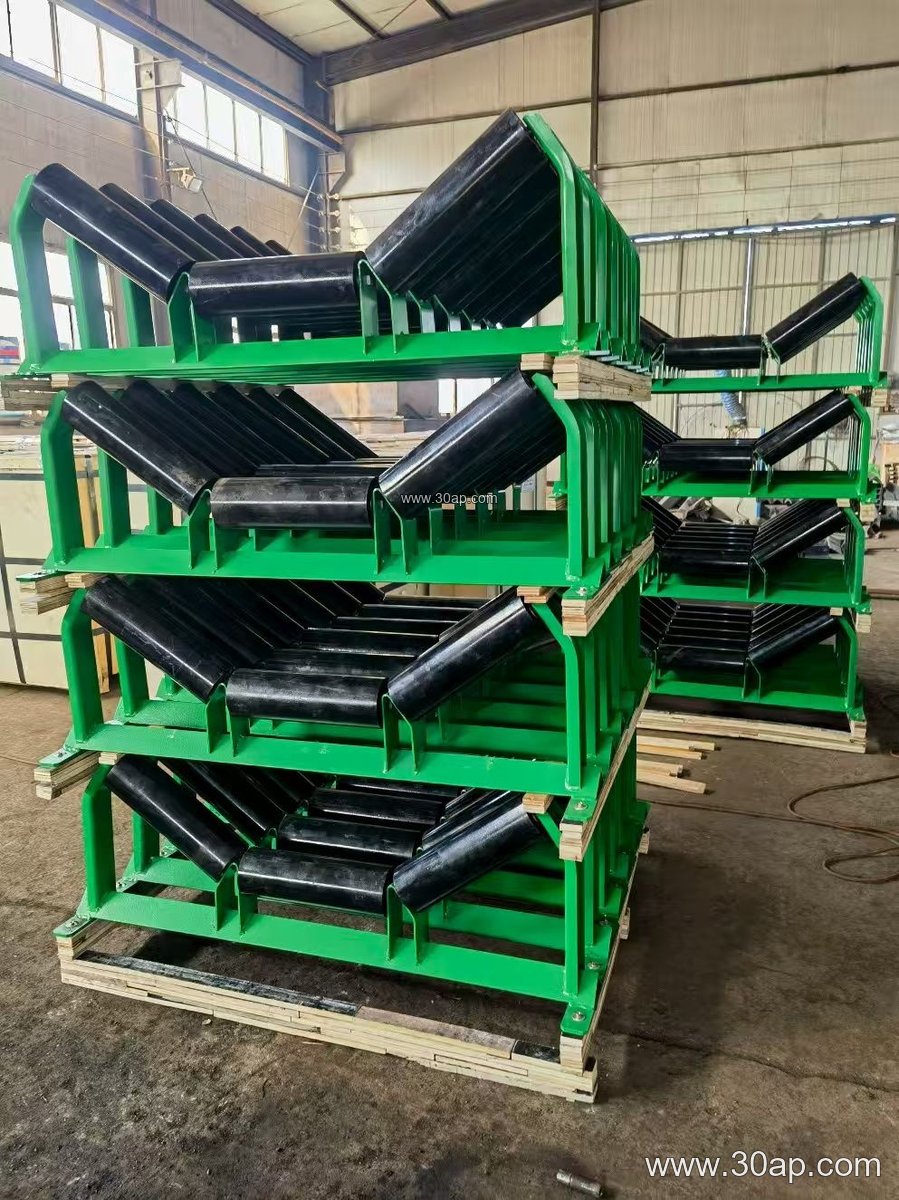
Matching Lagging to Pulley and Belt Dimensions
Pulley diameter and face width set the practical limits. Face width is normally slightly wider than the belt, and diameter grows with the torque the drive must deliver. The pairs below are common reference combinations, not fixed rules, and final sizing is always confirmed by the conveyor designer.
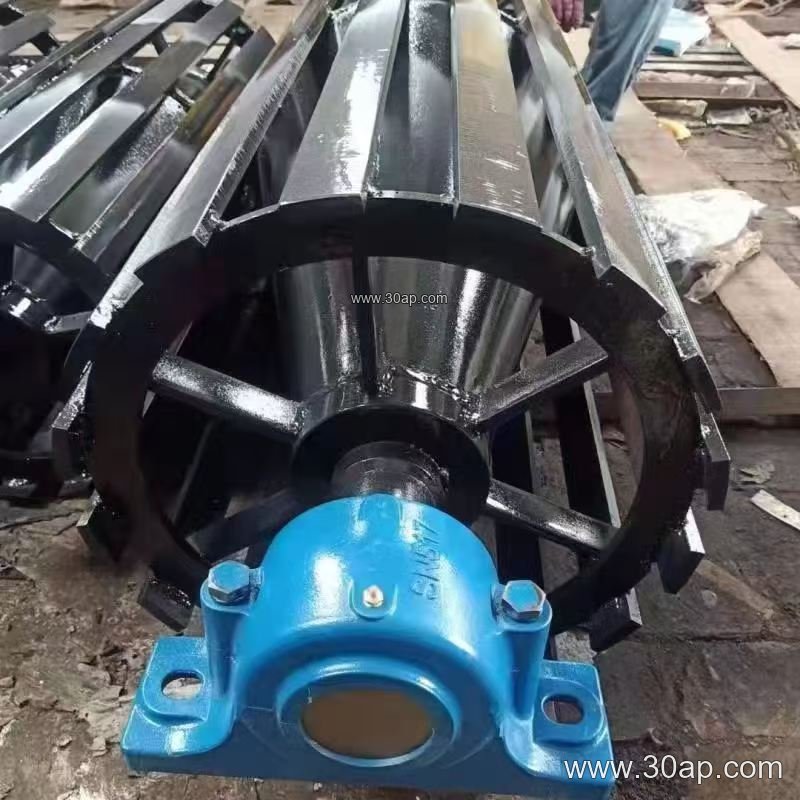
- B800 belt with a Ø500 pulley, often seen on medium-duty aggregate lines
- B1000 belt with a Ø630 or Ø800 pulley on primary drives
- B1200 belt with a Ø1000 pulley in high-torque quarry duty
- B1400 belt with a Ø800 or Ø1000 pulley on cement plant conveyors
- B1600 and B1800 belts with Ø1250 to Ø1600 pulleys at port terminals
Shaft diameter is calculated from torque and bearing load, so a B1000 pulley might run a Ø120 shaft in one installation and a larger shaft in another. Do not assume a shaft size from belt width alone.
Reference dimensions for planning
| Belt width | Typical pulley face width | Common pulley diameters | Lagging thickness |
|---|---|---|---|
| B500 | about 600 mm | Ø200 to Ø400 | 8 to 10 mm |
| B650 | about 750 mm | Ø250 to Ø500 | 8 to 12 mm |
| B800 | about 950 mm | Ø315 to Ø630 | 10 to 12 mm |
| B1000 | about 1150 mm | Ø400 to Ø800 | 10 to 15 mm |
| B1200 | about 1400 mm | Ø500 to Ø1000 | 12 to 15 mm |
| B1400 | about 1600 mm | Ø630 to Ø1250 | 12 to 20 mm |
| B1600 | about 1800 mm | Ø800 to Ø1400 | 15 to 20 mm |
What a Buyer Should Check Before Ordering
Start with the pulley drawing: shell diameter, face width, shaft size, and whether the drum is a drive, tail, or bend pulley. Confirm the belt type and condition, because worn or oily belts reduce the benefit of any lagging. Ask how the lagging will be attached and whether the pulley can be removed for hot vulcanizing or will be serviced in place with cold bonding.
Consider the environment. Wet, muddy conditions favor grooved or ceramic surfaces. Fine dry dust favors patterns that do not trap material. High-temperature zones near kilns or sinter coolers need a compound rated for that heat, and underground coal work needs flame retardant properties. Also check that the lagging thickness keeps the pulley within its intended diameter envelope, since a thicker cover slightly changes belt path geometry.
Finally, plan maintenance. Check lagging wear at each shutdown, watch for glazing, chunking, or separation at the edges, and replace before the belt starts slipping. A small lagging job is far cheaper than a scored pulley shell or a stalled conveyor.