What a Ceramic Rubber Lagged Pulley Is
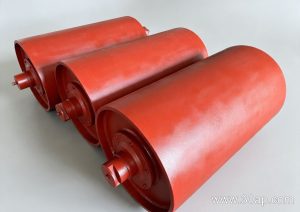
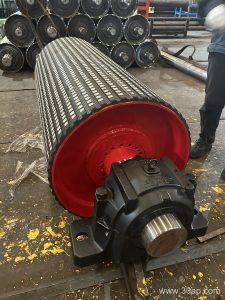
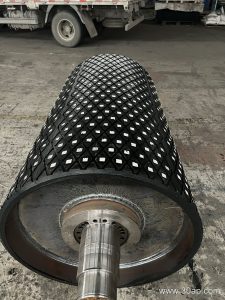
A ceramic rubber lagged pulley is a conveyor pulley whose shell is covered with a rubber lagging that contains embedded ceramic tiles. The rubber provides flexibility and grip, while the ceramic chips sit slightly proud of the rubber surface and take the abrasion. In a quarry, a coal washery or a cement plant, this combination is chosen where a plain rubber lagging would wear through too quickly or where the belt tends to slip under load.
It is also called a ceramic lagged conveyor pulley or ceramic pulley lagging drum. These are equivalent names for the same product. A ceramic rubber lagged pulley is usually a drive pulley or a head pulley, because those positions carry the highest torque and the greatest risk of belt slip. It is not a substitute name for a tail pulley or a bend pulley, which are separate positions with different duties.
How the Lagging Is Built
The build starts with a steel shell, hub and shaft assembly. The rubber layer is applied either by hot vulcanization in a workshop or by cold bonding in the field. Ceramic tiles are then set into the rubber in a regular pattern, often with small gaps between tiles so the rubber can flex. The tile pattern matters: staggered or chevron arrangements can help shed water and fines, while a dense block pattern favors pure abrasion resistance.
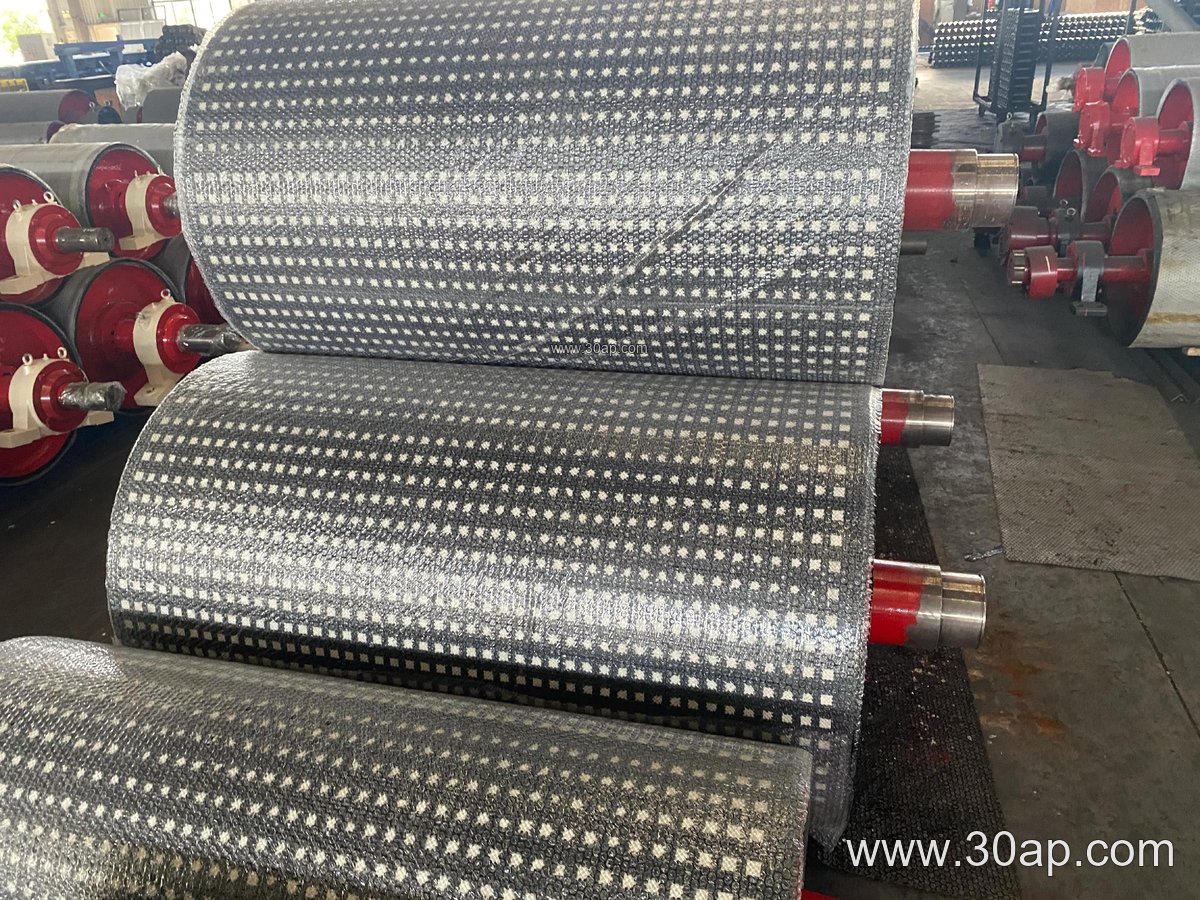
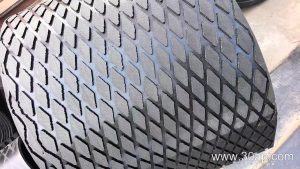
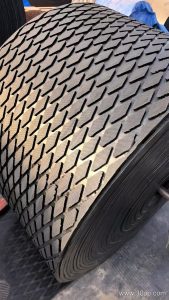
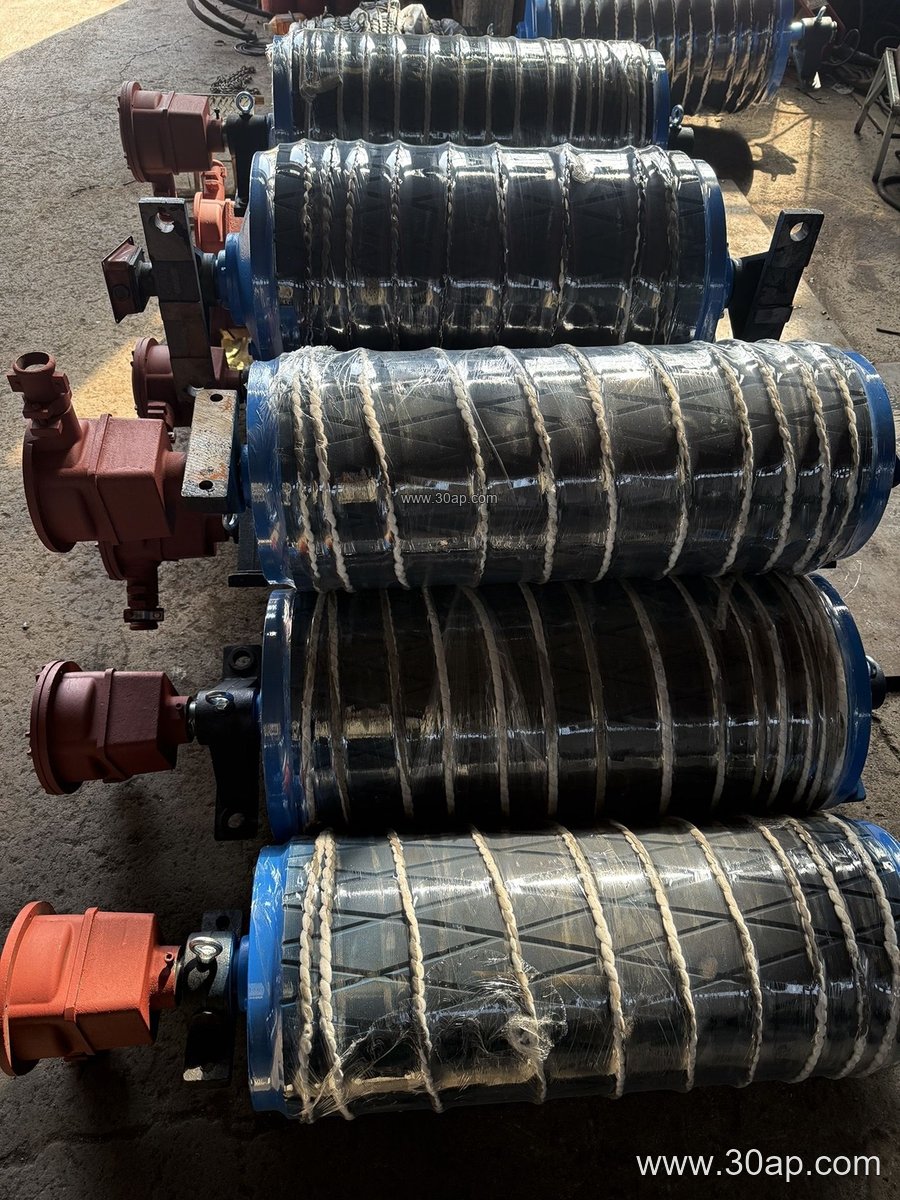
Common lagging thicknesses are 8, 10, 12, 15 and 20 mm. Thicker lagging gives more wear life but adds weight and cost, so the choice should follow the duty, not habit. Surface forms for rubber lagging generally include plain, diamond and herringbone; the ceramic version is a separate surface form in its own right, and its tile layout should be specified clearly on the drawing.
Where It Fits on the Conveyor
The most common home for this pulley is the head or drive position on a belt conveyor handling abrasive bulk material. In an iron ore or copper ore line, sharp fines can polish a smooth lagging quickly; the ceramic chips keep a rough, high-friction face for longer. In a power plant coal handling system, a ceramic rubber lagged pulley on the drive helps maintain grip when the belt is damp.
A bend pulley or take-up pulley may use a lighter rubber lagging, and a tail pulley often runs a plain or diamond surface. The ceramic version is rarely needed at every position. Matching the lagging to the actual slip and wear risk is more useful than upgrading the whole conveyor.
Sizes and Reference Data
Pulley size follows the belt width, the wrap angle and the torque demand. The table below gives common reference values, not fixed pairings. A B1200 belt might run on a Ø1000 drive pulley in one plant and a different diameter in another.
| Belt width | Typical shell face width | Reference diameter range |
|---|---|---|
| B500 | about 600 mm | Ø250 to Ø500 |
| B650 | about 750 mm | Ø315 to Ø630 |
| B800 | about 950 mm | Ø400 to Ø800 |
| B1000 | about 1150 mm | Ø500 to Ø1000 |
| B1200 | about 1400 mm | Ø630 to Ø1000 |
| B1400 | about 1600 mm | Ø800 to Ø1250 |
| B1600 | about 1800 mm | Ø1000 to Ø1400 |
Shaft diameter is set by torque and load, not by belt width alone. Common shaft sizes include Ø80, Ø100, Ø120, Ø140 and Ø160, but a given belt width can pair with several shaft sizes depending on the drive arrangement.
What Buyers Should Check
- Position and duty. Confirm whether the pulley is a drive, head, tail, take-up or bend unit. The ceramic lagging belongs where slip and abrasion are real problems.
- Lagging thickness and tile pattern. Ask for the drawing, tile size, spacing and rubber hardness rather than a general description.
- Bonding method. Hot vulcanized lagging is usual for new pulleys; cold bonded ceramic lagging can be a field repair option, but surface preparation decides its life.
- Balance and runout. A lagged pulley is heavier than a bare one, so balance quality and concentricity should be stated.
- Interface with the belt. Check belt tension, wrap angle and the condition of the conveyor belt. Ceramic lagging does not fix a misaligned frame or a worn conveyor bracket.
- Neighboring components. Confirm clearance to the conveyor pulley guard, the idler roller frames and the conveyor bracket so the larger lagged diameter does not foul anything.
Maintenance Notes
Inspect the ceramic face for missing tiles and lifted rubber edges. A small lost tile can grow into a larger patch, especially in a sand and gravel line where fines work under the rubber. Keep the belt cleaner and the take-up adjusted so the pulley is not asked to compensate for poor tension control. When the lagging is worn beyond its useful thickness, re-lagging is usually more economical than replacing the whole pulley, provided the shell and shaft are still sound.