What a Belt Anti-Misalignment Idler Does
A belt anti-misalignment idler is a self-correcting roller assembly installed on a conveyor to stop the belt from wandering off its centre line. In a quarry, a coal handling plant or a cement kiln feed line, a belt that creeps sideways will fray its edges, spill material and eventually damage the conveyor pulley and frame. The anti-misalignment idler — also called a self-aligning idler or training idler — senses that drift and steers the belt back without an operator touching anything.
It is not a drive pulley, tail pulley or bend pulley. Those parts transmit power and change belt direction. The anti-misalignment idler is a carrying or return roller that pivots, so its role is guidance, not traction.
How the Self-Aligning Roller Is Built
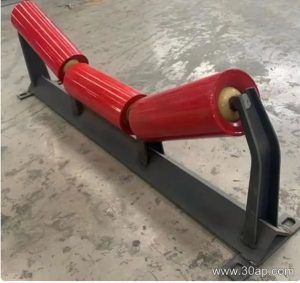
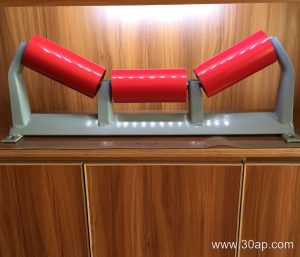
The core of the design is a roller set mounted on a pivoting frame or a swivel base. When the belt edge contacts a vertical guide roller, the frame rotates slightly around a vertical axis. That rotation changes the angle between the roller surface and the moving belt, producing a small sideways force that pushes the belt back toward the centre.
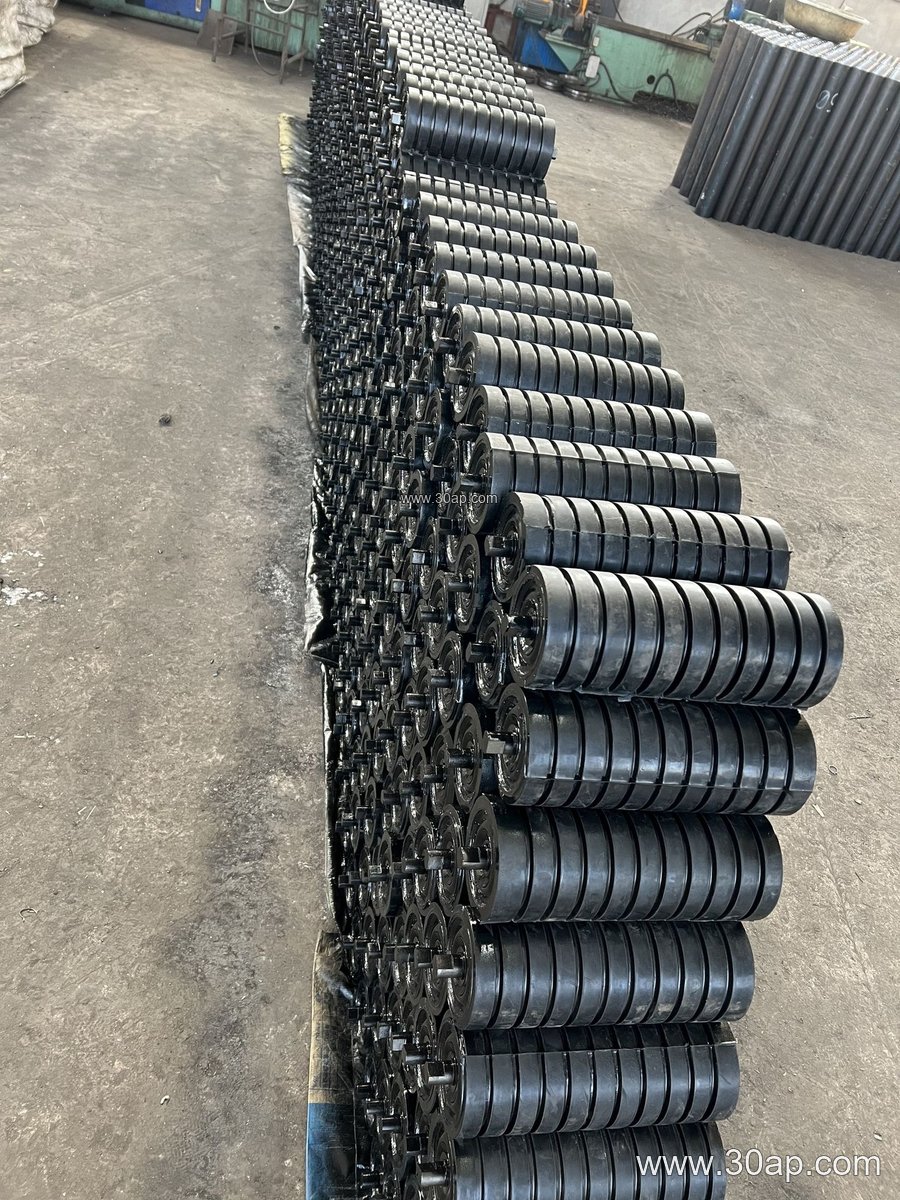
Common constructions include:
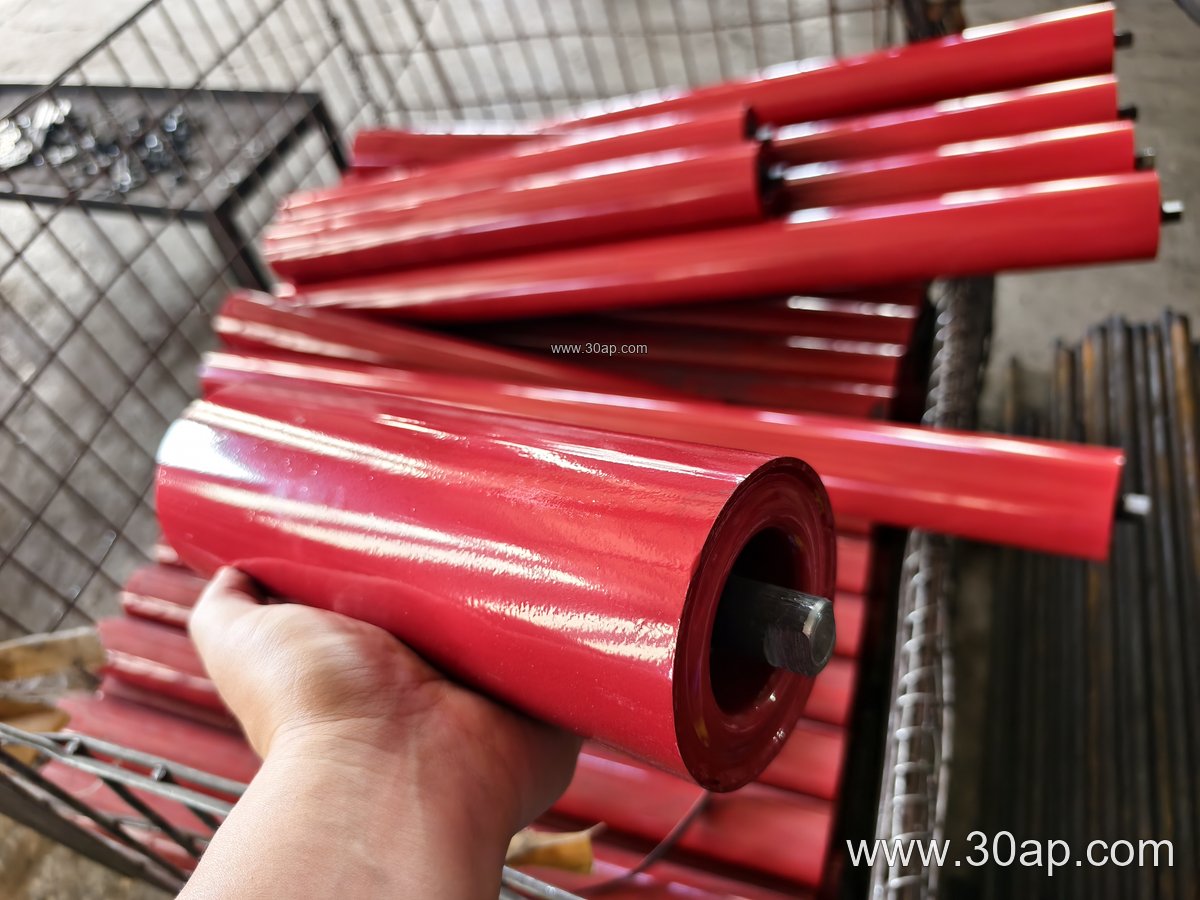
- Friction self-aligning idler — a pair of vertical rollers at the sides detects edge contact and turns the frame.
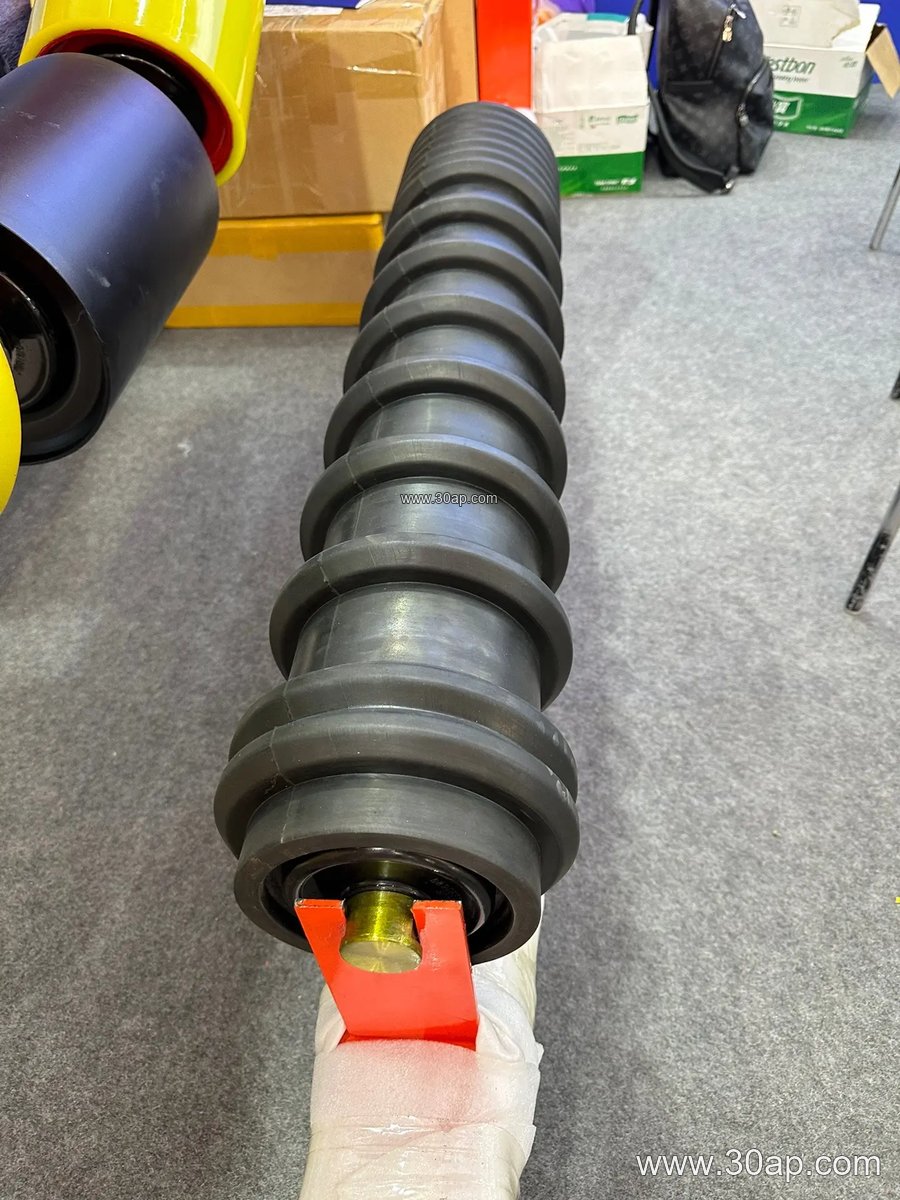
- Tapered self-aligning idler — conical roller ends create a differential surface speed that nudges the belt inward.
- Forward-tilted trough idler — the rollers are set at roughly 1.5 to 2 degrees of forward tilt, which gives a mild centring effect on its own.
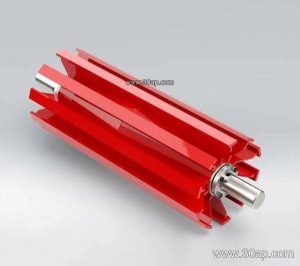
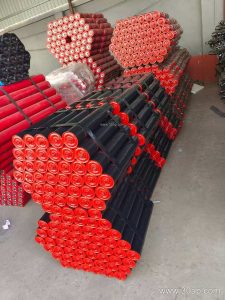
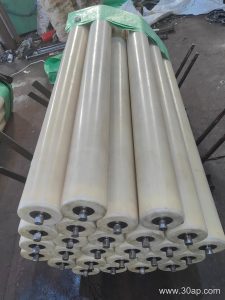
Shell materials are usually steel tube, with nylon, ceramic or rubber rings available where abrasion or build-up is a problem. Bearings such as 6204, 6205, 6305, 6306, 6308 and 6310 appear across the range; the bearing is matched to load and roller diameter, not fixed by belt width alone.
Where It Fits on the Conveyor
Training idlers are normally placed on the carrying side, spaced along the run, and often a few metres before the tail pulley where misalignment tends to show up first. Return-side self-aligning rollers are also used under the belt. On a long overland conveyor at a power plant or a steel plant stockyard, several units may be needed rather than one.
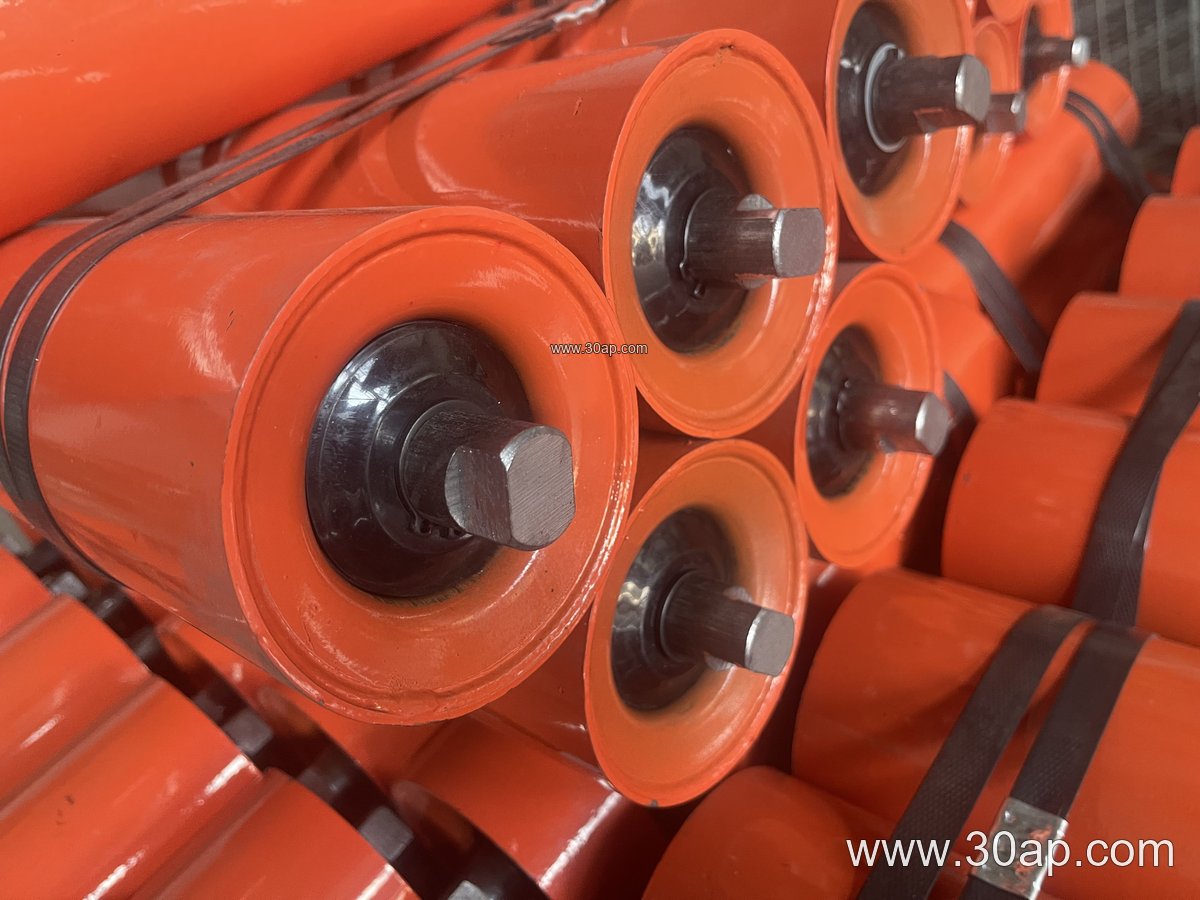
The equipment around it matters. A worn conveyor pulley with an off-centre lagging, a seized ordinary idler roller or a bent conveyor bracket can all cause drift that no training idler will fully cure. Check the whole line before adding self-aligning rollers.
Typical roller diameter and belt width references
These are common industry references, not fixed pairings. Final selection depends on belt tension, load and frame design.
| Belt width | Common roller diameter | Typical three-roll length (centre) |
|---|---|---|
| B500 | Ø63 – Ø89 | about 200 mm |
| B650 | Ø76 – Ø108 | about 250 mm |
| B800 | Ø89 – Ø133 | about 315 mm |
| B1000 | Ø108 – Ø159 | about 380 mm |
| B1200 | Ø108 – Ø178 | about 465 mm |
| B1400 | Ø133 – Ø194 | about 530 mm |
| B1600 | Ø133 – Ø219 | about 600 mm |
| B1800 | Ø159 – Ø219 | about 670 mm |
Trough angles of 20, 30, 35 and 45 degrees are standard. Side rollers and centre rollers can differ in length, so the figures above are examples only.
Buying Notes for Plant and Maintenance Teams
Match the anti-misalignment idler to the belt it guides. A heavy-duty mining conveyor belt carrying iron ore at high tonnage needs a sturdier frame and larger bearing than a light aggregate line. In a coal mine, flame retardant conveyor belt and anti-static conveyor belt specifications may affect which roller components are acceptable underground. In a cement plant or a fertilizer plant, dust and chemical exposure influence seal choice.
Ask suppliers for the pivot mechanism type, roller diameter, shell material, bearing number and mounting height. Confirm that the frame fits your existing conveyor bracket spacing. If the belt is a pipe conveyor belt or a corrugated sidewall conveyor belt, the training arrangement is different and a standard anti-misalignment idler may not apply.
Finally, keep spares. A self-aligning roller that has lost its pivot freedom behaves like an ordinary roller and stops correcting. Periodic inspection of the swivel, the vertical guide rollers and the bearing seals is the cheapest way to keep a belt running true.