What a Q355 Conveyor Bracket Does
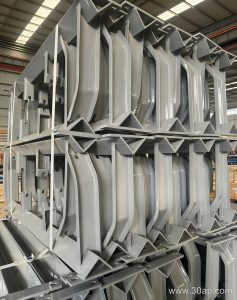
A Q355 conveyor bracket is the structural component that holds idler rollers in place along a conveyor system. Often called a Q355 conveyor support bracket or simply a belt conveyor bracket, it provides the mounting base that keeps the conveyor belt tracking correctly and the idler roller at the proper angle. The Q355 designation refers to the steel grade, which offers a yield strength of around 355 MPa. This makes the bracket suitable for heavy-duty applications in industries such as mining, coal preparation, cement plants, and power station coal handling.
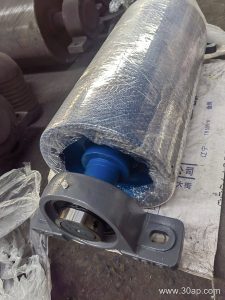
Unlike a conveyor pulley, which drives or redirects the belt, the bracket is a stationary support element. Drive pulleys, tail pulleys, and bend pulleys each perform distinct functions in a conveyor, and a bracket never substitutes for any of them. The Q355 bracket works alongside these components to maintain belt alignment and reduce wear.
Construction and Material
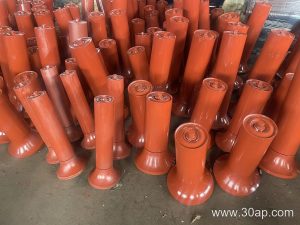
Most Q355 conveyor brackets are fabricated from angle steel, channel steel, or folded steel plate. The choice of profile depends on the load requirements and the width of the conveyor. A typical bracket assembly includes a crossbeam, mounting plates, and adjustable slots for setting the trough angle.
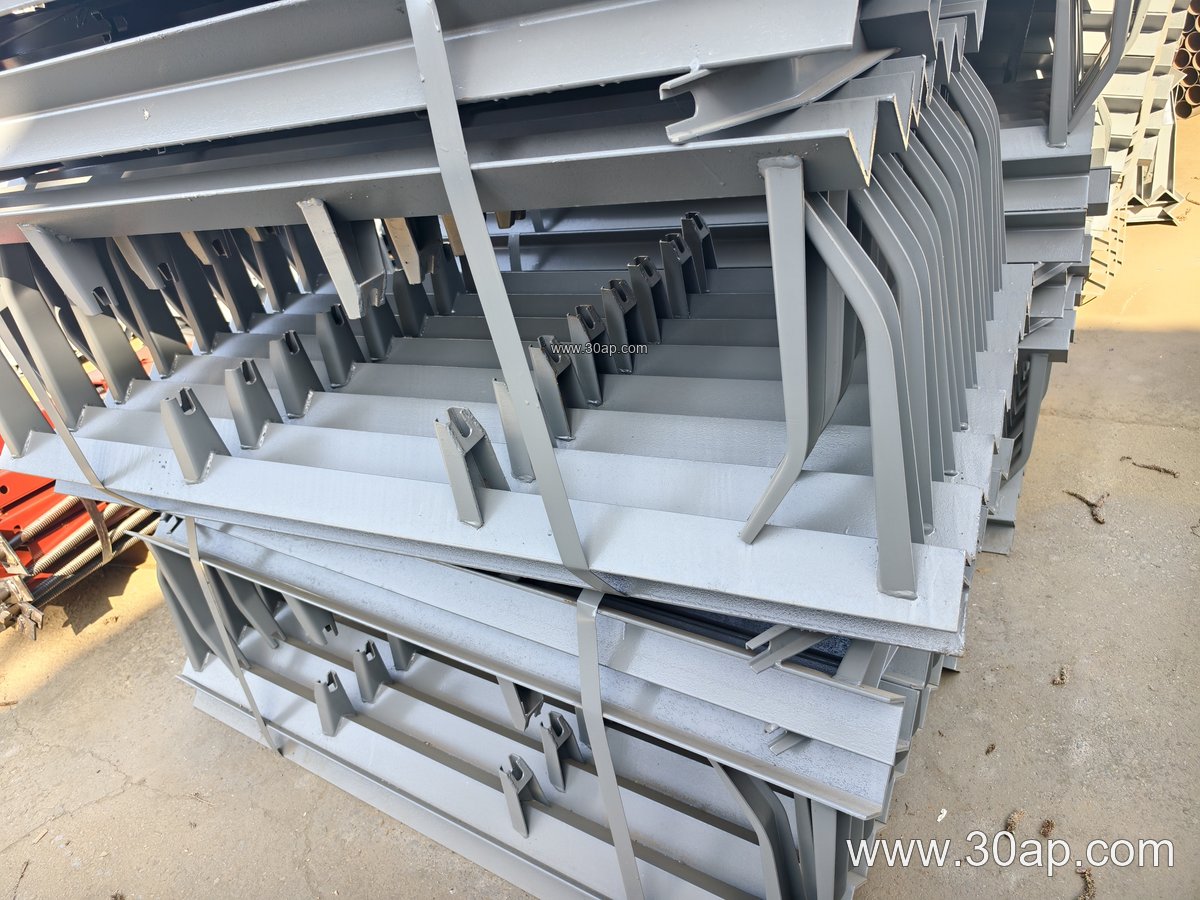
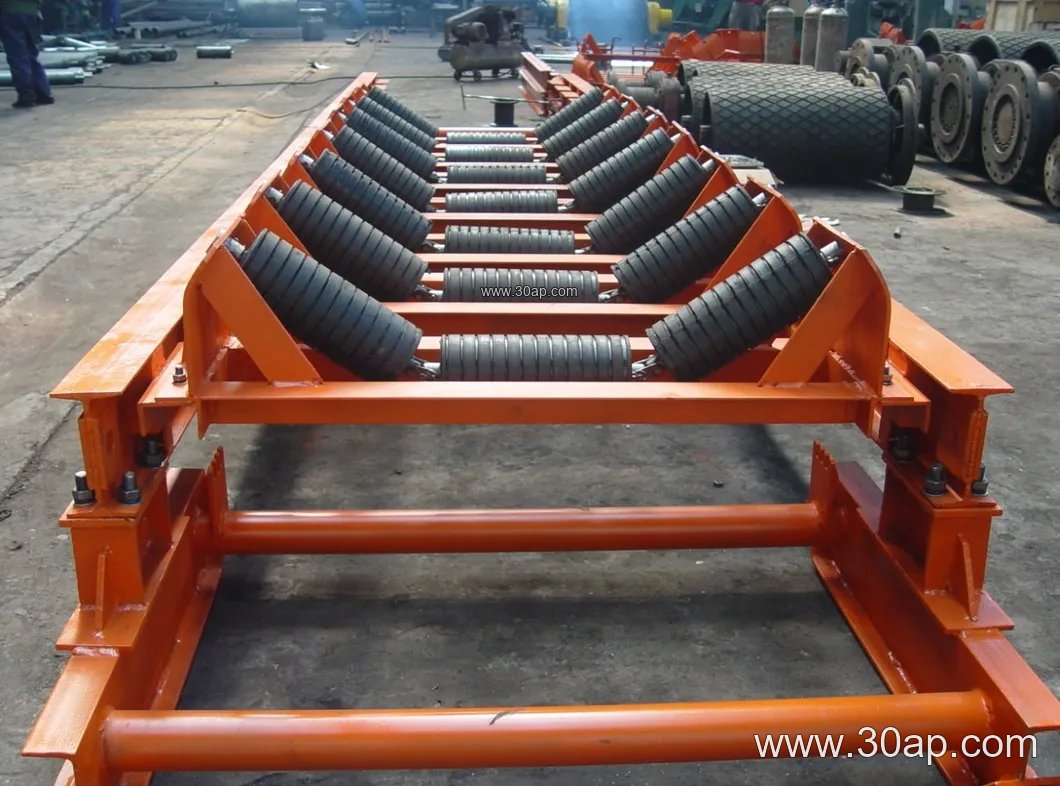
Common types include troughing brackets, return brackets, impact brackets, and self-aligning brackets. Each type is designed for a specific position along the conveyor line. For example, a troughing bracket supports three idlers to form a trough shape, while a return bracket supports the belt on its return run. A V-return bracket is another subtype used to help center the belt on the return side.
Key Dimensions and Configuration
Buyers should consider belt width, trough angle, and roller diameter when selecting a Q355 conveyor bracket. These values are not fixed pairs; a range of combinations is possible depending on the conveyor design. The table below shows common reference values, but actual dimensions should be confirmed with the conveyor designer.
| Parameter | Common Options |
|---|---|
| Belt width (B) | B500, B650, B800, B1000, B1200, B1400, B1600, B1800, B2000, B2200 |
| Trough angle | 20°, 30°, 35°, 45° (adjustable brackets allow on-site adjustment) |
| Roller diameter | Ø89, Ø108, Ø133, Ø159, Ø194 |
| Material | Q355 steel (angle, channel, or folded plate) |
Mounting hole spacing and crossbeam length vary with belt width and trough angle. For instance, a B800 conveyor with a 35° trough and Ø108 rollers will have a different bracket geometry than a B1200 conveyor with a 45° trough and Ø133 rollers. These are examples, not mandatory combinations.
Where Q355 Brackets Are Used
Q355 conveyor brackets are found in bulk material handling operations across many industries. In a coal preparation plant, they support the conveyor belt that carries raw coal from the crusher to the wash box. In a cement plant, they hold idlers on clinker and limestone conveyors. The bracket also appears in power plant coal yards, steel mill sinter lines, and port ship-loading systems.
Because the Q355 grade provides good weldability and toughness, these brackets perform well in outdoor and dusty environments. They are often paired with conveyor pulley systems and conveyor bracket assemblies to form a complete support structure.
Selection and Maintenance Tips
- Match the bracket type to the belt position: troughing for carrying side, return for return side, impact for loading zones.
- Check that the bracket’s trough angle suits the material’s surcharge angle and the belt’s flexibility.
- Use adjustable brackets where belt tracking problems are likely, as they allow fine-tuning of the trough angle.
- Inspect mounting bolts and welds regularly, especially in high-vibration areas near crushers or screens.
- Keep the bracket free of material buildup to prevent misalignment and premature roller wear.
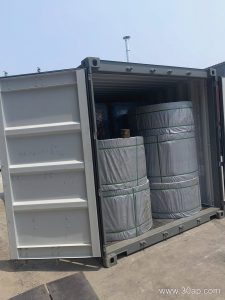
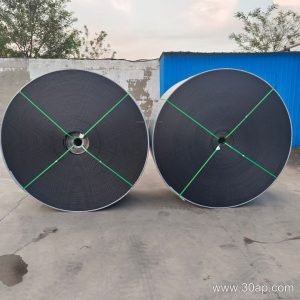
For conveyors using EP conveyor belt or steel cord belt, the bracket must be sturdy enough to handle the belt’s tension and weight. In mining applications, a heavy-duty Q355 bracket with reinforced crossbeams is often preferred.
Buyer Checklist
Before ordering, confirm the belt width, required trough angle, roller diameter, and mounting hole pattern. Ask for the bracket’s load rating and steel certificate if available. Remember that a Q355 conveyor bracket is a support component, not a drive or tail pulley, so it should be specified together with the full conveyor layout. Proper selection ensures long service life and smooth operation in quarry, mining, and processing plants.