What an Anti-Slip Lagged Pulley Does
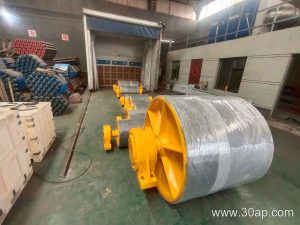
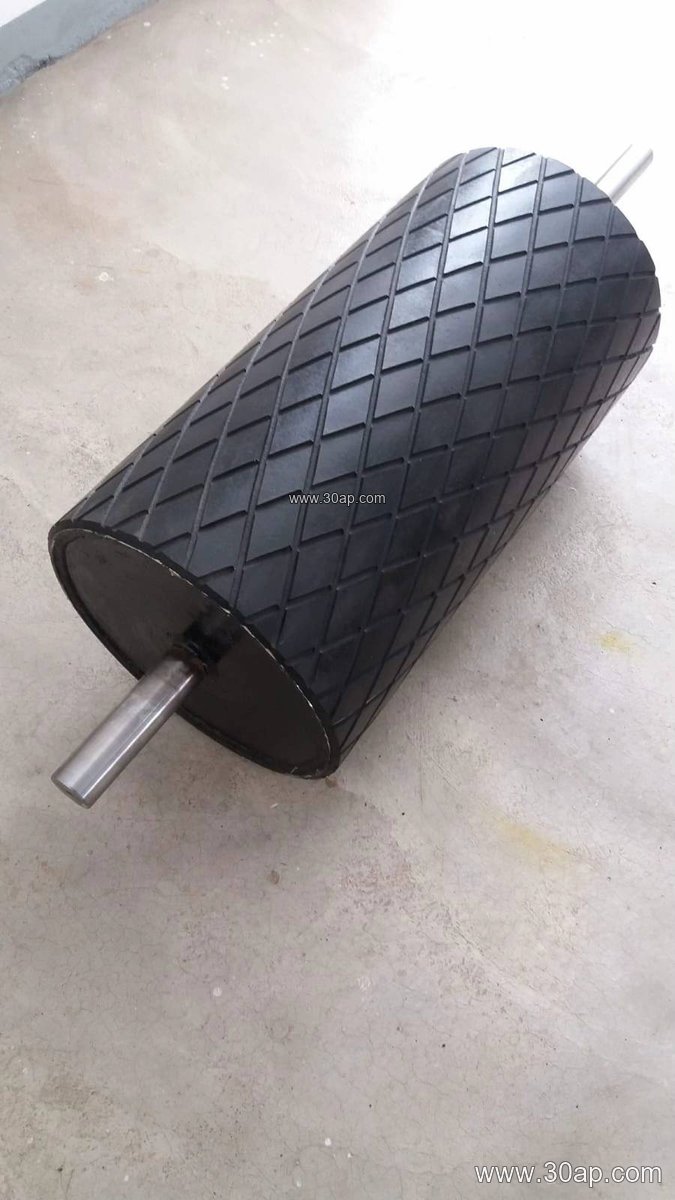
An anti-slip lagged pulley is a conveyor pulley whose shell carries a rubber or ceramic lagging layer designed to raise friction between the drum face and the conveyor belt. The purpose is simple: keep the belt moving without visible slip at the drive point, especially where the belt carries wet, dusty, or heavy material. In a quarry, a coal washing plant, or a power plant coal yard, a small amount of slip quickly becomes heat, wear, and belt tracking problems. A properly lagged drum protects the belt cover and keeps starting and braking predictable.
This drum is usually a drive pulley or a head pulley, but the same anti-slip principle applies wherever high traction is needed. A tail pulley, a bend pulley, and a tension pulley serve different roles in the conveyor layout, so they should not be treated as interchangeable with the drive position.
How the Lagging Is Built
The base is a steel shell with end discs and a shaft, machined for balance and runout. Lagging is then applied in one of several ways: hot vulcanized rubber, cold bonded rubber, cast rubber, diamond grooved rubber, herringbone rubber, or ceramic tile lagging. Grooved patterns help water and fine dust escape from the contact zone, while plain lagging is often chosen for cleaner duty. Common lagging thicknesses are 8, 10, 12, 15, and 20 mm, selected according to belt tension, duty, and the abrasiveness of the load.
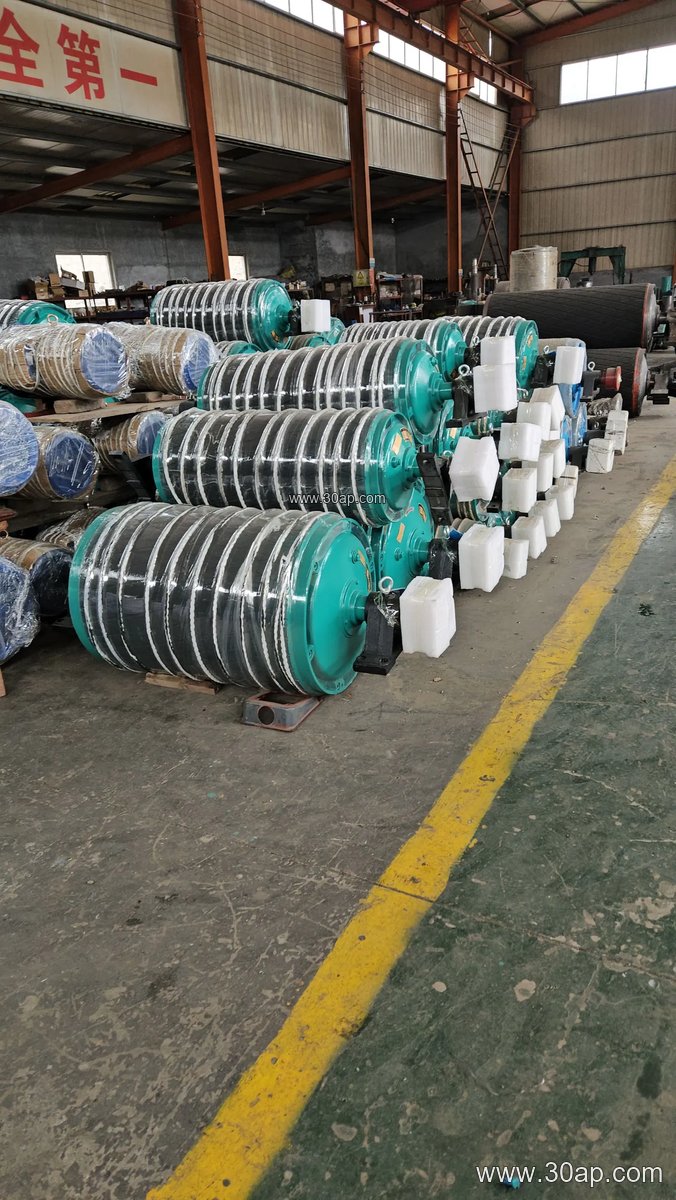
The shell is commonly wider than the belt it carries. For example, a B800 belt is often matched with a shell around 950 mm, and a B1200 belt with a shell near 1400 mm. These are reference values, not fixed rules, and the final combination is confirmed by the conveyor designer.
Common Reference Dimensions
| Belt width | Typical shell width | Example pulley diameter |
|---|---|---|
| B500 | about 600 mm | Ø250 to Ø400 |
| B650 | about 750 mm | Ø315 to Ø500 |
| B800 | about 950 mm | Ø400 to Ø630 |
| B1000 | about 1150 mm | Ø500 to Ø800 |
| B1200 | about 1400 mm | Ø630 to Ø1000 |
| B1400 | about 1600 mm | Ø800 to Ø1250 |
| B1600 | about 1800 mm | Ø1000 to Ø1400 |
Shaft diameter is determined by torque and bearing load, not by belt width alone. Common shaft sizes range from Ø50 up to Ø200, and the correct value comes from the drive calculation.
Where It Fits in the Plant
Anti-slip lagging matters most on the drive drum of a belt feeder, a inclined conveyor, or a short transfer belt where the wrap angle is limited. In a cement plant, a lagged head drum on the clinker or limestone belt helps hold traction when dust settles on the shell. In an iron ore or copper ore handling line, ceramic lagging is sometimes preferred for its resistance to abrasion. In a coal washing plant, flame retardant grades of rubber lagging and a Flame Retardant Conveyor Belt are often specified together for safety.
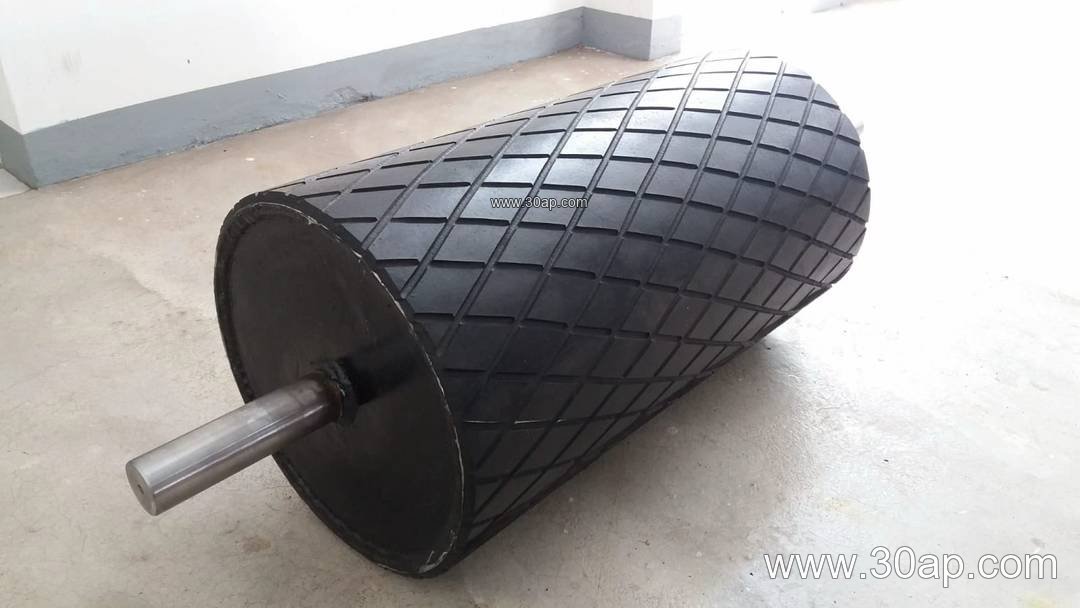
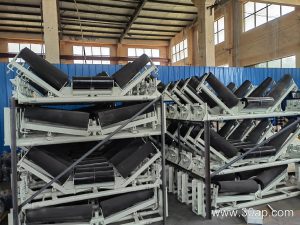
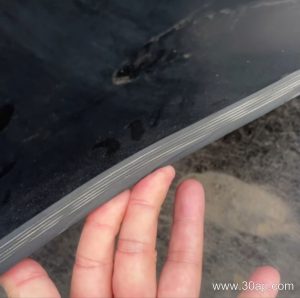
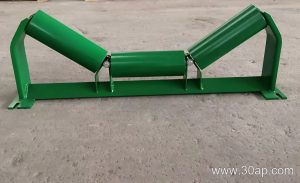
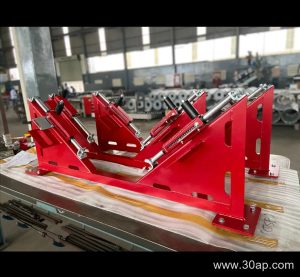
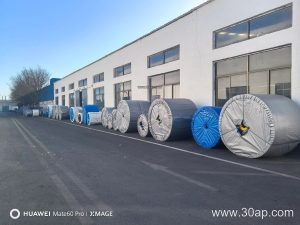
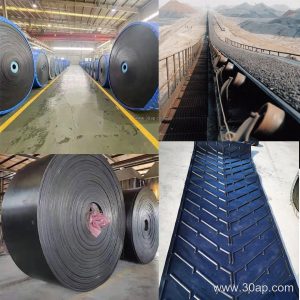
Lagged drums work alongside the conveyor belt, the idler roller sets, and the conveyor bracket assemblies. When the belt is a heavy-duty type such as a Steel Cord Conveyor Belt or a high-tension EP Conveyor Belt, the pulley lagging must match the belt cover and the expected friction demand.
Buyer Checklist
- Duty and position: confirm whether the drum is a drive, head, or tension pulley, because the required traction and lagging pattern differ.
- Belt and load: note belt width, belt type, material, moisture, and temperature so the lagging compound suits the job.
- Lagging form: choose plain, diamond, herringbone, or ceramic based on slip risk, cleaning needs, and abrasion.
- Dimensions: agree on shell diameter, face width, shaft size, bearing centers, and keyway before production.
- Balance and finish: ask for dynamic balancing and a check on lagging bond quality, since poor bonding leads to early peeling.
A well-matched anti-slip lagged pulley reduces belt wear and keeps throughput steady. It should be selected together with the conveyor belt, the idler roller layout, and the conveyor bracket frame, rather than as a standalone item.