What Makes a Ceramic Lagged Drive Pulley Different
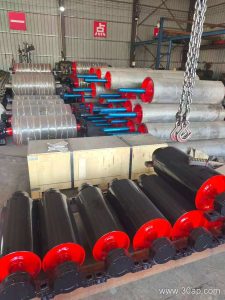
A ceramic lagged drive pulley is the head pulley that drives a conveyor belt, fitted with a rubber lagging that contains embedded ceramic tiles. These tiles are set in a pattern that exposes their edges, creating a high-friction surface that grips the belt under heavy loads. In a quarry, a cement plant, or a coal-fired power station, this pulley is often the single point where the entire conveyor’s pulling force is transferred.
The ceramic lagged drive pulley is also known as a ceramic rubber lagged head pulley. This is the same product, and the name change simply reflects the combination of rubber and ceramic in the lagging. It is not a tail pulley, a bend pulley, or a take-up pulley. Those serve different positions and duties on the conveyor.
How the Ceramic Lagging Is Built
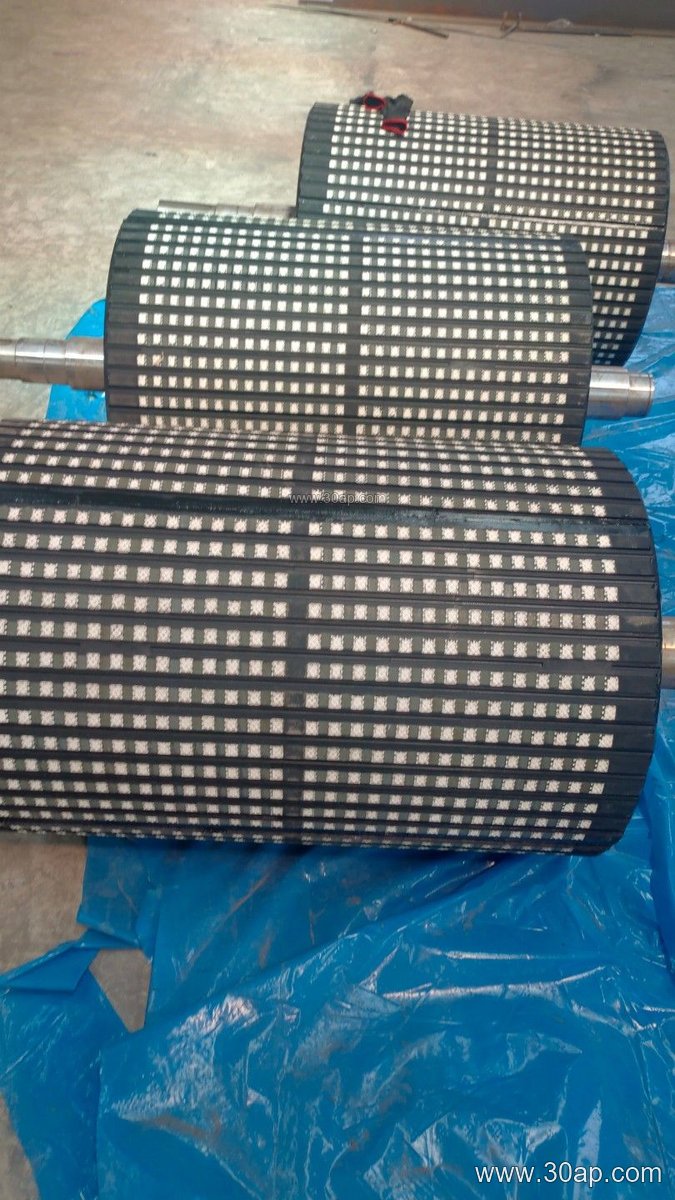
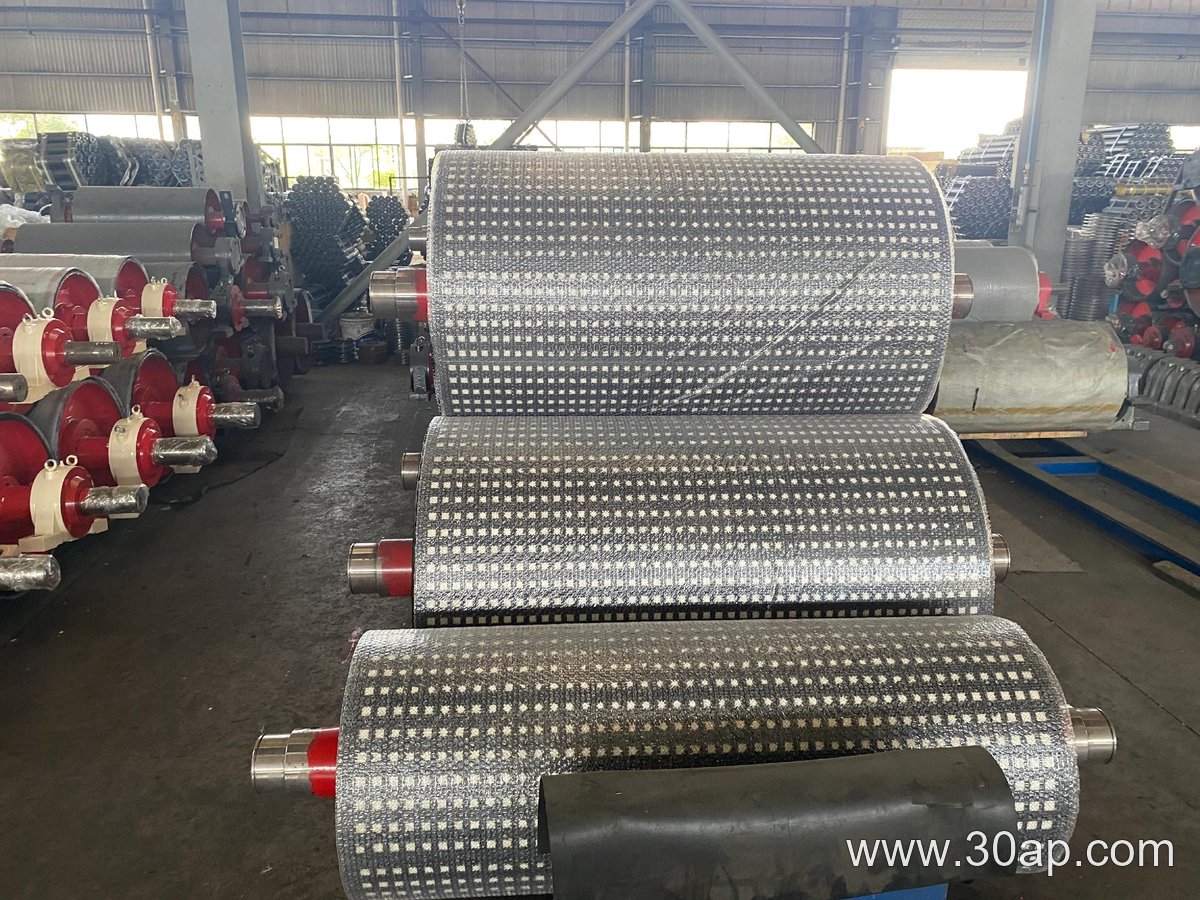
The pulley body is usually a welded steel cylinder with machined end discs and a shaft. The lagging is applied in one of two common ways. In hot vulcanization, uncured rubber with ceramic tiles is pressed onto the shell and bonded under heat and pressure. In cold bonding, a pre-formed ceramic rubber sheet is adhered with a two-part compound. Both methods aim to keep the tiles firmly in place while the rubber absorbs shock and protects the belt.
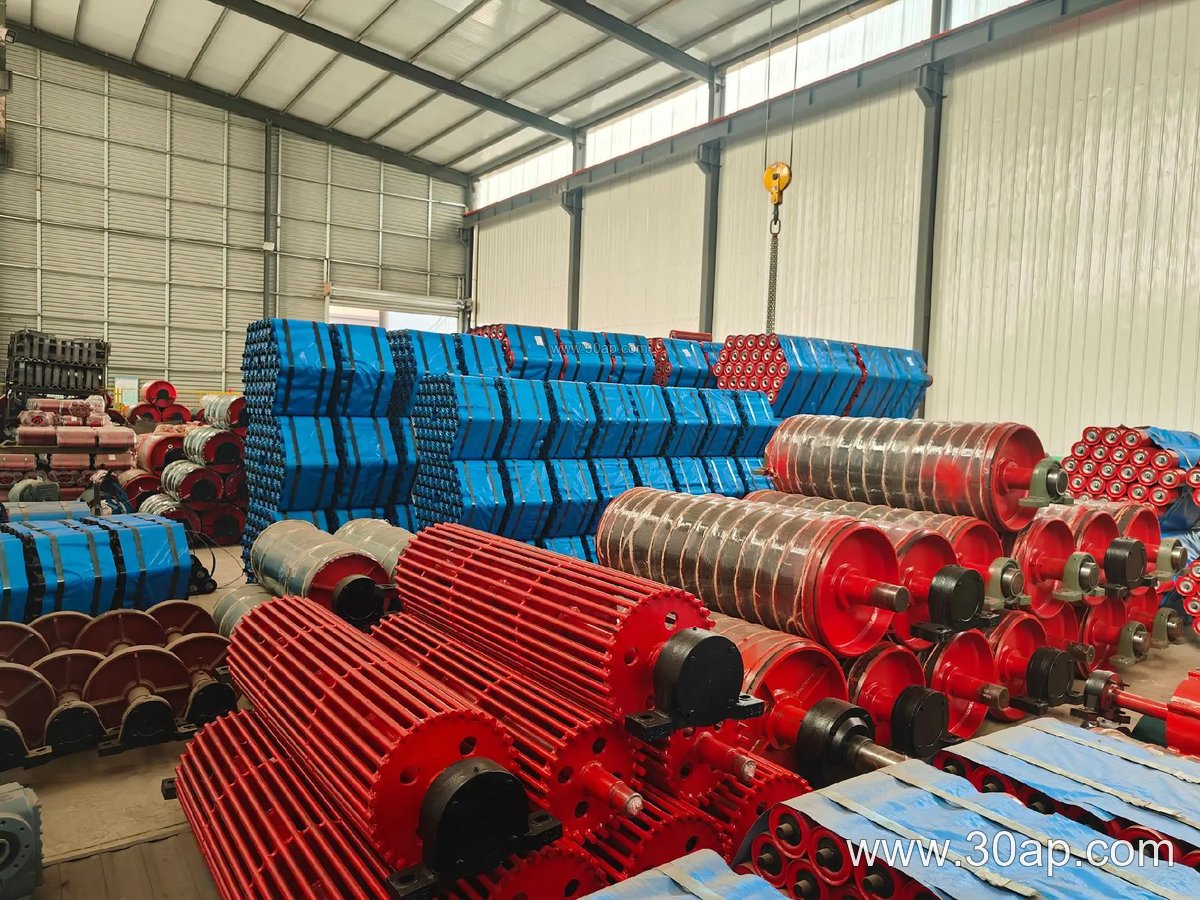
Ceramic tiles are typically rectangular or hexagonal and are arranged in a staggered pattern. The rubber between the tiles can be formulated to resist abrasion, oil, or heat. The tile surface may be flat or slightly raised. A raised pattern can improve grip in wet or muddy conditions, but it also needs careful cleaning to avoid material build-up.
Where It Works Best
This type of pulley is often chosen for the head position in abrasive and wet applications. Examples include sand and gravel lines, limestone mines, iron ore concentrators, and clinker handling in cement plants. In a coal-fired power plant, a ceramic lagged drive pulley can help maintain traction when coal dust and moisture reduce friction. It is also used in tunnel muck removal and in some fertilizer or grain silo conveyors where slipping would stop the whole line.
It is not a universal answer for every pulley. A bend pulley or a tail pulley may use a plain rubber lagging or a smooth surface. A ceramic lagged drive pulley is specifically for the driving position, where torque transmission and belt grip are critical.
Key Parameters to Consider
When selecting a ceramic lagged drive pulley, several parameters work together. The belt width, pulley diameter, shaft diameter, lagging thickness, and face width must be matched to the conveyor design. Common belt widths range from B400 to B2400, and pulley diameters from Ø200 to Ø1800. Lagging thickness is often 8, 10, 12, 15, or 20 mm. The table below shows a few reference combinations, but these are examples only. A smaller belt width can be paired with different pulley diameters depending on torque and load.
| Belt Width | Typical Pulley Diameter | Common Lagging Thickness | Typical Face Width |
|---|---|---|---|
| B500 | Ø400 | 10 mm | 600 mm |
| B800 | Ø500 | 12 mm | 950 mm |
| B1000 | Ø630 | 12 mm | 1150 mm |
| B1200 | Ø1000 | 15 mm | 1400 mm |
| B1400 | Ø800 | 15 mm | 1600 mm |
| B1600 | Ø1250 | 20 mm | 1800 mm |
Shaft diameters are not fixed by belt width alone. They are determined by torque, radial load, and bearing life. Common shaft sizes include Ø80, Ø100, Ø120, Ø140, Ø160, and Ø200, but the final choice belongs to the conveyor designer.
Buying Advice for Plant and Mine Operators
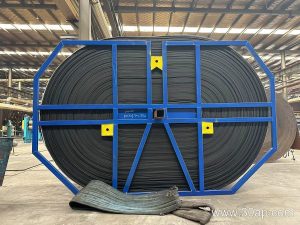
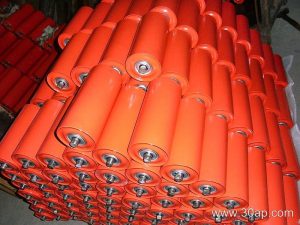
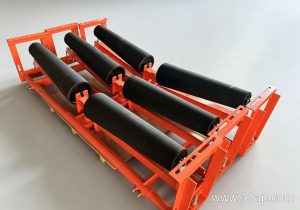
Before ordering a ceramic lagged drive pulley, confirm the belt width, the required pulley diameter, the shaft size, and the lagging thickness. Check whether the lagging should be hot vulcanized or cold bonded, and whether the ceramic pattern suits the material being carried. For a conveyor belt that runs in a dusty or wet environment, a ceramic lagging can reduce slip and extend belt life. But it must be matched with the right idler roller and conveyor bracket alignment to avoid edge wear.
Ask for the pulley face width to be slightly wider than the belt, as is common practice. Also confirm the balance grade and the method of shaft locking. A ceramic lagged drive pulley is a durable component, but it is not maintenance-free. Regular inspection of the ceramic tiles and the rubber bond helps prevent unexpected downtime in a busy quarry, coal mine, or cement plant.