What a Conveyor Belt Tracking Idler Does
A conveyor belt tracking idler is a specialized roller assembly installed along the carrying or return side of a conveyor to keep the belt centered on its path. When a belt drifts sideways, material spills, edges fray, and the belt may rub against the structure. The tracking idler corrects this drift by applying a small steering force through its mounting arrangement or its angled roller profile. In a quarry, a coal handling system, or a cement plant, this small correction protects the entire belt line.
This roller is not the same as a drive pulley or a tail pulley. Those pulleys transmit power and set belt tension. The tracking idler is a guiding component that works together with the conveyor belt and the frame. It is often grouped with self-aligning idlers, which pivot slightly to follow the belt edge.
How the Tracking Idler Is Built
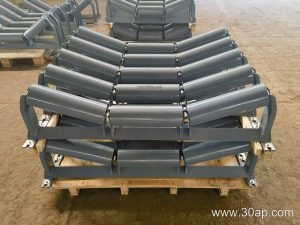
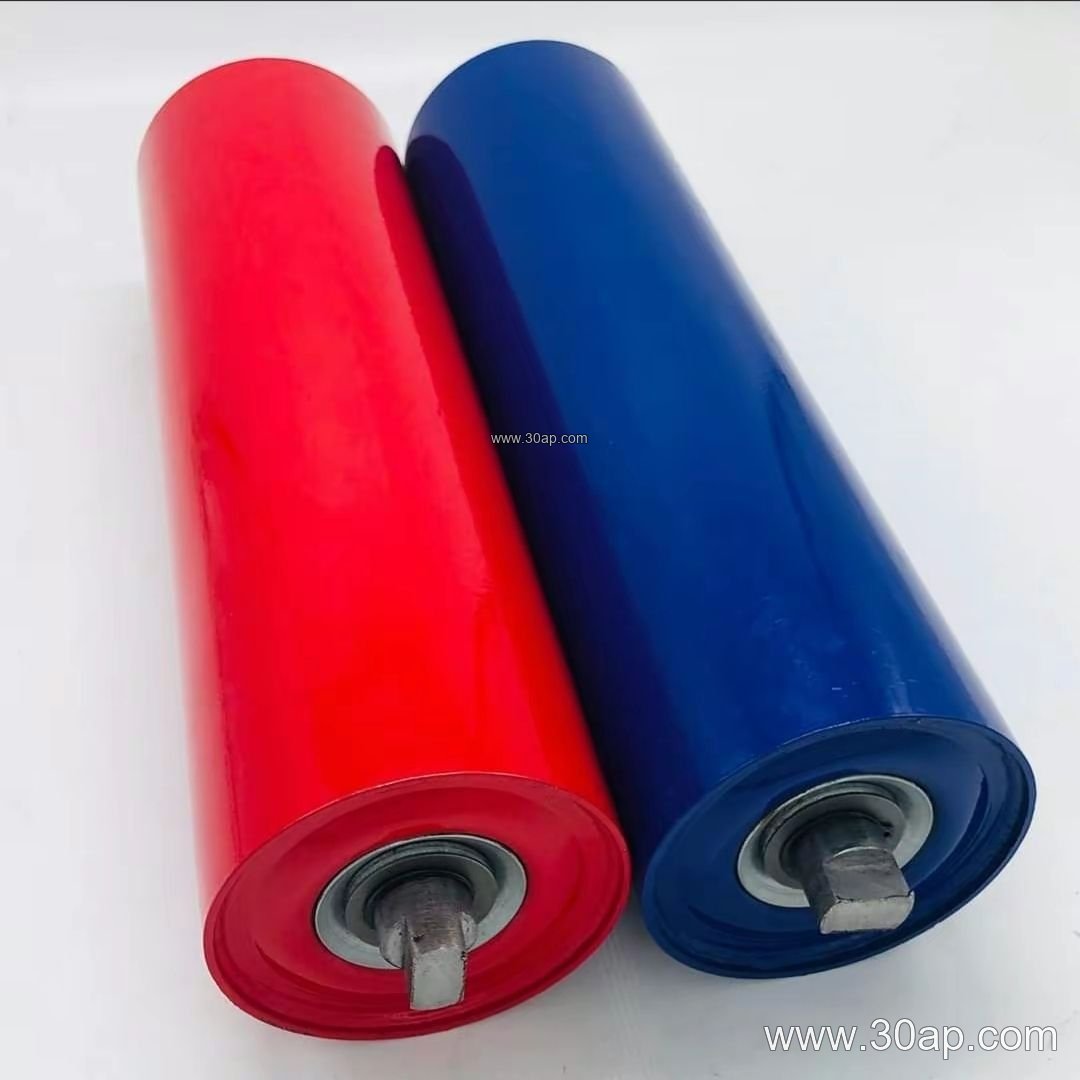
Most tracking idlers use a steel tube shell fitted with sealed bearings. Common bearing sizes include 6204, 6205, 6305, 6306, 6308, and 6310, matched to the load and shaft design rather than to one fixed roller diameter. Roller diameters often range from Ø63 and Ø76 up to Ø159, Ø178, Ø194, and Ø219 depending on belt width and duty. The roller surface may be plain steel, nylon, ceramic, or rubber covered. Rubber rings help grip the belt edge and absorb shock in harsh service.
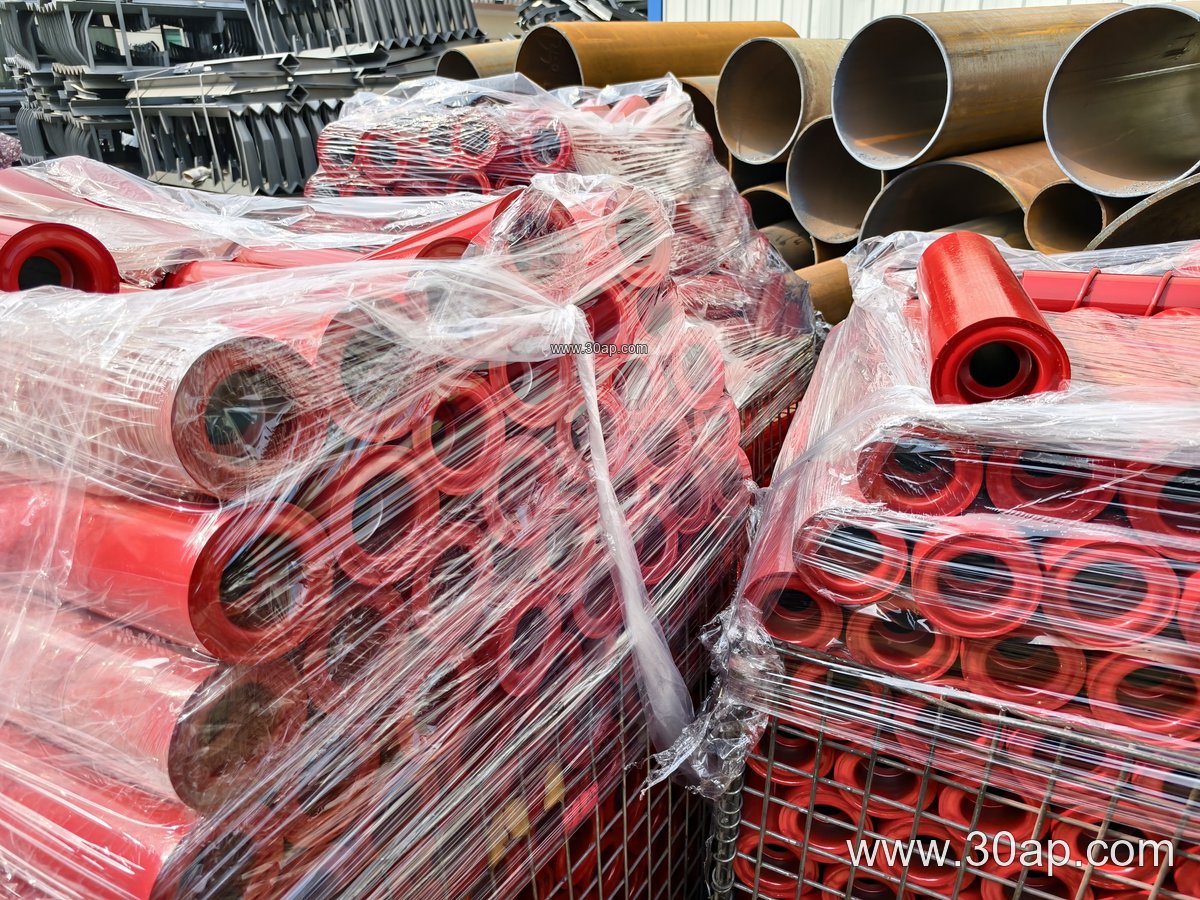
The tracking action usually comes from a pivoting bracket or a friction design. A friction tracking idler uses the belt’s own movement to swing the roller into a correcting angle. A tapered tracking idler uses conical ends to create a self-centering effect. Mounting frames and conveyor bracket assemblies must be strong enough to hold the roller square to the belt path.
Common Reference Dimensions
The table below shows typical examples only. Final dimensions depend on belt width, trough angle, and idler group design.
| Belt Width | Typical Roller Length (three-roll trough) |
|---|---|
| B500 | about 200 mm |
| B650 | about 250 mm |
| B800 | about 315 mm |
| B1000 | about 380 mm |
| B1200 | about 465 mm |
| B1400 | about 530 mm |
| B1600 | about 600 mm |
| B1800 | about 670 mm |
| B2000 | about 750 mm |
Trough angles are commonly 20, 30, 35, or 45 degrees. A slight forward tilt of about 1.5 to 2 degrees is sometimes used on training idlers to help centering. These values are reference data, not a universal match for every belt.
Where Tracking Idlers Are Used
Tracking idlers appear wherever long belts carry bulk material. In a coal washing plant or an underground coal mining conveyor, belt misalignment is a constant risk because of uneven loading. A flame retardant conveyor belt running on self-aligning idlers benefits from steadier tracking and less edge wear. In a limestone quarry or aggregate line, dust and shock loads make robust sealing important.
The same component supports belts in power plant coal yards, steel plant sinter lines, and port ship loading systems. On a pipe conveyor belt, tracking is handled differently because the belt forms a tube, but the general principle of guiding the belt path remains. A heat resistant conveyor belt in a cement kiln area also needs reliable roller alignment to avoid hot spots from rubbing.
Buyer Checklist
- Match roller diameter and bearing size to the belt speed, load, and frame space.
- Confirm the mounting bracket pattern and whether the idler is friction or taper type.
- Check the roller surface for the environment: rubber for grip and shock, ceramic for wear, steel for general use.
- Review seal quality for dusty or wet conditions in mining and quarry service.
- Ask how the idler is adjusted after installation and whether spare rollers are available.
A tracking idler is a small part of a conveyor system, but it protects expensive belt and pulley components. Buyers should treat it as a wear item that needs periodic inspection, especially on high-tonnage lines using steel cord conveyor belt or heavy fabric core belts.