What a Carbon Steel Idler Is and Where It Fits
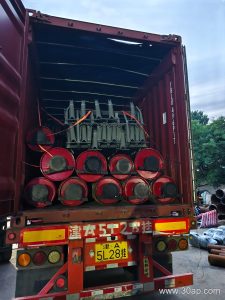
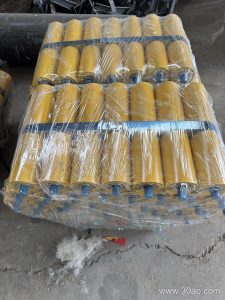
A carbon steel idler is a conveyor support roller made from carbon steel tube and shafting, mounted in a frame and positioned under or over the belt to carry the load and keep the belt tracking. In a typical conveyor line, these rollers are the most numerous wearing parts: a long overland conveyor may carry hundreds of them, and each one has to spin freely under dust, grit and load. Carbon steel is chosen because it offers a good balance of strength, machinability and cost, and it can be painted, galvanized or coated for corrosion protection depending on the site. On a quarry conveyor handling crushed stone, or a mining conveyor belt moving ore, the idler set is what the belt actually rides on.
How the Roller Is Built
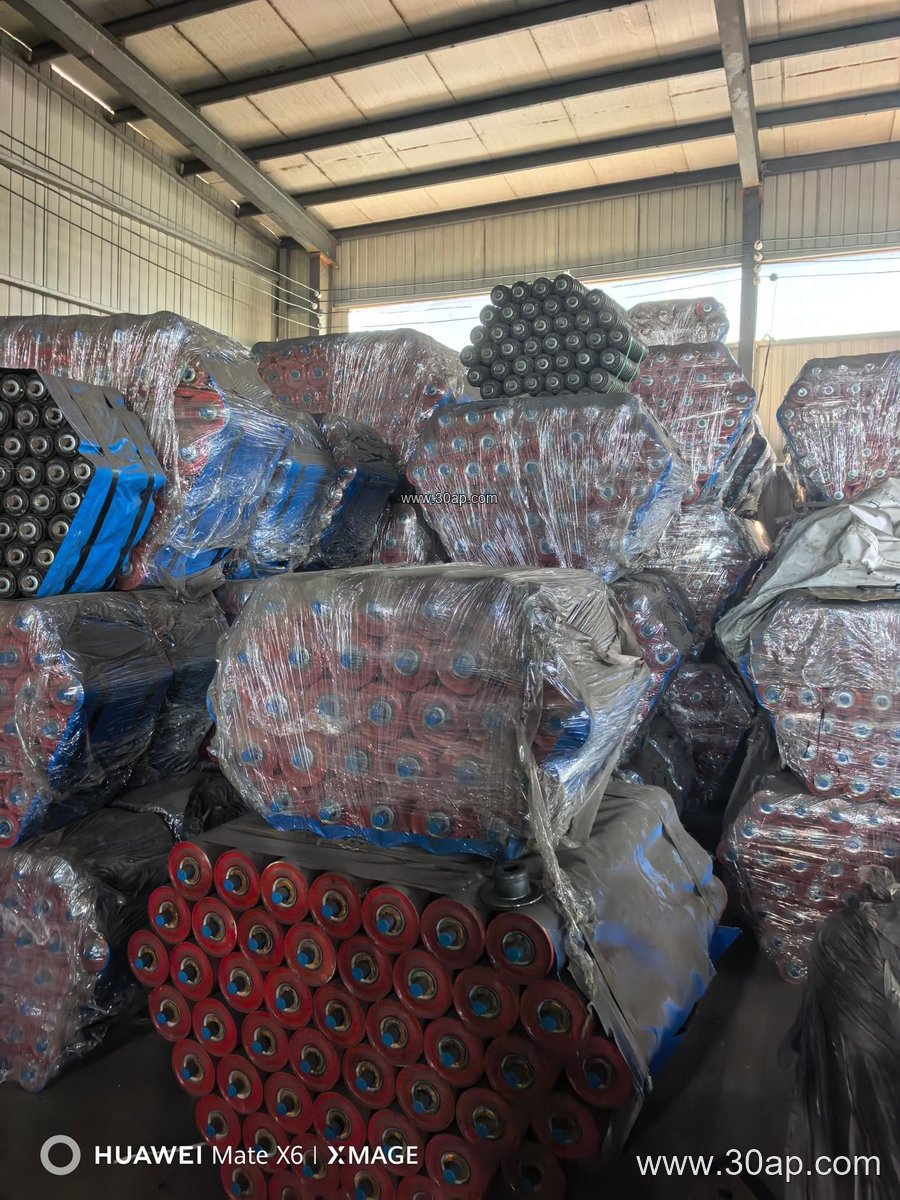
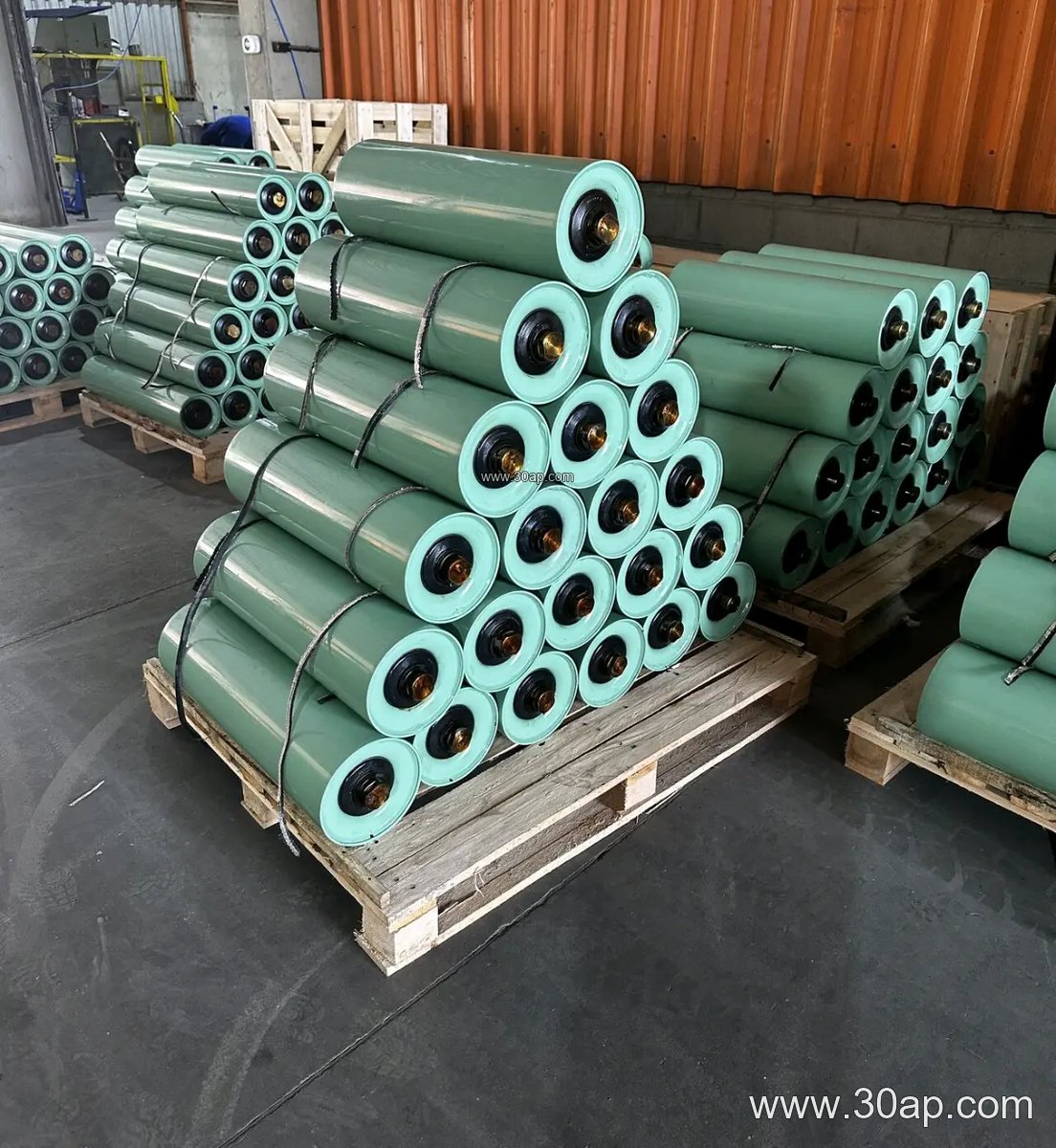
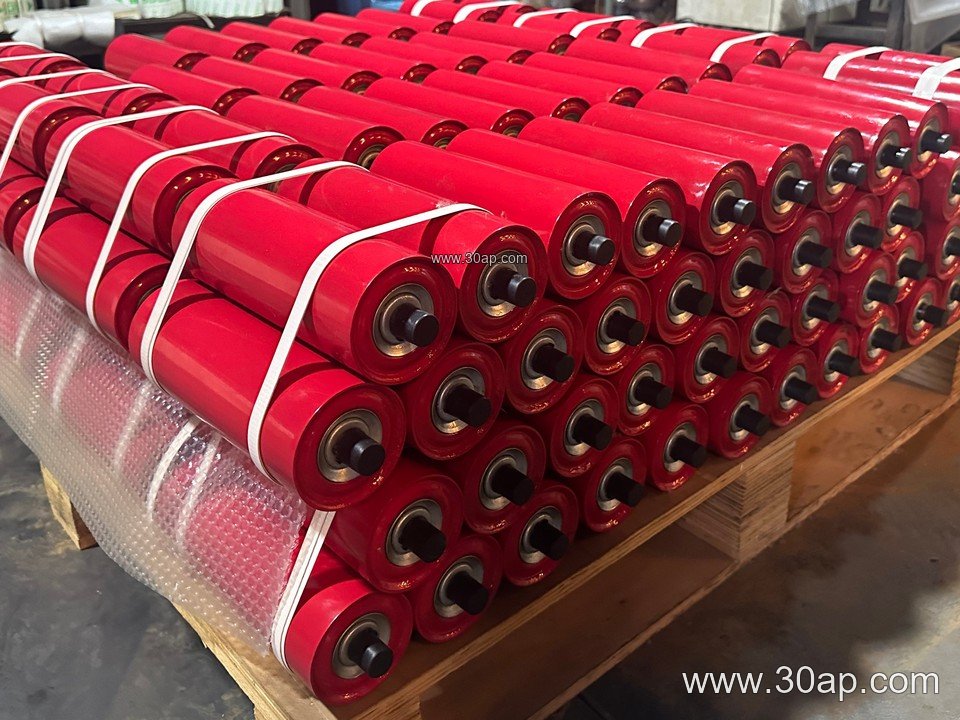
The body is usually a seamless or welded carbon steel tube, machined at both ends to seat the bearing housings. Inside, deep-groove ball bearings are fitted in pressed or cast housings, with labyrinth seals, felt seals or combination seals to keep out fine dust and water. The shaft runs through the tube and is fixed to the conveyor bracket at each end. Roller surface options include plain steel, nylon, ceramic and rubber rings; rubber rings are common on impact idlers at the loading point, while ceramic or nylon covers may be used where sticky material builds up. Bearing selection is matched to load and speed rather than to tube diameter alone, so a given roller diameter may appear with more than one bearing size.
Common Types and Arrangements
The carrying side normally uses troughing idlers in two- or three-roll sets, which form the belt into a trough so bulk material stays centered. The return side uses flat or V-return rollers. Transition idlers ease the belt from flat to troughed profile near the pulleys. Impact and rubber-ring impact idlers absorb energy where material drops onto the belt, and self-aligning types help correct belt wander. Spiral rollers can reduce material build-up on the return strand. These are different roles, not interchangeable parts: a troughing idler cannot substitute for a return roller, and a bend pulley is not a tail pulley. The same logic applies to conveyor pulleys at the head and tail; the idler supports the belt between them.
Reference Dimensions Buyers Often Ask About
The table below collects typical reference values used when specifying carbon steel idlers. These are common examples for discussion, not fixed combinations; final dimensions follow the conveyor design, belt width, trough angle and load.
| Parameter | Common reference values |
|---|---|
| Roller diameter | Ø63, Ø76, Ø89, Ø102, Ø108, Ø127, Ø133, Ø159, Ø178, Ø194, Ø219 mm |
| Belt width | B400, B500, B650, B800, B1000, B1200, B1400, B1600, B1800, B2000, B2200, B2400 |
| Trough angle | 20°, 30°, 35°, 45° |
| Idler set form | Single roll, two-roll, three-roll troughing |
| Roller surface | Steel tube, nylon, ceramic, rubber ring |
| Bearing reference | 6204, 6205, 6305, 6306, 6308, 6310 |
| Typical roll length, three-roll set | About 200 mm at B500, 250 mm at B650, 315 mm at B800, 380 mm at B1000, 465 mm at B1200, 530 mm at B1400, 600 mm at B1600, 670 mm at B1800, 750 mm at B2000 |
Side rollers and center rollers in the same set can differ in length. A 1200mm wide conveyor belt, for example, is usually supported by a three-roll set with side rolls shorter than the center roll, and the exact figures come from the trough geometry. Do not assume that one belt width locks in a single roller diameter or shaft size; those are calculated from load, spacing and belt tension.
Applications Across Industries
Carbon steel idlers appear wherever a belt runs continuously. In a limestone quarry or aggregate plant they carry crushed rock on heavy-duty troughing sets. In a coal washing plant or underground coal mining conveyor, flame retardant and anti-static belt grades are matched with robust rollers and sealed bearings. Cement plants use them on clinker and raw meal lines, power plants on coal handling, and steel plants on sinter and coke conveyors. Ports and ship loading terminals rely on long trains of idlers under a steel cord conveyor belt, while a concrete mixing plant uses shorter belts with fewer rollers. The environment decides the finish: wet, salty or chemical exposure calls for galvanized or coated steel, and dusty service calls for better sealing.
What to Check Before Ordering
- Confirm roller diameter, roll length and set form against the drawing, not against a rule of thumb.
- State the belt width and trough angle so the set geometry matches the existing frame.
- Describe the duty: lump size, tonnage, belt speed and whether the location is a loading impact zone.
- Specify the environment, since moisture, dust and temperature affect seal and coating choice.
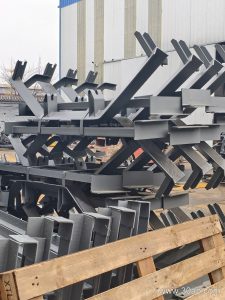
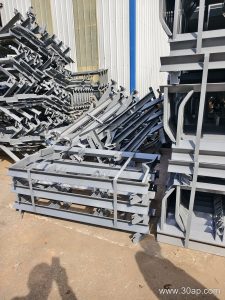
- Check shaft ends and bracket fit, because a roller that does not seat properly will wear the frame.
- Ask for the bearing reference and seal type, and keep spare sets for high-wear positions.
Routine inspection of idler rotation, noise and alignment prevents belt edge damage and reduces downtime. Replacing a seized roller early is far cheaper than repairing a torn belt on a quarry or plant line.