What the Tail Drive Pulley Does
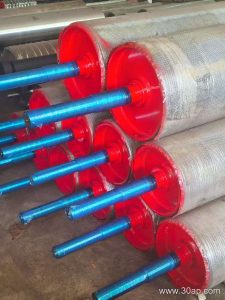
In a belt conveyor, the tail end is where the belt returns after unloading. When the drive unit is mounted at that end, the rotating drum is called a tail drive pulley. It does two jobs at once: it transmits torque to the belt and it sets the belt path at the return point. This arrangement is common on short to medium conveyors, on mobile crushing plants, and on machines where the head section has no room for a gearbox.
Do not confuse it with a bend pulley or a head drive pulley. A bend pulley only changes belt direction and carries no drive torque. A head drive pulley pulls the belt at the discharge end. The tail drive unit sits at the loading end, so the belt is pulled through the carrying run toward the head. Each position has its own load case, and the drums are not interchangeable.
How It Is Built
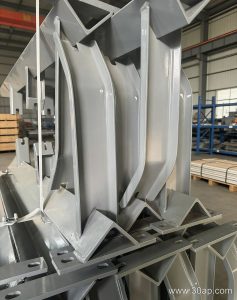
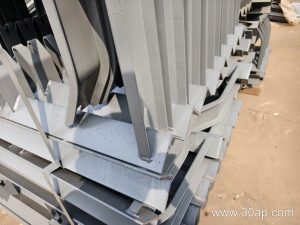
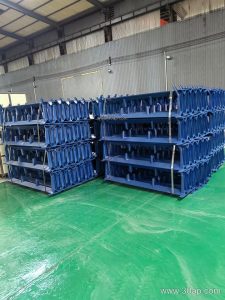
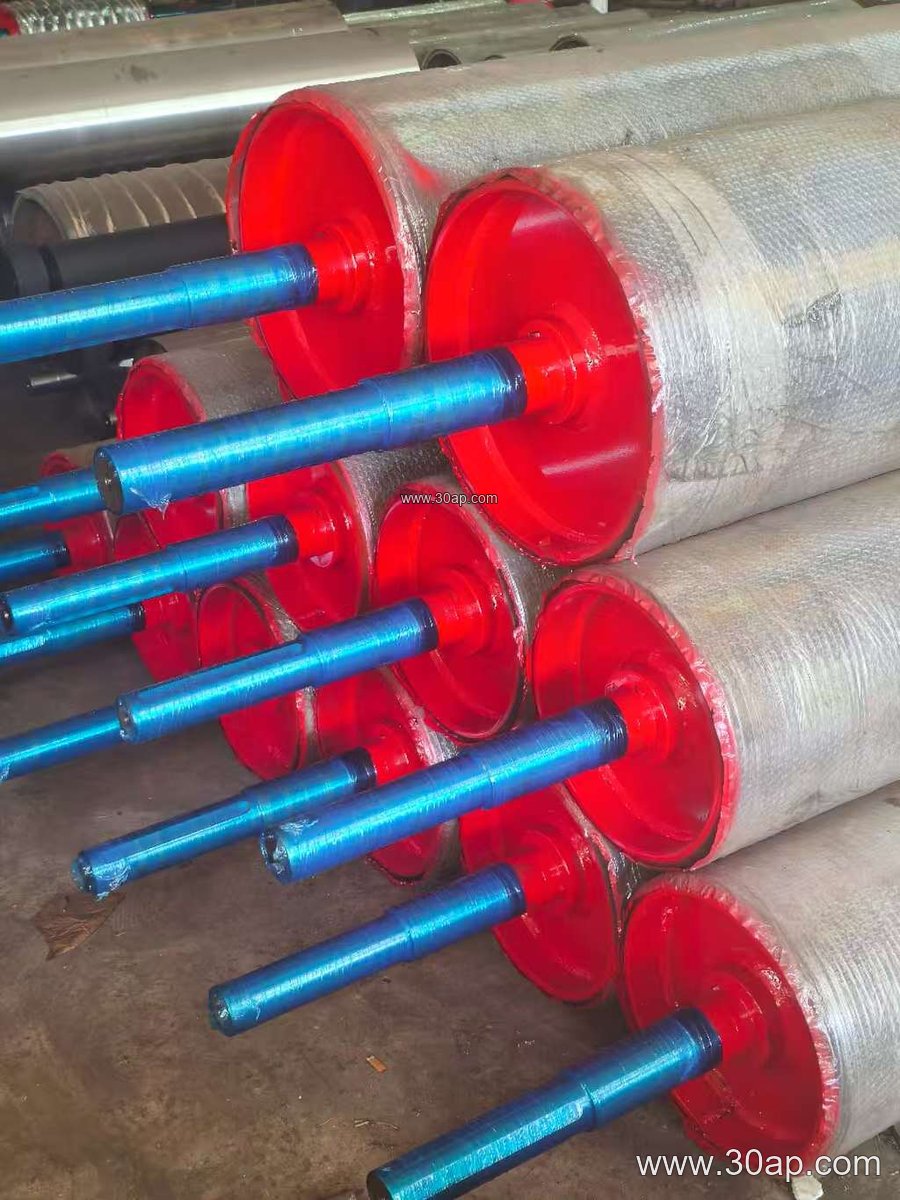
A typical unit combines a cylindrical shell, two end discs, a shaft, bearing housings, and a lagging surface. The shell is usually rolled steel, machined at the ends and welded to the discs. The shaft is keyed or shrink-fitted to the shell and supported by spherical roller bearings in pillow blocks or flanged housings. A conveyor bracket or frame holds the bearing housings and lets the operator adjust belt tracking and tension.
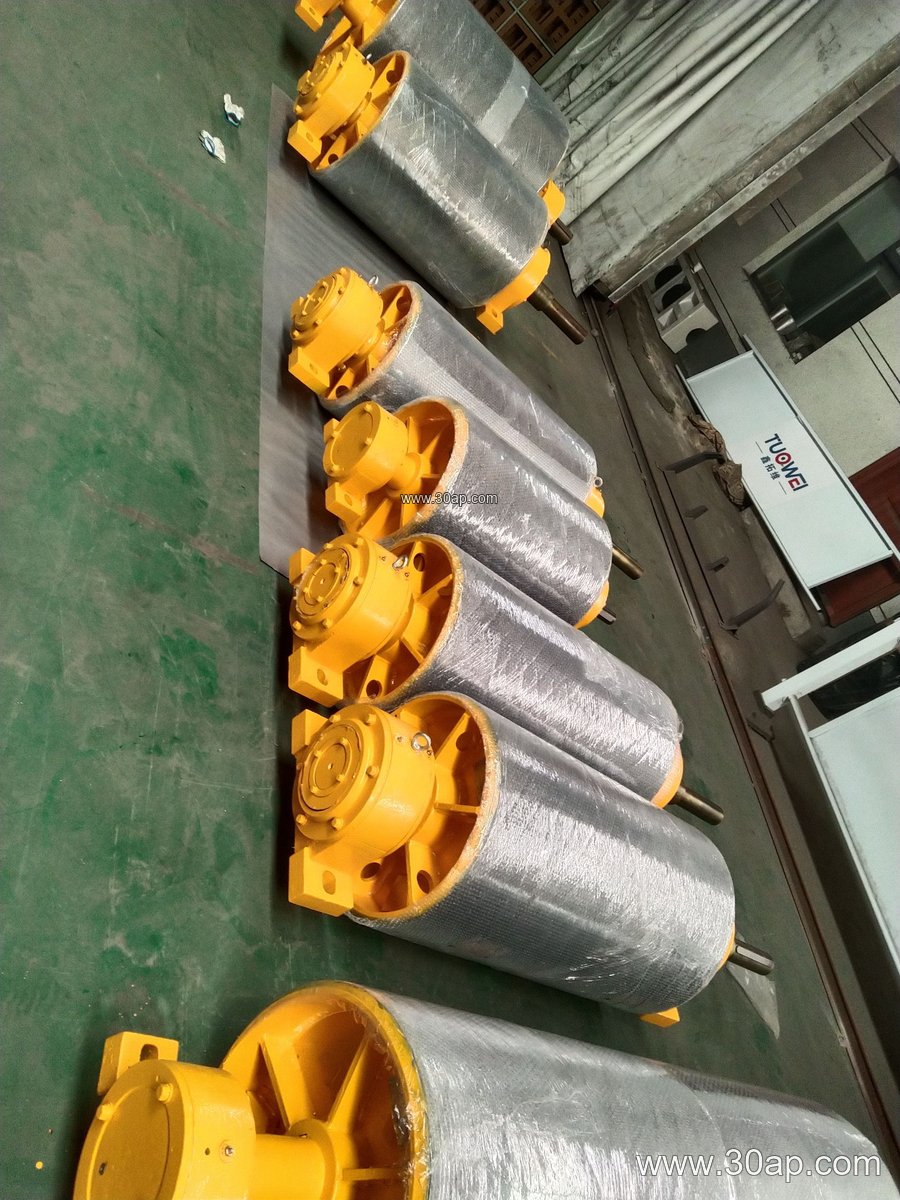
Surface treatment matters. Plain finish is used where grip is not critical. Rubber lagging, either cold-bonded or hot-vulcanized, raises friction and protects the shell. Diamond grooving improves water shedding on wet lines, while ceramic lagging suits abrasive duty in a quarry or a copper ore plant. Common lagging thicknesses are 8, 10, 12, 15 and 20 mm, chosen by the designer rather than fixed by belt width.
Where It Fits In The Plant
You will see this drum in a limestone mine feeding a primary crusher, in a small cement plant clinker line, in a power plant coal yard, and in sand and gravel plants where the discharge point is fixed and the drive is easier to reach at the tail. It also appears in tunnel spoil handling and in fertilizer or grain silo conveyors when a compact drive layout is needed.
The drum must match the belt it carries. A heavy-duty abrasion resistant conveyor belt running over a lagged tail drum needs enough friction to avoid slip at start-up. A flame retardant conveyor belt used underground requires a drum surface that will not generate excessive heat. On a pipe conveyor belt or a corrugated sidewall conveyor belt, the tail drum geometry is set by the belt profile, so the supplier should confirm the profile before machining.
Common Size Ranges
The table below shows reference values often seen in catalogues. They are starting points for discussion, not a rule that one belt width must use one diameter.
| Belt width | Typical drum face | Common diameters | Typical shaft range |
|---|---|---|---|
| B500 | about 600 mm | Ø250 to Ø400 | Ø50 to Ø80 |
| B650 | about 750 mm | Ø315 to Ø500 | Ø60 to Ø90 |
| B800 | about 950 mm | Ø400 to Ø630 | Ø70 to Ø100 |
| B1000 | about 1150 mm | Ø500 to Ø800 | Ø80 to Ø120 |
| B1200 | about 1400 mm | Ø630 to Ø1000 | Ø90 to Ø140 |
| B1400 | about 1600 mm | Ø800 to Ø1250 | Ø100 to Ø160 |
| B1600 | about 1800 mm | Ø1000 to Ø1400 | Ø120 to Ø180 |
| B1800 | about 2000 mm | Ø1250 to Ø1600 | Ø140 to Ø200 |
Belt speed, wrap angle, starting torque and the weight of the loaded belt all influence the final choice. A B1200 x Ø1000 unit and a B800 x Ø500 unit may both exist in the same plant. The shaft diameter follows torque and bearing life, not belt width alone.
Buying Advice
- State the belt type: an EP conveyor belt, a steel cord conveyor belt, a chevron conveyor belt or a skirted conveyor belt each loads the drum differently.
- Give the belt width, the required face width, the drum diameter and the shaft diameter, or ask the supplier to calculate them from torque and belt tension.
- Specify the lagging: plain, diamond, herringbone or ceramic, and the thickness.
- Confirm the mounting: bearing type, bracket spacing and whether the drum is fixed or sliding for take-up.
- Ask for dynamic balance and machining tolerances on the shell and shaft.
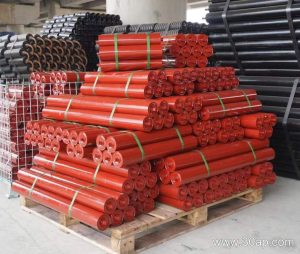
On site, check belt tracking after the first few shifts, keep the lagging clean, and inspect the bearings for heat. A well-matched tail drive drum, paired with the right conveyor idler roller and conveyor bracket, keeps the whole line running quietly. For more conveyor components, see our conveyor pulley range and the matching rubber conveyor belt options.