What a Self-Aligning Idler Set Does
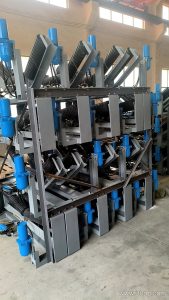
A self-aligning idler set, also called a training idler set or self-tracking idler group, is a section of idler rollers mounted on a pivoting frame that automatically steers a drifting conveyor belt back toward the center line. Instead of relying on a fixed bracket, the assembly is designed to rotate slightly when the belt contacts a vertical guide roller. That small movement changes the angle of the carrying rollers, creating a gentle side force that corrects misalignment before the belt can rub against the structure.
These sets are common on the carrying side of a conveyor, and they can also be configured for the return strand. In a limestone quarry, a cement plant, or a coal handling system, a belt that wanders off center can spill material, damage the edge, and shorten the life of the conveyor belt itself. A self-aligning idler set is one of the simplest mechanical answers to that problem, and it works without sensors or power.
How the Assembly Is Built
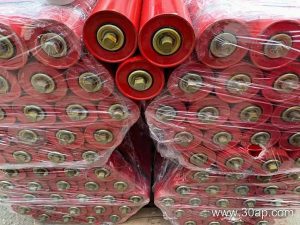
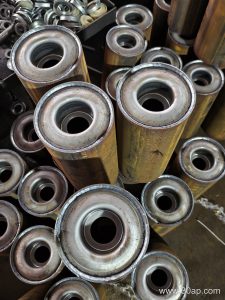
The core components are the idler rollers, the pivoting base, and the linkage or guide mechanism. The rollers themselves are usually steel tubes fitted with sealed bearings. Common bearing sizes include 6204, 6205, 6305, 6306, 6308, and 6310, though the correct bearing depends on the load, speed, and roller diameter rather than on belt width alone.
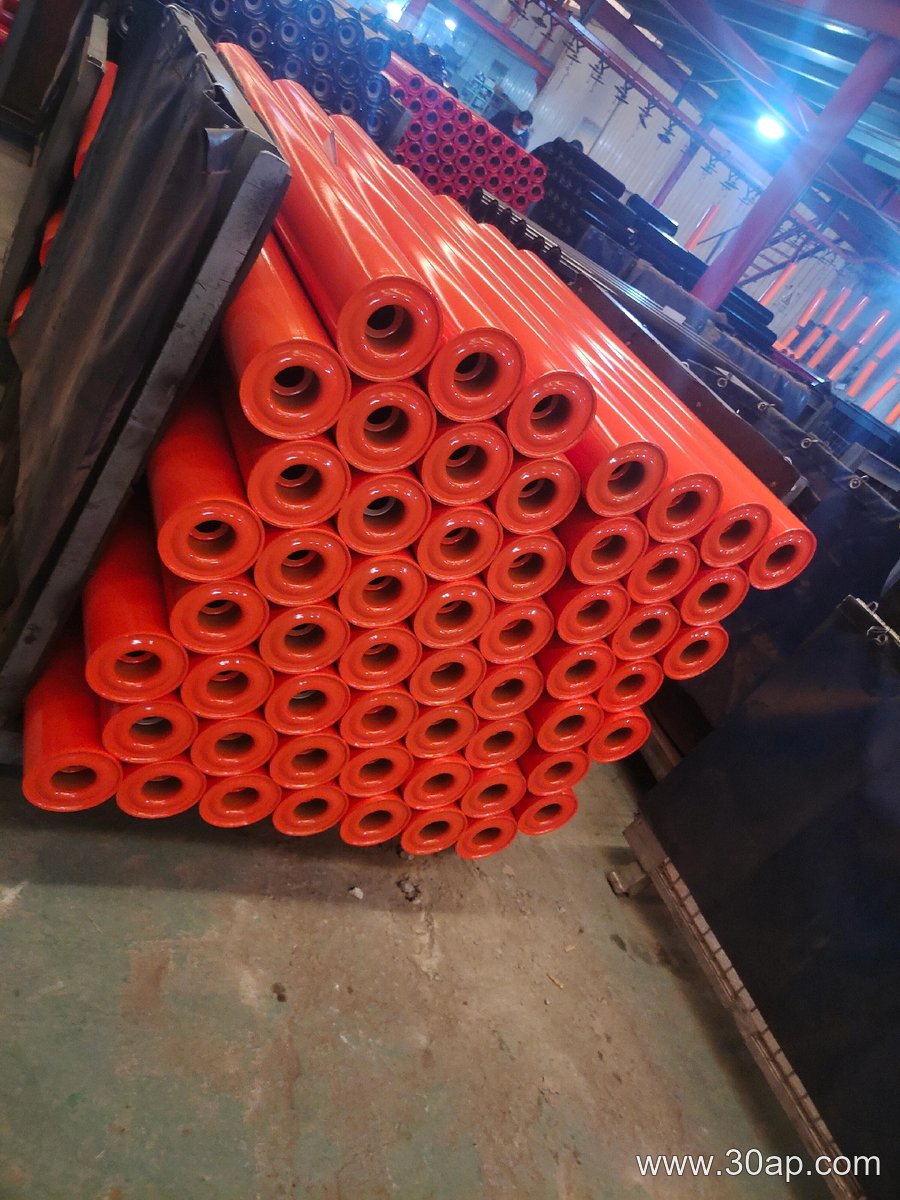
Roller diameters for this type of set often range from Ø63 mm and Ø76 mm up to Ø108 mm, Ø127 mm, Ø133 mm, Ø159 mm, Ø178 mm, and larger sizes such as Ø194 mm or Ø219 mm for heavy-duty service. The frame may carry two or three rollers in a trough arrangement. A typical three-roll set uses a trough angle of 20, 30, 35, or 45 degrees. The side rollers can be slightly forward-tilted, often about 1.5 to 2 degrees, to assist the self-centering action.
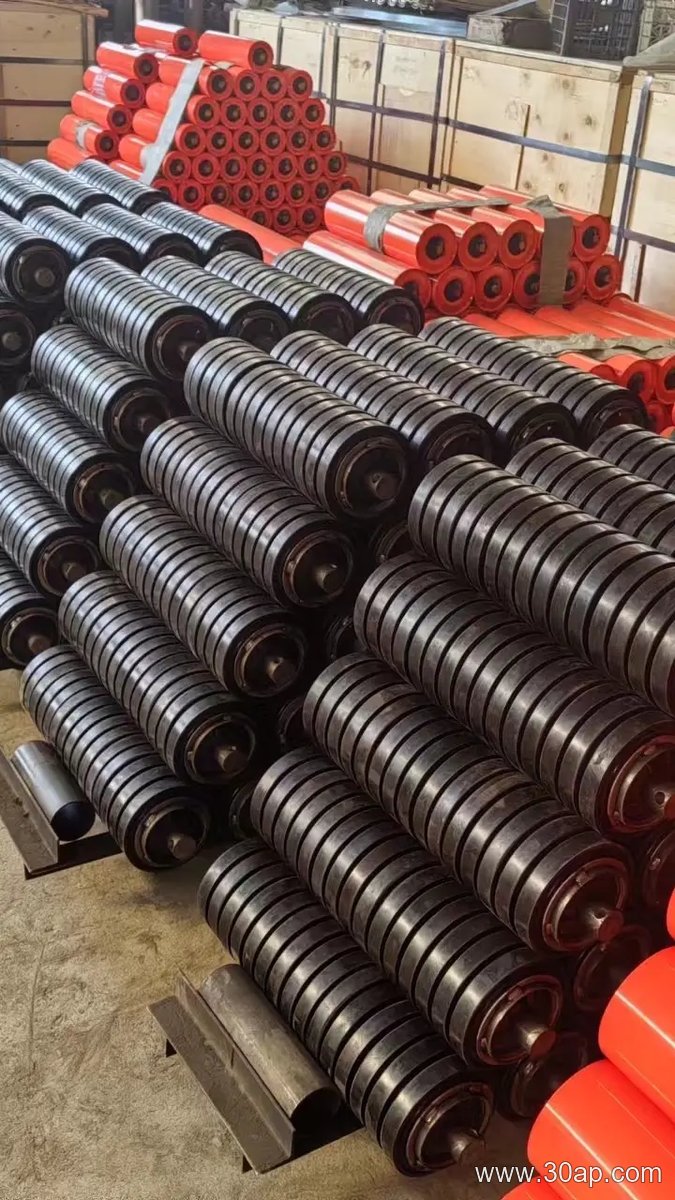
The roller surface can be plain steel, nylon, ceramic, or rubber rings. Rubber-covered rollers are sometimes chosen for impact zones, while ceramic or nylon surfaces may be used where material buildup or abrasion is a concern. The pivot bearings and the guide roller are what separate a self-aligning set from a standard fixed troughing idler set.
Where It Fits on the Conveyor
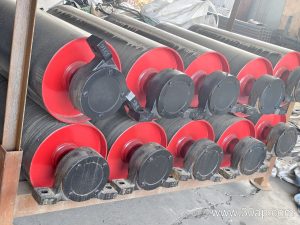
A self-aligning idler set is normally installed at intervals along the carrying run, especially after a loading point, a curve, or a transition section where the belt is most likely to shift. It is not a replacement for a drive pulley, a tail pulley, or a bend pulley. Those pulleys perform different functions: the drive pulley transmits power, the tail pulley returns the belt, and a bend pulley changes direction. A self-aligning set only manages belt tracking on the idler section.
In a sand and gravel line, a self-aligning set can be placed after the crusher discharge to keep the belt centered under a variable feed. In a power plant coal yard, it helps control the belt through long open sections exposed to wind and uneven loading. In a cement plant, it may be used on clinker or raw material conveyors where dust and high temperature are present, provided the selected roller surface and bearing seals suit those conditions.
Common Sizes and Selection Points
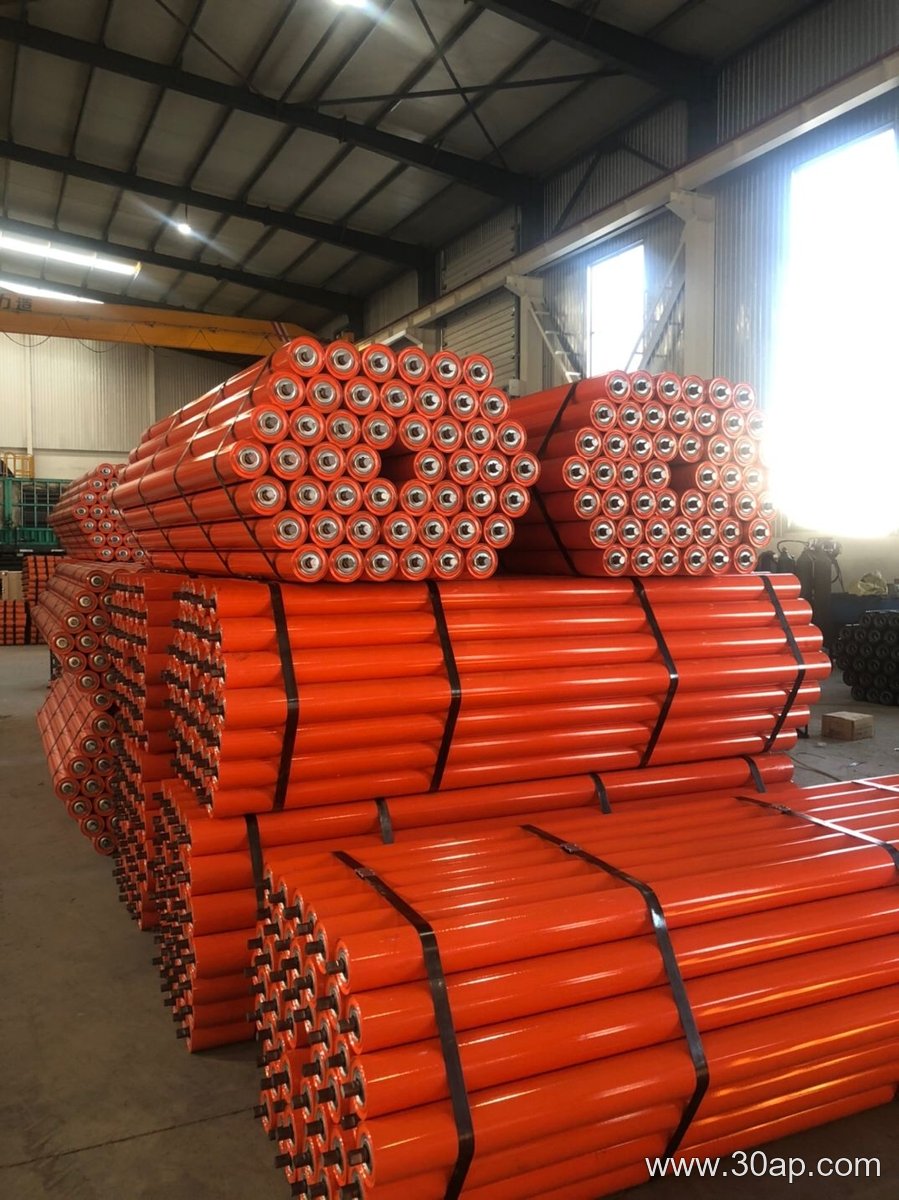
Buyers should match the set to the conveyor belt width, the trough angle, and the roller group form. The table below gives common reference ranges, not fixed universal combinations. Roll length varies with belt width, trough angle, and the number of rollers, and the center roller may differ from the side rollers.
| Belt width | Typical roller diameter range | Common trough angle | Roller group form |
|---|---|---|---|
| B500 | Ø63 to Ø89 mm | 20°, 30°, 35° | Two-roll or three-roll |
| B650 | Ø76 to Ø102 mm | 20°, 30°, 35° | Three-roll troughing |
| B800 | Ø89 to Ø108 mm | 30°, 35°, 45° | Three-roll troughing |
| B1000 | Ø102 to Ø133 mm | 30°, 35°, 45° | Three-roll troughing |
| B1200 | Ø108 to Ø159 mm | 30°, 35°, 45° | Three-roll troughing |
| B1400 | Ø127 to Ø178 mm | 35°, 45° | Three-roll troughing |
| B1600 | Ø133 to Ø194 mm | 35°, 45° | Three-roll troughing |
| B1800 and above | Ø159 to Ø219 mm | 35°, 45° | Heavy-duty three-roll |
For example, a three-roll troughing set on a B800 belt often uses a roller length around 315 mm, while a B1200 set commonly uses about 465 mm. These are typical values only. The actual roller length, shaft size, and bracket dimensions should be confirmed against the conveyor design and the existing conveyor bracket pattern.
What to Check Before Ordering
- Belt width and trough angle: These determine the roller group geometry and the roller length range.
- Roller diameter and bearing size: Match the load and speed, not just the belt width. A larger diameter roller does not automatically suit every application.
- Roller surface: Steel, nylon, ceramic, or rubber rings each suit different material and impact conditions.
- Mounting dimensions: The pivot base and bracket holes must align with the conveyor frame.
- Return or carrying side: A self-aligning set for the return strand may use a different roller arrangement than a carrying-side troughing set.
A well-chosen self-aligning idler set reduces edge damage, spillage, and premature belt wear. It is not a cure for poor pulley alignment or a badly loaded conveyor, but in quarries, mines, cement works, and power stations it remains a practical tracking aid that pays for itself through longer belt life and less downtime.