What a V-Type Return Idler Does
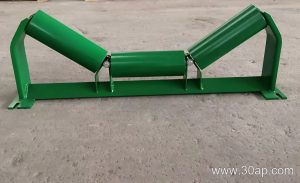
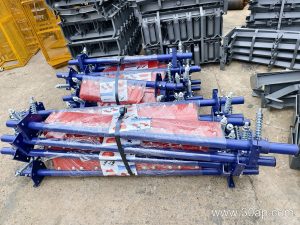
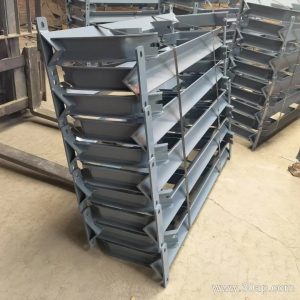
A V-Type Return Idler is a two-roll return idler arranged in a shallow V shape beneath the carrying side of a conveyor. Instead of one flat roller supporting the empty belt, the two rolls meet at a low center point and rise toward the conveyor frame. This simple geometry does two jobs at once: it supports the returning belt and encourages it to stay centered as it travels back toward the tail.
The product is also described as a V-return idler or V-shaped return roller. Both names refer to the same two-roll assembly, and neither should be confused with a flat return idler, which uses a single horizontal roll. The V-Type Return Idler is a distinct subtype, and its angled rolls are the feature that defines it.
Construction and Main Parts
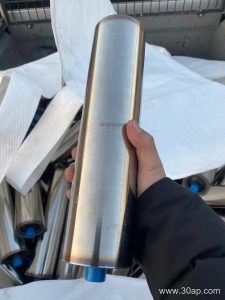
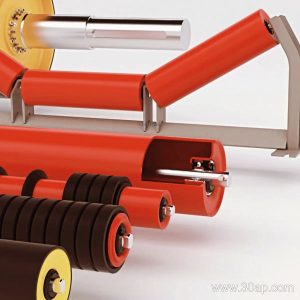
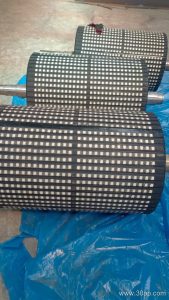
Each unit is built around two idler rollers mounted on a common frame. The rolls are usually steel tube shells fitted with end caps, sealed bearings, and a shaft that locks into the frame through a conveyor bracket. Roll face options include plain steel, nylon, and rubber-covered versions; rubber rings are sometimes used where material buildup or belt slip is a concern.
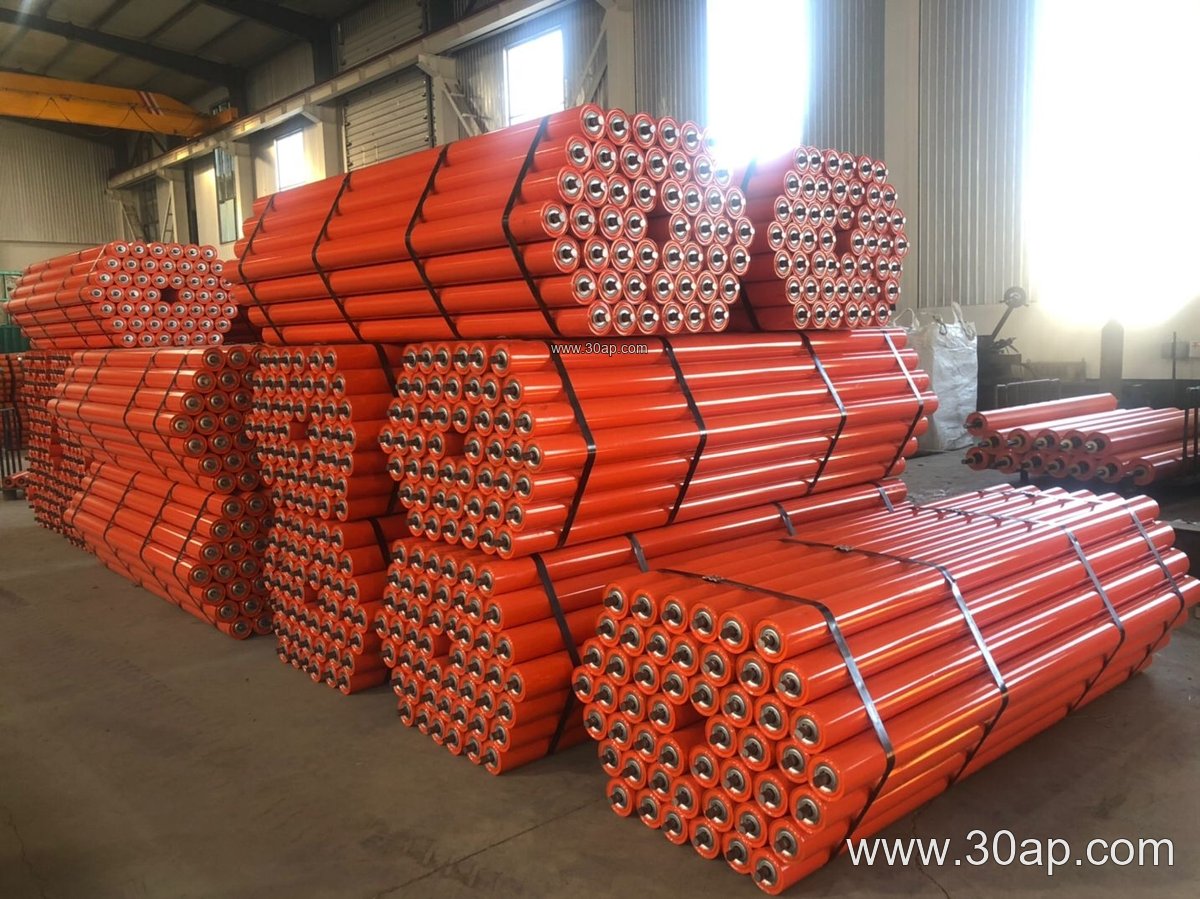
Typical roll diameters for return positions include Ø89, Ø102, Ø108, Ø127, Ø133, and Ø159 mm, while larger installations may use Ø178 or Ø194 mm. Bearing sizes such as 6204, 6205, 6305, 6306, 6308, and 6310 appear across the range, matched to load and speed by the designer rather than fixed to one roll diameter.
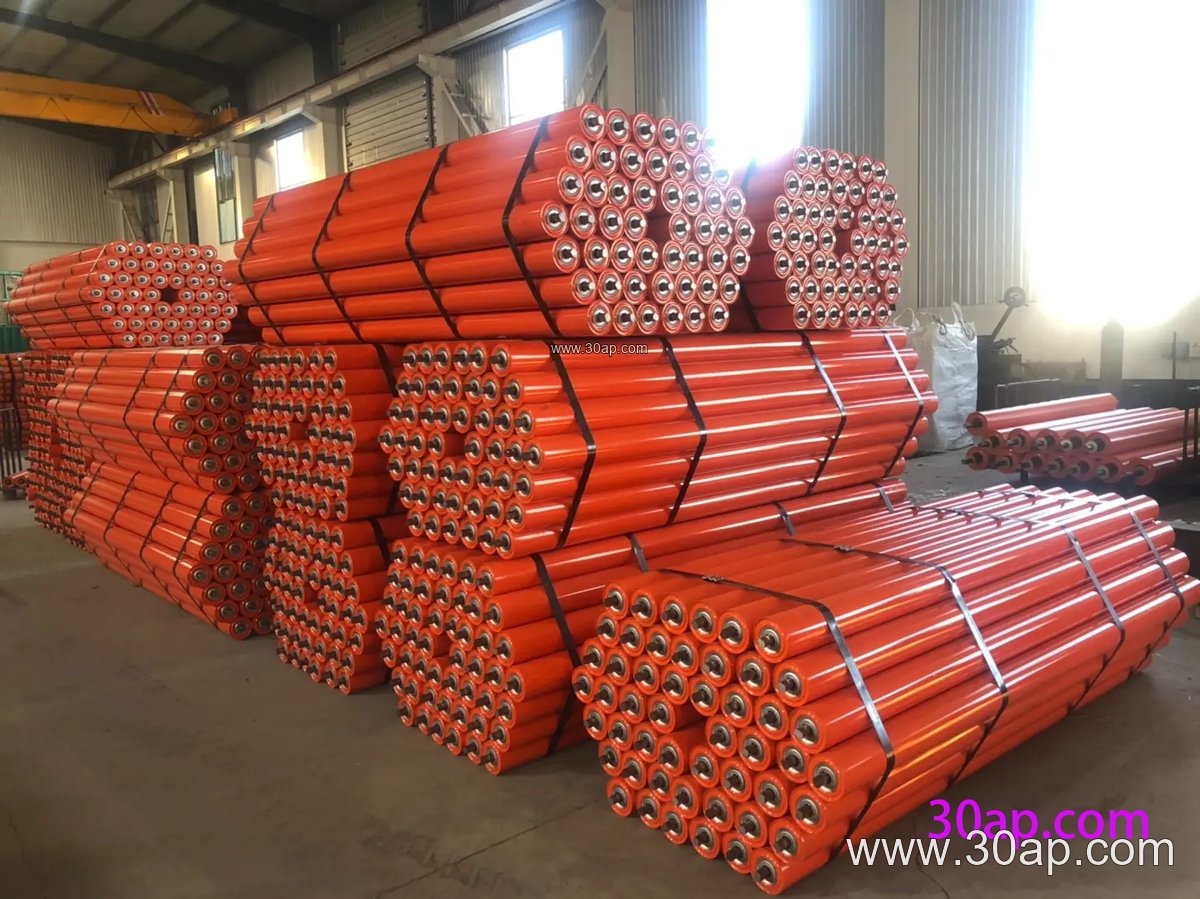
| Parameter | Common Reference Range |
|---|---|
| Roll diameter | Ø89 to Ø194 mm |
| Belt width | B500 to B2400 mm |
| V angle | Usually 5 to 15 degrees per side, set by design |
| Roll surface | Steel, nylon, rubber ring |
| Bearing | 6204, 6205, 6305, 6306, 6308, 6310 |
The V angle and roll length are determined by belt width, trough geometry, and frame layout. A B800 belt and a B1400 belt will not use the same roll length, and the center spacing changes accordingly. Buyers should treat any published table as a starting reference and confirm dimensions against the actual conveyor drawing.
Where It Fits on the Conveyor
This idler belongs to the return run, the lower strand that carries no material. It is often placed at intervals between the tail pulley and the drive pulley, especially on long conveyors where belt tracking tends to drift. In a coal mining conveyor, a cement plant clinker line, or a power plant coal handling system, the V arrangement helps shed fines that would otherwise collect on a flat roll and cause the belt to wander.
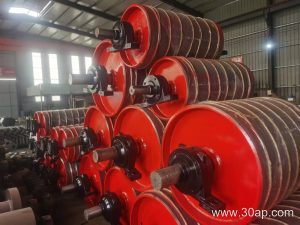
The assembly works alongside the conveyor pulley, the conveyor bracket, and the belt itself. It does not replace a bend pulley or a tail pulley; those are different components with different duties. It also differs from a training idler with vertical side rollers, which corrects misalignment through a swivel action rather than through the V profile alone.
Selection Points for Buyers
- Match the roll diameter and bearing to the belt speed and load, not to belt width alone.
- Confirm the V angle and mounting hole spacing against the existing frame.
- Choose the roll surface for the environment: rubber rings for wet or sticky conditions, plain steel for dry bulk.
- Check seal quality where dust is heavy, such as a quarry, crusher discharge, or sinter plant.
- Consider the belt type in service, since a heavy-duty mining conveyor belt or an abrasion resistant conveyor belt may call for a more robust return roll.
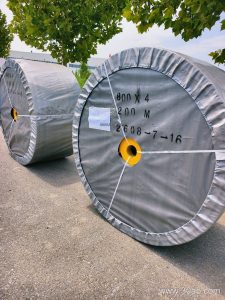
For abrasive duties, pairing the idler with a suitable rubber conveyor belt or EP conveyor belt helps extend service life. In underground coal mining, flame retardant conveyor belt and anti-static conveyor belt grades are common, and the return idlers should be specified to suit the same environment.
Installation and Maintenance Notes
Set the two rolls so the belt rests evenly on both, with the low point centered under the belt. A misaligned frame will pull the belt to one side and wear the roll ends. Greaseable bearings need a planned lubrication interval, while sealed-for-life units should be inspected for play and noise. Replace a roll when the shell is worn through, the bearing runs rough, or the seal has failed and allowed grit inside.
Keep spare rolls on hand for critical lines in a port terminal, steel plant, or aggregate plant. A small stock of the correct diameter and bearing size avoids long downtime when a single return roll seizes.