What a Heavy-Duty Belt Conveyor Idler Is
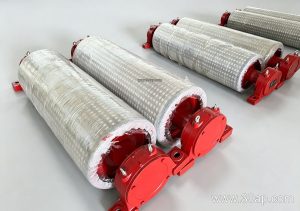
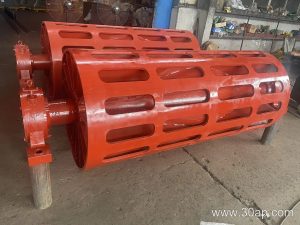
A heavy-duty belt conveyor idler is the rotating support that carries the conveyor belt and its load along the length of a bulk handling system. In quarries, coal preparation plants, cement works, and iron ore terminals, these idlers keep the belt tracking smoothly while absorbing constant impact and abrasion. Unlike a drive pulley or a tail pulley, which transmit power and change belt direction, the idler simply rolls under the belt. The heavy-duty version is built with thicker wall tubing, larger shaft diameters, and reinforced bearing housings to survive high tonnage and dirty conditions.
The same component is often called a heavy-duty conveyor roller or heavy-duty carrying idler. These are accurate equivalent names for the same product. A bend pulley or a take-up pulley is not a substitute term; those are different conveyor pulleys with different duties.
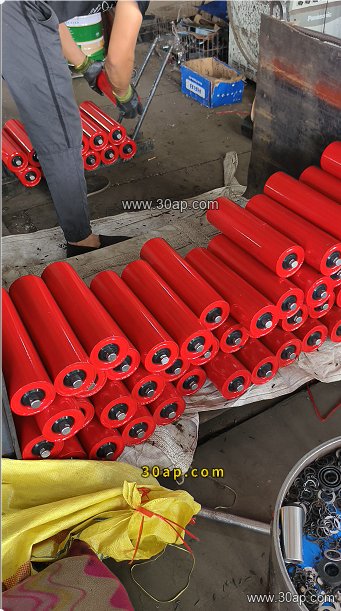
Construction and Key Components
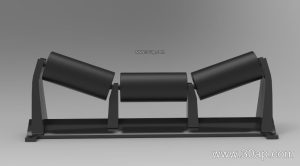
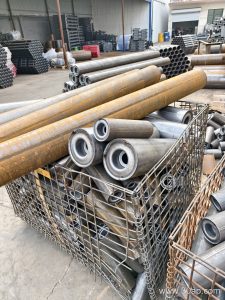
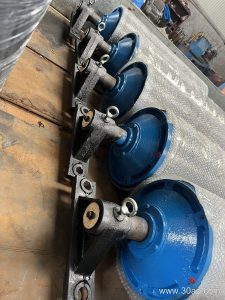
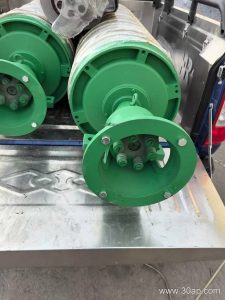
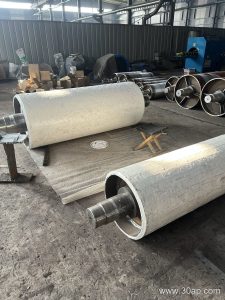
A typical heavy-duty belt conveyor idler consists of a steel tube shell, a through shaft, sealed ball bearings, and a protective end cap. The shell may be plain steel, nylon-coated, ceramic-lined, or fitted with rubber rings for impact zones. Bearing sizes commonly range from 6204 and 6205 up to 6308 and 6310, selected according to load and speed rather than a single fixed rule. The roller diameter is usually matched to belt width and load, with common sizes including Ø89, Ø108, Ø127, Ø133, Ø159, and Ø178. Heavier mining duties may use Ø194 or Ø219. The idler length depends on belt width, trough angle, and the number of rolls in the set; for example, a three-roll troughing set on a B1000 belt often uses rolls around 380 mm long, while a B1400 set may use rolls near 530 mm. These are common examples, not mandatory pairings.
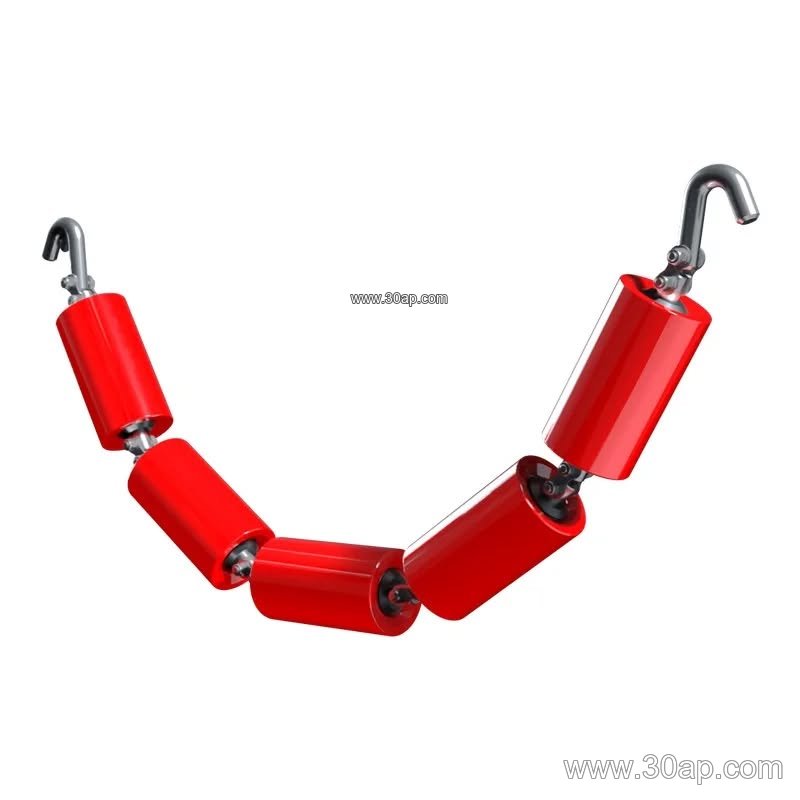
Common idler configurations
- Troughing idlers in two-roll or three-roll sets, with trough angles of 20°, 30°, 35°, or 45°
- Impact idlers with rubber rings under crusher discharge and transfer points
- Return idlers, including flat and V-type, supporting the empty belt
- Self-aligning idlers for belts that tend to wander
Where Heavy-Duty Idlers Are Used
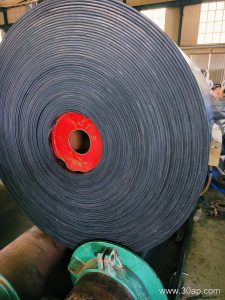
In a sand and gravel plant, heavy-duty idlers carry abrasive aggregate from the primary crusher to the screening deck. In a coal washing facility, they support a flame retardant conveyor belt that may be wet and sticky. The idler must resist dust ingress and keep turning freely. At a power plant coal yard, long overland conveyors rely on thousands of idlers to keep a heavy-duty conveyor belt moving hour after hour. The same idler design appears under a steel cord conveyor belt at an iron ore terminal and beneath an EP conveyor belt in a cement plant. The working environment, not the belt brand, decides whether a standard or heavy-duty idler is appropriate.
Specifications a Buyer Should Review
Buyers should confirm roller diameter, shaft diameter, bearing type, shell thickness, and the idler set form. The table below shows typical reference values; final selection depends on belt width, belt speed, load, and ambient conditions.
| Parameter | Common reference values |
|---|---|
| Roller diameter | Ø63, Ø76, Ø89, Ø102, Ø108, Ø127, Ø133, Ø159, Ø178, Ø194, Ø219 |
| Belt width | B400, B500, B650, B800, B1000, B1200, B1400, B1600, B1800, B2000 |
| Trough angle | 20°, 30°, 35°, 45° |
| Bearing | 6204, 6205, 6305, 6306, 6308, 6310 |
| Roll surface | Steel, nylon, ceramic, rubber ring |
Do not assume that one belt width fixes one pulley diameter or one shaft size. A B800 conveyor may use different idler diameters depending on load and speed. Likewise, a 1200mm wide conveyor belt does not automatically require a specific bearing number. The design engineer should calculate the load per idler and match the bearing and shaft accordingly.
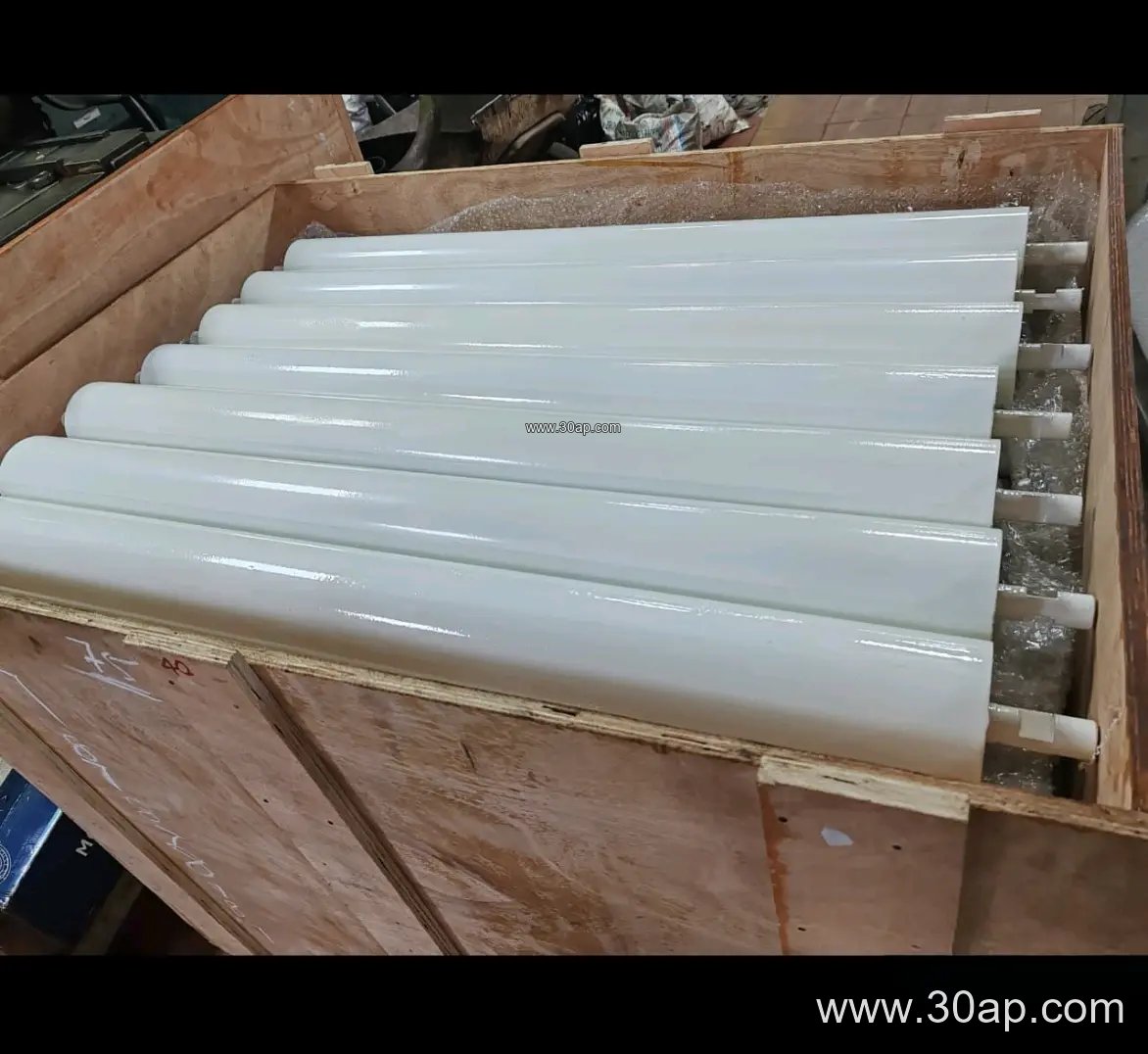
Selection and Maintenance Notes
For abrasive duty, such as a quarry conveyor belt handling crushed rock, specify a heavy-duty idler with good seal protection and a wear-resistant shell. In coal mining, a flame retardant conveyor belt may be paired with anti-static idlers to reduce risk. At a port ship loading conveyor, salt air calls for corrosion-conscious bearing covers. During maintenance, check for seized rollers, worn shells, and misaligned brackets. A conveyor bracket that is bent or loose can shorten idler life and damage the belt edge. Replacing a failed idler early is cheaper than repairing a torn conveyor belt.
Heavy-duty belt conveyor idlers are simple parts, but they determine how smoothly a bulk handling line runs. Match the idler to the belt, the load, and the environment, and the conveyor will reward you with fewer stoppages and longer belt life.