What a Double-Row Return Idler Does on a Conveyor
A Double-Row Return Idler is a return-side roller assembly built with two rows of rollers instead of a single flat roller. It supports the empty, returning strand of the conveyor belt, keeping the belt from sagging between the tail and drive ends. In a quarry, a coal washing plant, or a power station coal yard, the return strand is often the quietest part of the conveyor until a roller seizes or the belt starts to wander. The double-row format spreads the belt load across more contact points than a single flat return roller, and it is often chosen where belt tracking and load distribution deserve extra attention.
In practice, this component is also called a two-row return roller or a double-roll return idler. Those terms describe the same product, not a different idler family. A V-type return roller, a spiral return roller, and a training return roller are separate designs and should not be treated as substitutes when the specification calls for two rows.
How the Assembly Is Built
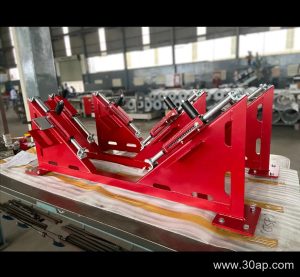
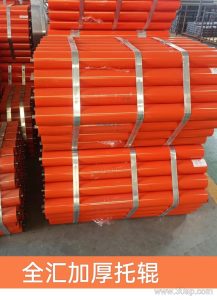
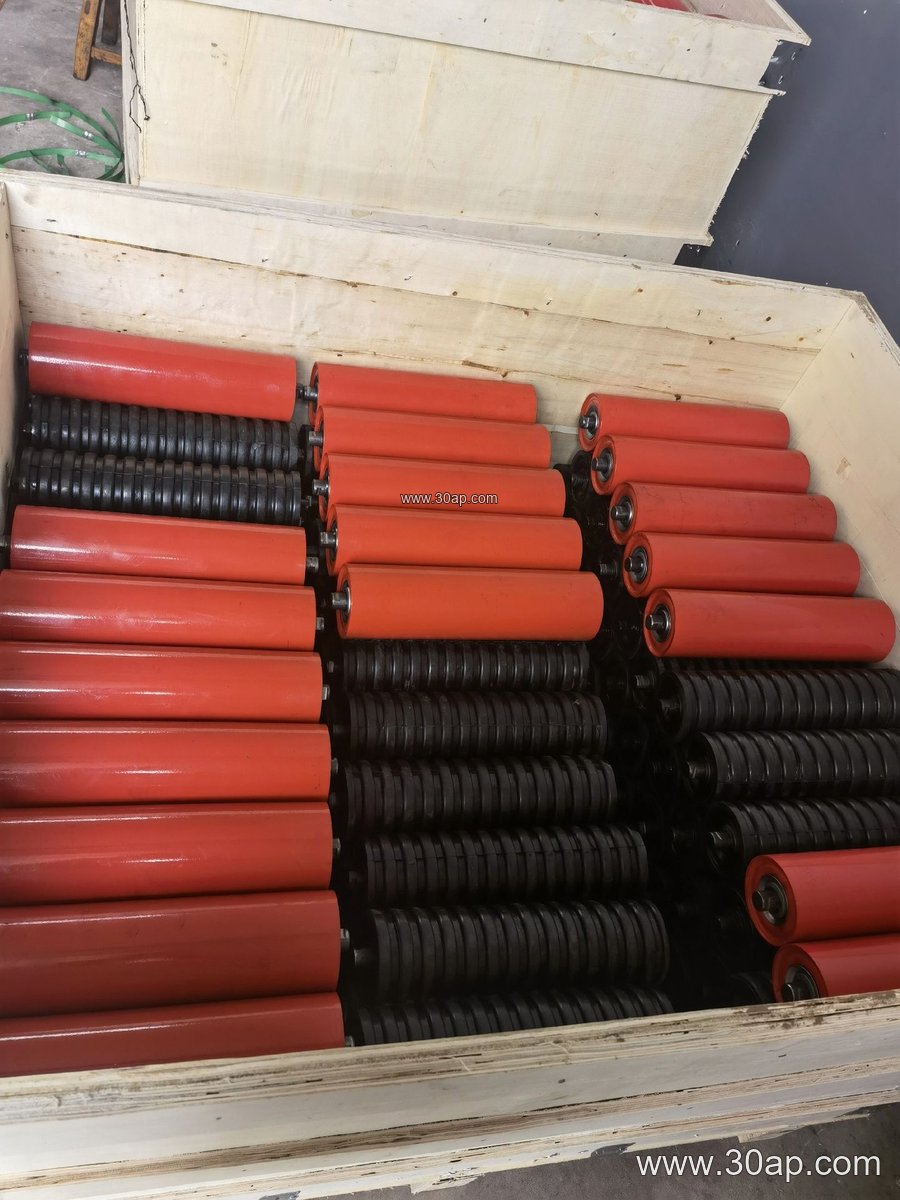
The frame normally carries two parallel roller rows mounted on a common support. Each row may use steel tube shells, nylon shells, ceramic-covered shells, or rubber-ring shells depending on the duty. Shafts run through bearing housings with seals at both ends, and the bearings are commonly 6204, 6205, 6305, 6306, 6308, or 6310 depending on load and shaft design. A labyrinth or multi-stage seal is typical in dusty service, and the housing is usually Grease-packed for long intervals between maintenance stops.
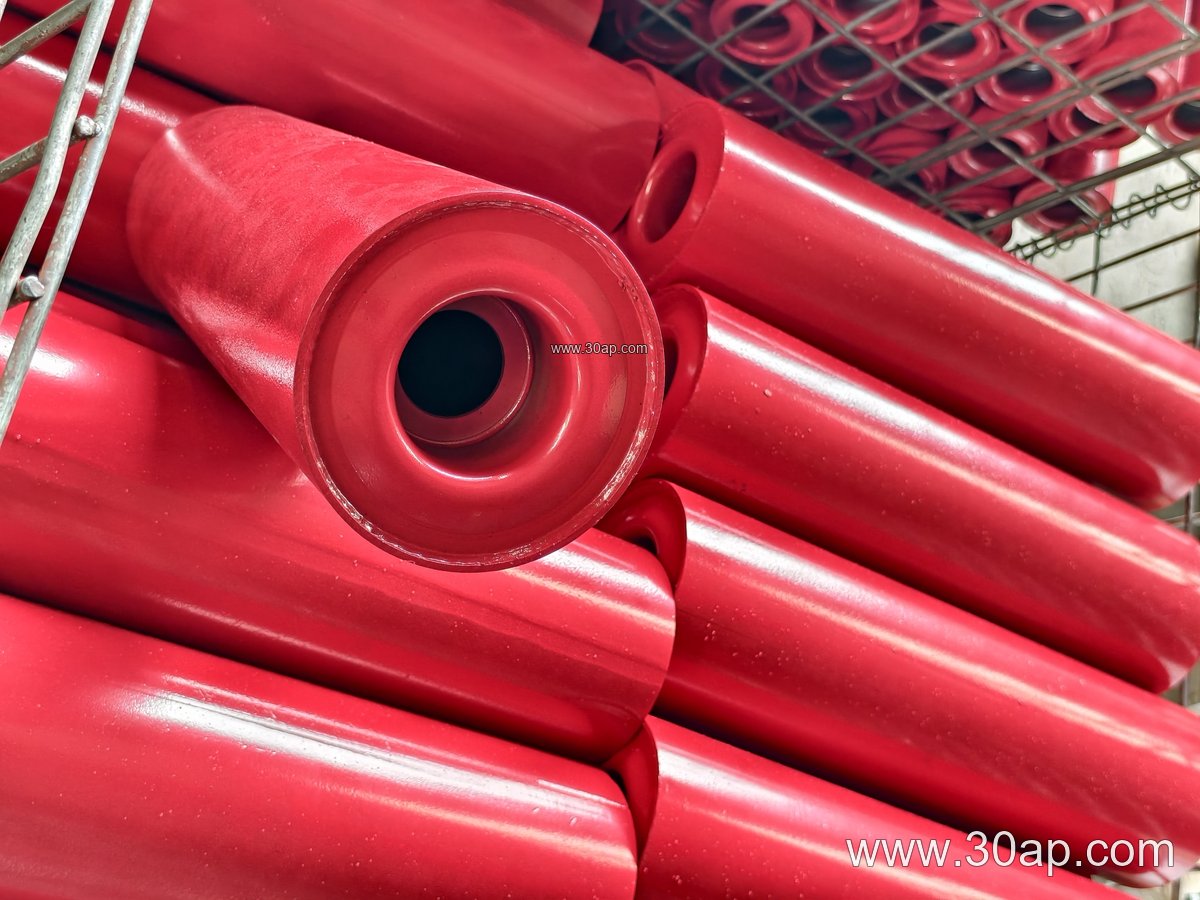
The two rows are often set at a slight angle to each other, which helps center the belt as it runs back. The support frame bolts to the conveyor bracket on the stringer, so mounting hole spacing and bracket height must be confirmed before ordering. Roller length depends on belt width, the frame design, and the gap between the two rows, not on a single fixed formula.
Where It Fits in the Conveyor Layout
Return rollers sit after the discharge point and before the tail pulley, and they repeat at intervals along the return run. In a limestone mine feeding a crusher, or in a cement plant clinker line, the return strand can be long, and roller spacing has a direct effect on belt sag and on the load seen by the tail pulley. A double-row unit is often considered where the belt is wide, where the return strand carries some carryback material, or where the belt has shown a tendency to drift.
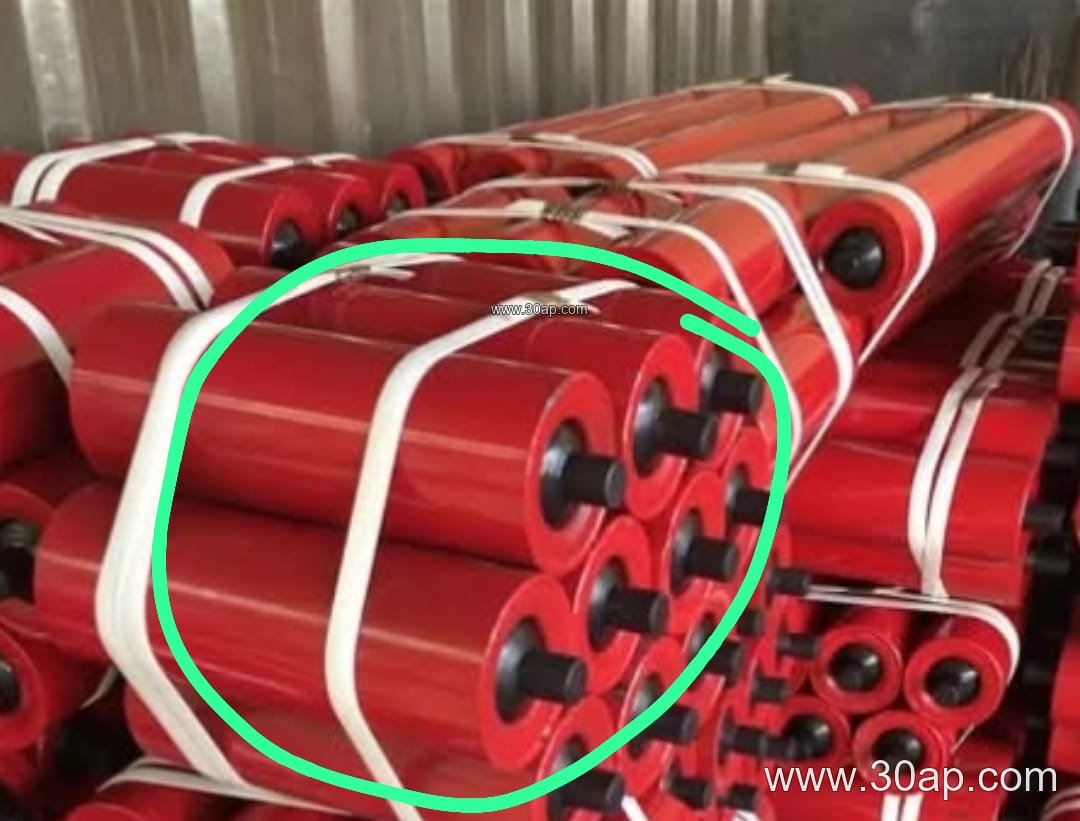
The same assembly is also used in sand and aggregate lines, iron ore handling, port ship-loading conveyors, and tunnel spoil removal. It is not a replacement for a bend pulley or a drive pulley; those are different components with different functions. The return idler only supports the belt, while the pulleys transmit motion and change belt direction.
Common Sizes and Reference Data
The table below lists reference values that are often used in catalogues and design sheets. They are examples, not universal specifications, and every project should confirm dimensions against the actual conveyor drawing.
| Parameter | Common Reference Values |
|---|---|
| Roller diameter | Ø63, Ø76, Ø89, Ø102, Ø108, Ø127, Ø133, Ø159, Ø178, Ø194, Ø219 mm |
| Belt width | B400, B500, B650, B800, B1000, B1200, B1400, B1600, B1800, B2000, B2200, B2400 |
| Bearing | 6204, 6205, 6305, 6306, 6308, 6310 |
| Shell material | Steel tube, nylon, ceramic, rubber ring |
| Typical roller length examples for three-roll trough sets | B500 about 200 mm, B650 about 250 mm, B800 about 315 mm, B1000 about 380 mm, B1200 about 465 mm, B1400 about 530 mm, B1600 about 600 mm, B1800 about 670 mm, B2000 about 750 mm |
Roller length for a double-row return unit is set by the frame and belt width, and the two rows may not share the same length as a troughing side roller. Bearing selection follows shaft load and speed, so a given bearing number is not tied to one roller diameter.
Buyer Checklist Before Ordering
- Confirm belt width and the return strand load, including any carryback.
- Check the conveyor bracket spacing and mounting hole pattern on the stringer.
- State the environment: coal dust, cement powder, salt air, or wash-down conditions affect seal choice.
- Match the roller shell to the belt: a rubber-ring shell helps with impact and noise, while a steel shell suits clean, high-speed runs.
- Ask for the shaft and bearing arrangement, not just the outside diameter.
- Check that the supplier understands the difference between a return idler, a bend pulley, and a tail pulley.
For the belt itself, the return idler works with whatever carcass is installed, whether that is a multi-ply fabric core, an EP belt, or a steel cord belt. In a coal mine, a flame retardant belt and anti-static properties matter as much as roller quality, and the return side should be inspected together with the belt cover. A worn return roller can damage the bottom cover of an abrasion resistant belt long before the top cover shows wear.
Maintenance Notes
Seized return rollers are a common cause of belt edge damage and motor overload. During shutdowns, check for roller rotation by hand where safe, listen for bearing noise, and look for material build-up between the two rows. Replace seals or complete rollers when grease leakage or shell wear appears. Keep the return strand clear of spillage, because a double-row frame can trap fines between the rows if the belt is shedding material.
Related equipment such as the conveyor pulley, the idler roller set on the carry side, and the conveyor bracket should be reviewed as one system. A well-matched double-row return idler reduces belt wander and extends the service life of the return strand in mines, cement plants, power stations, and aggregate operations.