What the Conveyor Tail Pulley Does
The conveyor tail pulley sits at the return end of a belt conveyor and closes the loop that keeps the belt tracking. In a quarry, a coal preparation plant, or a cement clinker line, this pulley supports the belt as it turns back toward the carrying side and works together with the tensioning arrangement to hold steady contact between belt and drive. Because it is a driven-by-the-belt component rather than a power source, it is often called the return or tail drum, but it should never be confused with a drive pulley at the head or a bend pulley used only to change belt direction.
A well-matched conveyor pulley at the tail keeps the belt centered, reduces edge wear, and protects the splice from unnecessary flexing. On a long overland or underground mining conveyor, this position also influences how smoothly the belt enters the loading zone.
Construction and Surface Options
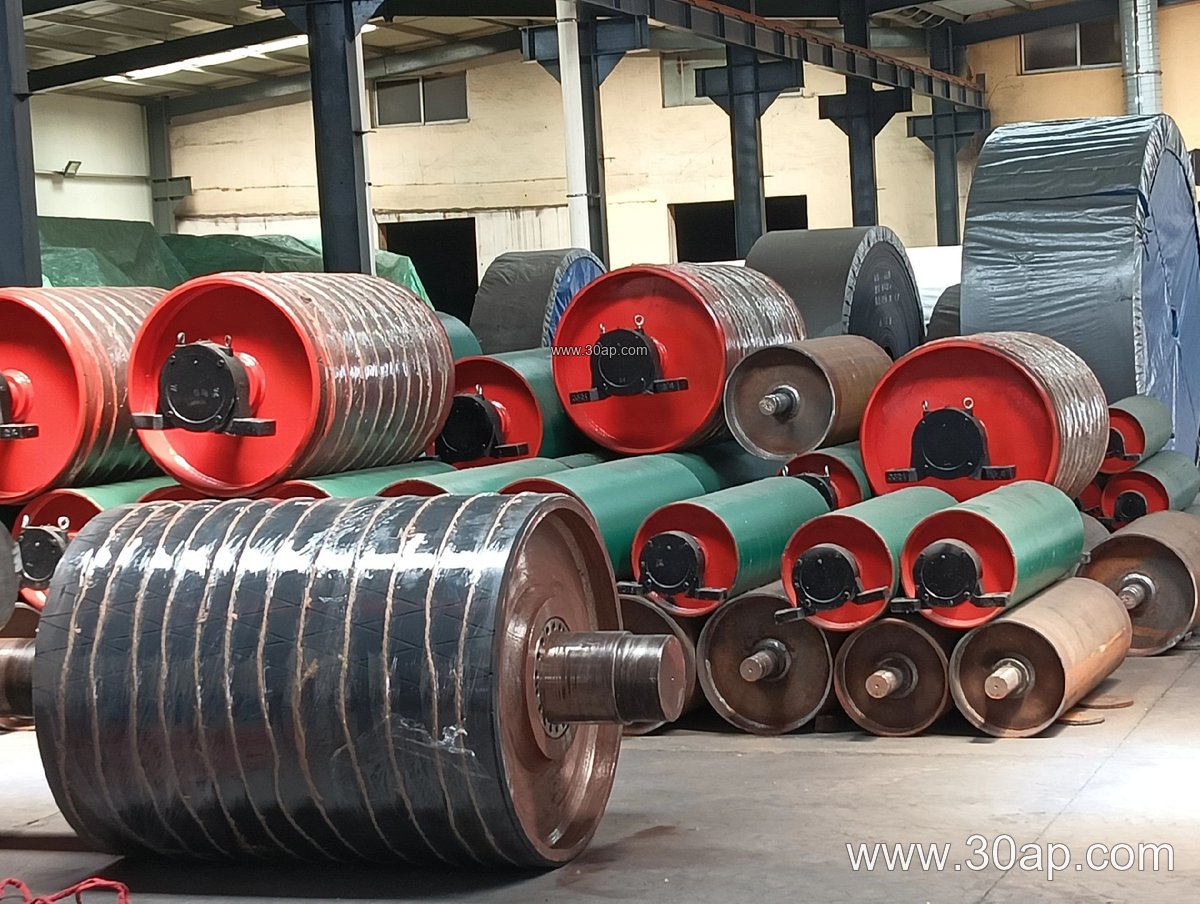
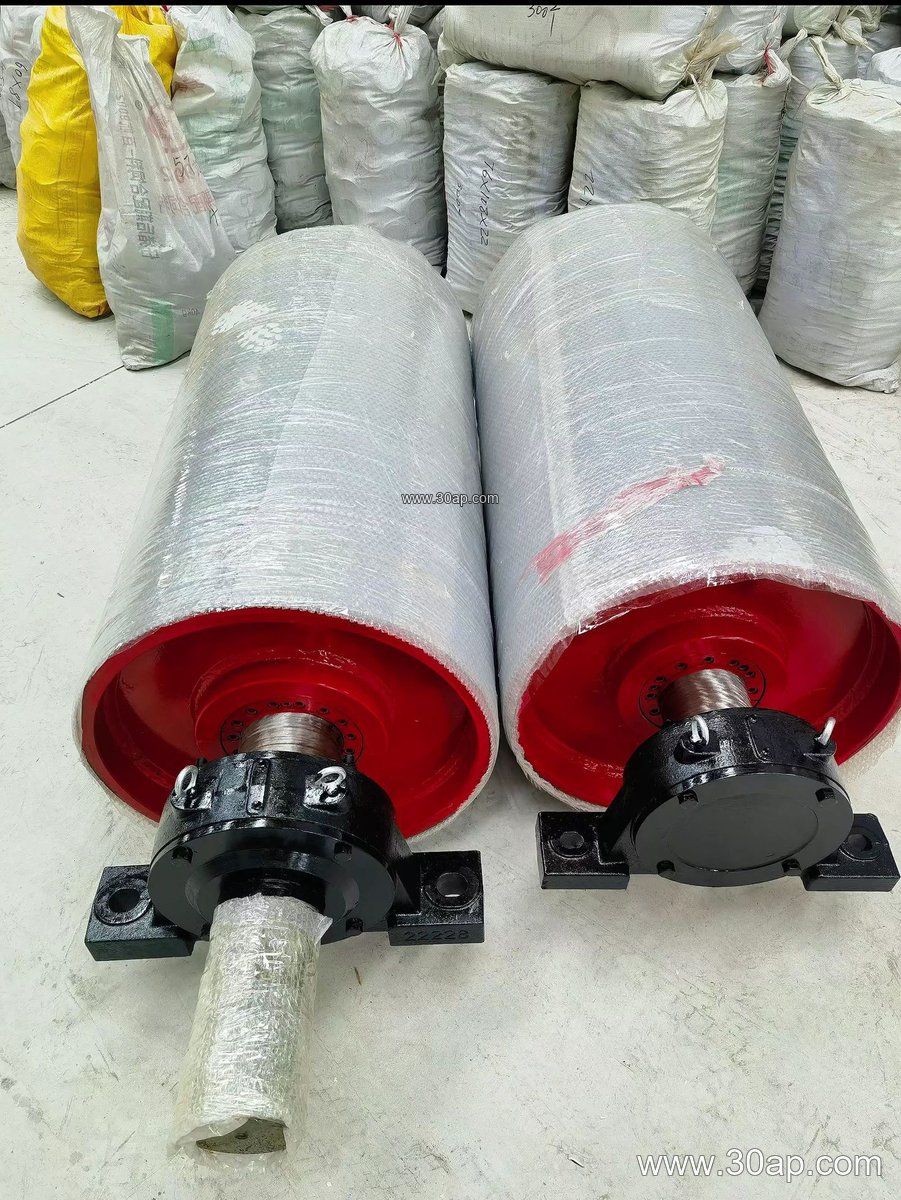
The tail drum is normally built from a rolled steel shell welded to end discs, with a through shaft mounted in bearing housings that sit on the conveyor bracket or tensioning frame. Shell thickness, shaft diameter, and bearing size are selected from the actual belt pull and torque rather than from belt width alone. A B800 tail pulley and a B1400 tail pulley may share a similar shell design but carry very different shafts.
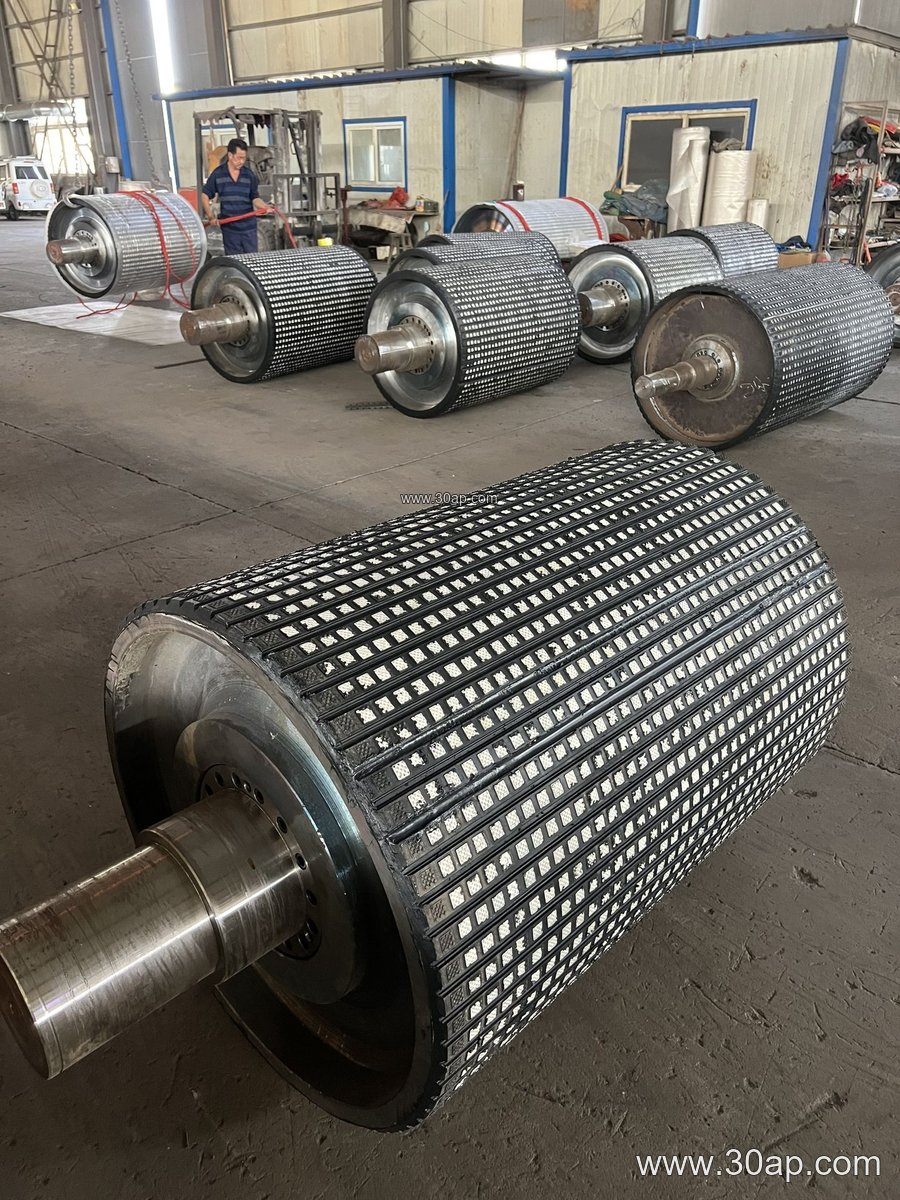
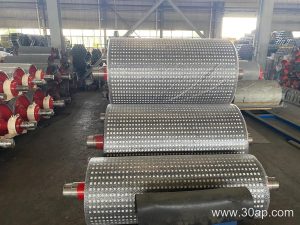
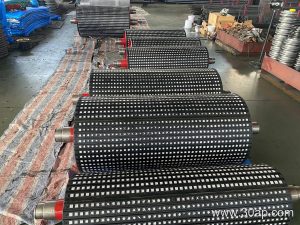
Surface finish matters. Plain shells are common where the belt runs freely and material build-up is not a concern. Rubber lagging, applied cold or hot vulcanized, improves grip and cushions the belt. Diamond or herringbone grooving helps shed water and fine dust in wet washing circuits, while ceramic lagging is chosen where abrasion is severe. Lagging thickness is usually 8, 10, 12, 15, or 20 mm, depending on duty.
Typical Reference Dimensions
The table below shows common combinations used in design discussions. These are reference values, not fixed rules, and final sizing always follows the conveyor design.
- B400 belt — shell width about 500 mm, common diameters Ø200 to Ø400
- B650 belt — shell width about 750 mm, common diameters Ø250 to Ø500
- B800 belt — shell width about 950 mm, common diameters Ø315 to Ø630
- B1000 belt — shell width about 1150 mm, common diameters Ø400 to Ø800
- B1200 belt — shell width about 1400 mm, common diameters Ø500 to Ø1000
- B1400 belt — shell width about 1600 mm, common diameters Ø630 to Ø1000
- B1600 belt — shell width about 1800 mm, common diameters Ø800 to Ø1250
Shaft journals commonly fall between Ø50 and Ø200, again determined by load and bearing selection. A B1200 × Ø1000 tail pulley in a primary crusher discharge is a realistic pairing, but so is B1200 × Ø800 on a lighter duty line.
Where It Fits in the Plant
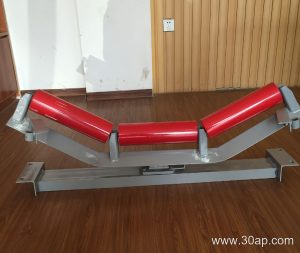
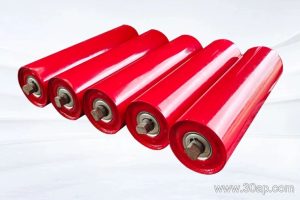
Tail pulleys appear wherever a belt must return and be tensioned. In an iron ore or copper ore concentrator they sit at the far end of long transfer conveyors. In a power plant coal handling system they work with a flame retardant conveyor belt and a set of idler rollers to keep the return strand supported. In aggregate and sand making plants, tail drums handle abrasive stone dust, so abrasion resistant lagging and sealed bearings are worth specifying.
The tail position also pairs with the belt type. A heavy-duty mining conveyor belt with steel cord construction demands a robust shell and generous shaft; a lighter EP conveyor belt on a package handling line can use a smaller drum. Where the belt carries hot sinter or cement clinker, a heat resistant conveyor belt may run over a tail pulley fitted with heat-tolerant lagging.
Buyer Checklist Before Ordering
Start with the belt width and the required shell width, then confirm the belt pull and the tensioning method. Check whether the tail pulley must slide in a take-up frame or remain fixed, and confirm bearing type and sealing for dusty or wet conditions. Ask for the lagging pattern and thickness in writing, and verify that the shaft diameter matches the coupling or bearing bore. For underground coal mining conveyors, confirm that the belt and pulley assembly suit the fire resistant and anti-static requirements of the site.
Finally, keep spare bearings and lagging material on hand. A tail pulley failure stops the whole line, and in a quarry or ship loading terminal that downtime adds up quickly. Matching the drum to the belt, the load, and the environment is the simplest way to keep the return end reliable.