What the Main Drive Pulley Does
The main drive pulley, often called the head pulley or drive drum, is the component that turns belt tension into forward motion. Mounted at the discharge end of a conveyor, it grips the inside of the belt and pulls the loaded strand toward the head. In a quarry, a coal preparation plant, or a cement clinker line, this single drum carries the highest torque in the system, so its construction and surface treatment matter more than any other pulley on the frame.
Because it transmits power rather than merely guiding the belt, the main drive pulley is not interchangeable with a tail pulley or a bend pulley. Those components redirect or tension the belt; the drive drum is the one coupled to the gearbox and motor. Confusing the two in a specification sheet leads to undersized shafts and premature belt slip.
How the Drum Is Built
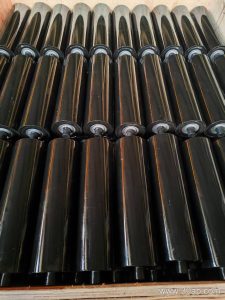
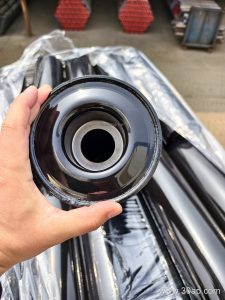
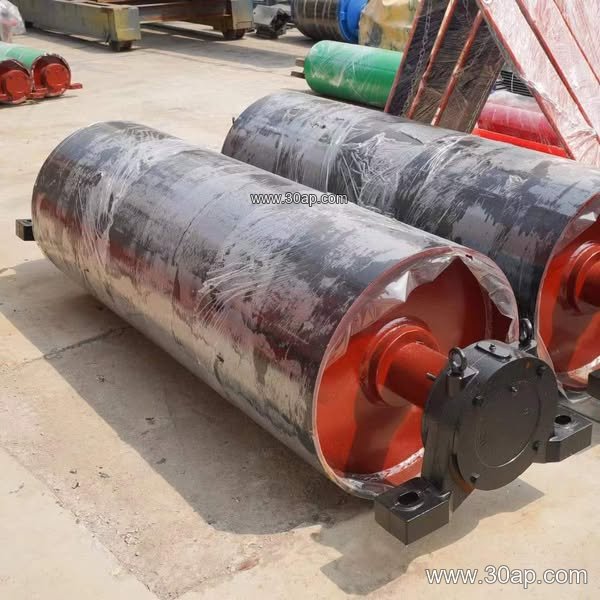
A typical drive drum combines a rolled steel shell, welded end discs, and a shaft that runs through the centre. The shell is machined to a slight crown in some designs to help the belt track, and the whole assembly is balanced before installation. Surface treatment is where most buyers focus: plain finish, hot-vulcanised rubber, cold-bonded rubber, diamond grooving, herringbone pattern, or ceramic lagging. Lagging thickness commonly falls between 8 mm and 20 mm depending on the grip required.
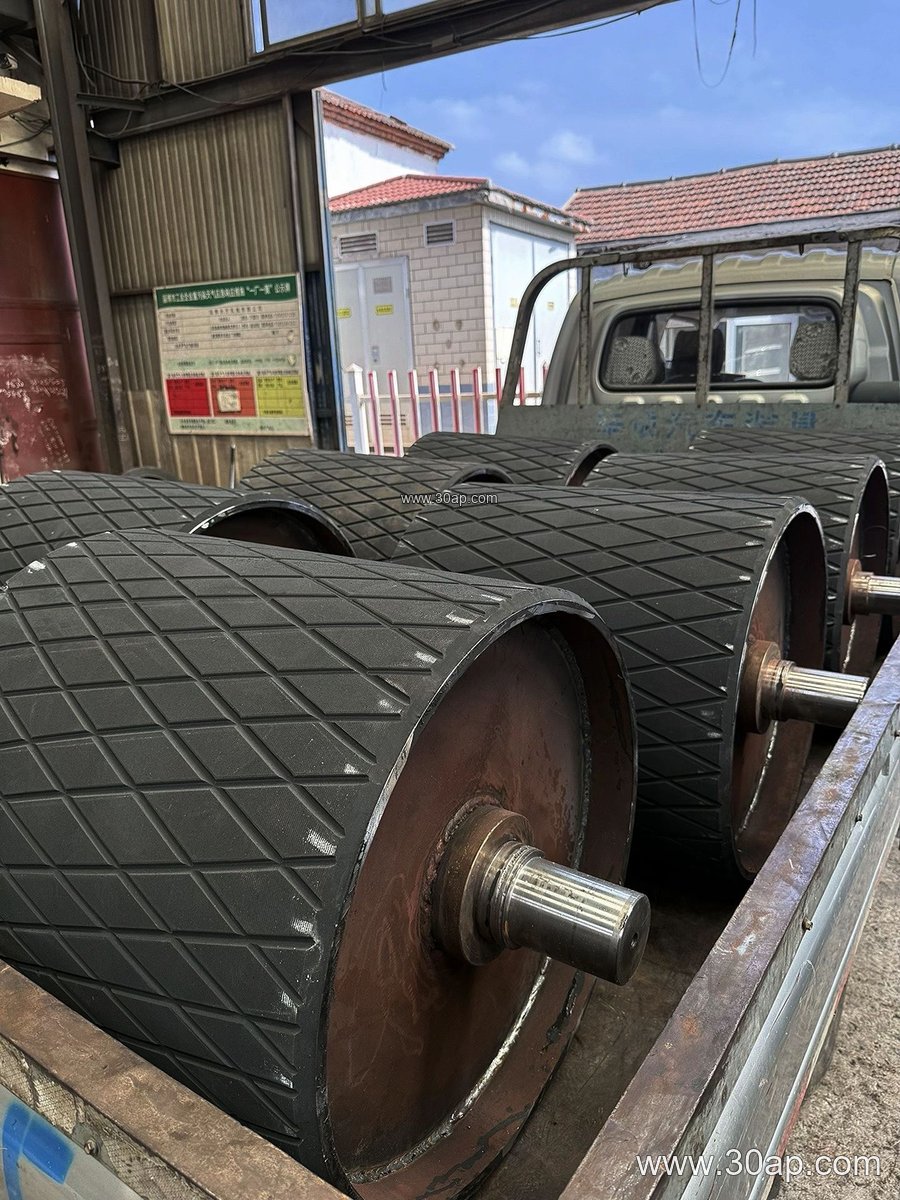
The shaft diameter is determined by torque and bearing load, not by belt width alone. Common shaft sizes include Ø80, Ø100, Ø120, Ø140, Ø160, and Ø180, but a B800 drum and a B1200 drum may share a shaft size if the duty is light, or differ widely if one runs a heavy-duty mining conveyor belt at high tension.
Matching Diameter to Belt Width
Belt width and drum diameter are related but not locked together. A wider belt needs a wider drum face, while the diameter depends on belt stiffness, wrap angle, and the number of plies or steel cords in the belt. The table below shows reference combinations that appear in general design work; they are starting points, not fixed rules.
- B800 × Ø500 — light to medium duty, aggregate and sand lines
- B1000 × Ø630 — general bulk handling, crusher discharge
- B1200 × Ø800 — cement plant and power plant coal handling
- B1400 × Ø1000 — heavy-duty mining and port bulk terminals
- B1600 × Ø1250 — high-tension steel cord belt systems
- B1800 × Ø1400 — large ore and overland conveyors
Face width usually exceeds belt width by roughly 100 to 200 mm. For example, a B650 belt typically runs on a drum with about 750 mm face, and a B1200 belt on a drum around 1400 mm face. These are common proportions, and final dimensions are set by the conveyor designer.
Where It Fits in the Plant
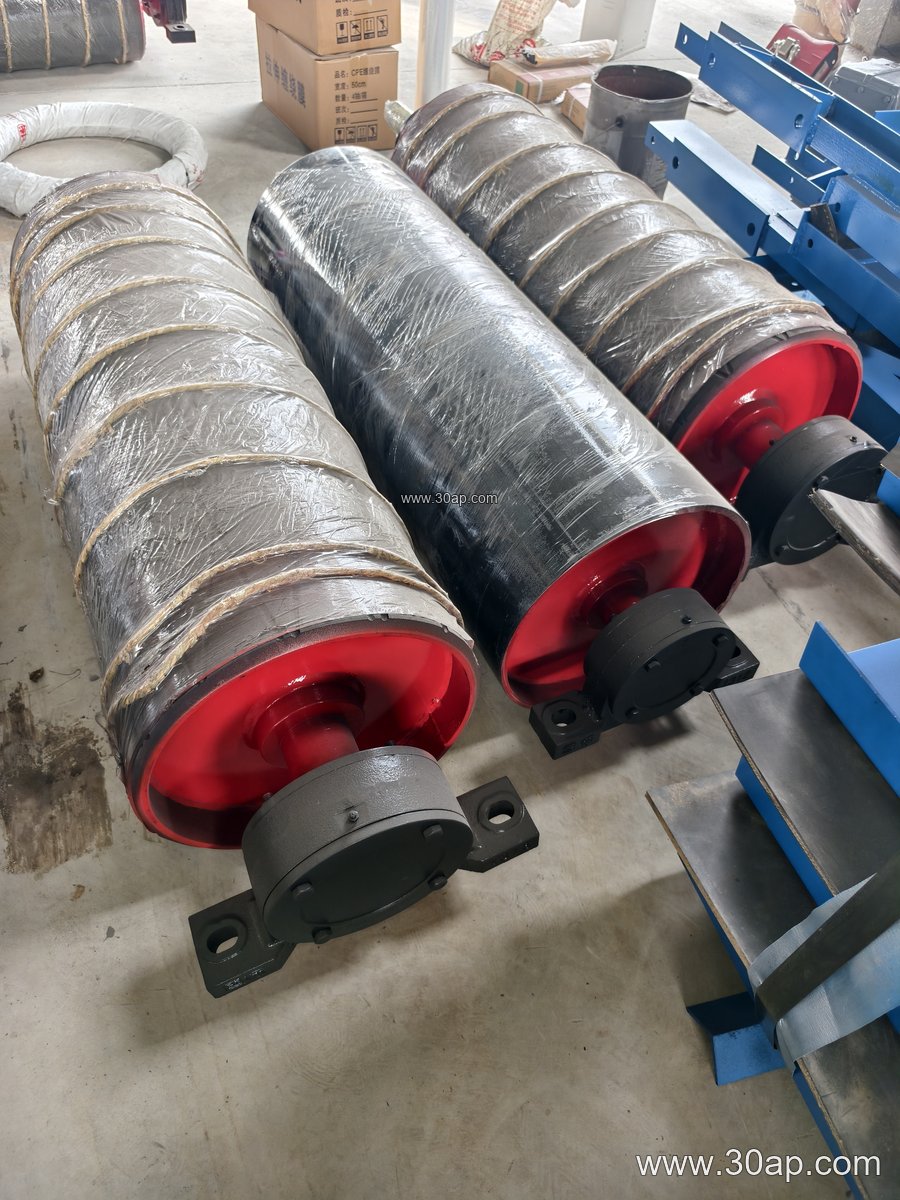
Drive pulleys appear at the head of nearly every bulk handling line. In an iron ore or copper ore concentrator, they sit at the discharge of the primary crusher and again at the transfer towers. In a coal mining operation, flame retardant conveyor belt and anti-static belt specifications often extend to the drum lagging, because static build-up and fire risk are real concerns underground. In a cement plant, the drive drum on the clinker transport line must tolerate heat and abrasive dust, so abrasion resistant conveyor belt grades are paired with a lagging that holds grip without polishing the belt cover.
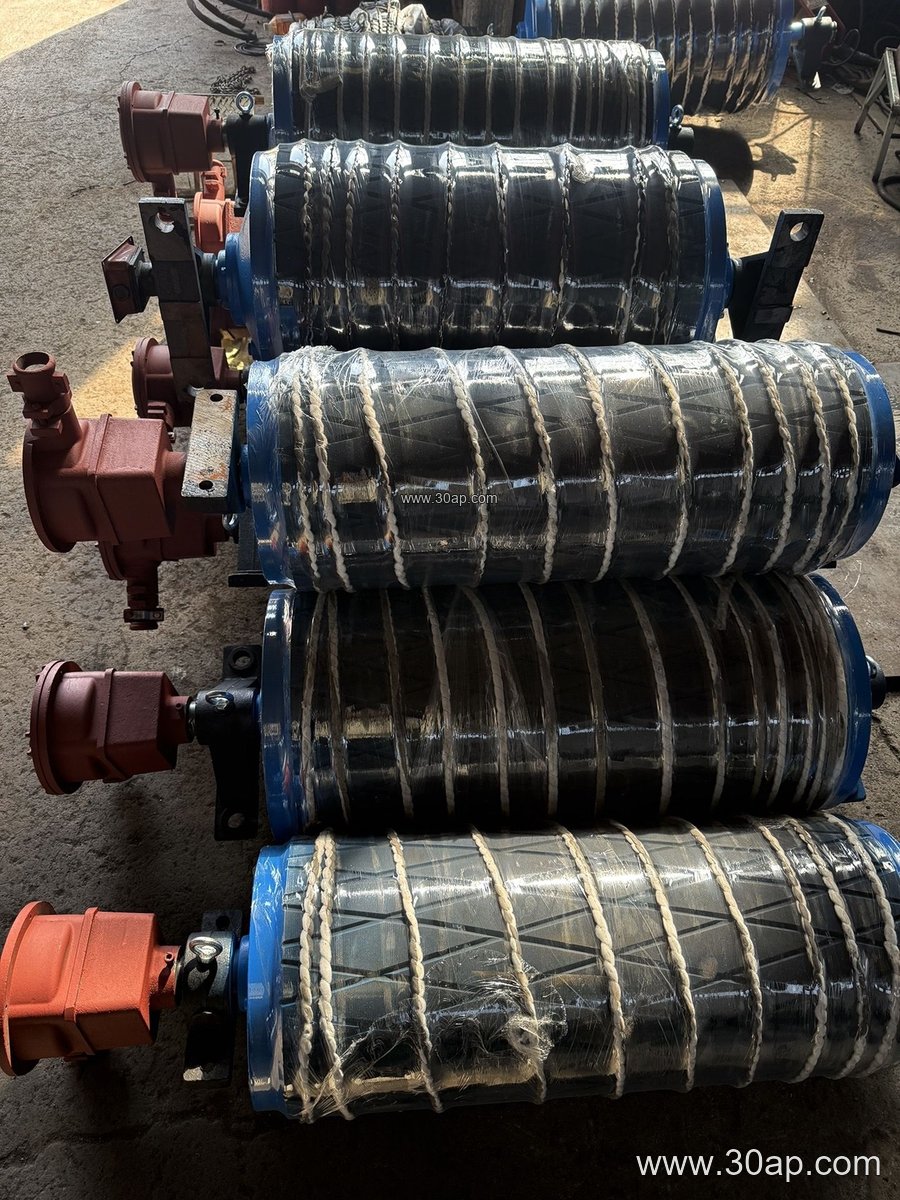
The same drum type also drives ship loading conveyors at ports and aggregate conveyors at stone crushing plants, where dust and continuous duty dominate the selection.
What Buyers Should Confirm
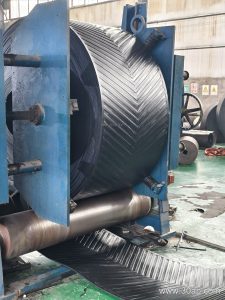
Before ordering, confirm the belt width, the belt type (fabric core, steel cord, or chevron), the calculated torque, and the wrap angle. Ask for the lagging pattern and hardness, the shaft material and diameter, and the bearing arrangement. Check that the pulley face width matches the belt, and that the lagging is suitable for the belt cover — a ceramic lagging on a soft abrasion resistant conveyor belt can wear the belt faster than expected.
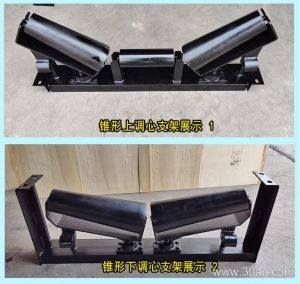
For a main drive pulley in a heavy-duty mining conveyor belt system, request the dynamic balance report and the weld inspection record. Spare lagging sheets, a spare shaft, and a matched set of conveyor brackets should be considered at the same time so that a shutdown does not wait on a single part. When the drum is paired with quality idler rollers and a properly tensioned belt, slip and tracking problems are far less likely.